A Renaissance Palazzo Beside Orvieto's Duomo
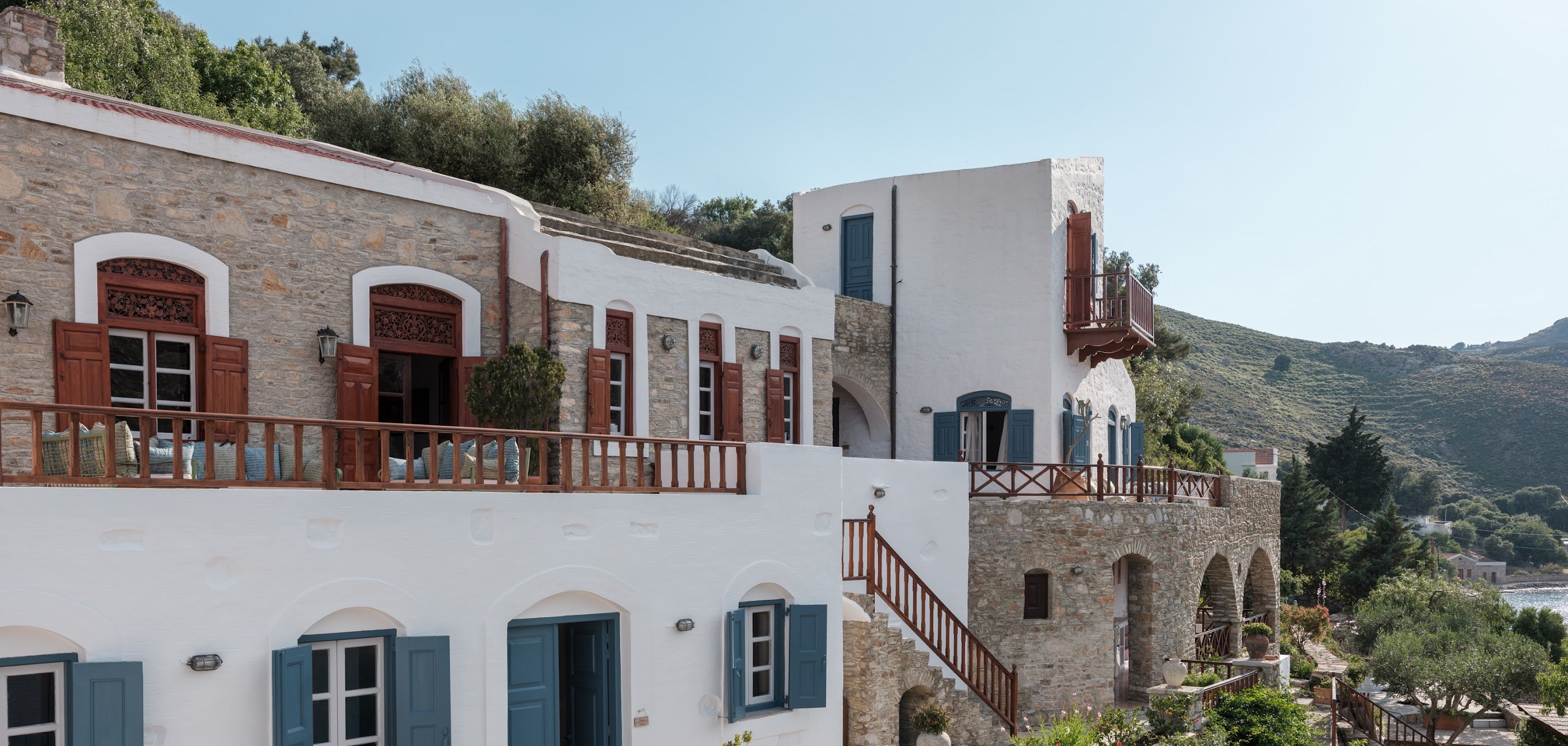
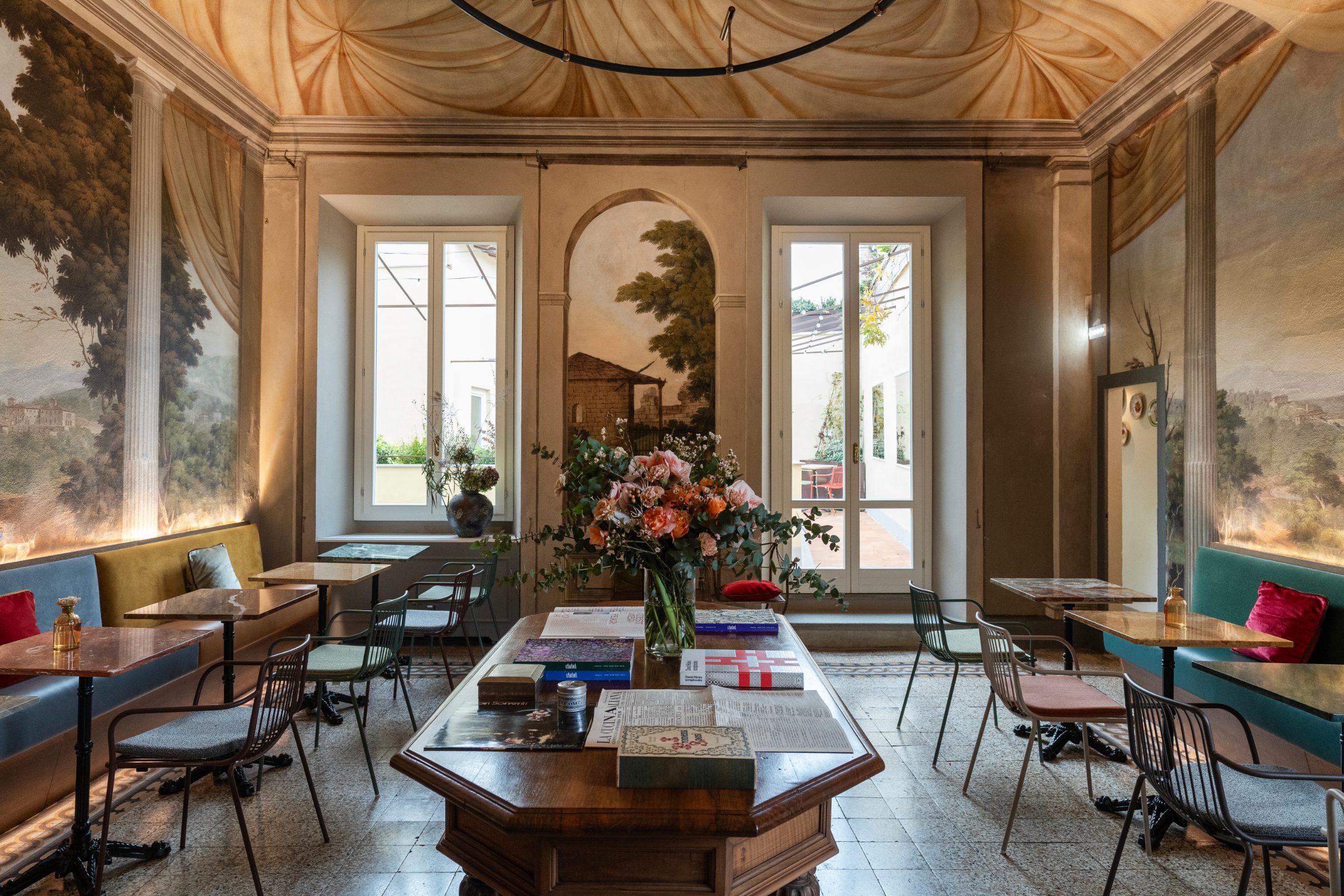
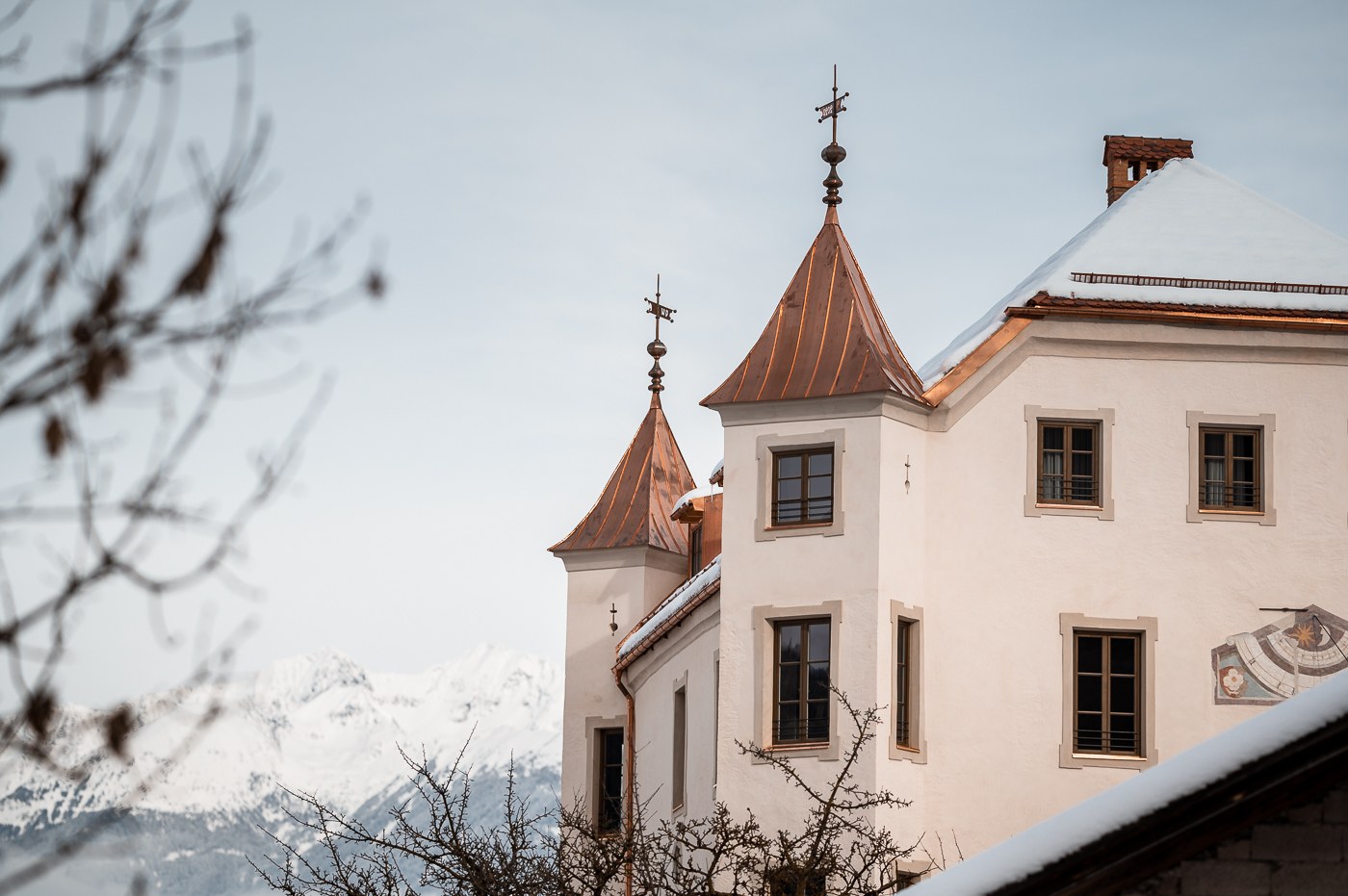
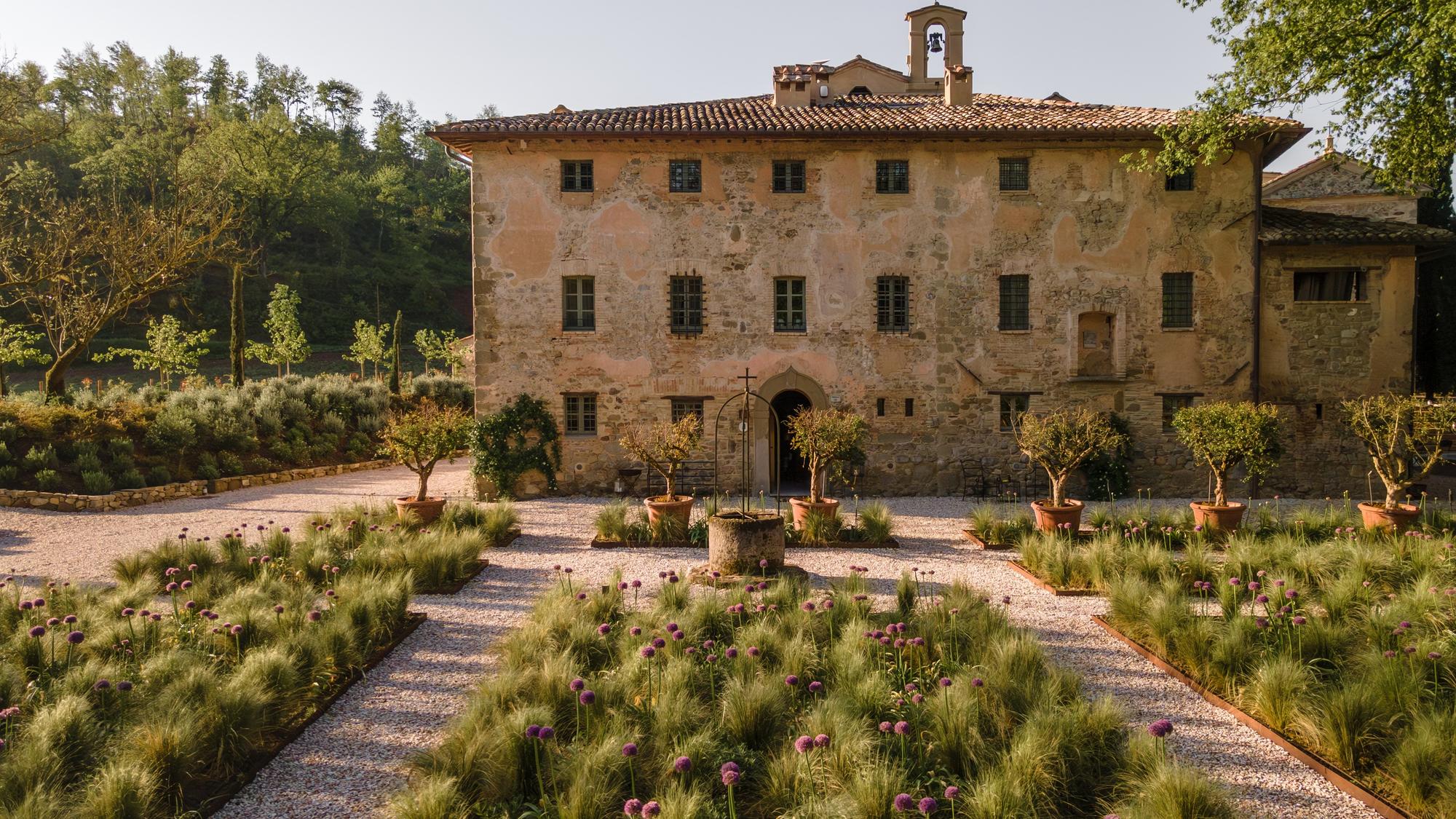
On Via del Duomo, a few steps from Orvieto’s striped cathedral, Palazzo Petrvs occupies a Renaissance residence built in 1475 by the notary Petrvs Facienus. After decades of neglect, the palazzo was brought back to life by Neapolitan architect Giuliano Andrea dell’Uva and local hotelier Raffaele Tysserand, opening as a nine-room hotel in 2024. The restoration uncovered frescoes hidden beneath centuries of plaster and preserved the original painted wooden ceilings, now set against clay walls, travertine and a considered mix of vintage Italian and Nordic furniture. The result is a house where the weight of history meets a quieter, contemporary sensibility. Palazzo Petrvs holds one MICHELIN Key.
- Best price guarantee
- Full access to content library
- Personalized itinerary
- A gift for every booking over three nights
- 24/7 support
Photography © Palazzo Petrvs.
Rooms & Availability
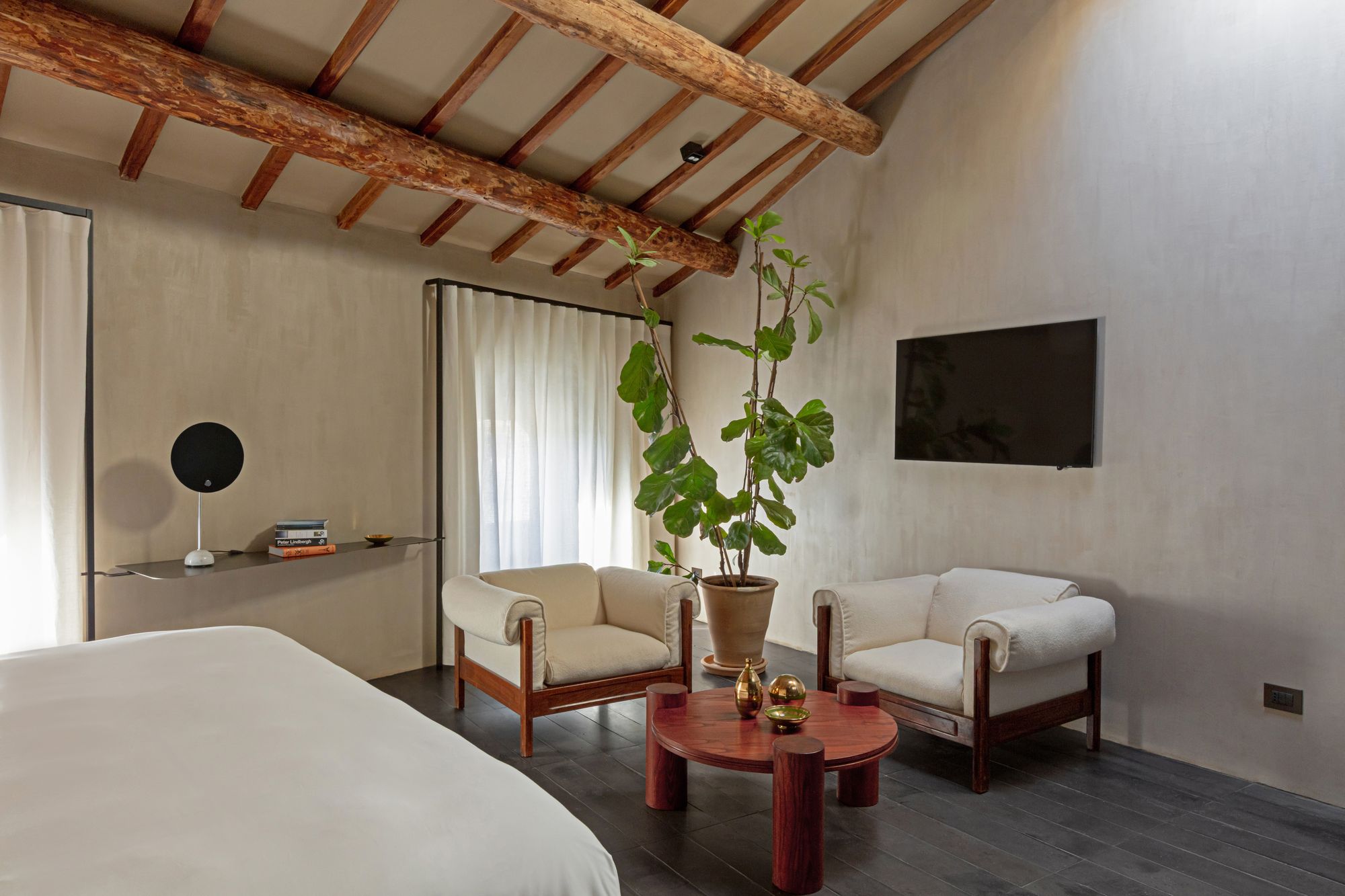
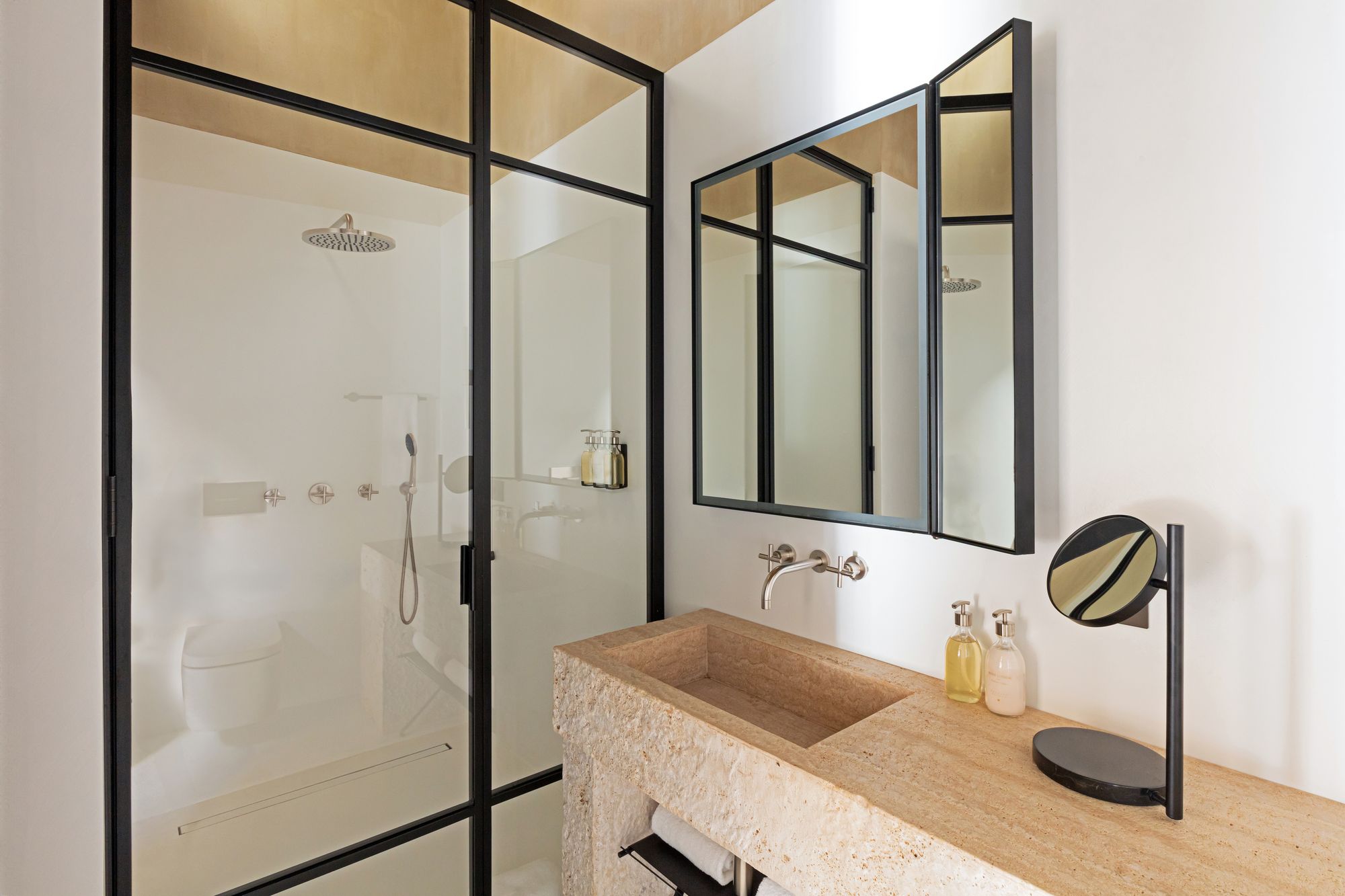
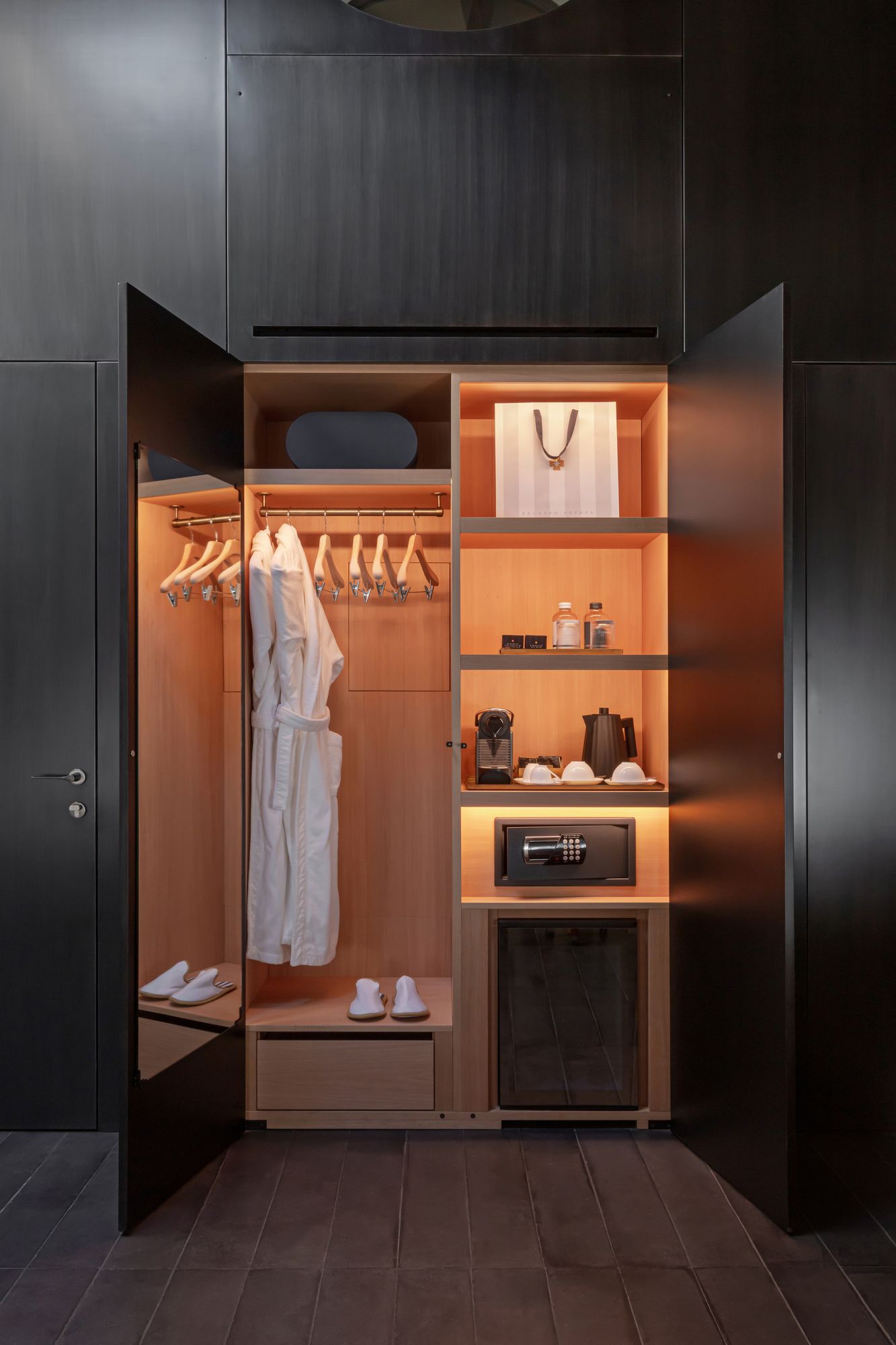



Superior Room

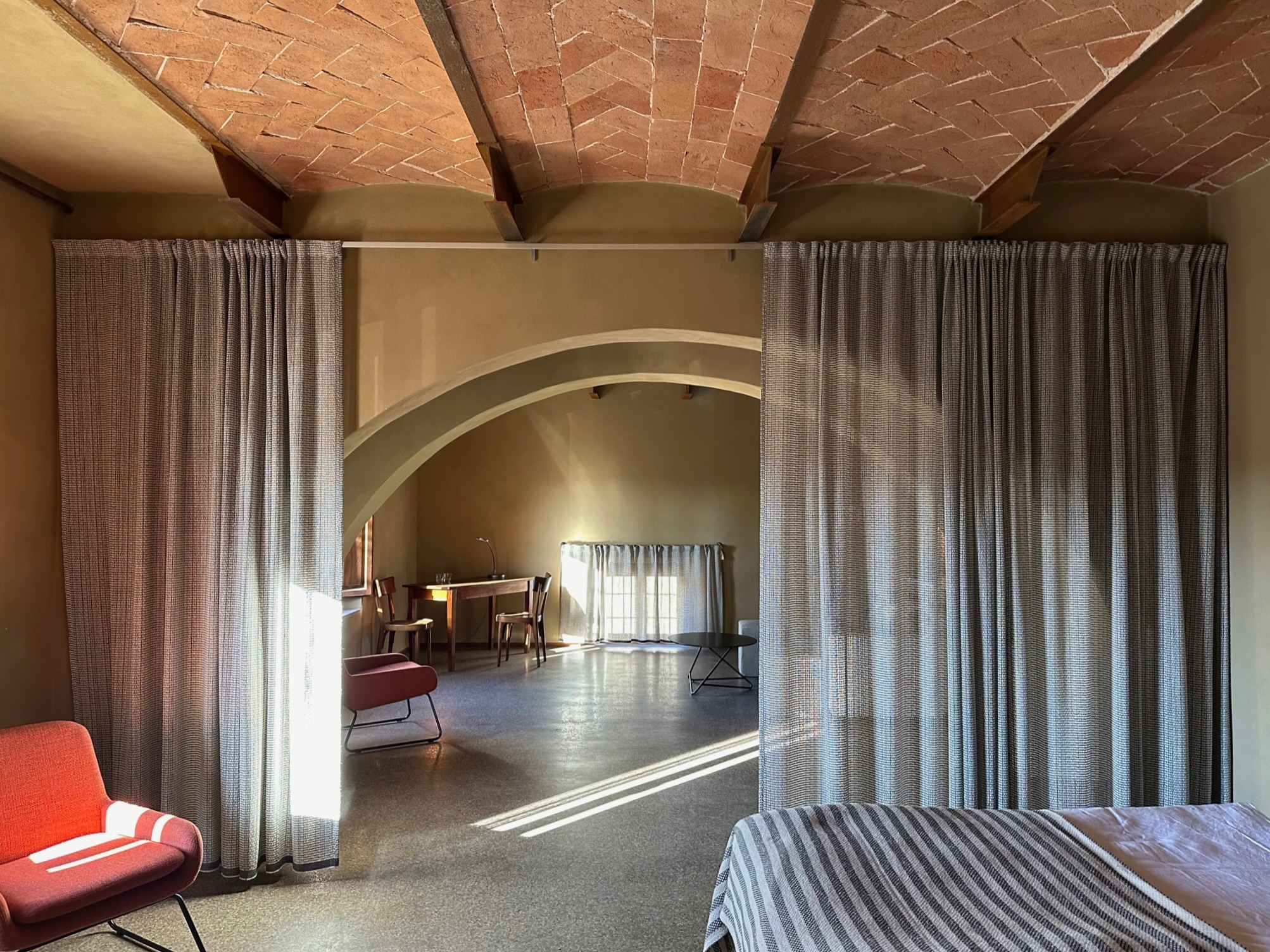
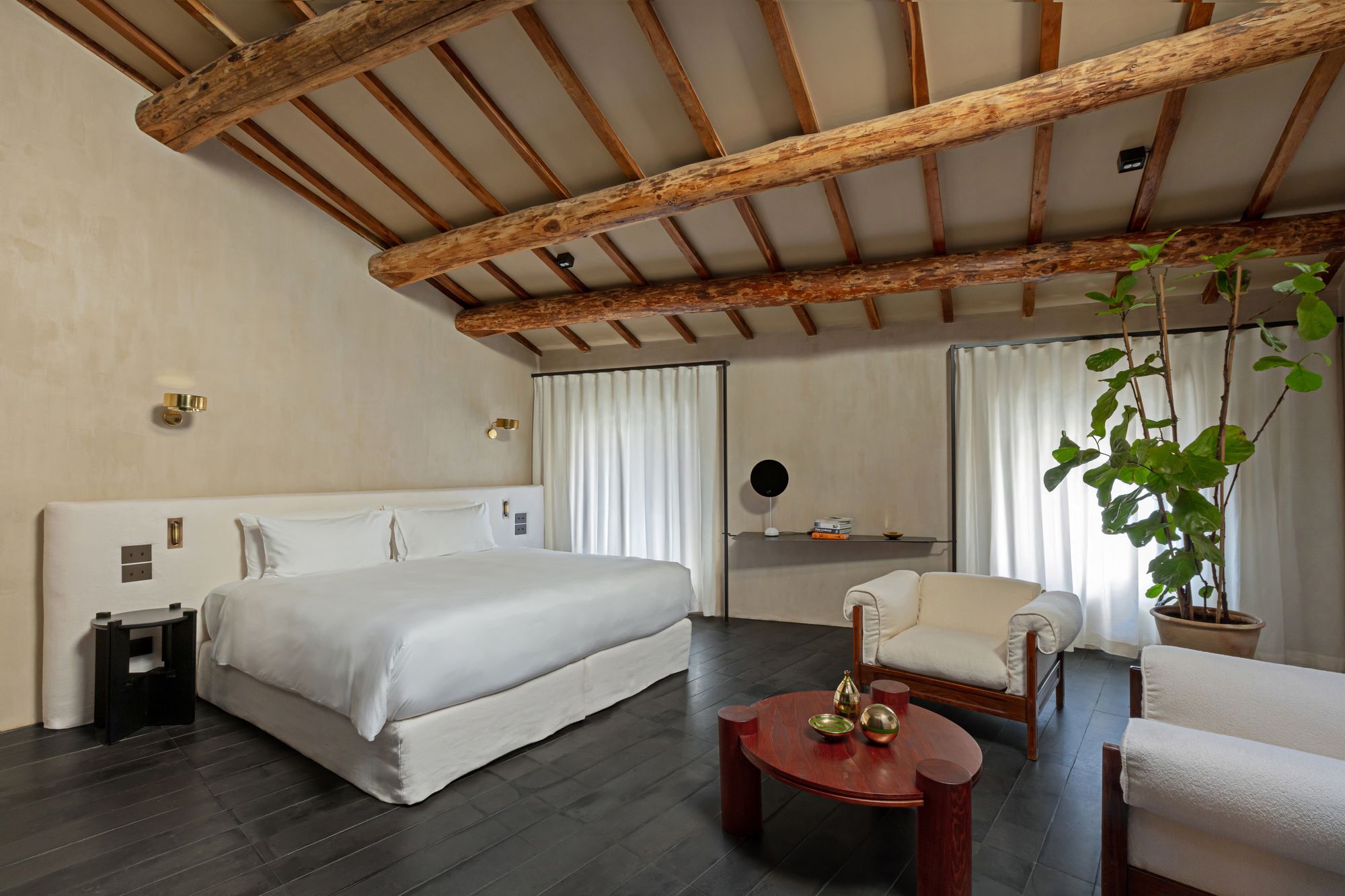
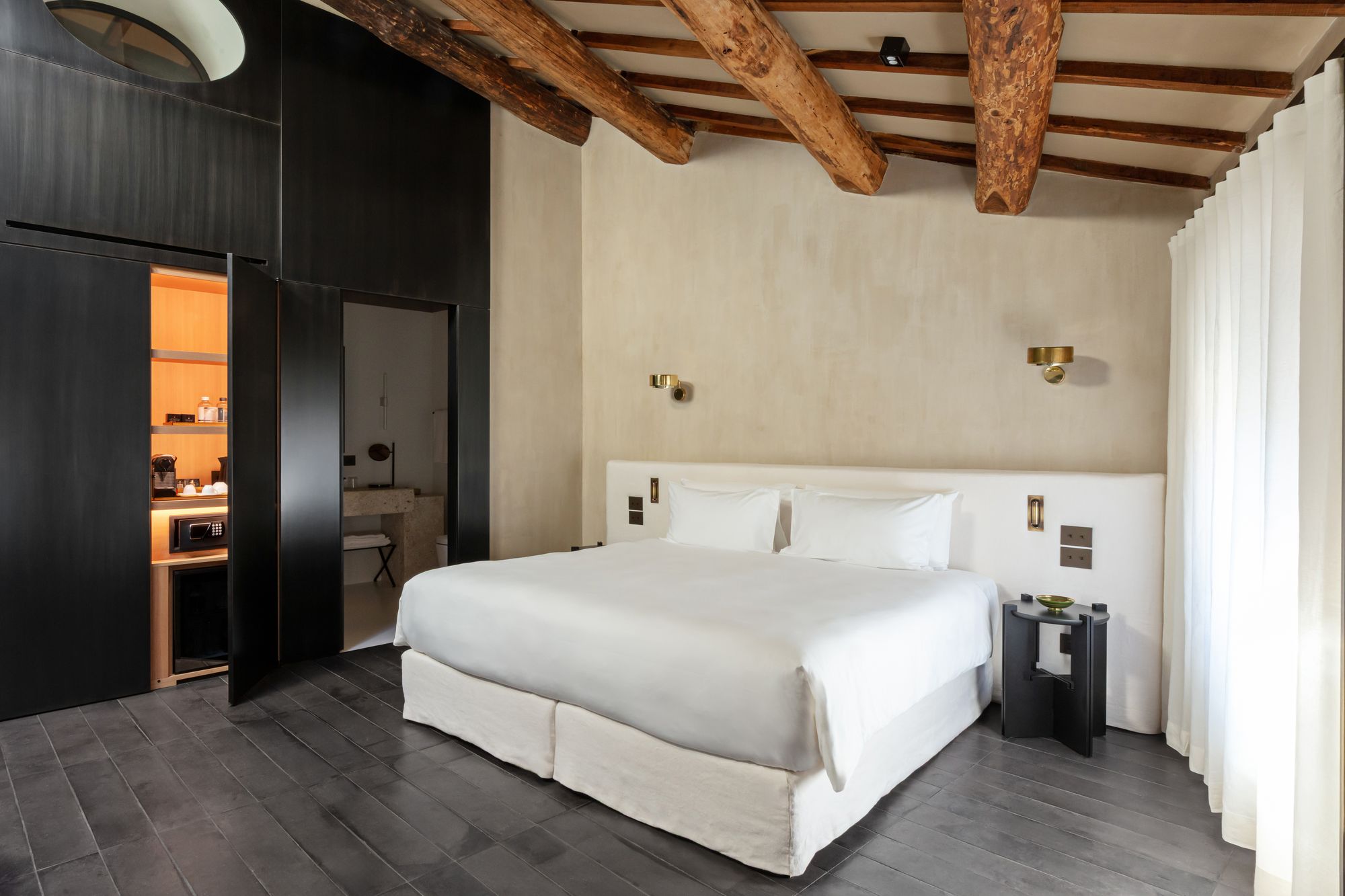
Under the original wooden ceiling, with clay walls, a terracotta floor and a travertine bathroom. King-size or two single beds.
Superior Room


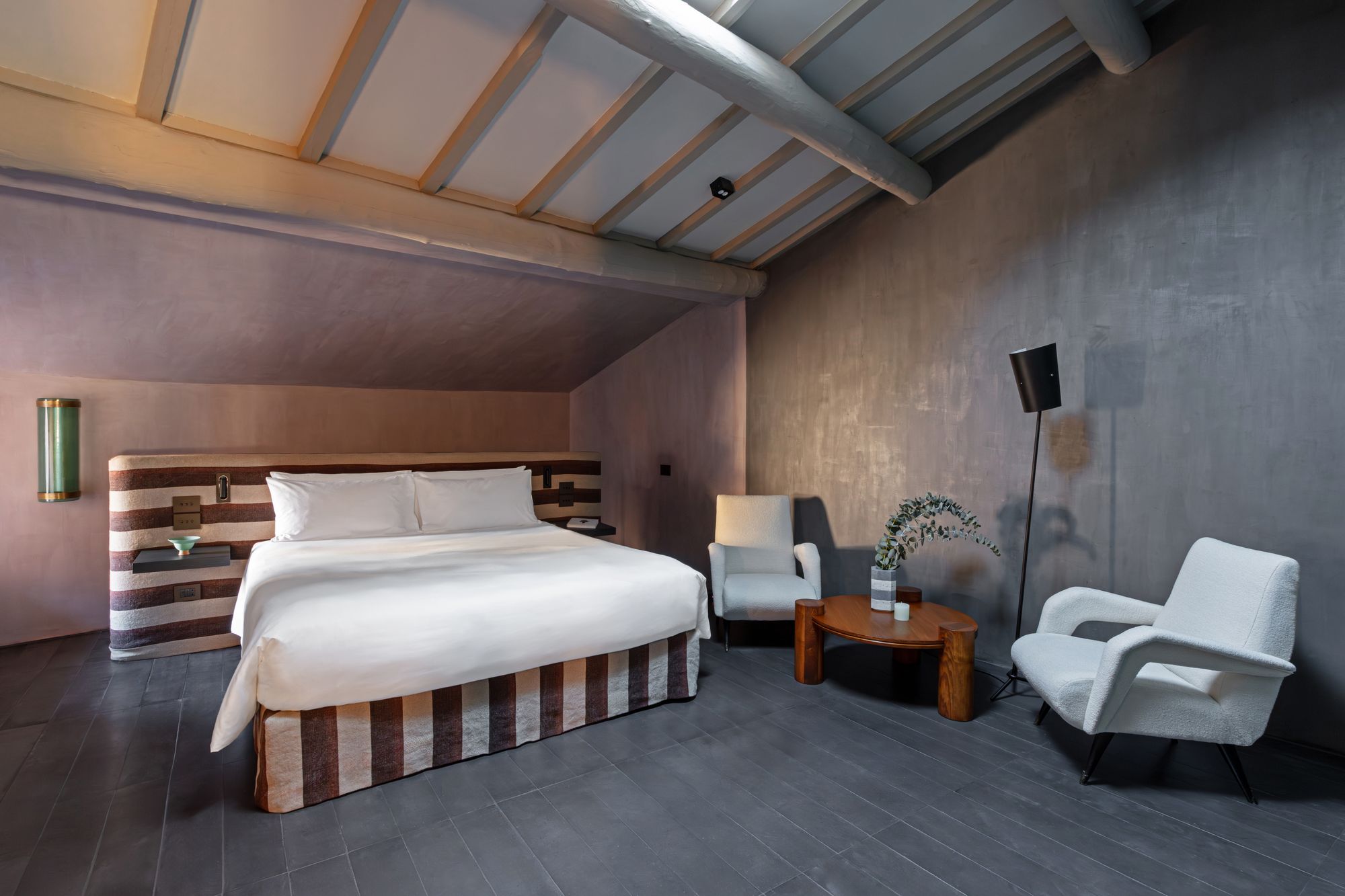

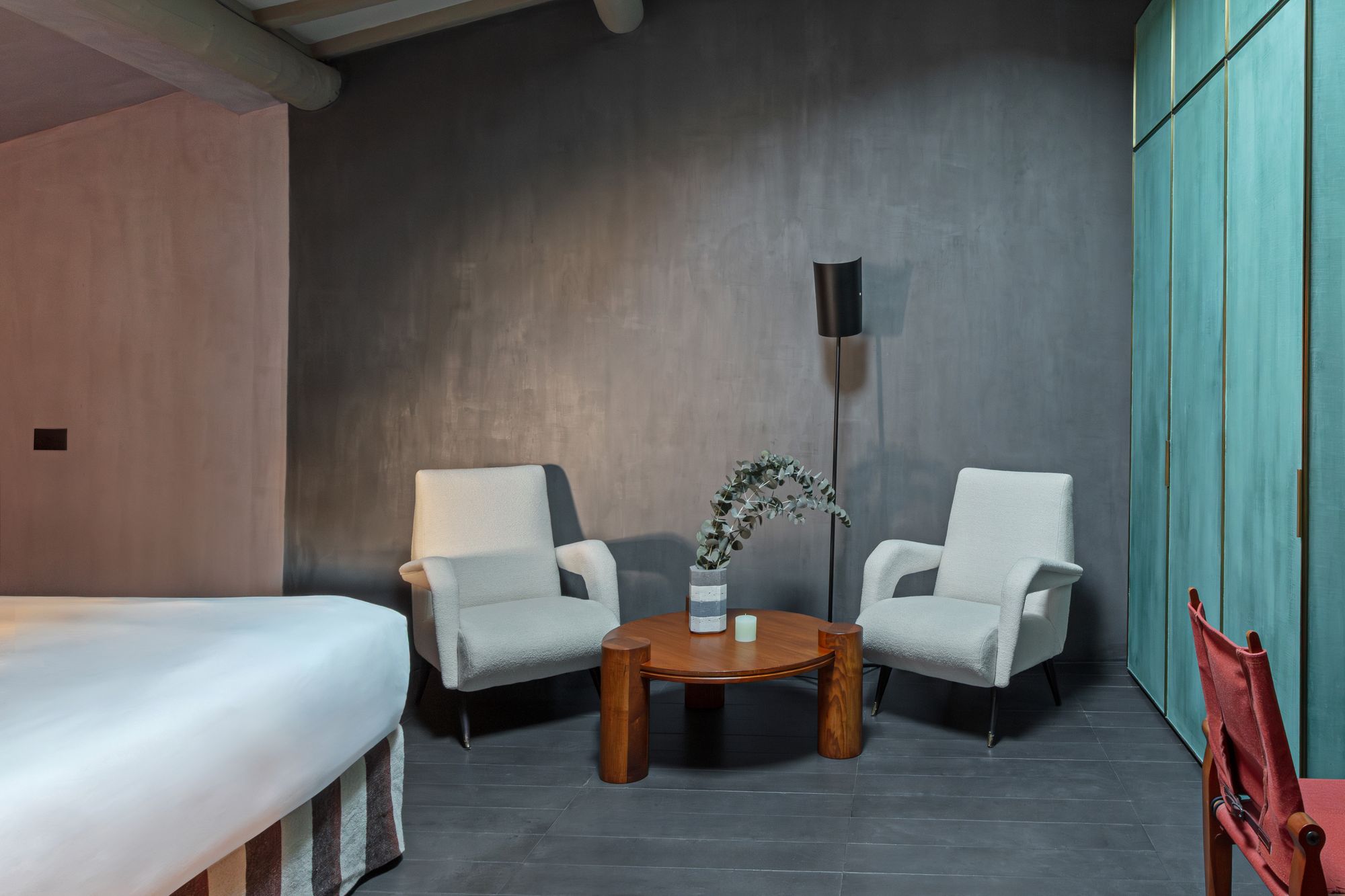

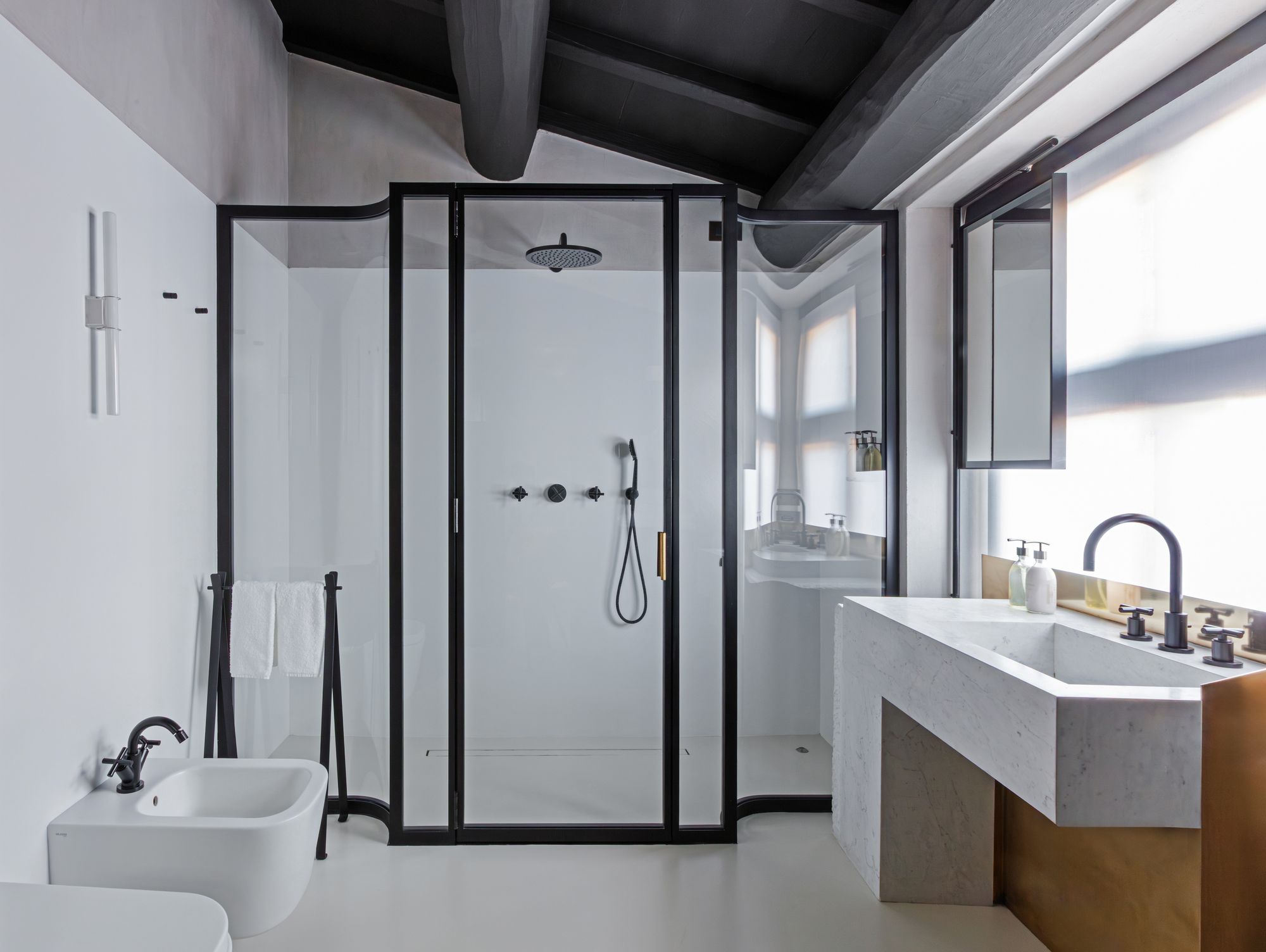
Superior Room
Burgundy and black-pepper walls, green clay furniture with brass, details taken from the Duomo and a marble-and-brass basin, looking onto the courtyard.
Superior Room

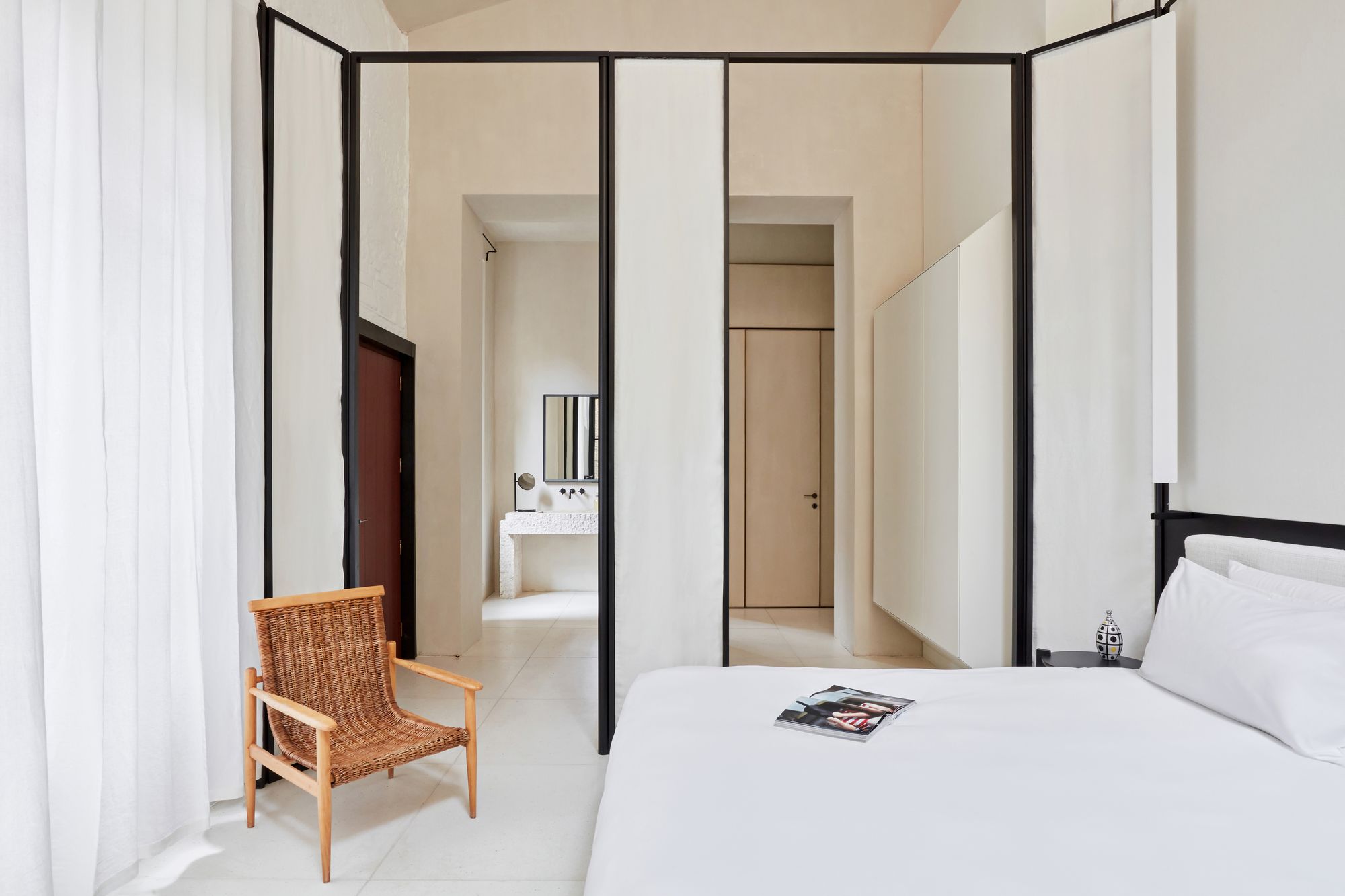

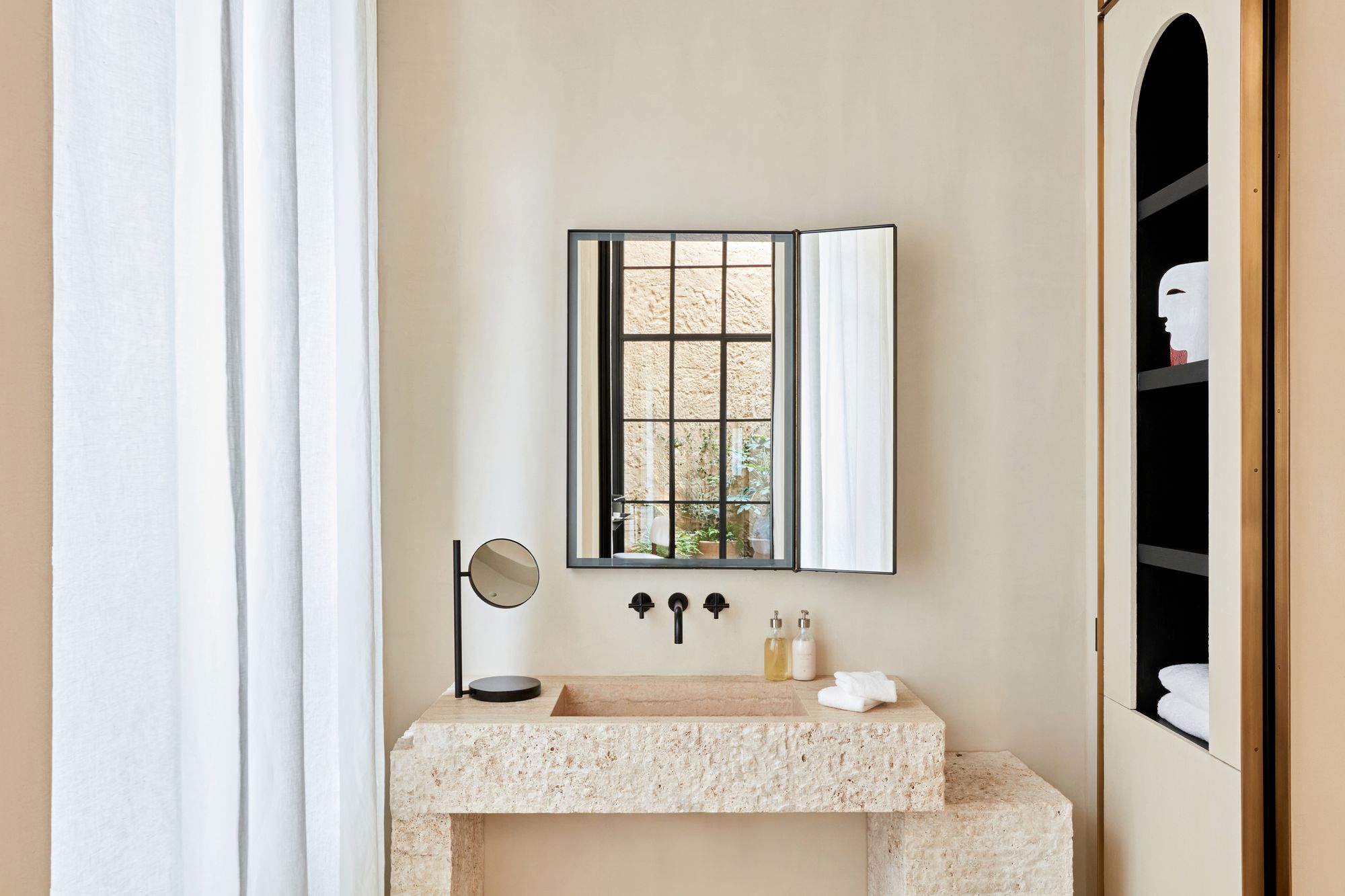
Deluxe Room
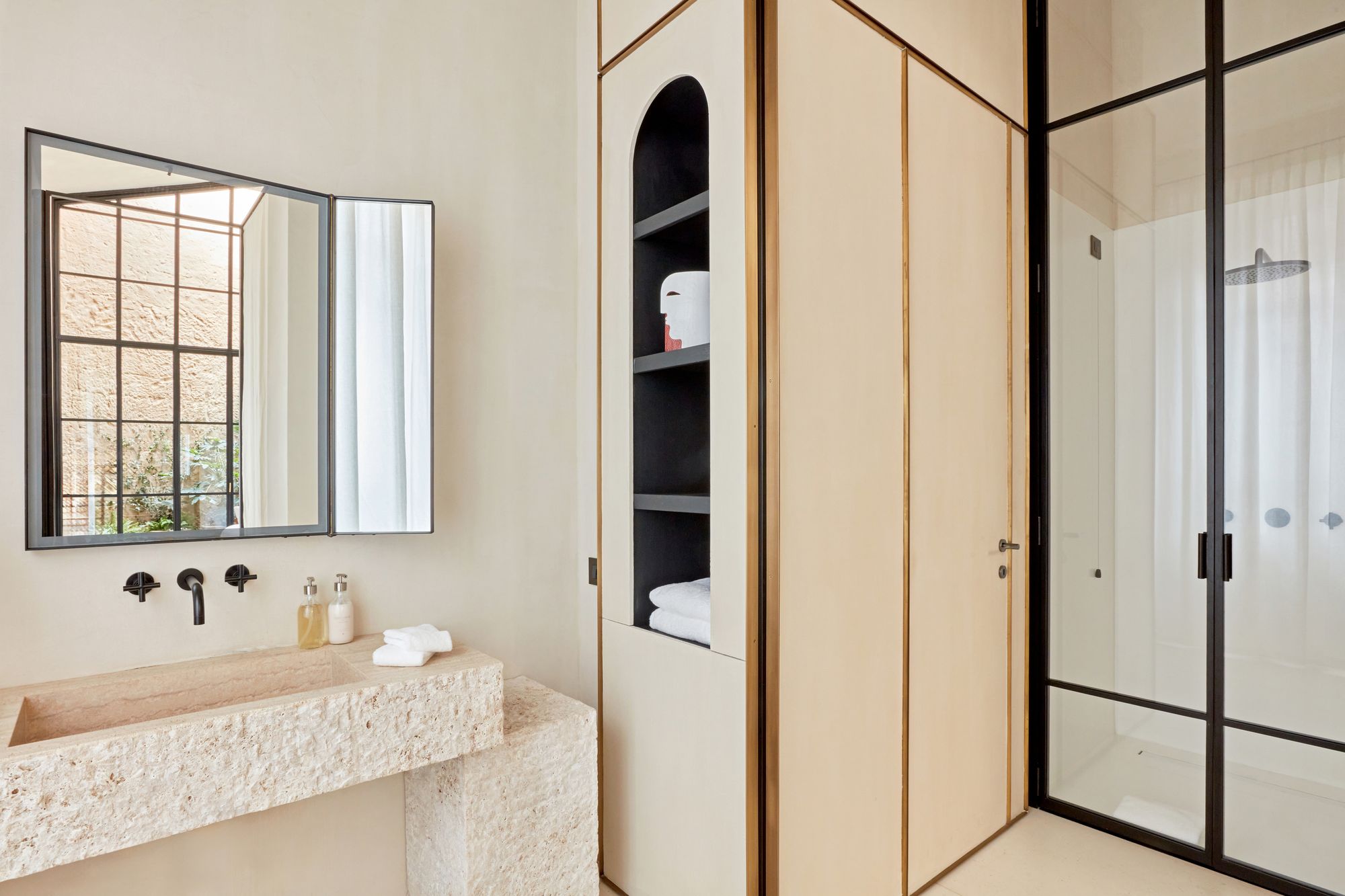
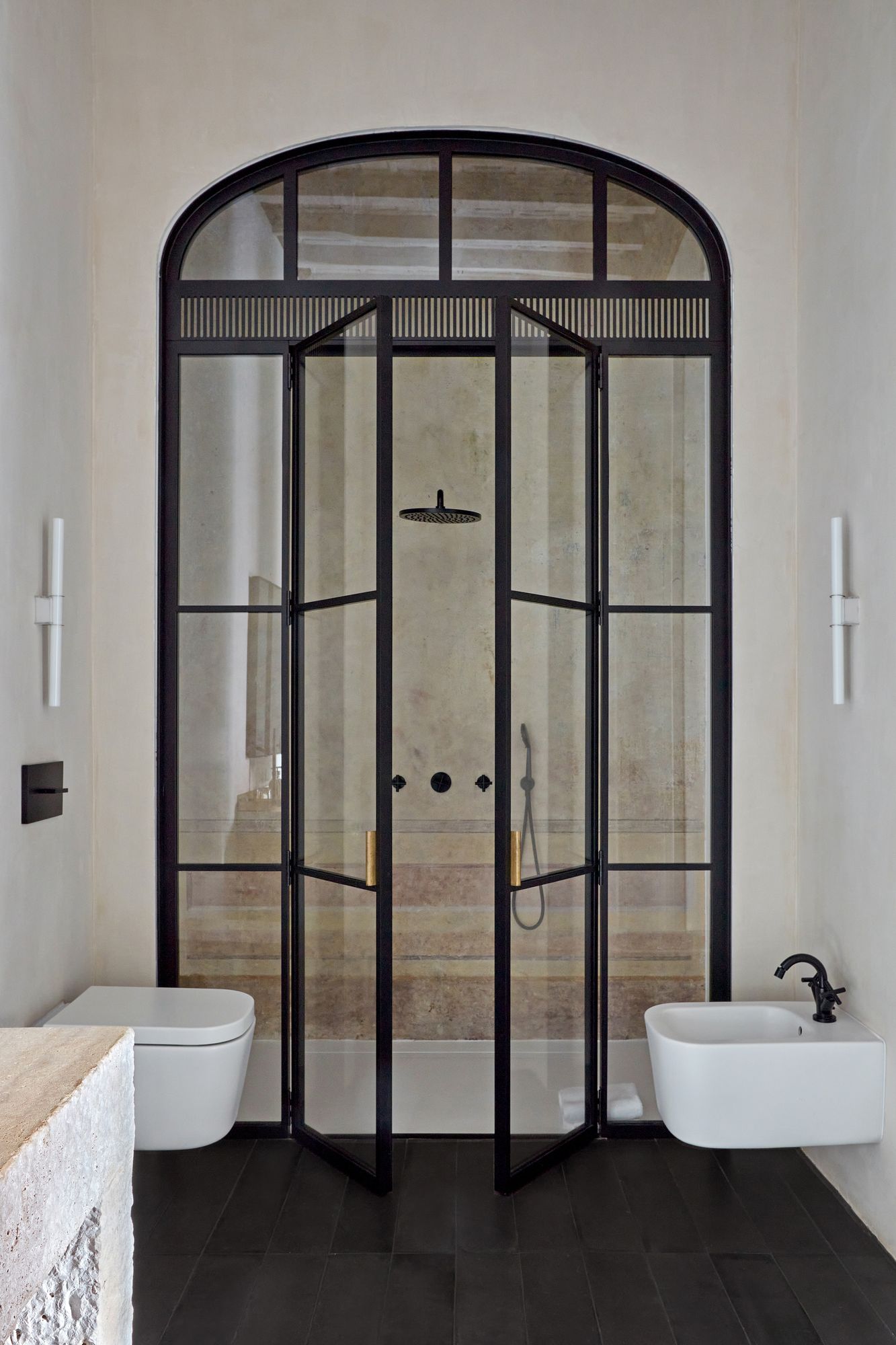
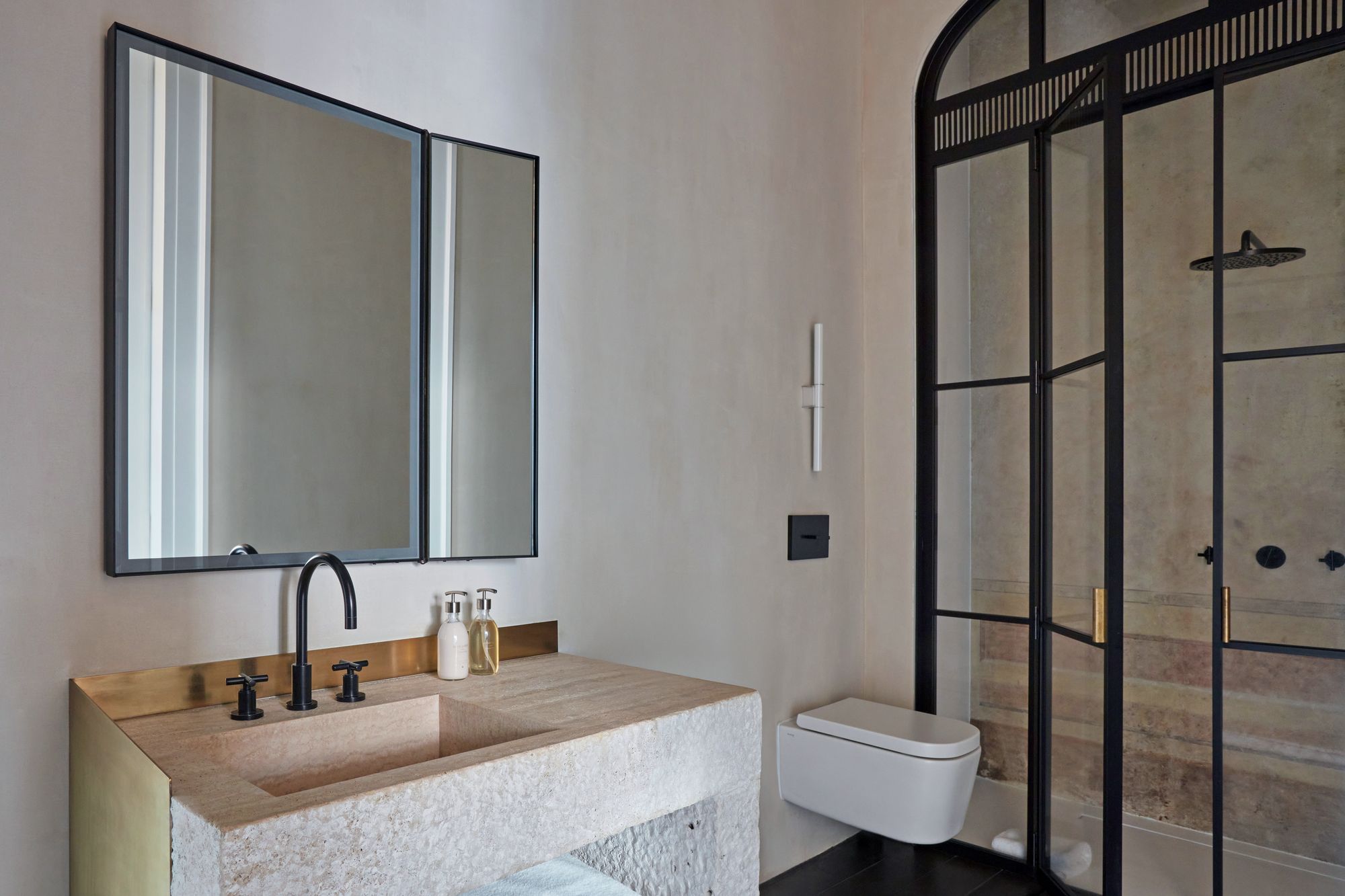
Lime-washed walls, linen and terracotta, looking onto the quiet inner courtyard and winter garden; glass shower and travertine basin.
Deluxe Room
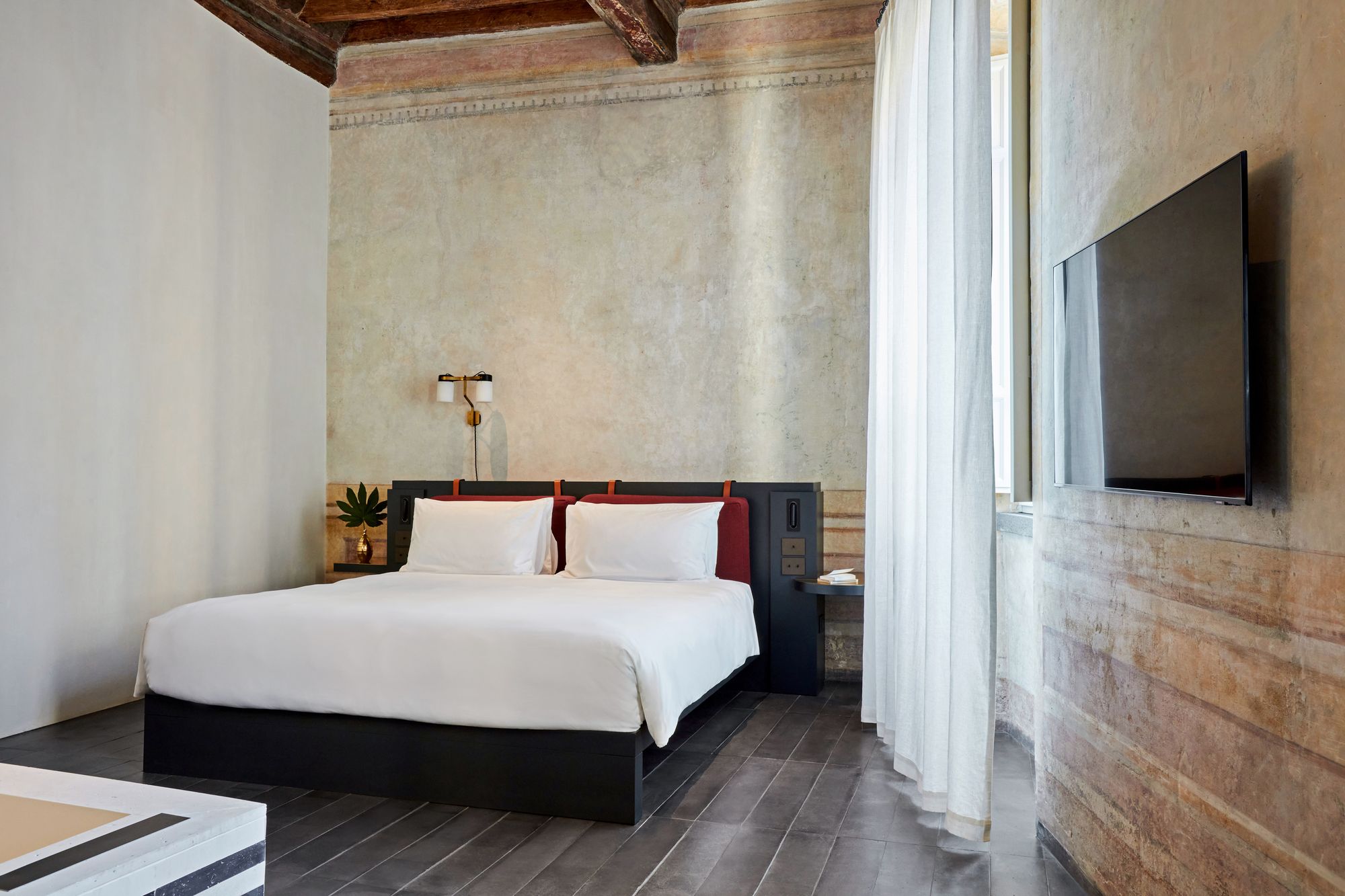

Deluxe Room
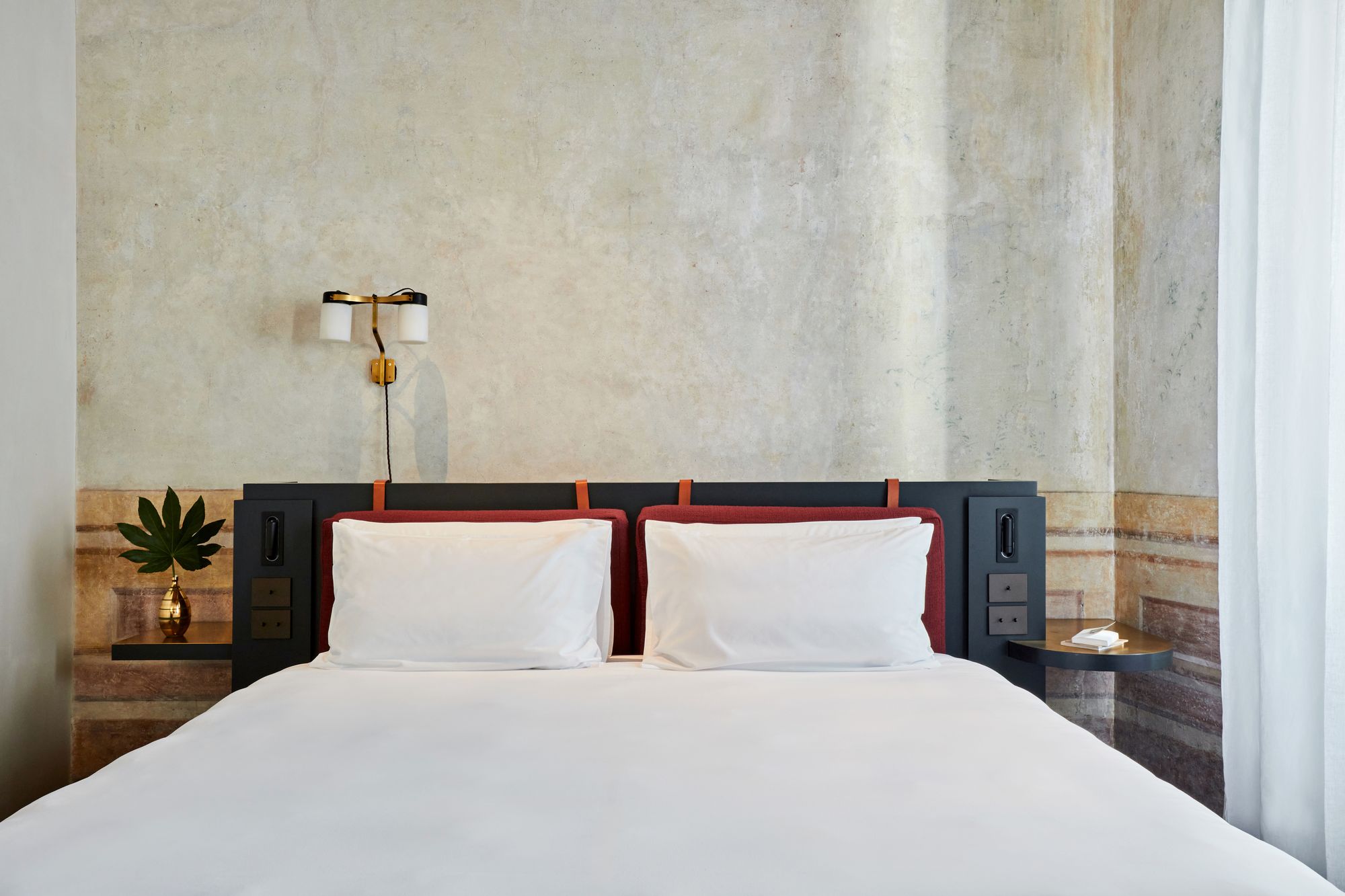
Over Via del Duomo, under a coffered ceiling painted with coats of arms and portraits, with original wall paintings.
Deluxe Room

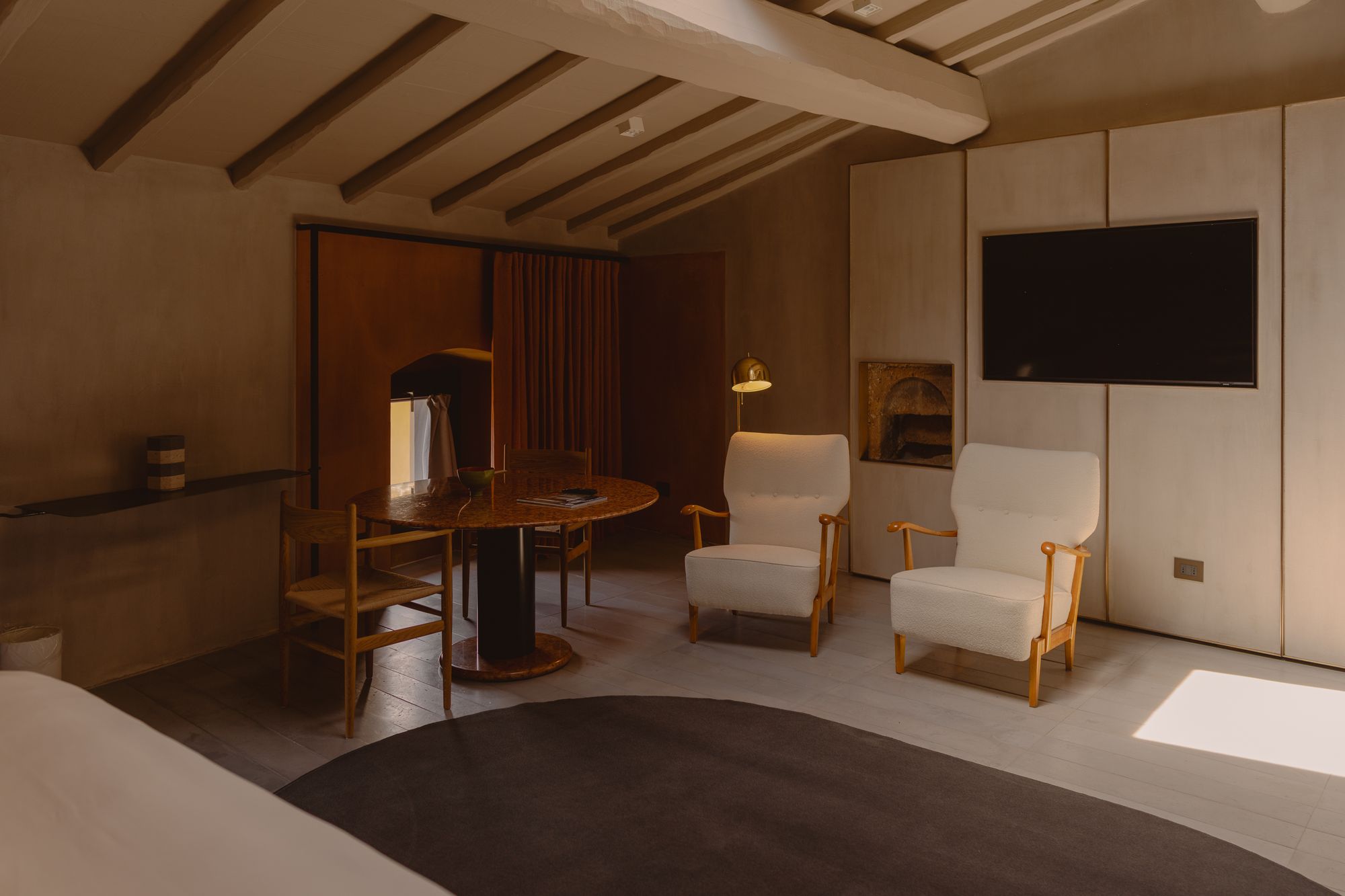
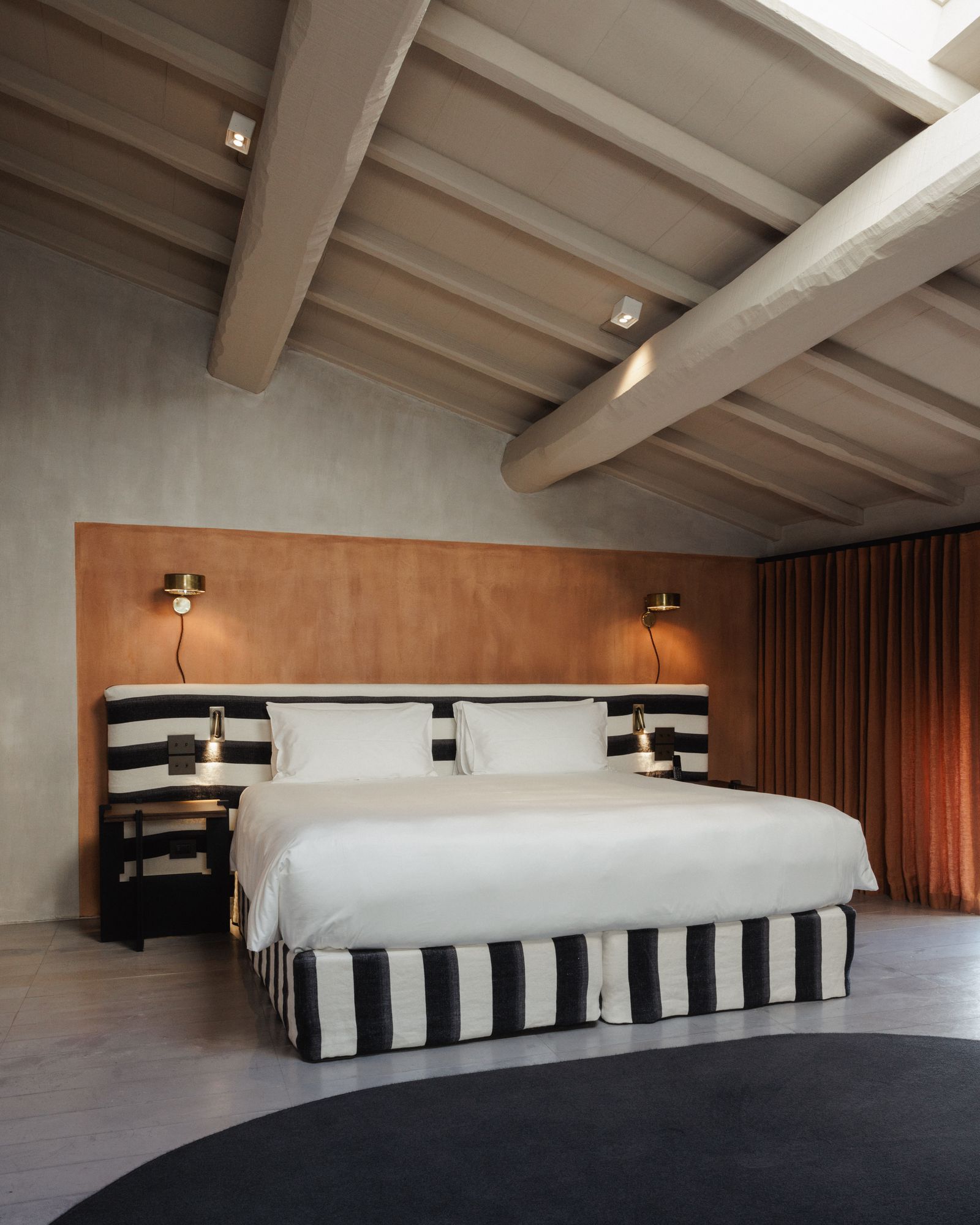
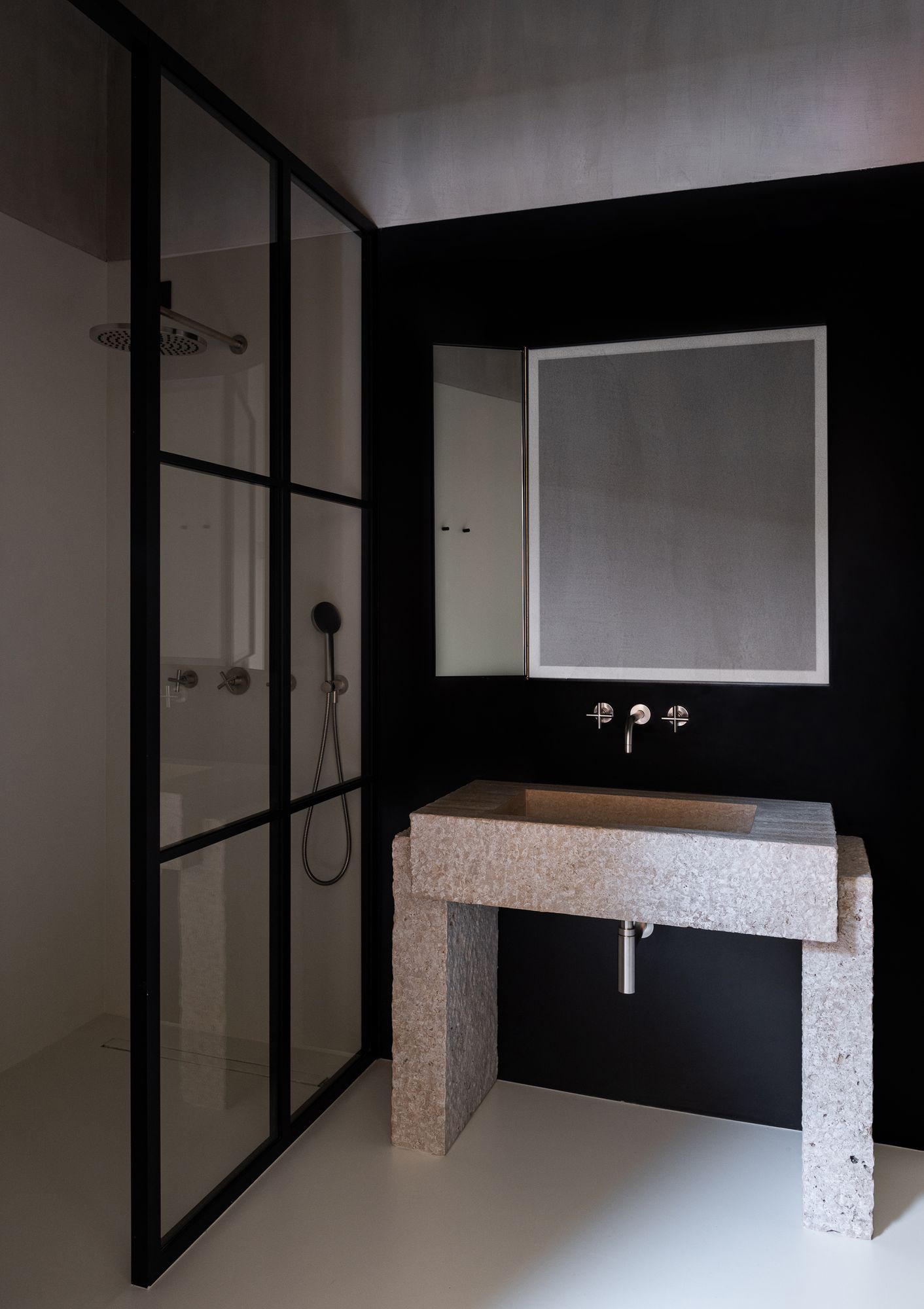

Junior Suite
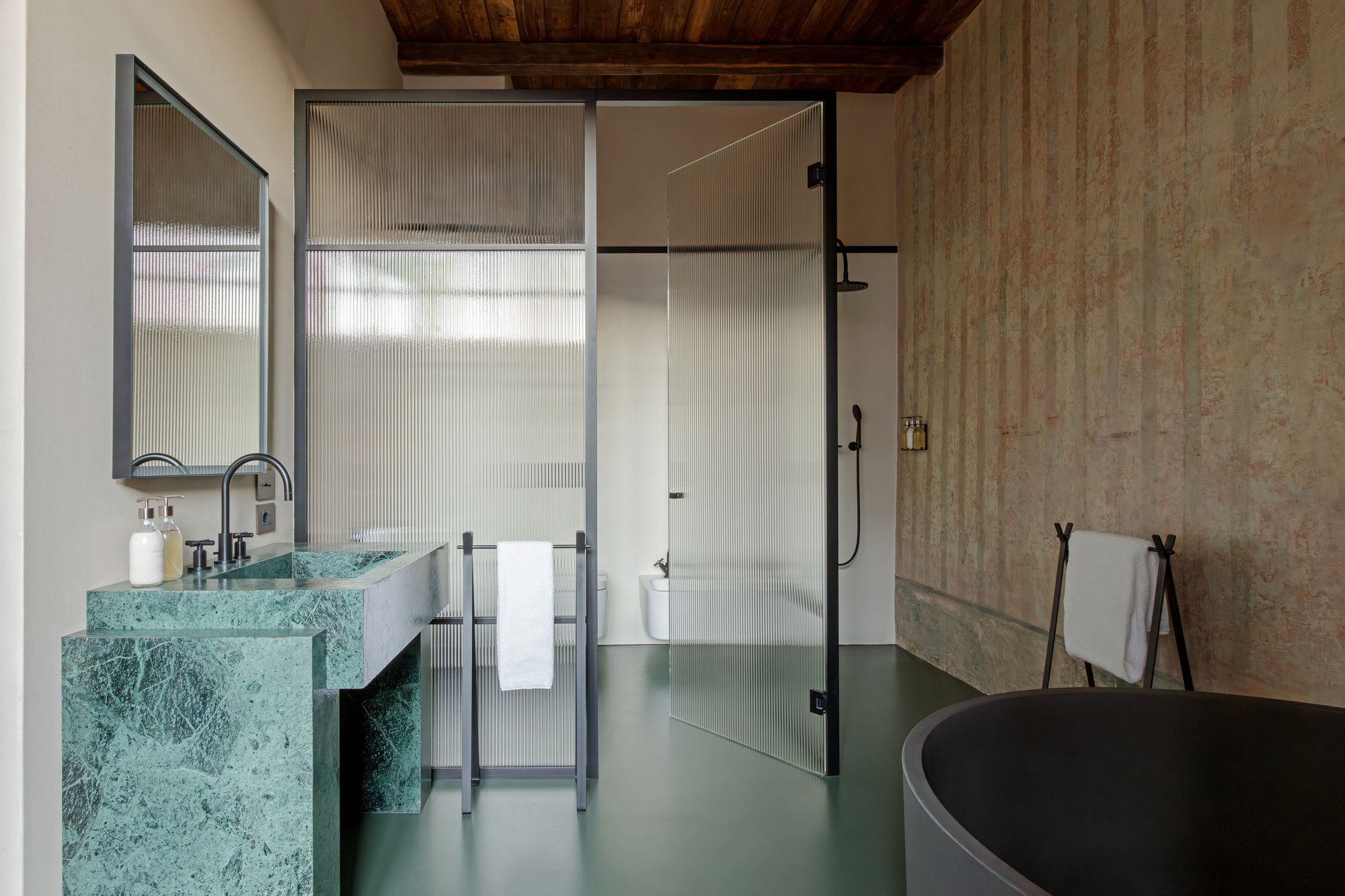
A glassed-in walk-in wardrobe, a bed with inlays taken from the Duomo and a travertine bathroom. King-size or twin beds.
Junior Suite
Junior Suite
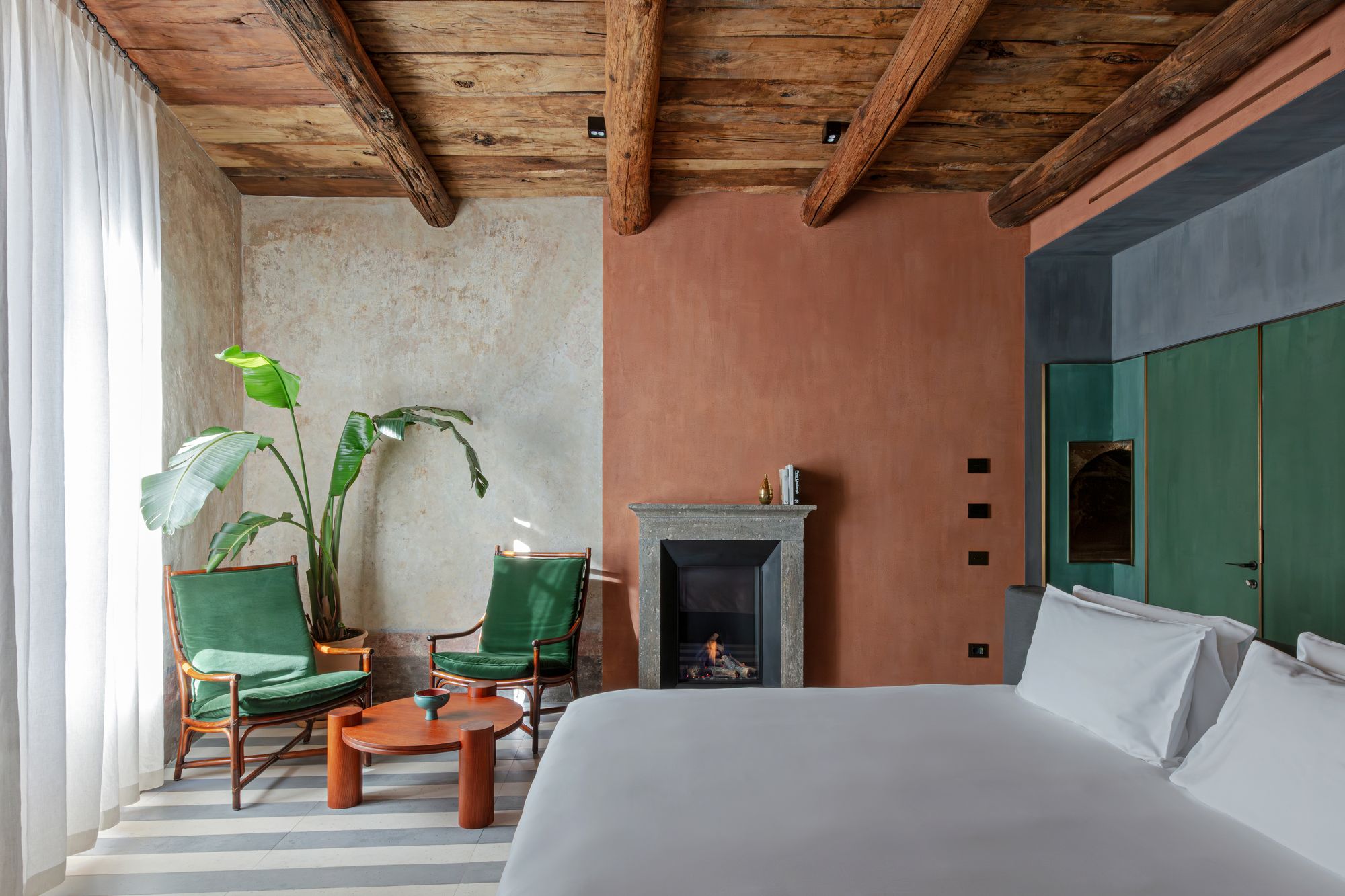
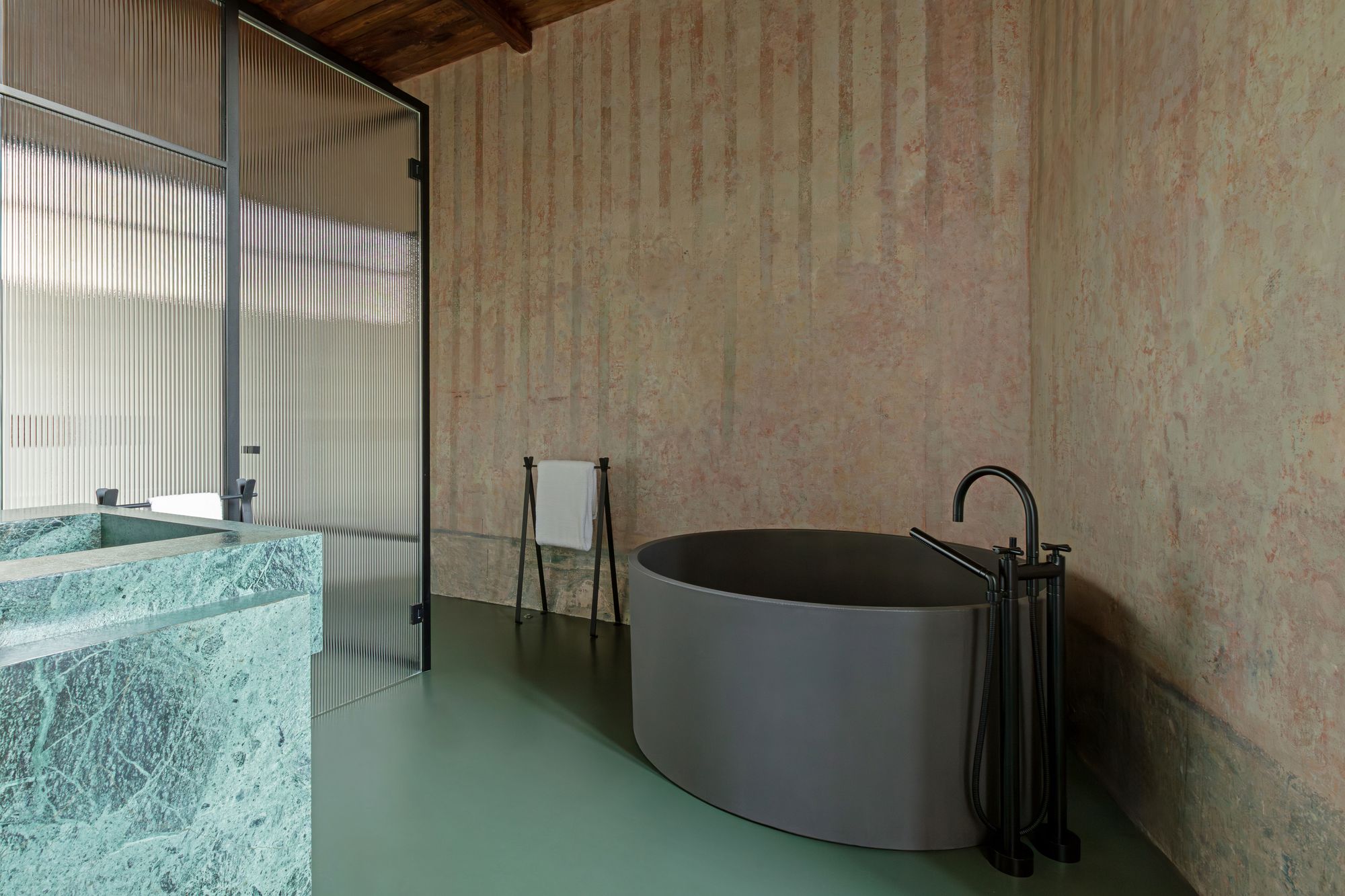
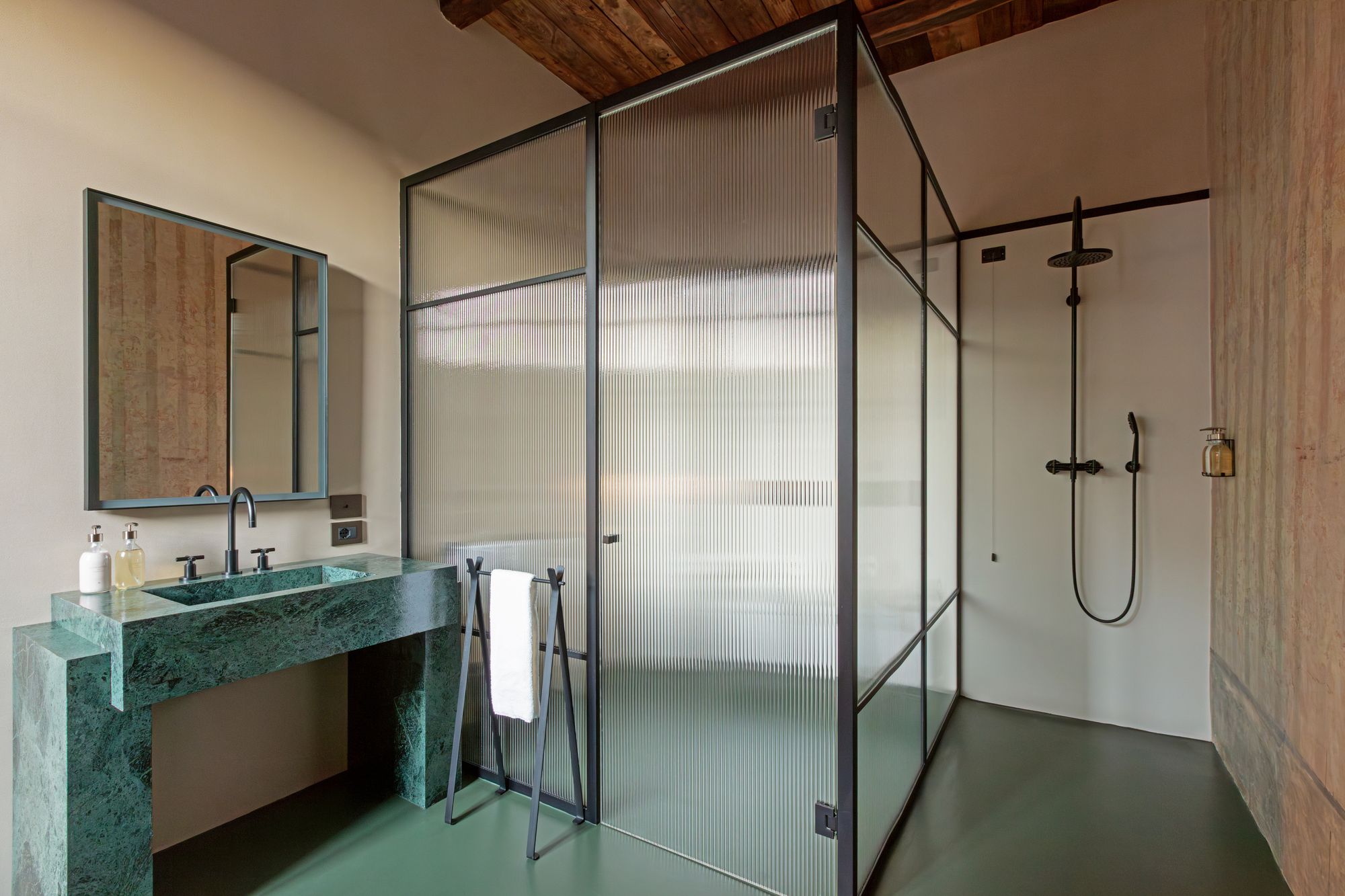
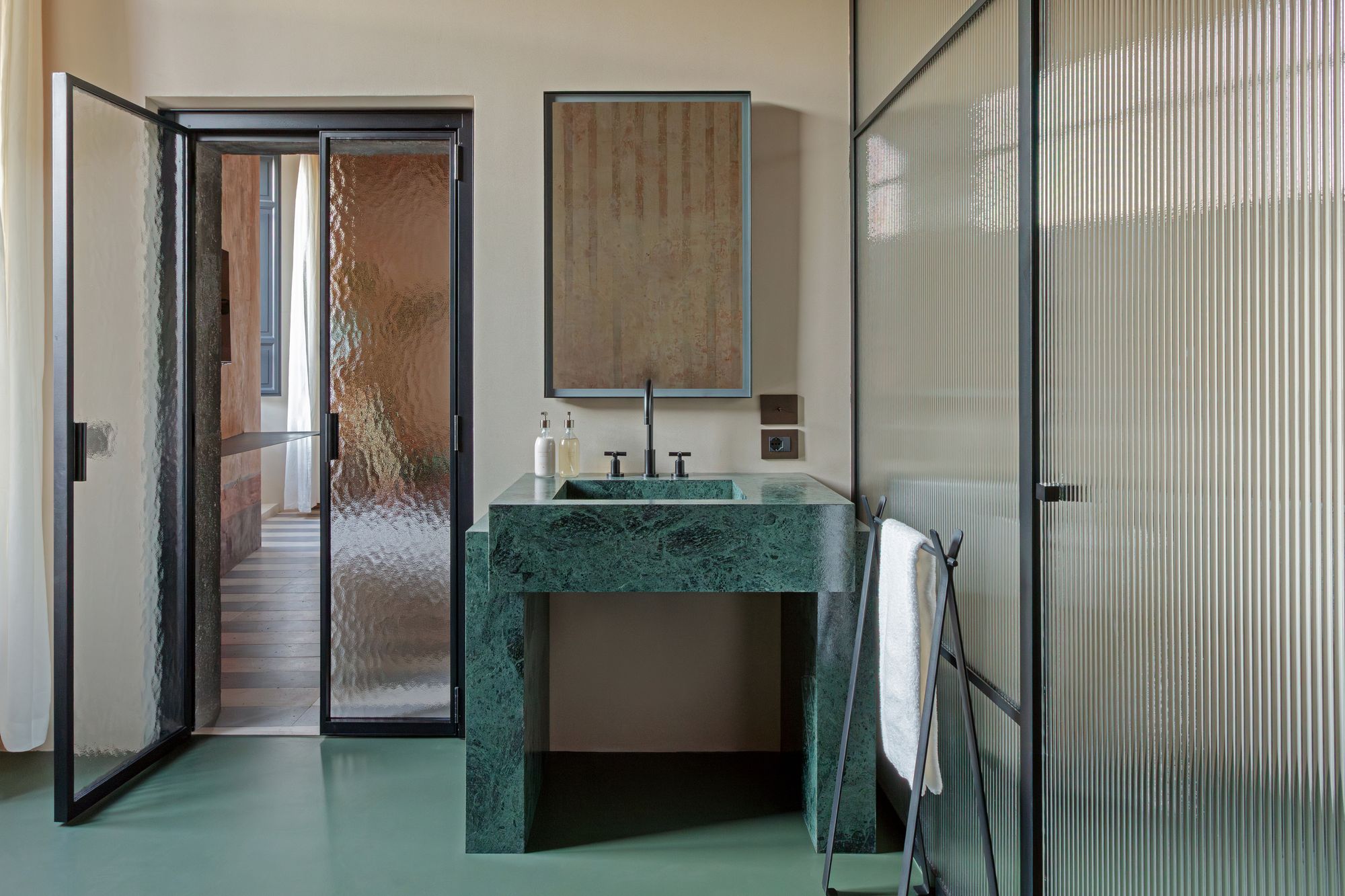
A brass floor that turns into terracotta, a beamed ceiling, a fireplace, period paintings and a round bathtub.
Junior Suite


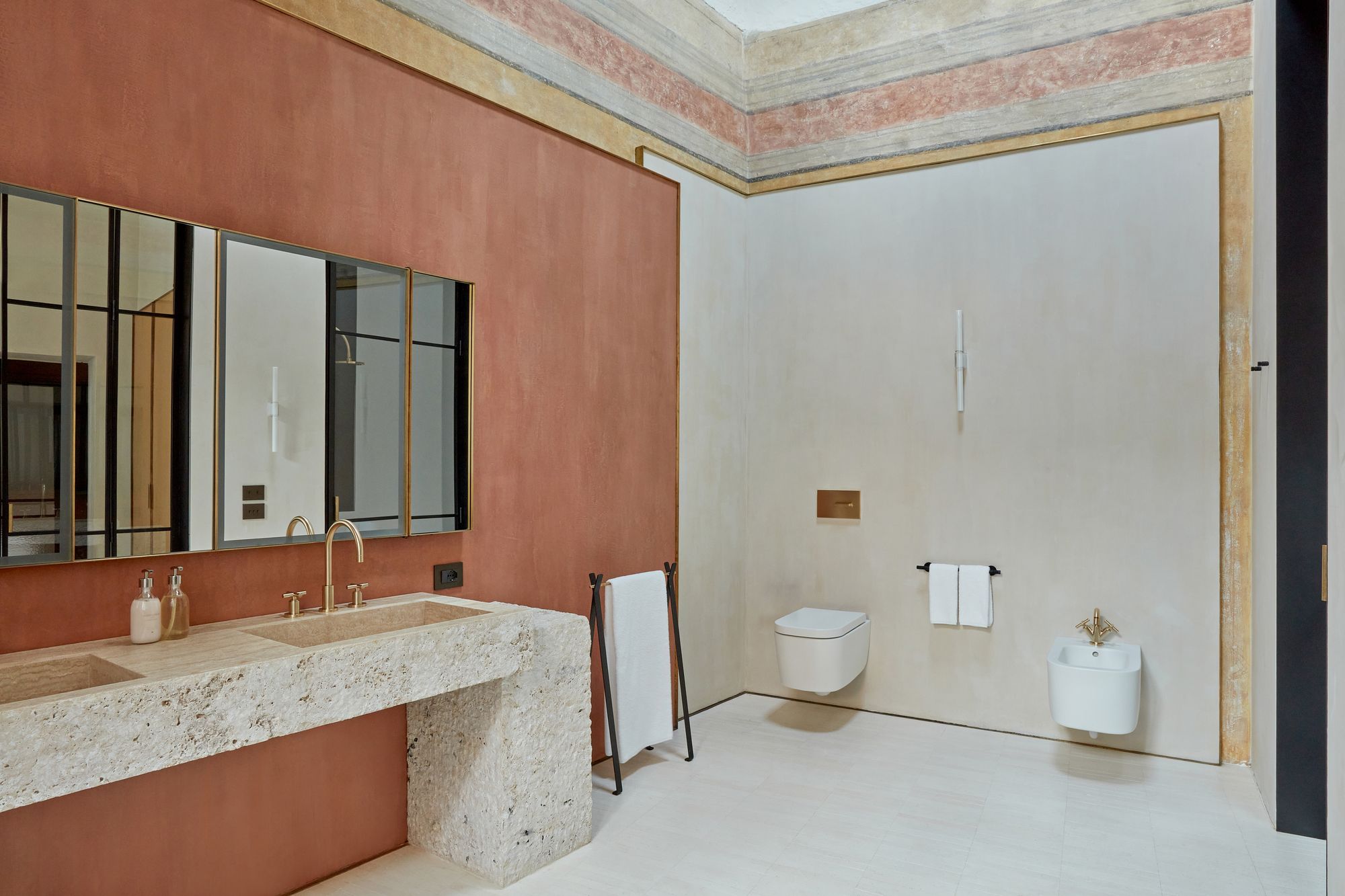
Junior Suite
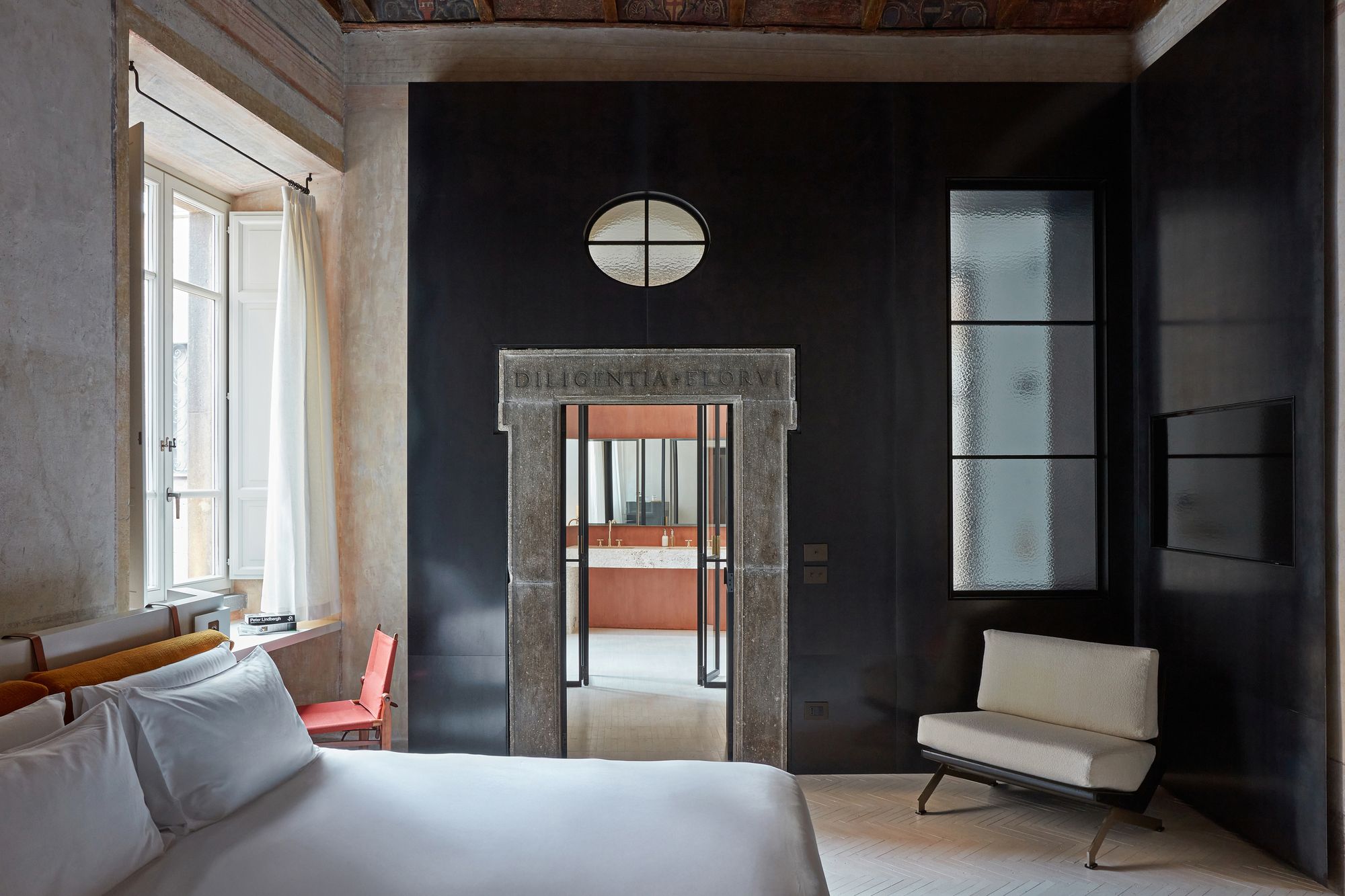
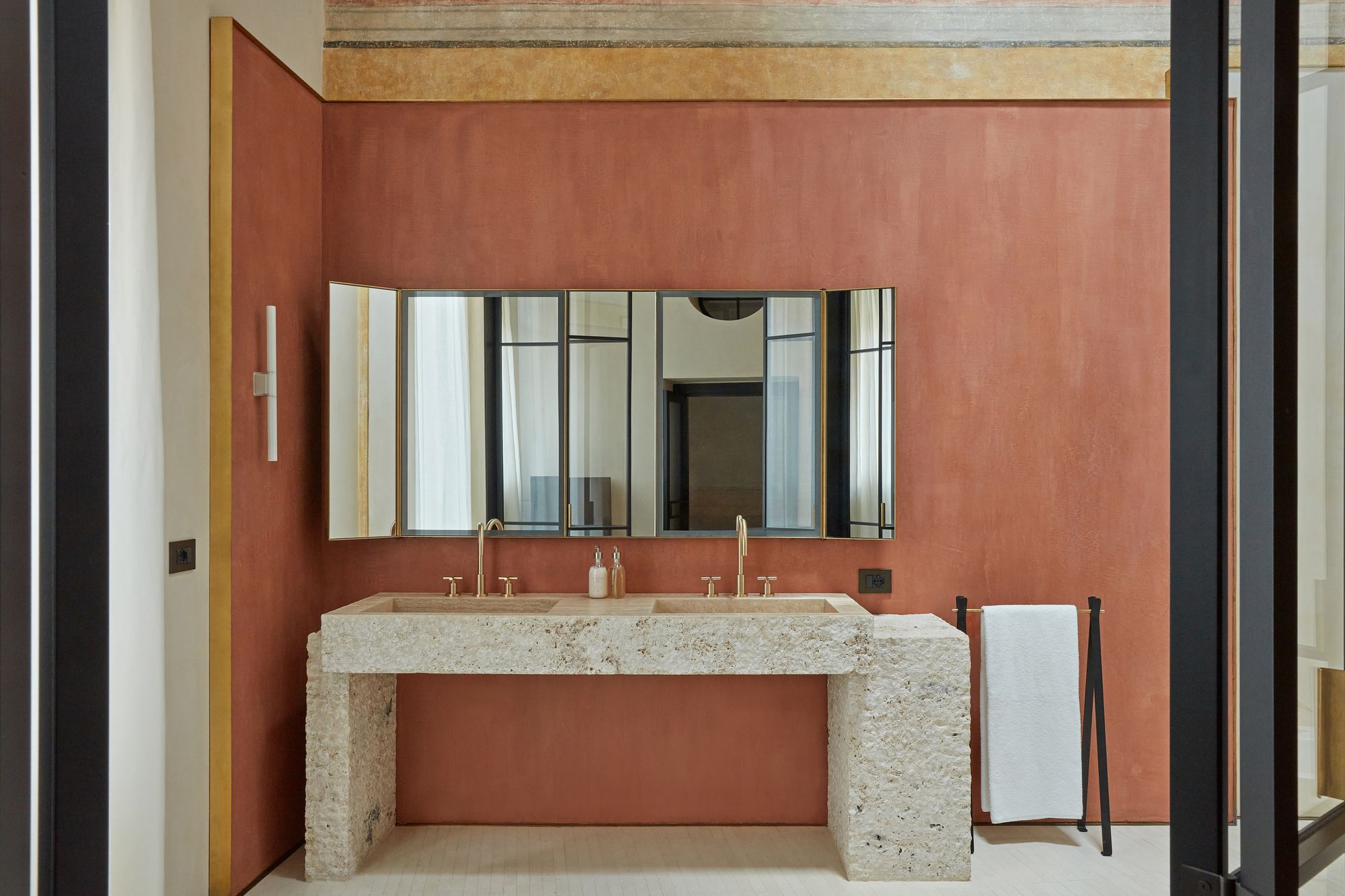
Old frescoes, coffered ceilings with noble crests and a fireplace, over the courtyard; the bathroom lies behind a stone door carved with ancient inscriptions.
Junior Suite

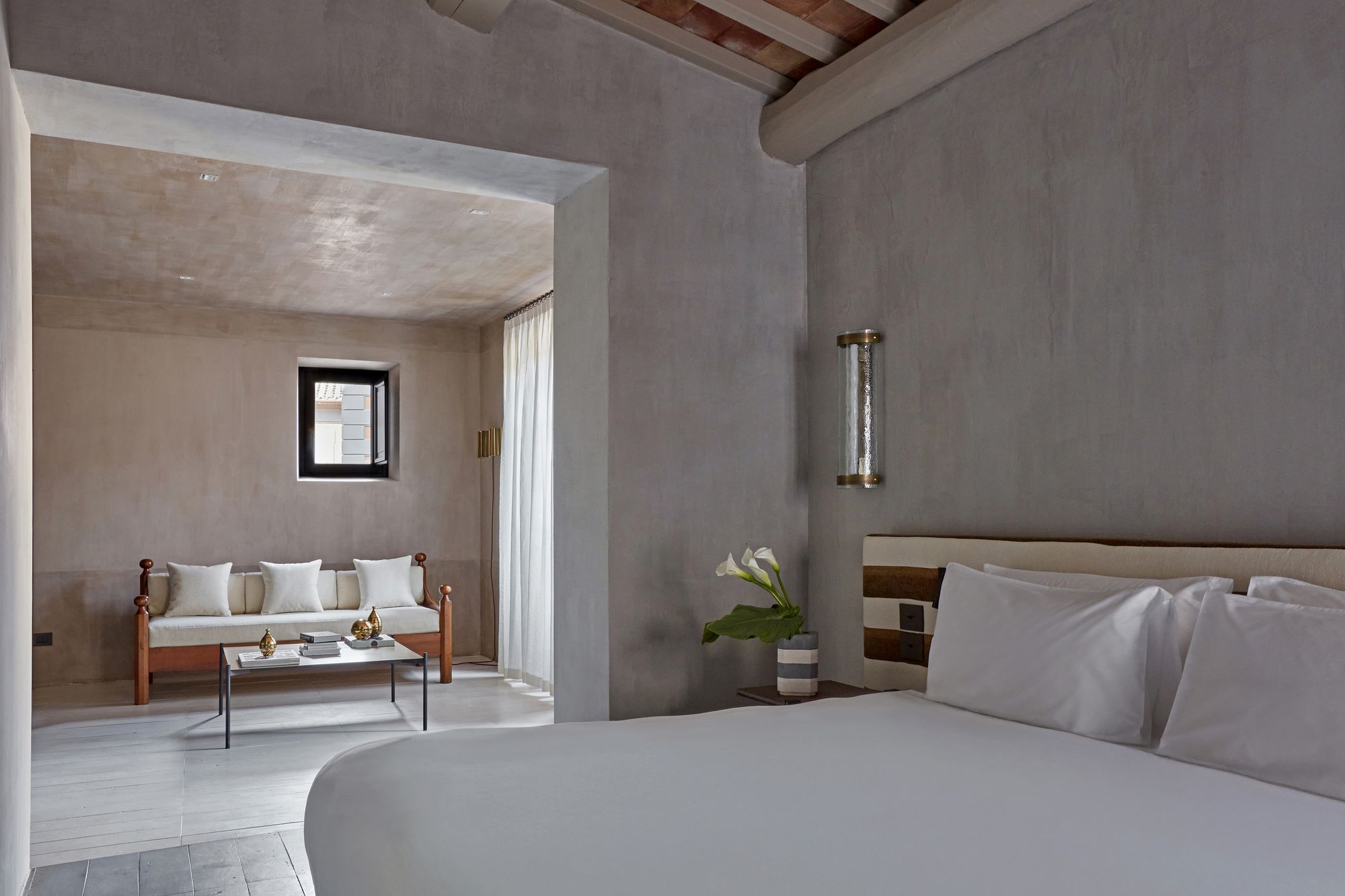


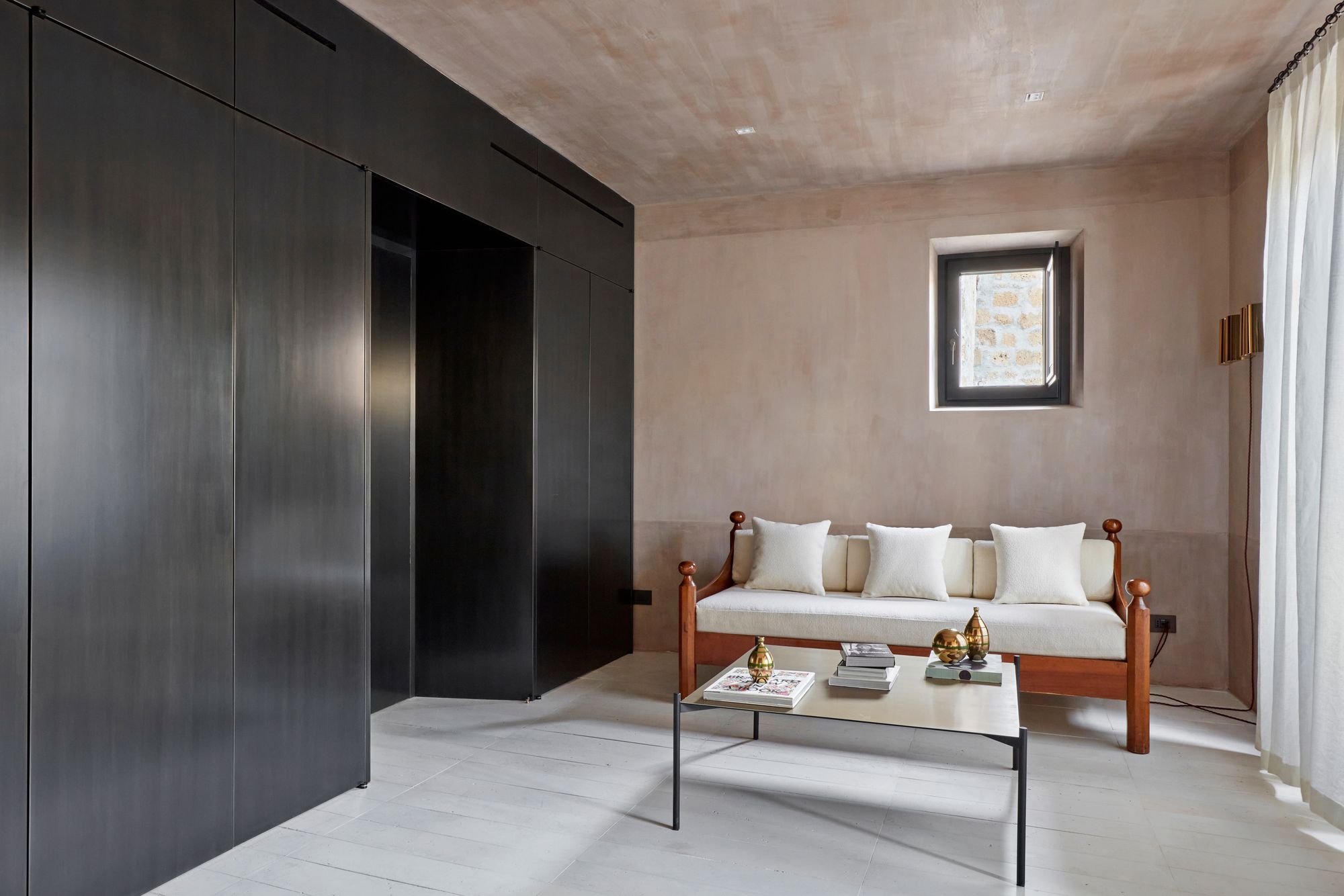
Suite
A suite with a separate living room and a veranda with a writing desk over the courtyard, under a wooden ceiling, with a marble basin.
Suite

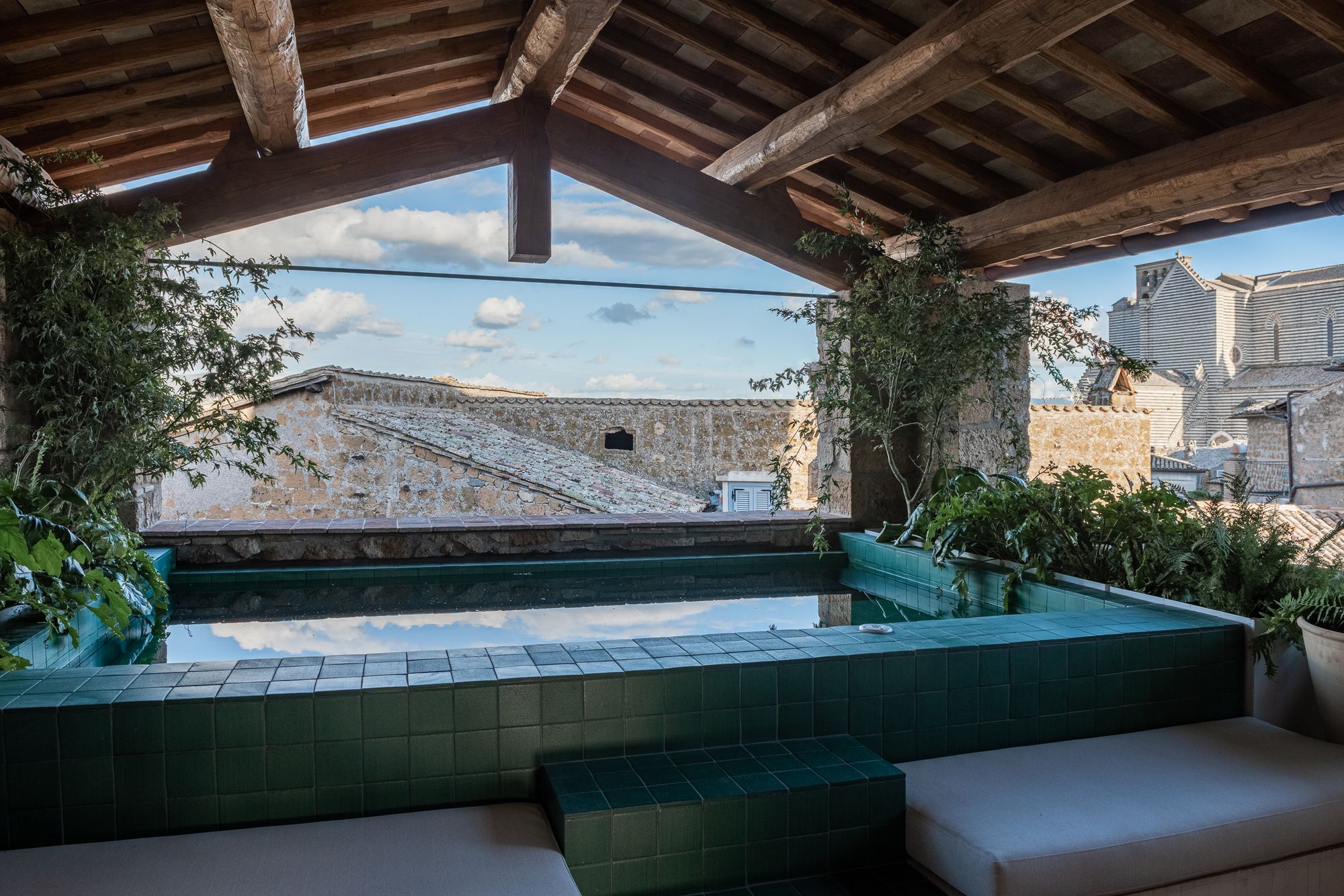


Penthouse Suite
In the palazzo's tower: tufa walls, a fireplace, a glass partition and a private terrace with a jacuzzi looking over the rooftops to the Duomo.
Penthouse Suite

Why book with us

Best Price Guarantee

Full Access to Content Library

Personalized Itinerary

A Gift with Every Booking

24/7 Support
Amenities
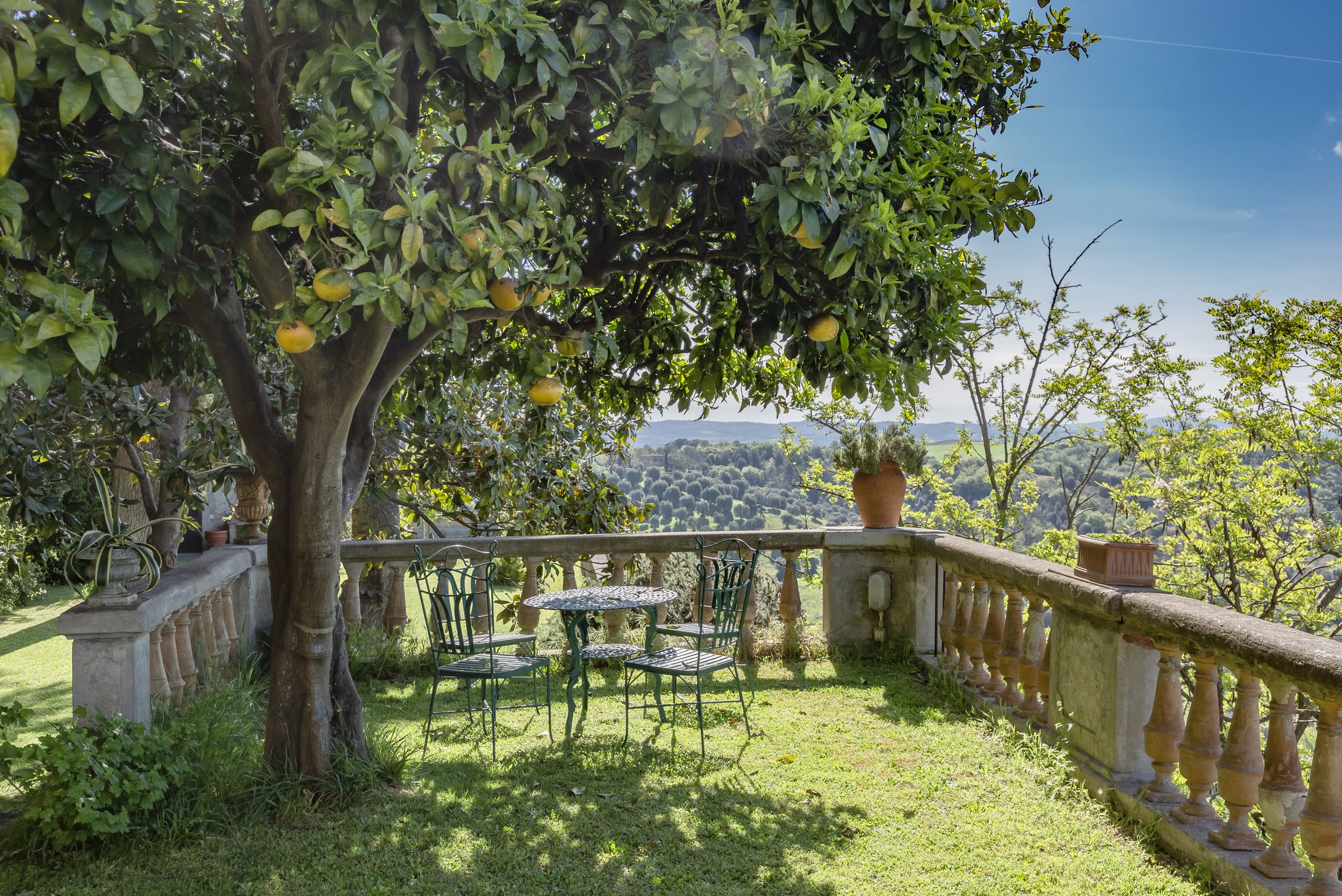
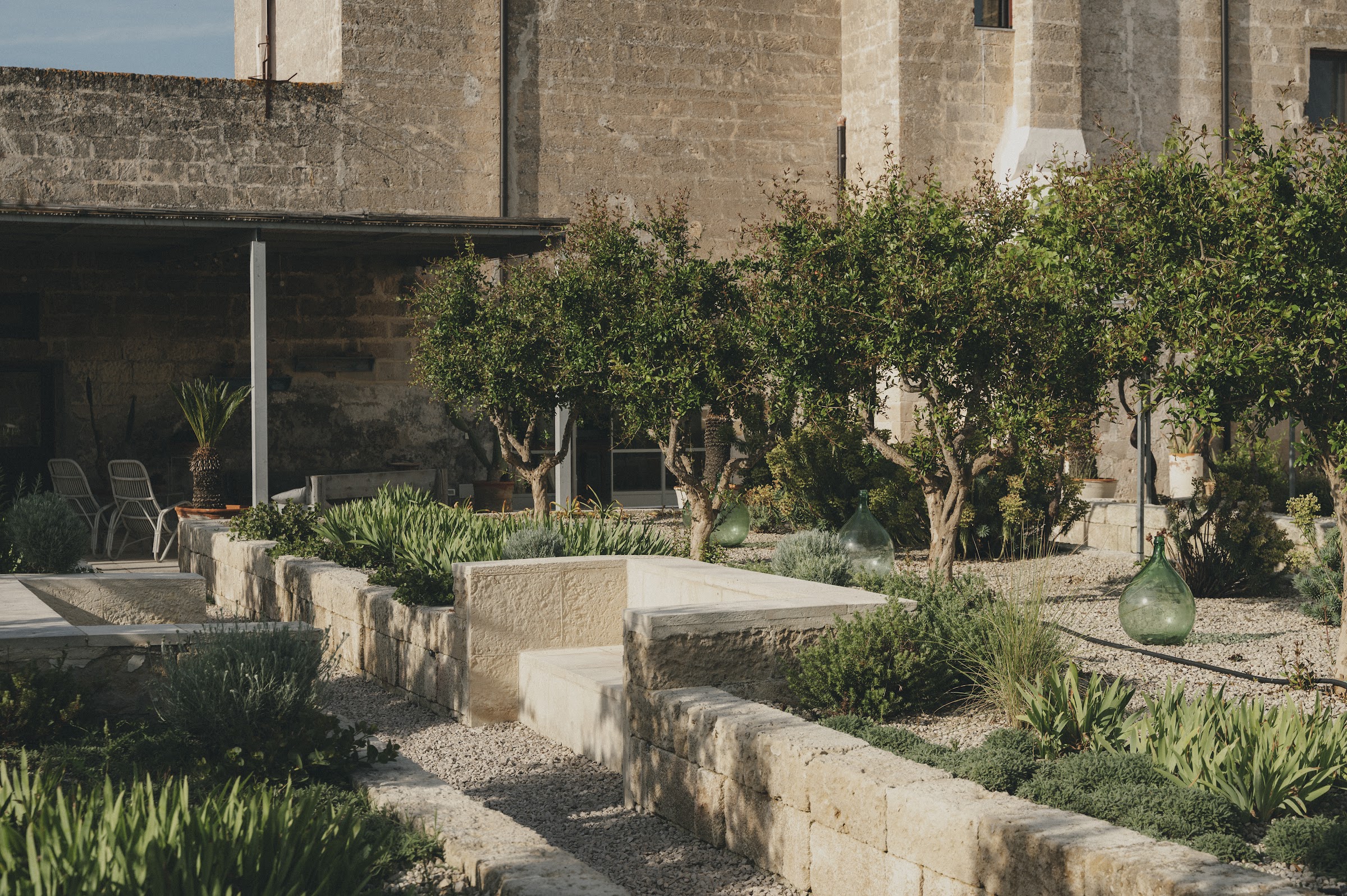
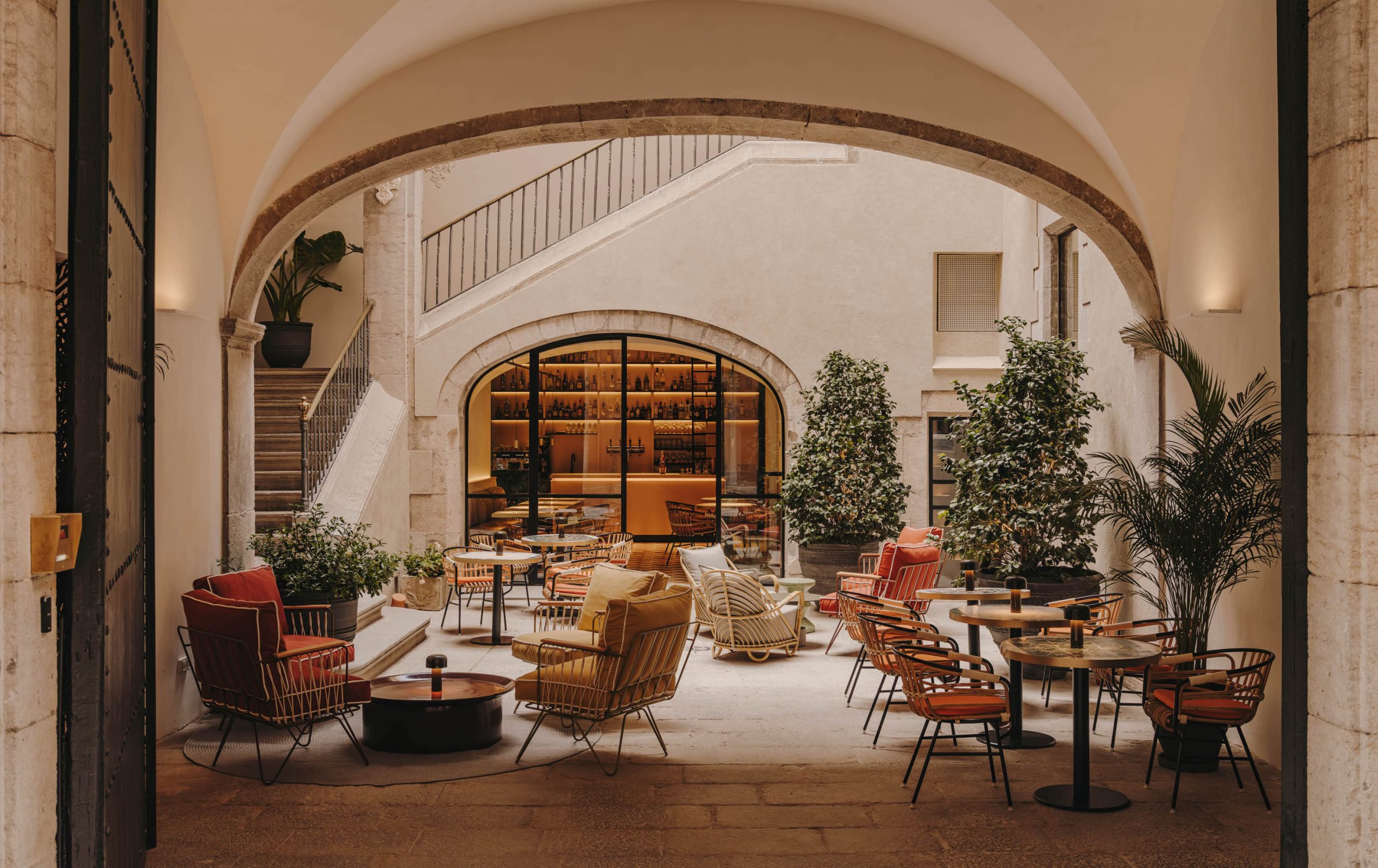
A courtyard with a winter garden and the Gocce bar, a tasting-menu restaurant in a former church next door, yoga on request, and a private jacuzzi on the penthouse terrace.
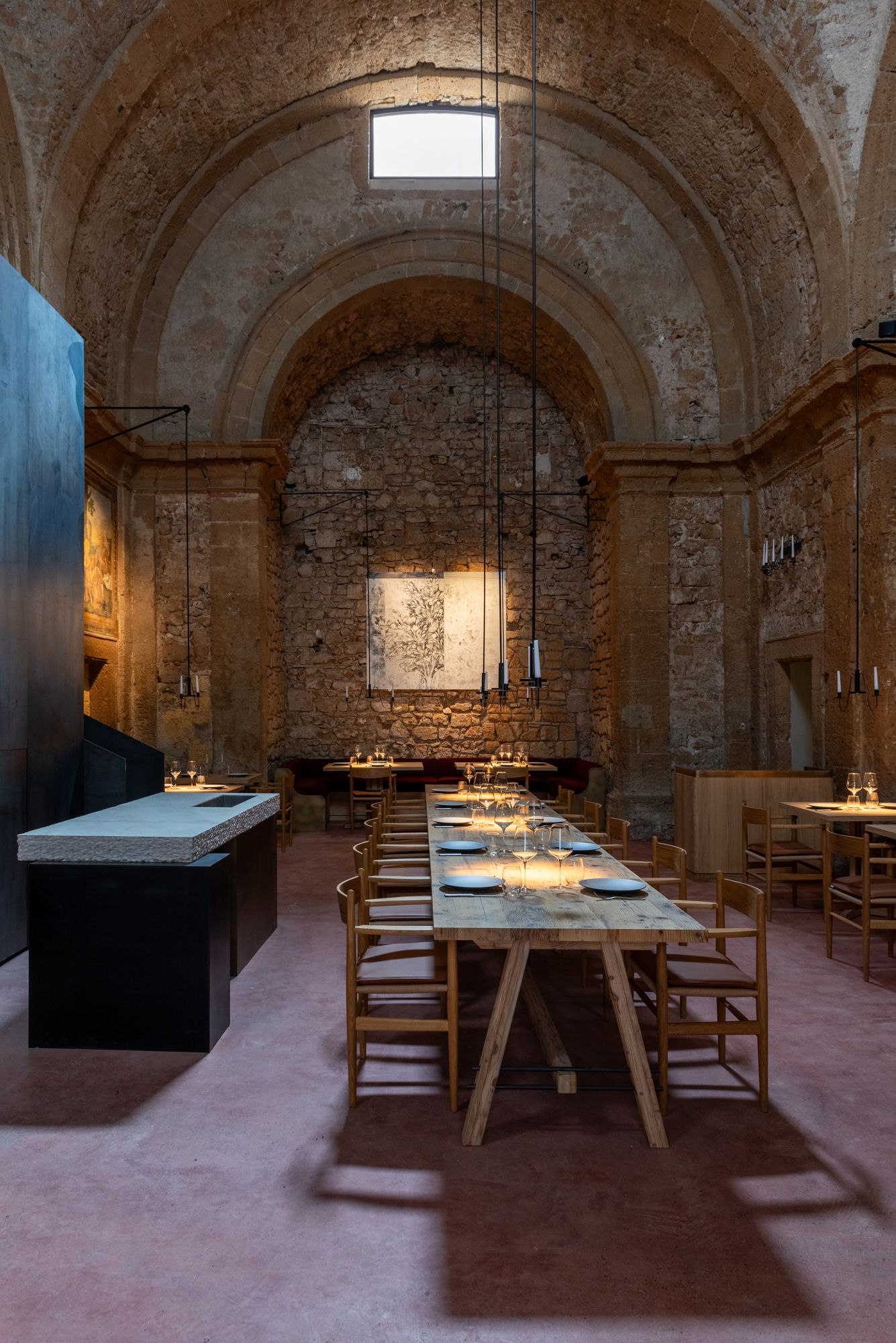
Coro
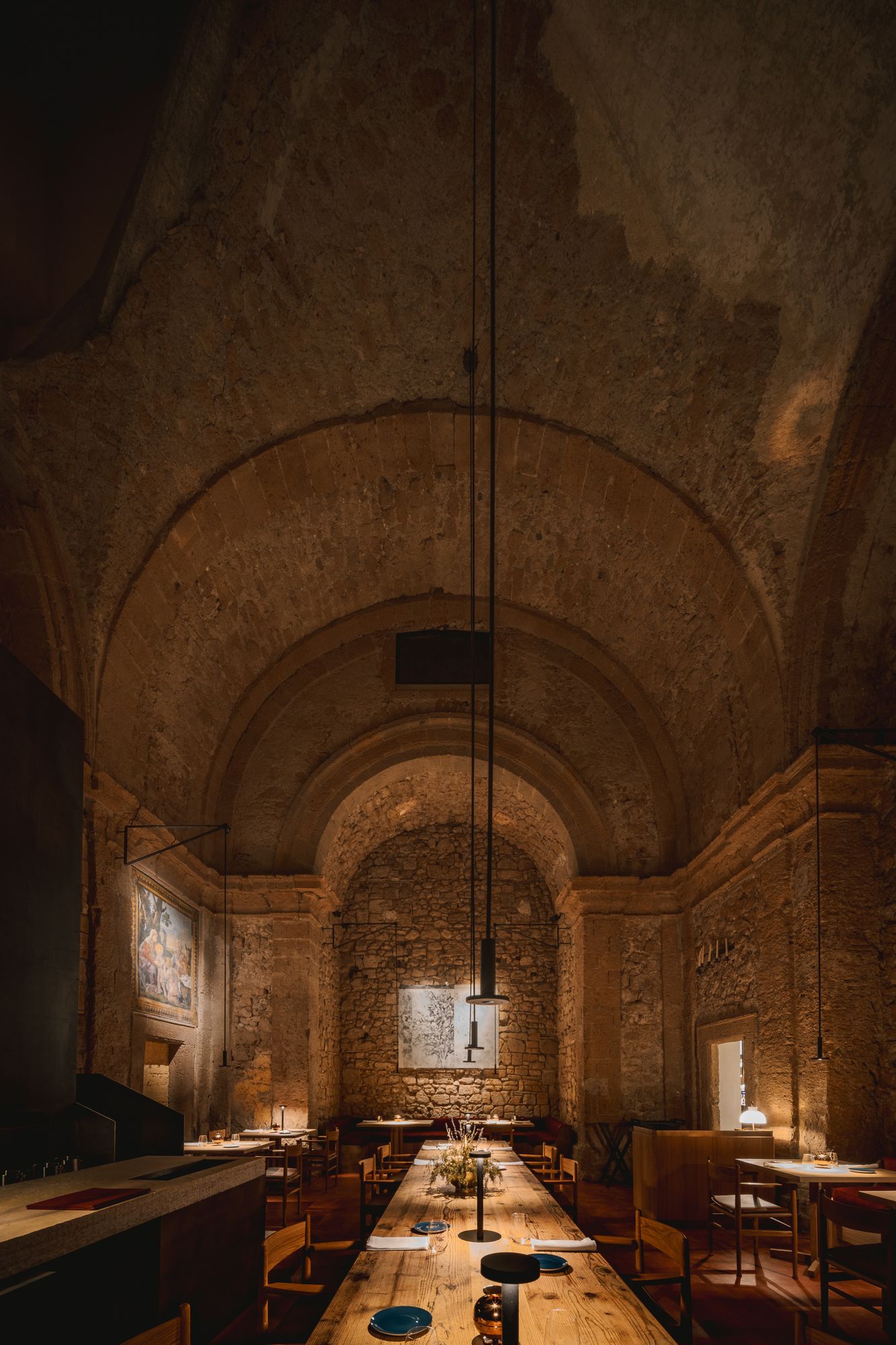
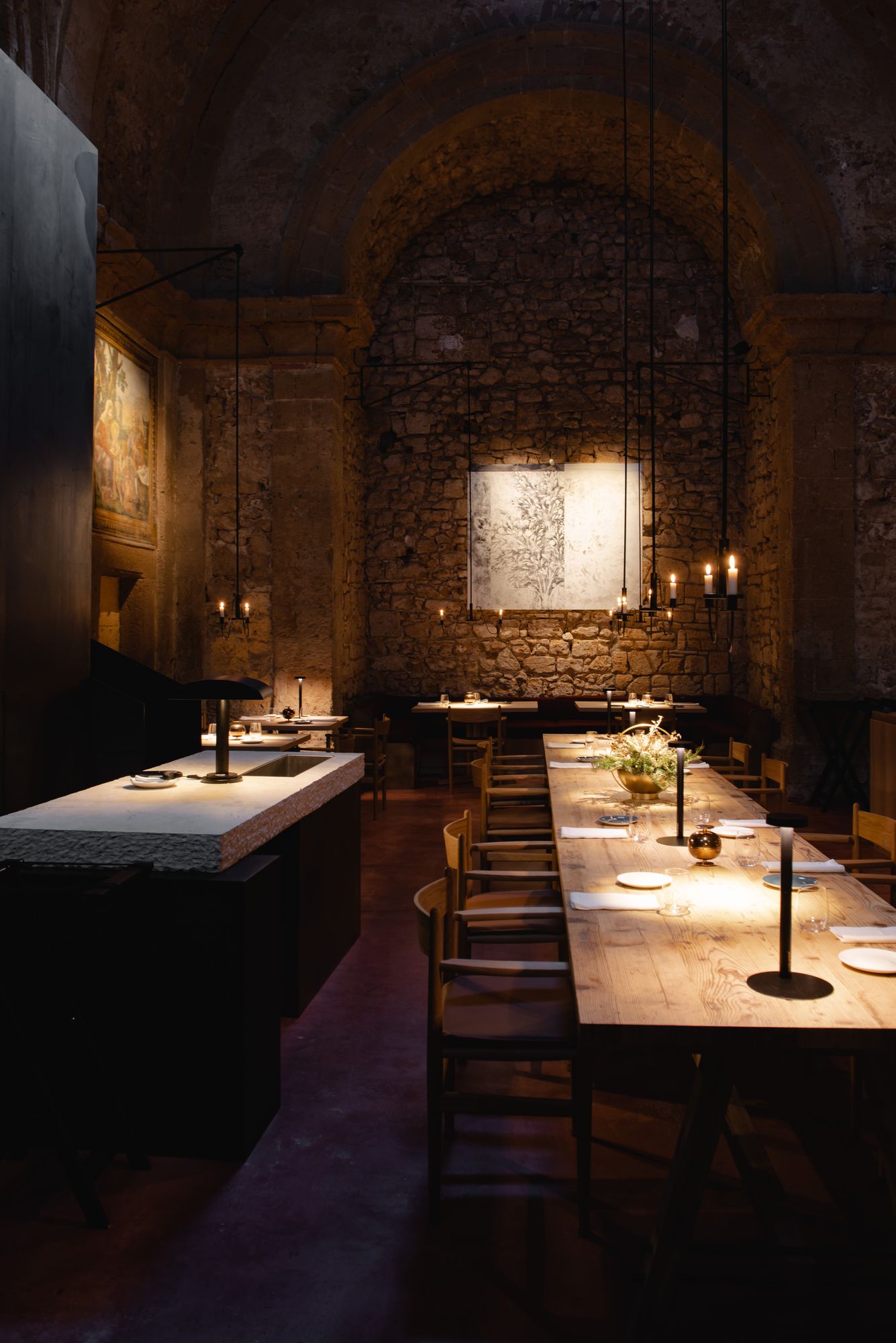
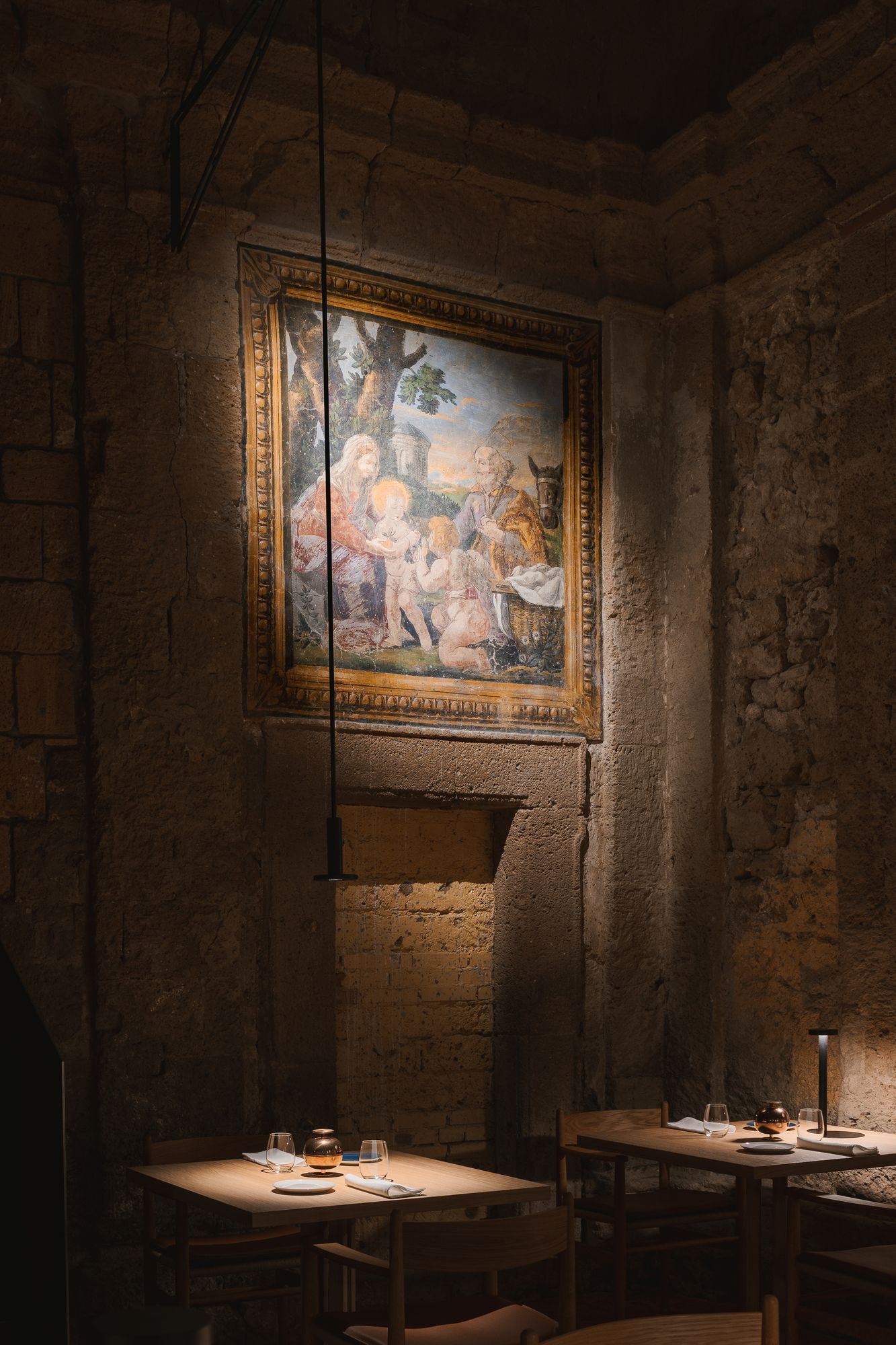
Next door to the palazzo, in a deconsecrated sixteenth-century church, Ronald Bukri cooks Umbrian produce as a ten-course tasting menu. Long tables run beneath the vaults, lit by candles, with art by Michele Guido on the old stone walls.
ORVIETO | OCTOBER 2026
A Grand Tour in Nine Rooms, Striped Like the Cathedral
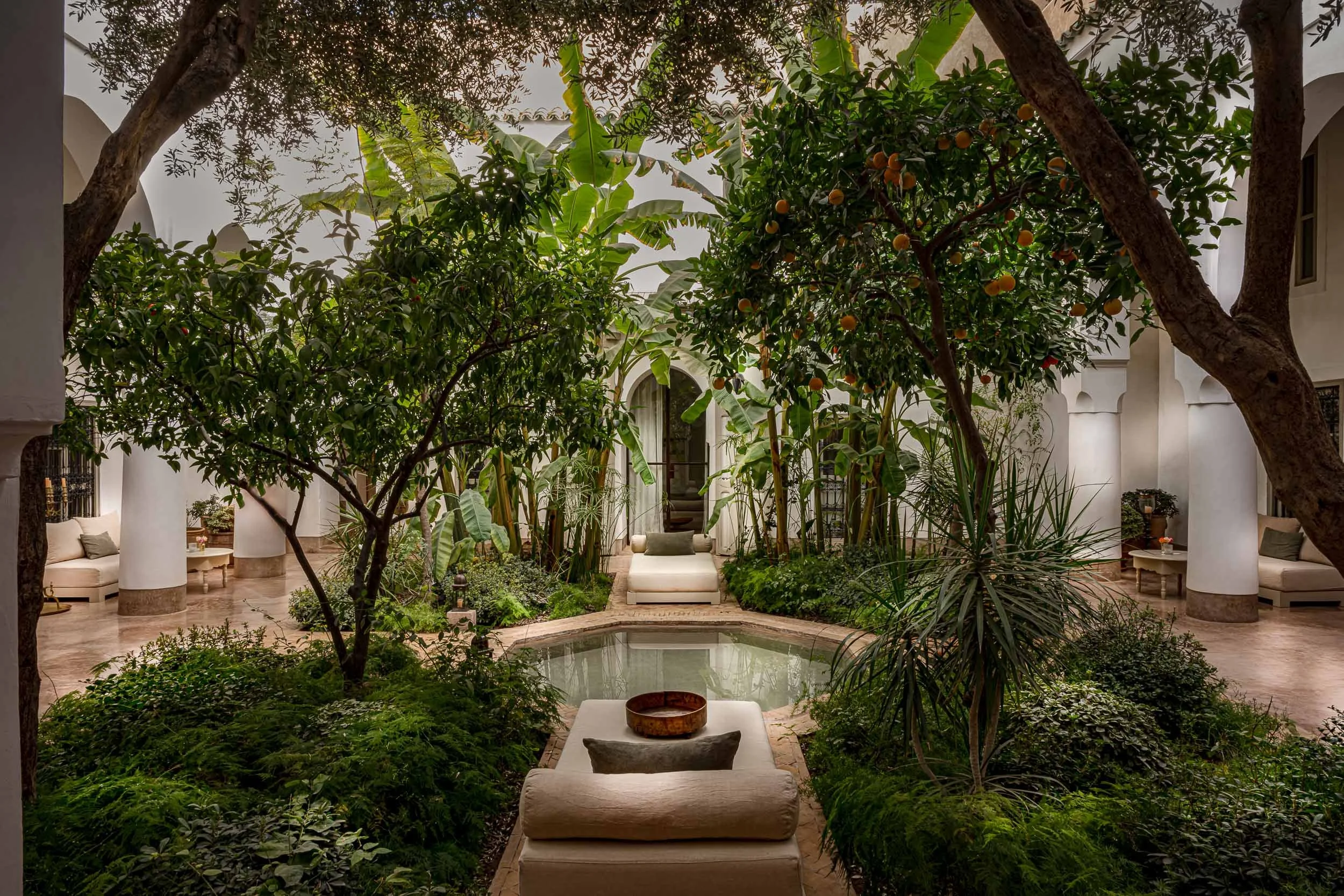
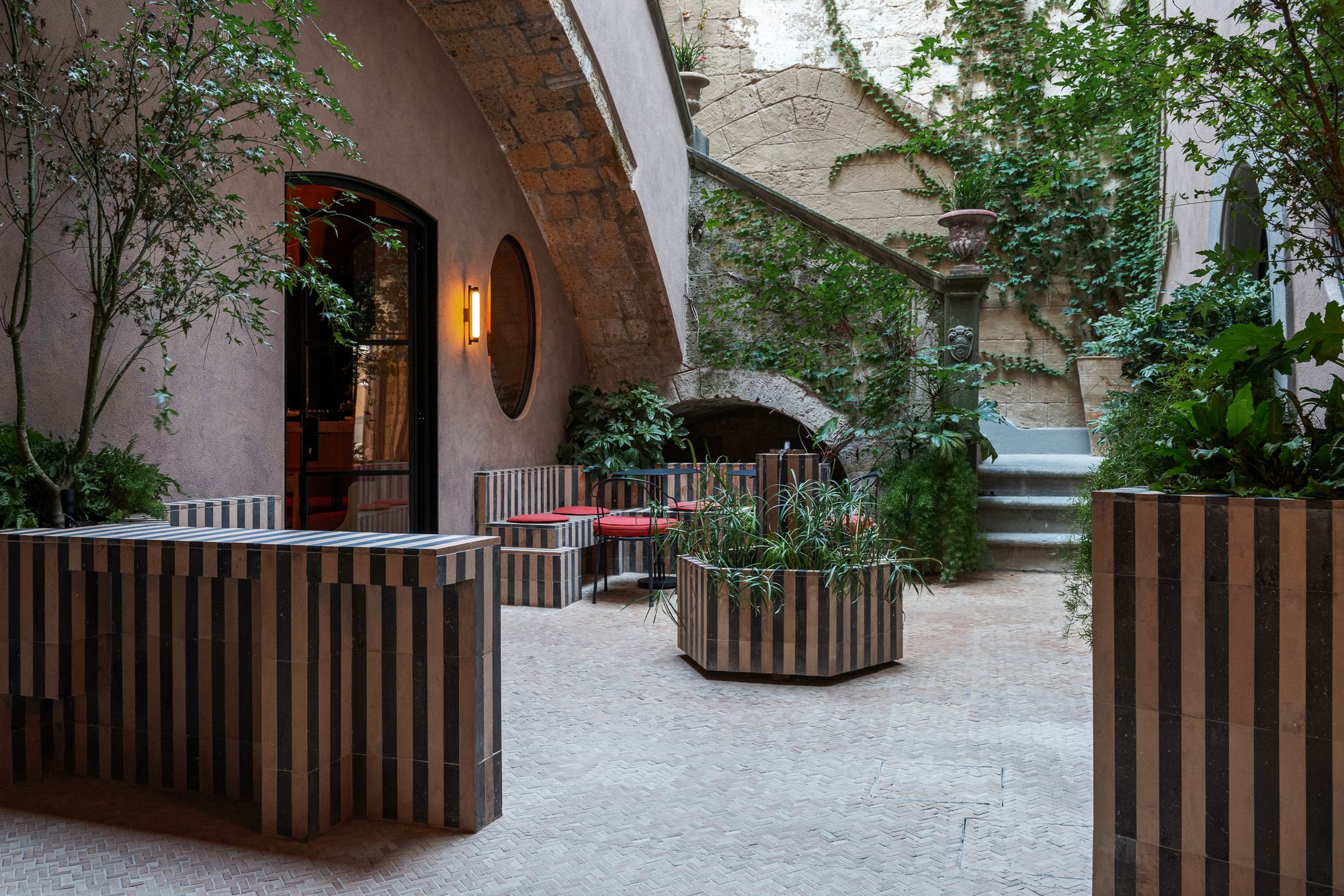
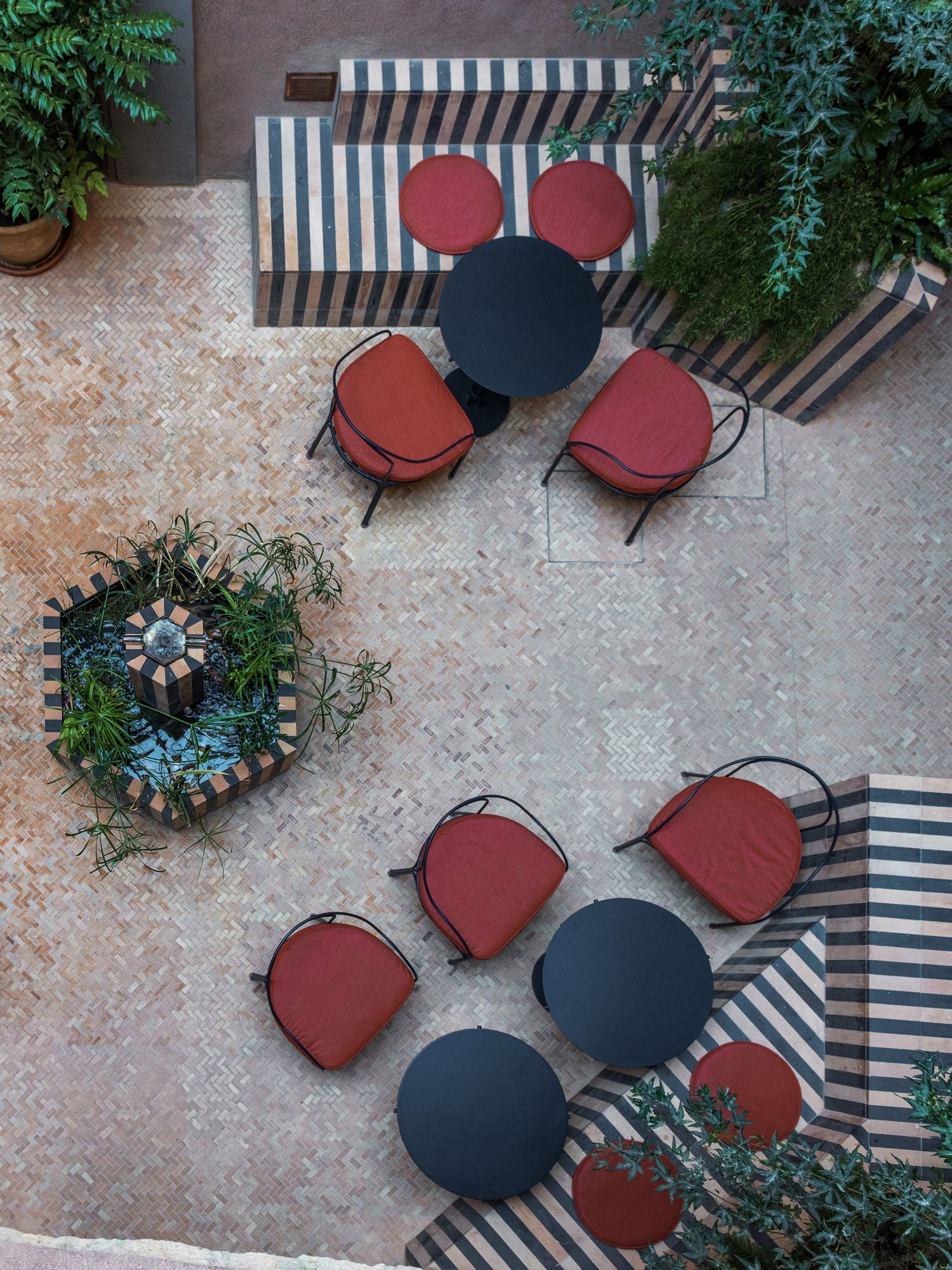
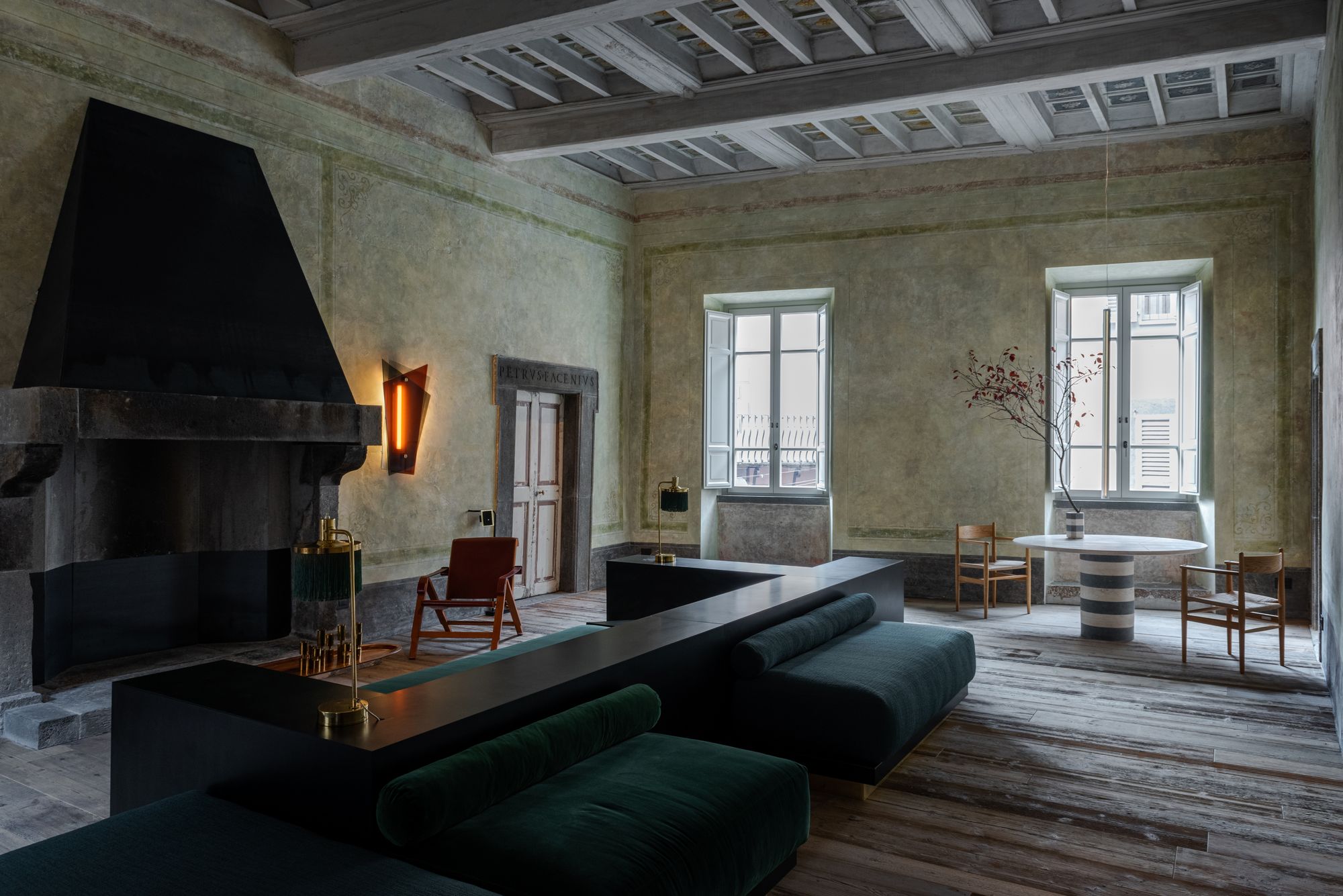
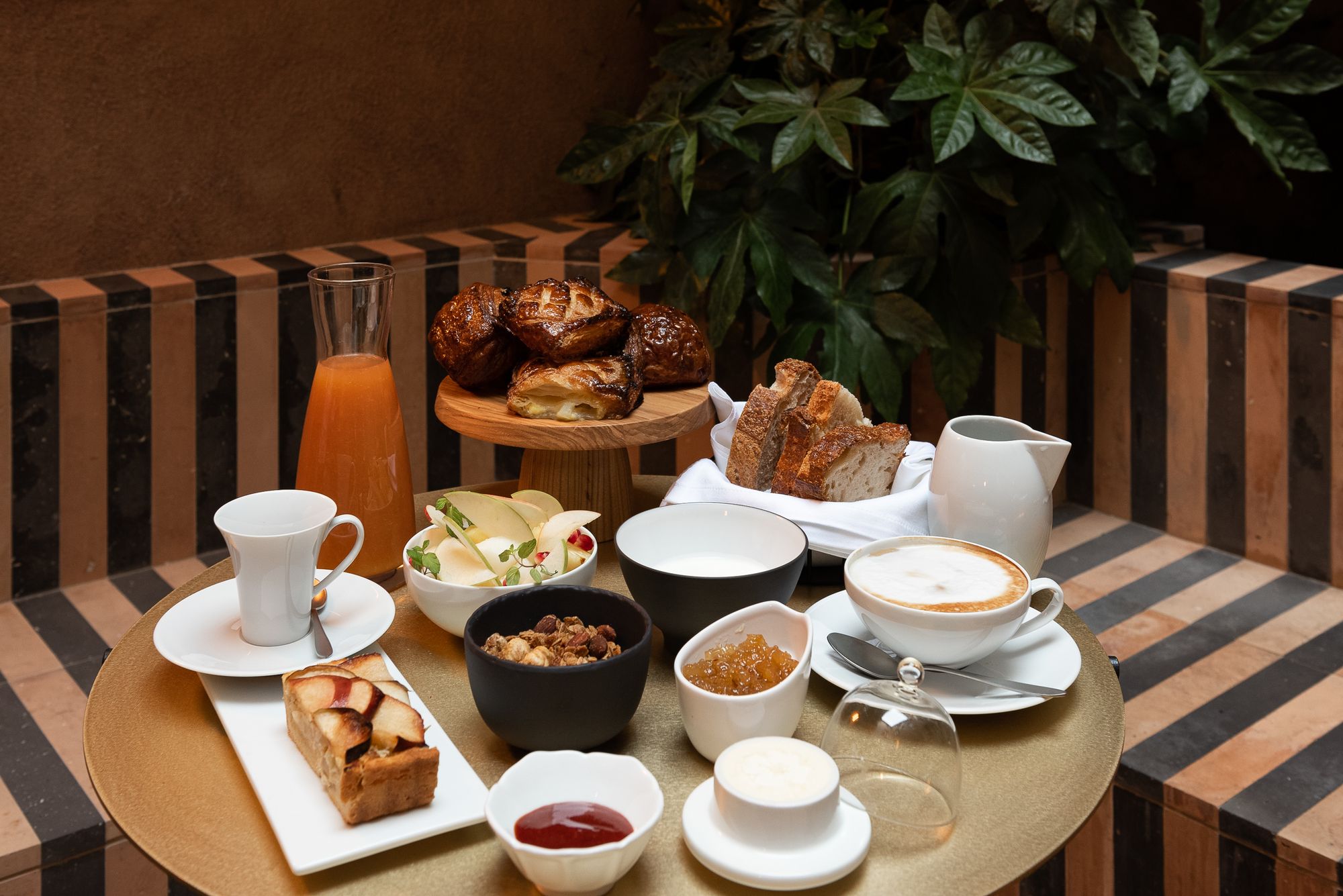
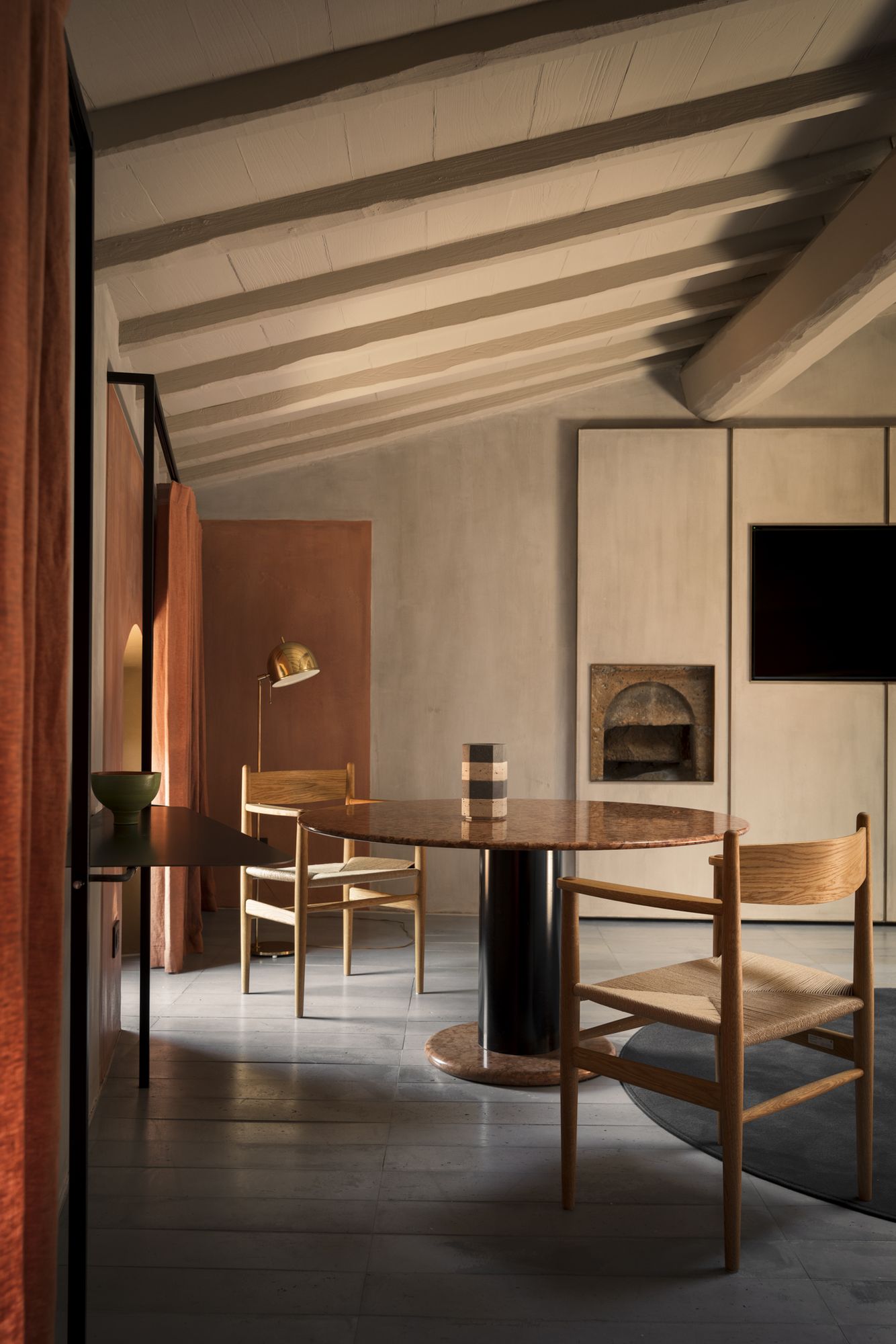
The door on Via del Duomo opens onto a cotto-tiled patio with a sculpted fountain, climbing plants and benches banded in black and sand — stripes borrowed from the travertine and basalt of the cathedral at the top of the street, and repeated throughout the house, up staircases and across bedheads. Check-in happens here, over a drink and something small to eat. Giuliano Andrea dell’Uva, who restored the palazzo, calls it a contemporary Grand Tour, and the rooms move between centuries without apology: Hans Wegner chairs and a Carlo Scarpa console under Renaissance frescoes, 1950s lamps by Hans-Agne Jakobsson beside a stone hearth tall enough to stand in, in the guests’ living room on the first floor.
No two of the nine rooms are alike. In one of the Junior Suites, a brass floor runs into terracotta, one wall is fresh clay and the other old plaster still carrying its painted decoration, and the bathroom lies through a stone doorway carved with the builder’s own name, PETRVS FACENIVS, onto a green resin floor and a round bathtub. One Deluxe Room looks down onto Via del Duomo from beneath a coffered ceiling painted with coats of arms and portraits, the other opens onto a small winter garden; a Superior Room is done in burgundy and black pepper, with a wardrobe of green clay and brass. At the top, the Penthouse Suite is reached through a steel door set in a stone frame inscribed in the sixteenth century; beyond the fireplace and the tufa walls, its terrace holds a plunge pool among the plants, facing the Duomo.
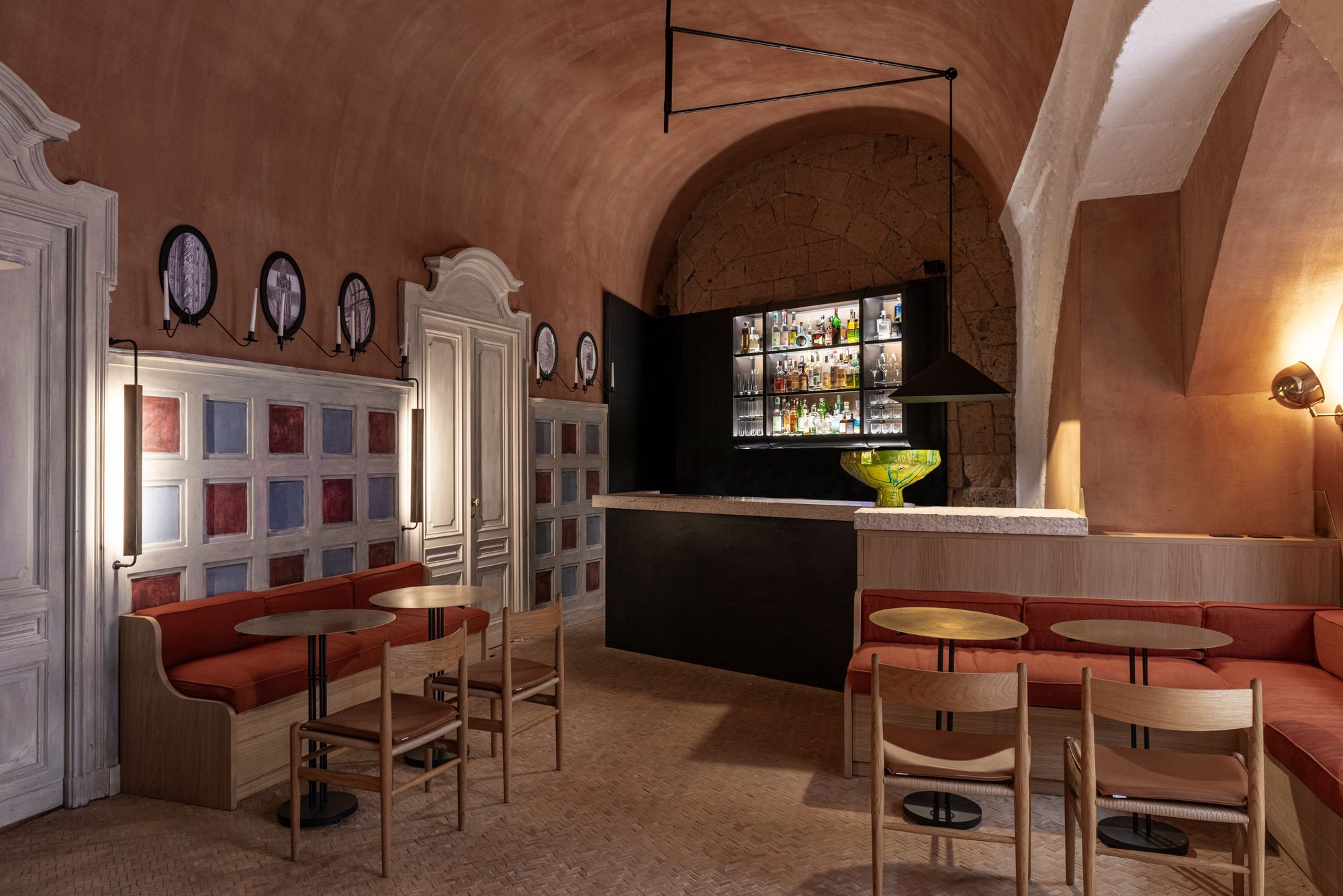
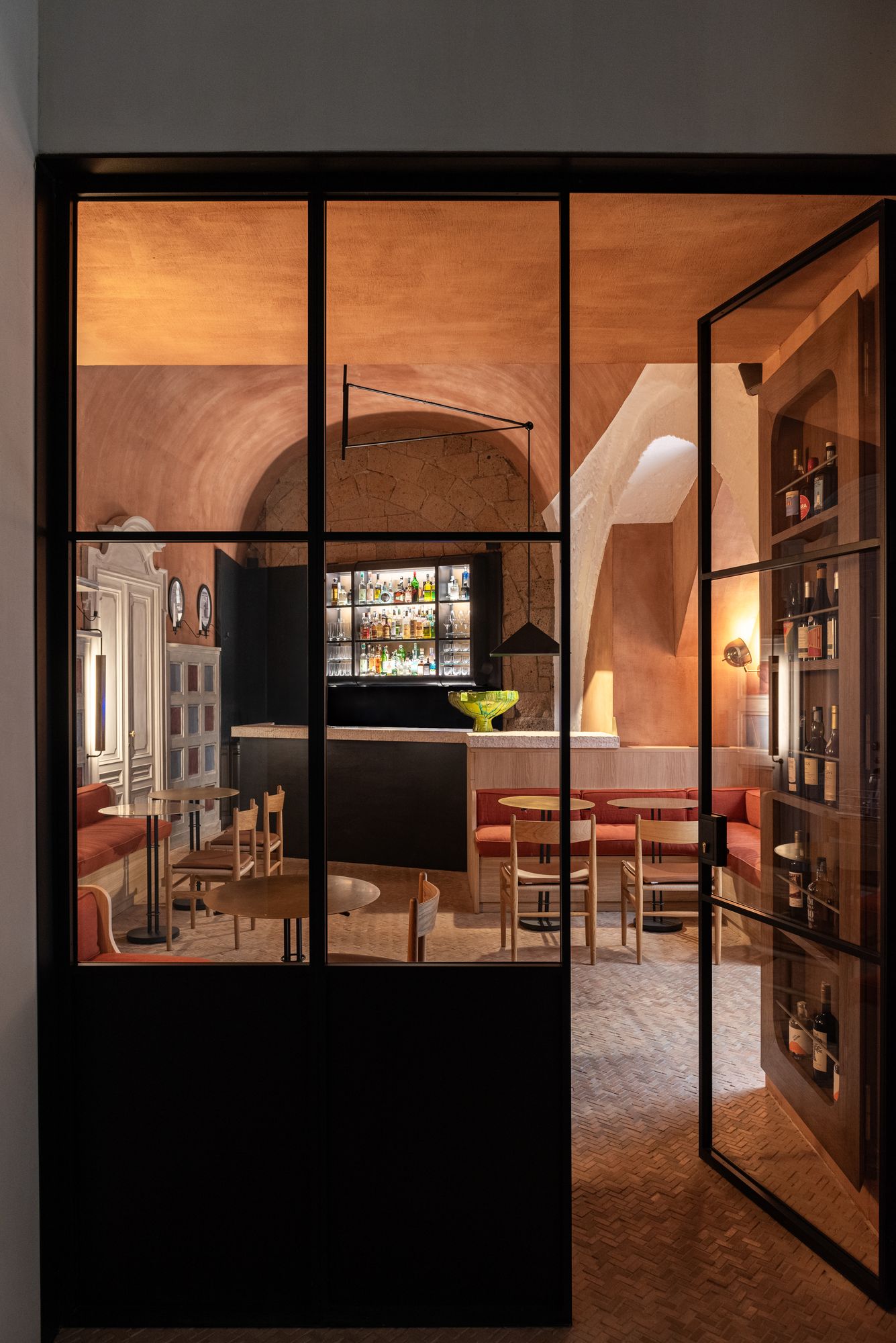
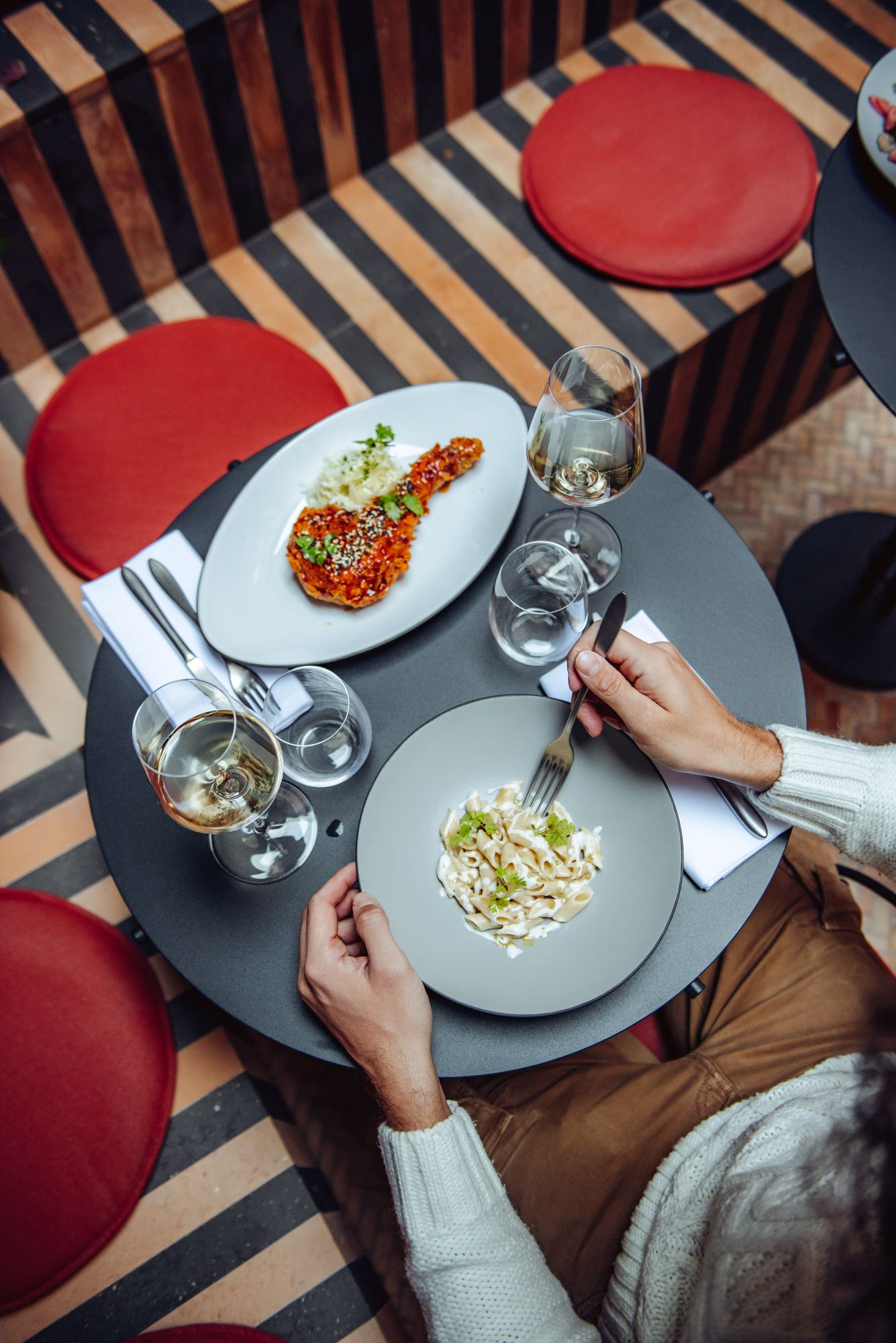
Breakfast is styled by Ronald Bukri, the chef and co-founder, who cooks at Coro in a deconsecrated sixteenth-century church next door: Umbrian produce as a ten-course tasting menu, under art by Michele Guido. Gocce, the bar off the courtyard, serves lunch and cocktails until midnight. The hotel is generous with the rest of the town, too — torta al semolino at Caffè Montanucci, a tagliere at Bottega Vera, pizza at Claudio al Vicolo, and at L’Orvietan a herbal bitter made to a recipe from 1603. Ask for lumachelle, the town’s pork-and-spice rolls, and umbrichelli, the thick hand-rolled pasta.
Orvieto rises on a tuff cliff between Florence and Rome, an hour by train from the capital, and the palazzo is in its middle. In the Duomo, Luca Signorelli’s Last Judgment is the fresco cycle Michelangelo studied before the Sistine Chapel; St. Patrick’s Well drops sixty-two metres on two spiral staircases that never meet; beneath the streets runs a second city of Etruscan and medieval caves. The house arranges the rest: a guided walk through the medieval lanes, tastings with the winemakers of Orvieto Classico or a private session with a sommelier, a ceramics class with Marino Moretti in his studio in the Rocca di Viceno, rides through the hills on horseback, yoga in the palazzo or out in the landscape, and a boat across Lake Bolsena to the islands of Martana and Bisentina. Further afield lie Civita di Bagnoregio on its crumbling ridge, Assisi and the Val d’Orcia.
Experiences
Orvieto walking tour
The medieval lanes and main sights of Orvieto with an expert guide.
Wine tasting in Umbria
Visits to historic wineries around Orvieto, with the winemakers.
Ceramics with Marino Moretti
A tour or a course at his studio in the Rocca di Viceno.
Horse riding
Hills, old paths and medieval villages around Orvieto, with an instructor.
Private yoga
Sessions in a historic palazzo, outdoors or in your room.
Boat on Lake Bolsena
Out to the islands of Martana and Bisentina.
Private wine tasting
Wines from around the world, led by a sommelier.
Other Places you will like.