The Deliberate Absence of Excess
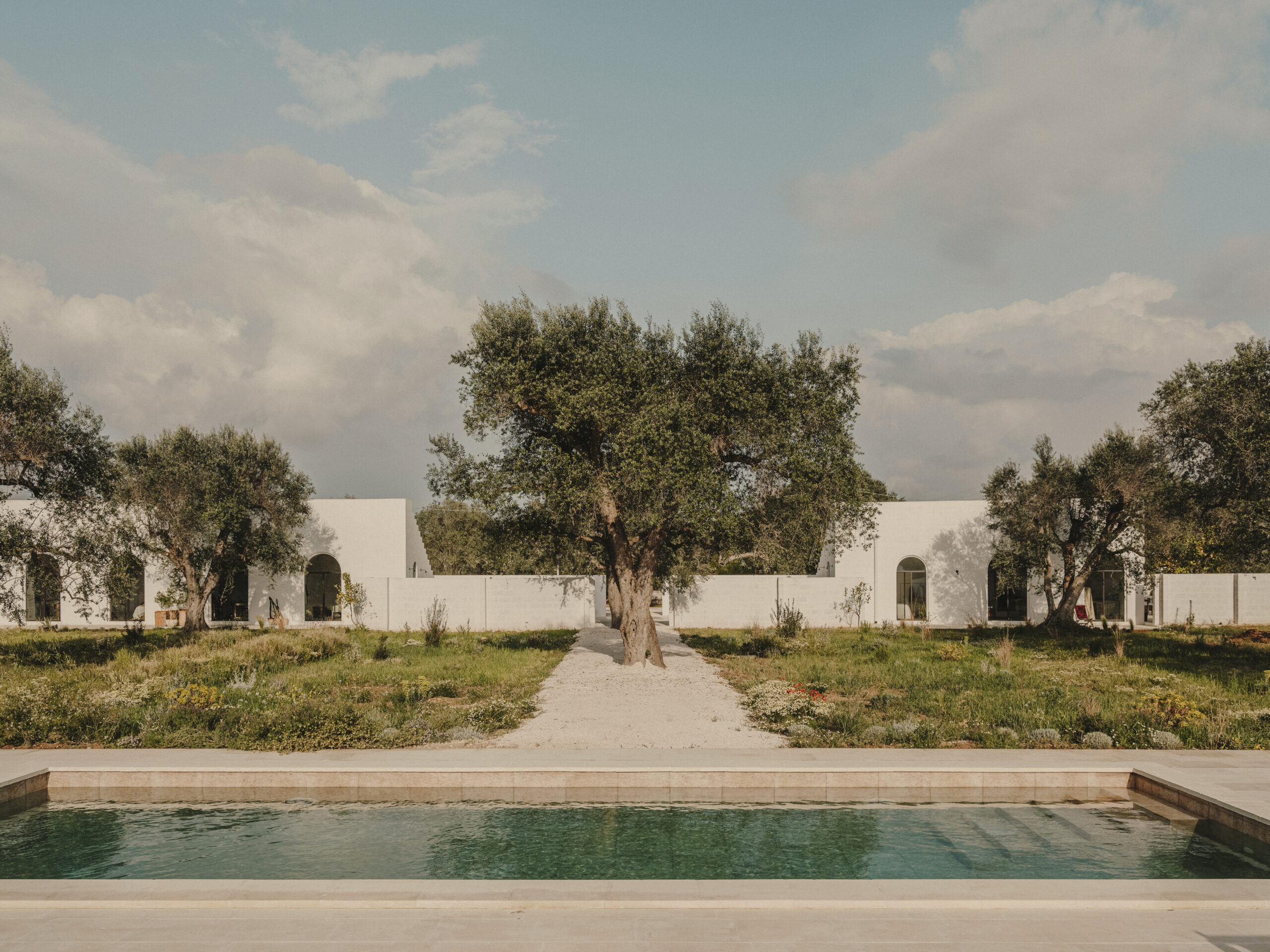
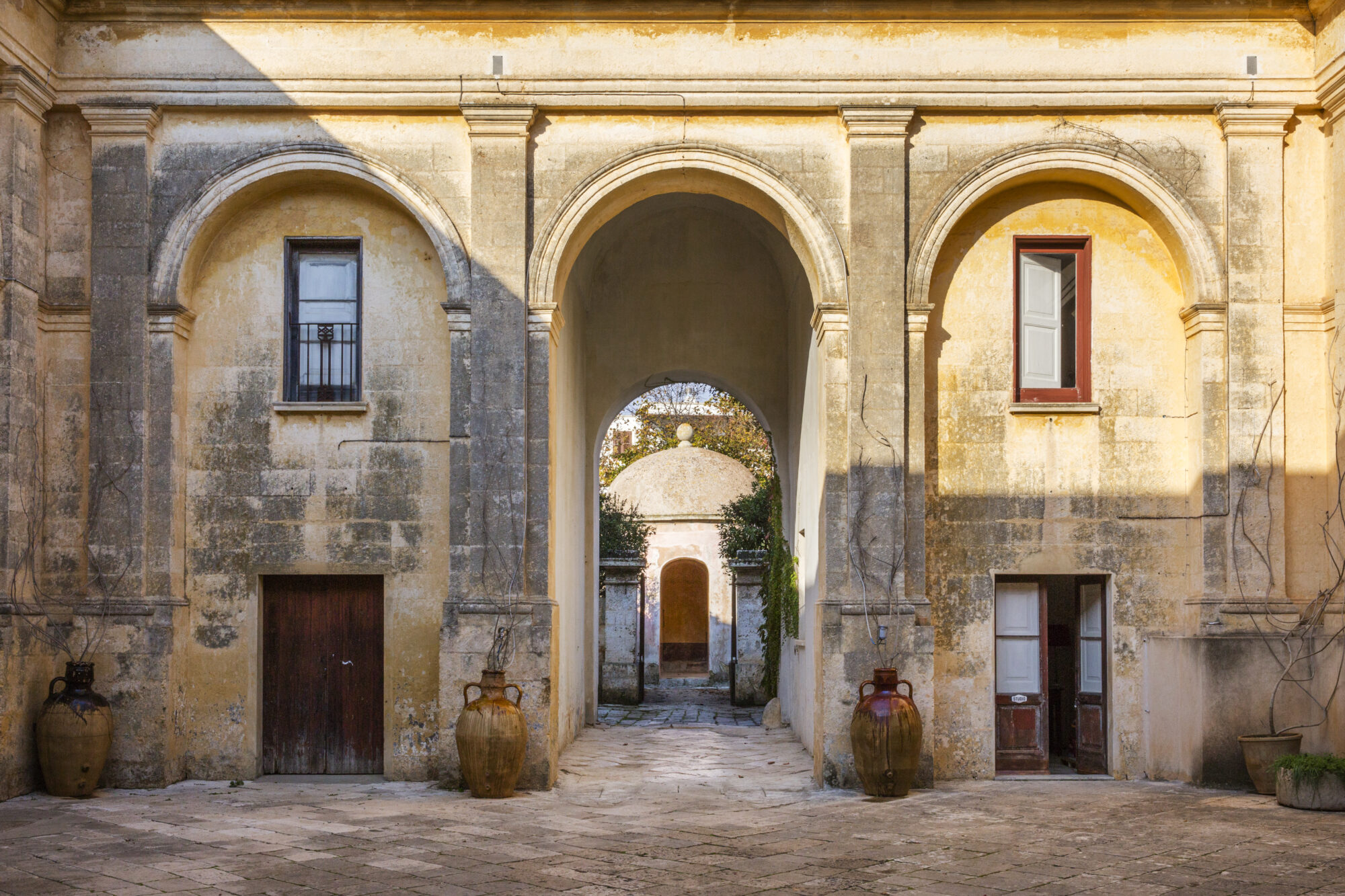
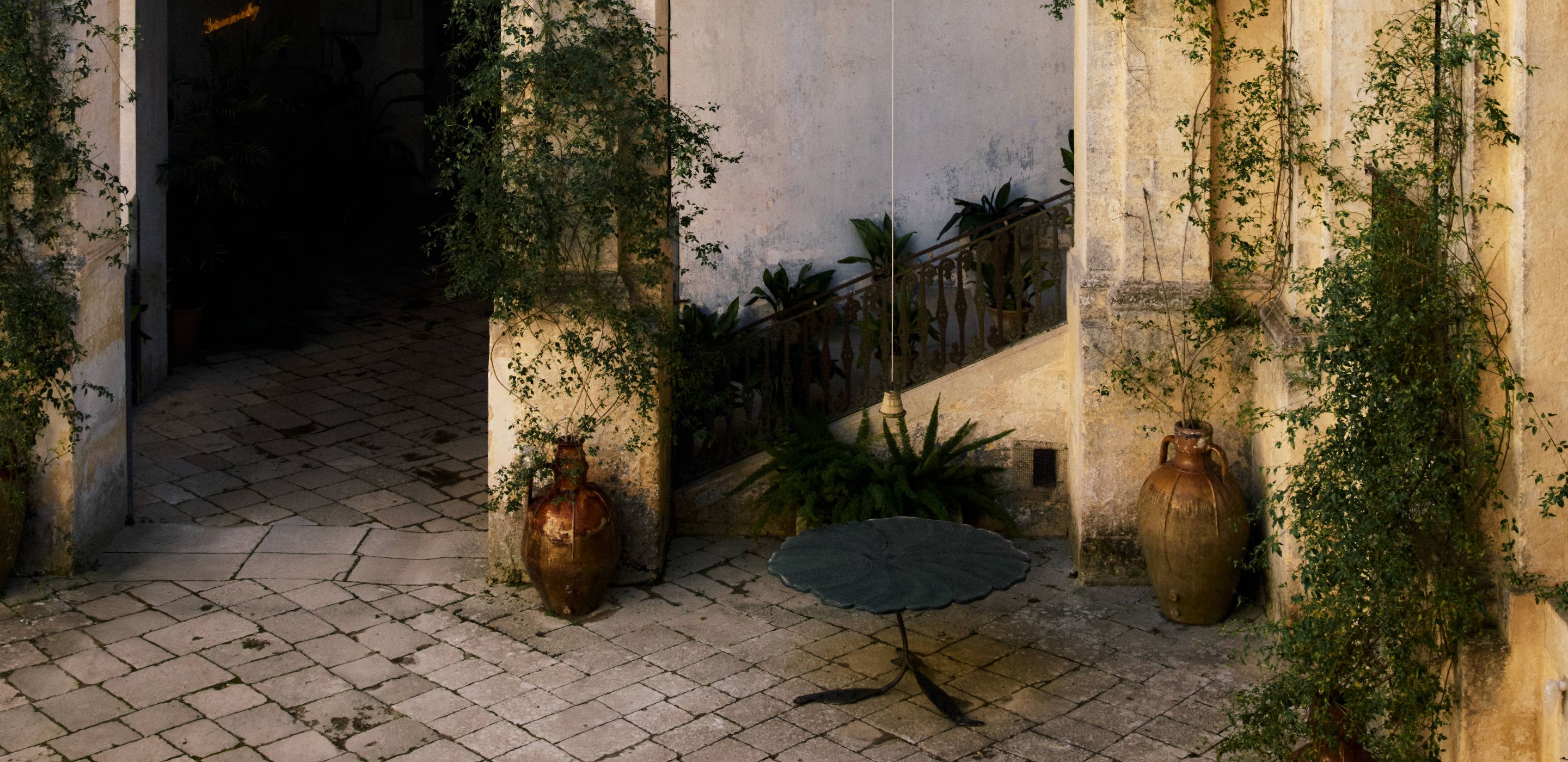
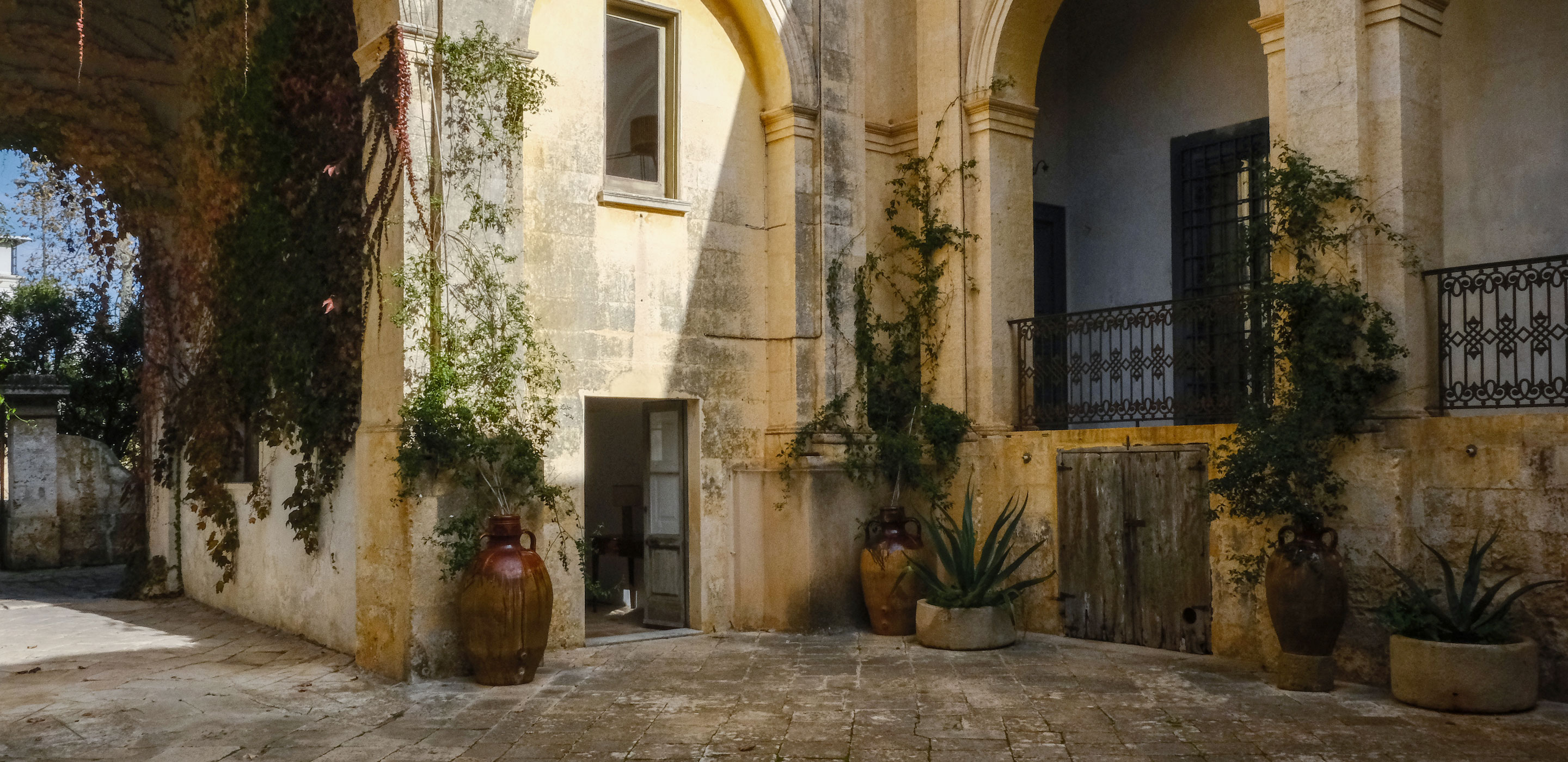
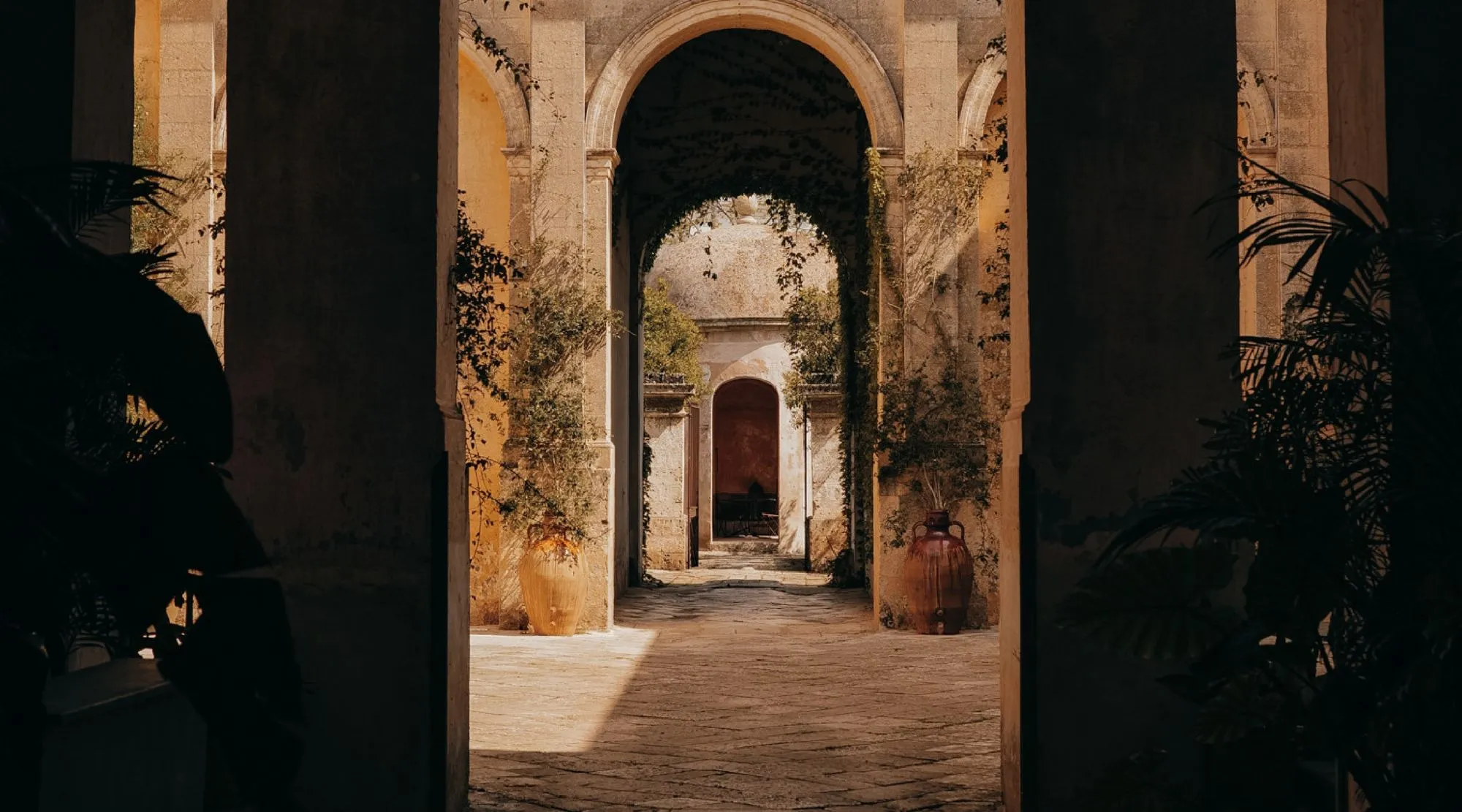
At the southern tip of Italy’s heel, in the quiet village of Gagliano del Capo, Palazzo Daniele occupies an aristocratic palazzo of 1861. Milanese architects Ludovica Serafini and Roberto Palomba reimagined it in 2019, extending it in 2025 with four vaulted suites in the former olive mill, keeping the frescoed ceilings and mosaic floors and stripping the rest back to plaster, stone and contemporary art. Its eleven suites are vast and almost bare, arranged around a courtyard and an inky-black pool. Days unfold slowly here, shaped by shifting light, the rhythm of the countryside and a deliberate absence of excess.
- Best price guarantee
- Full access to content library
- Personalized itinerary
- A gift for every booking over three nights
- 24/7 support
Photography © Palazzo Daniele.
Rooms & Availability



Executive

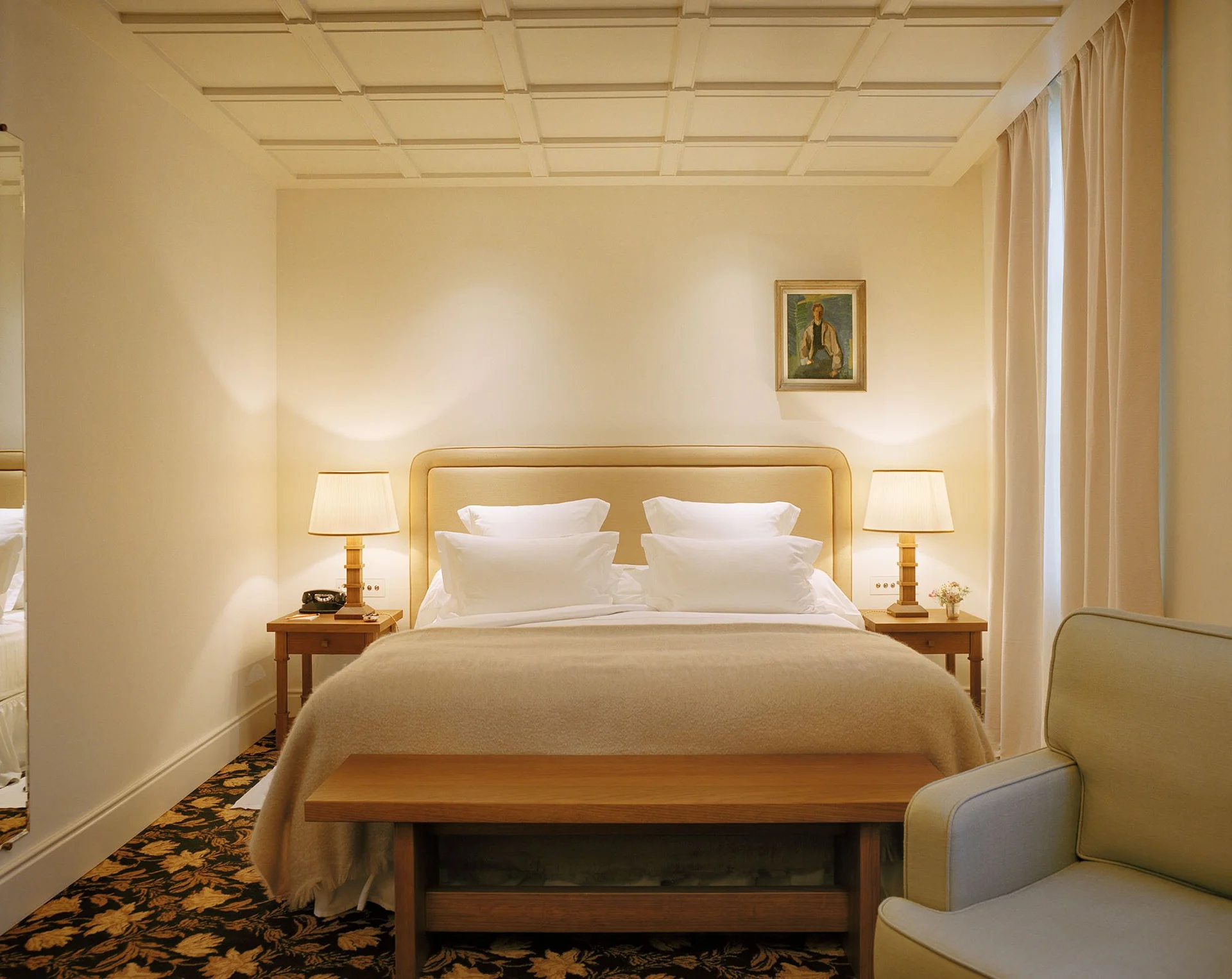
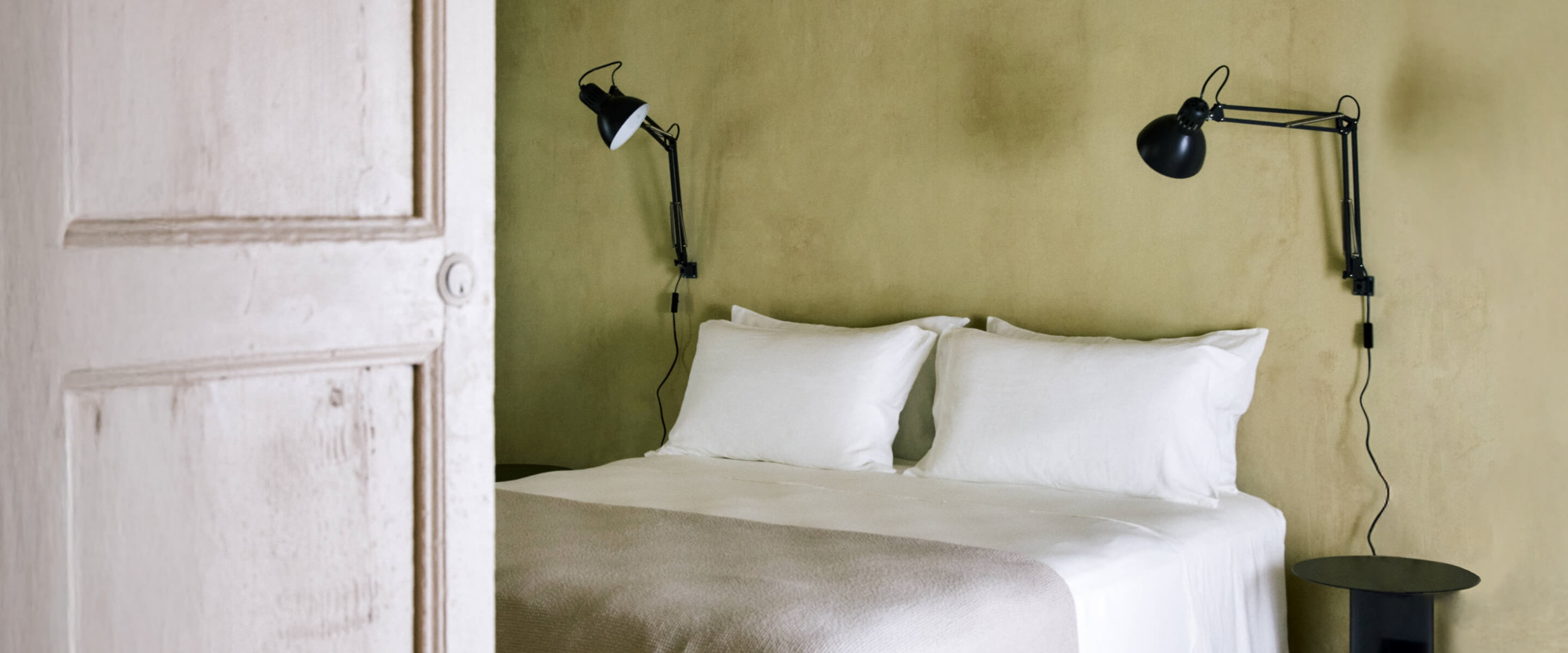
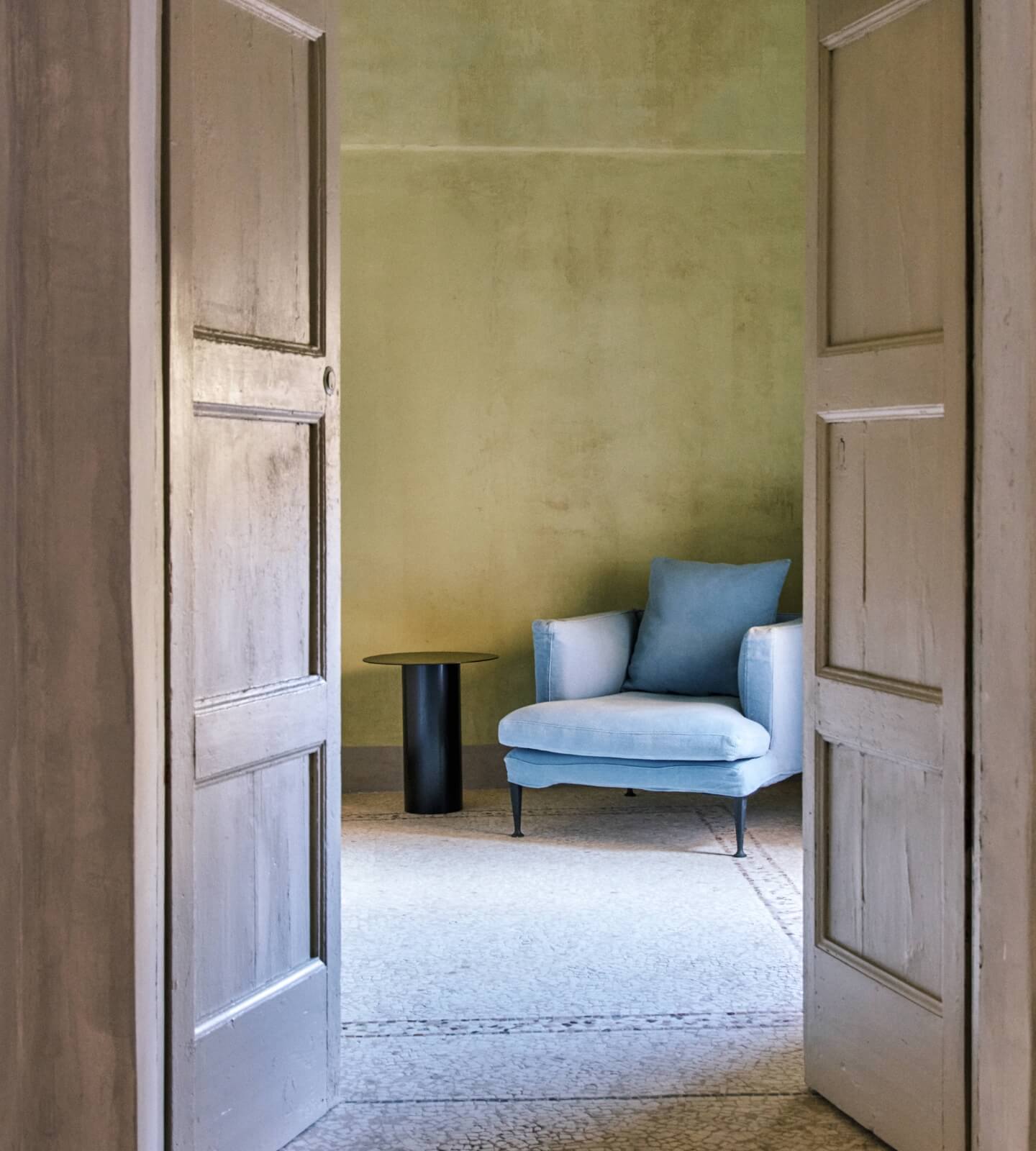
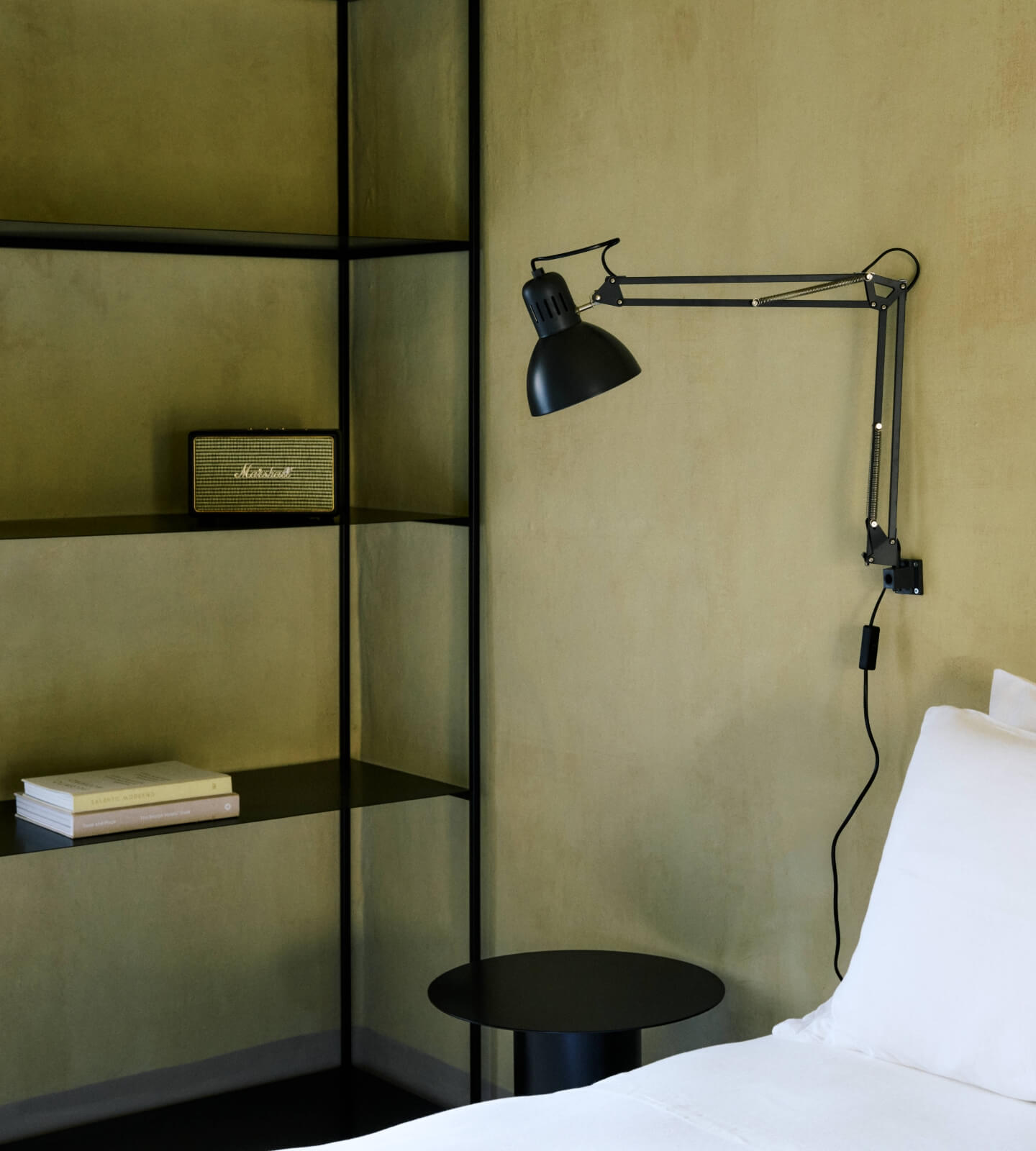
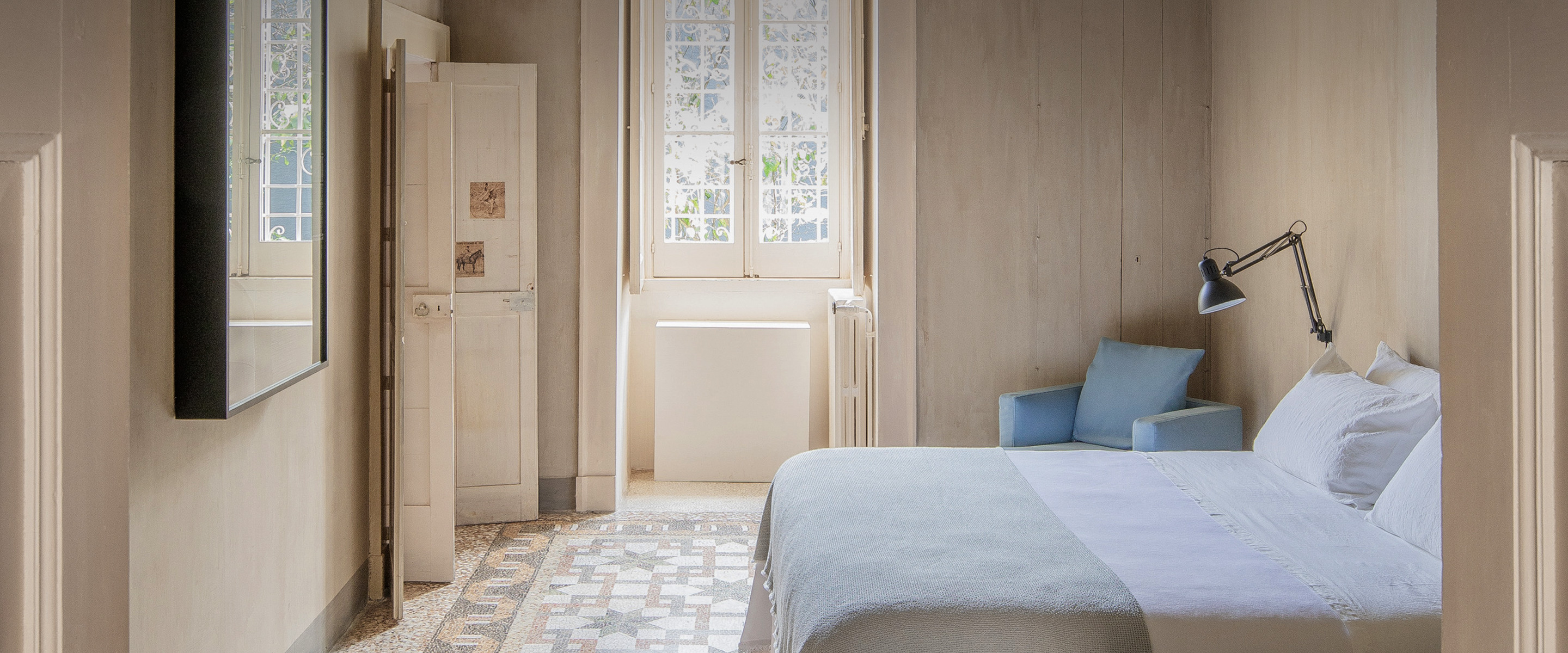
The most intimate room in the palazzo, overlooking the tranquil courtyard, where clean lines and custom-made furnishings meet high ceilings and original details. A king-size bed and an en-suite bathroom complete it.
Executive


Junior Suite
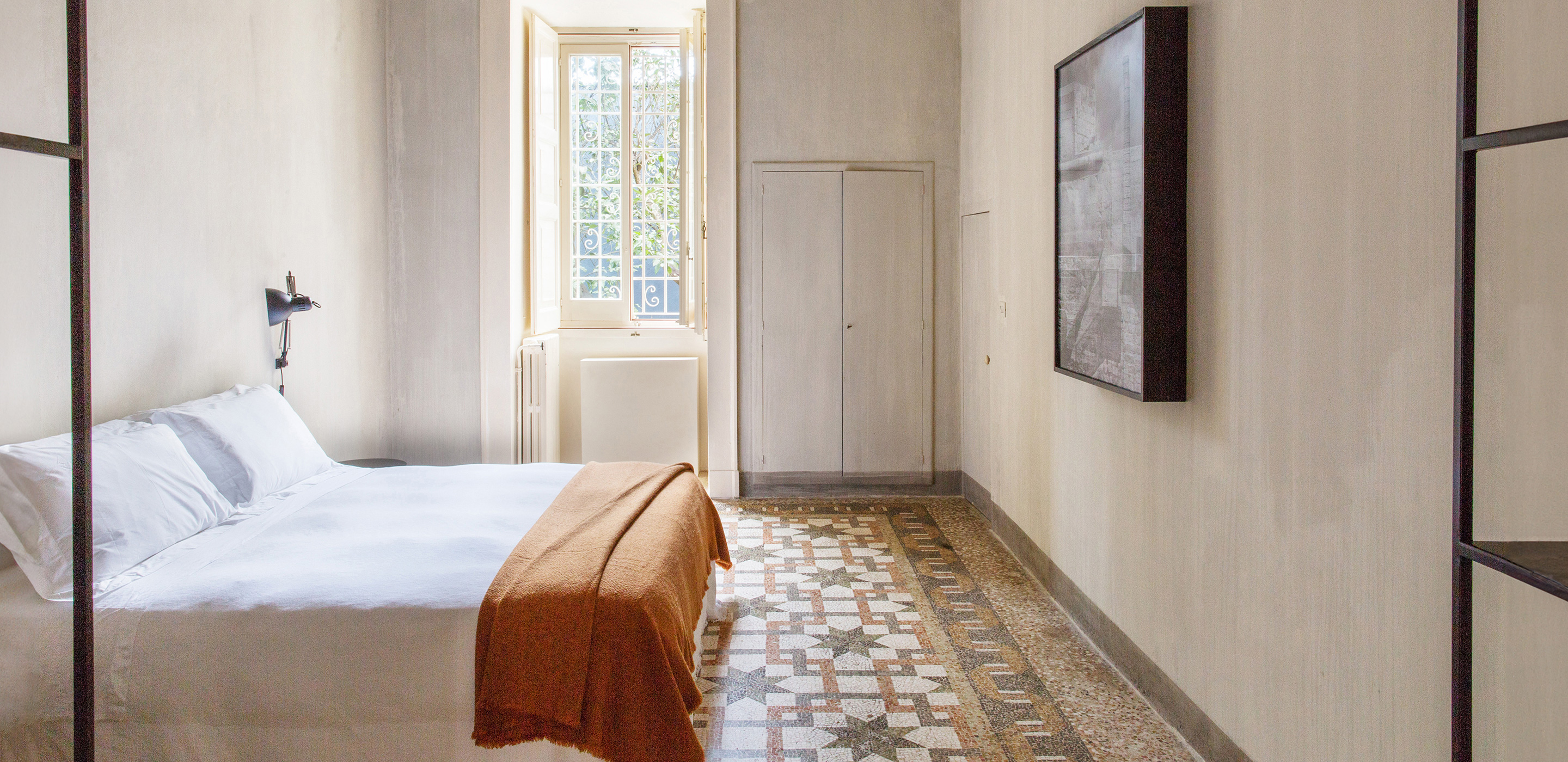
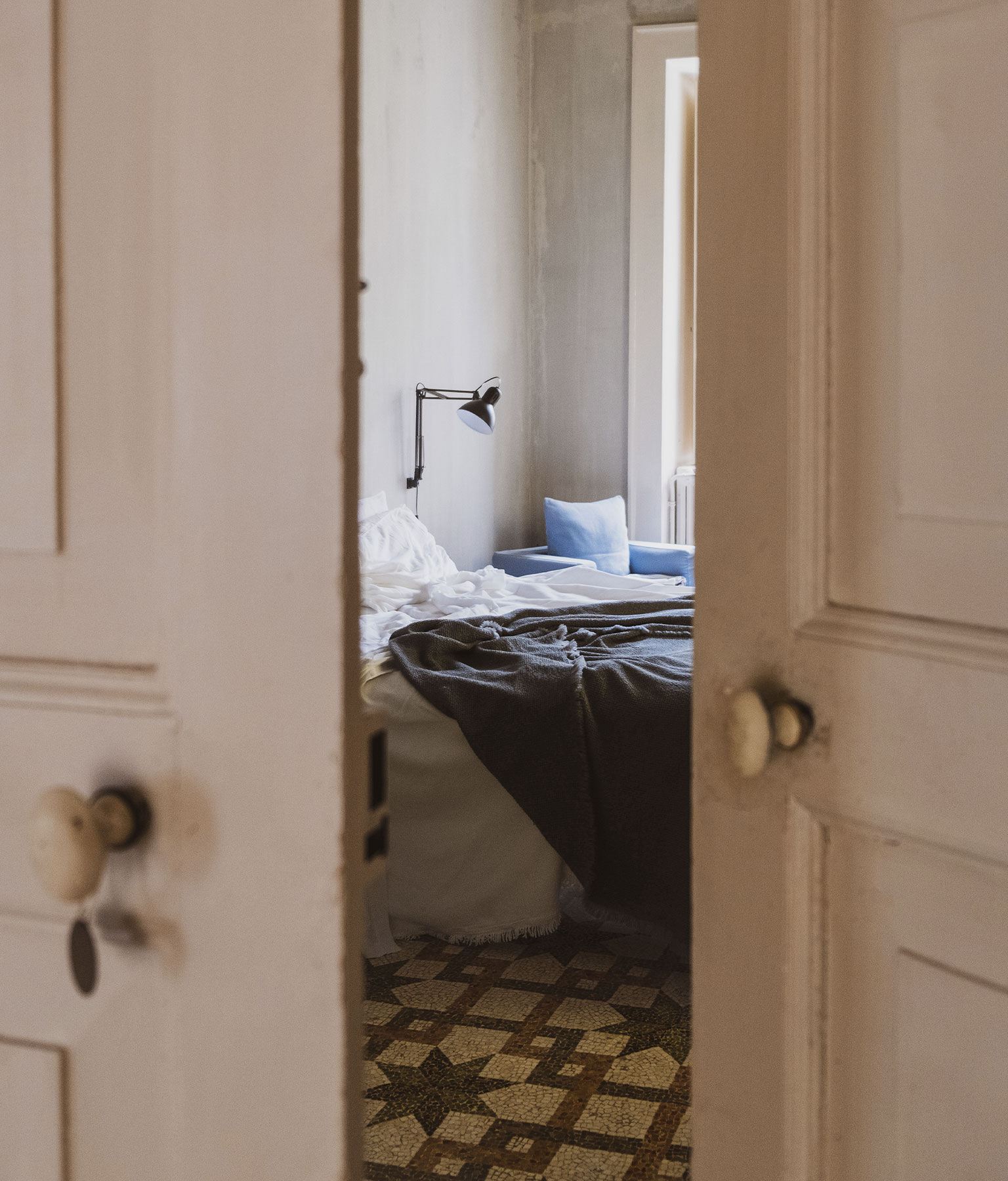
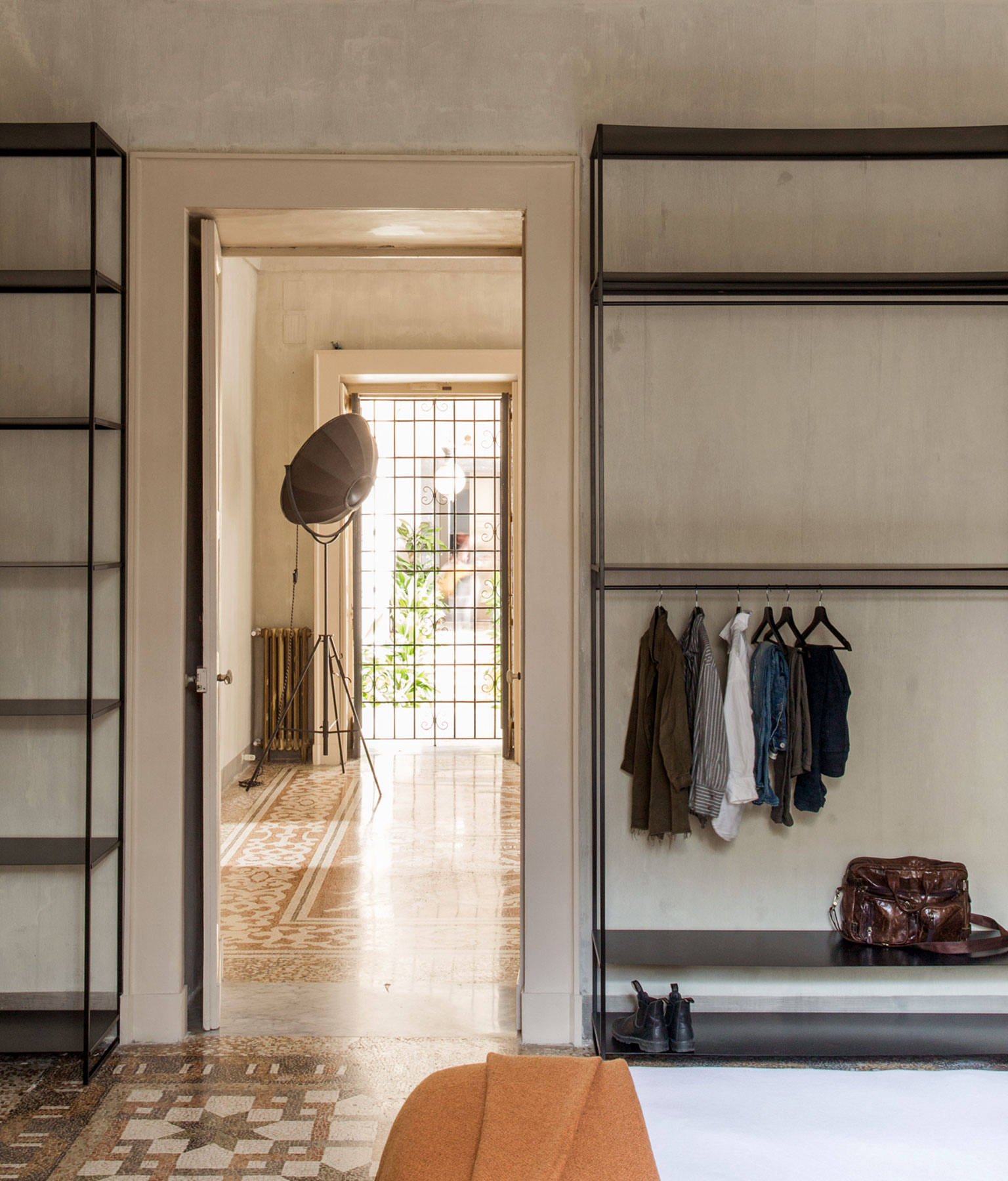
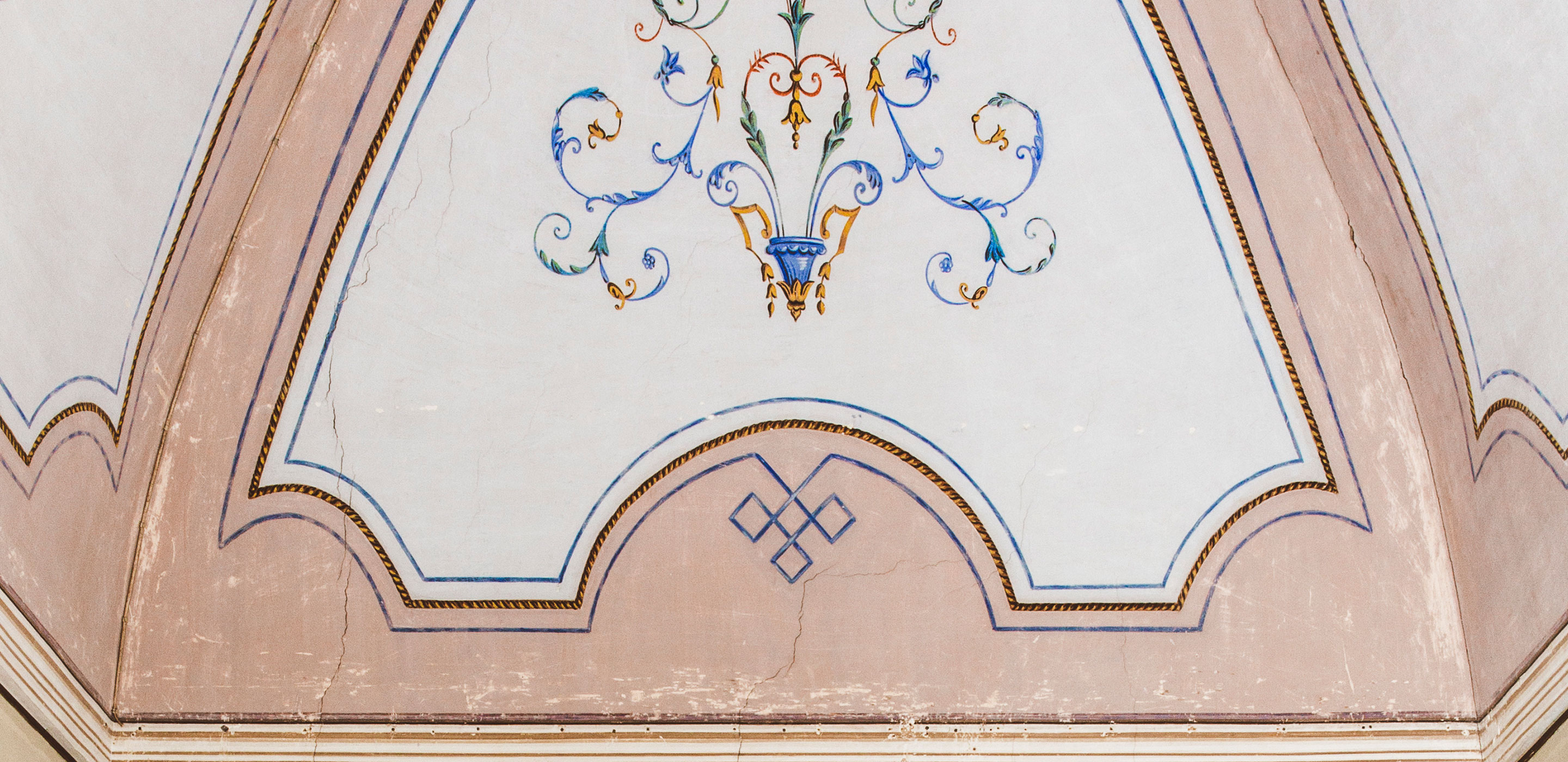
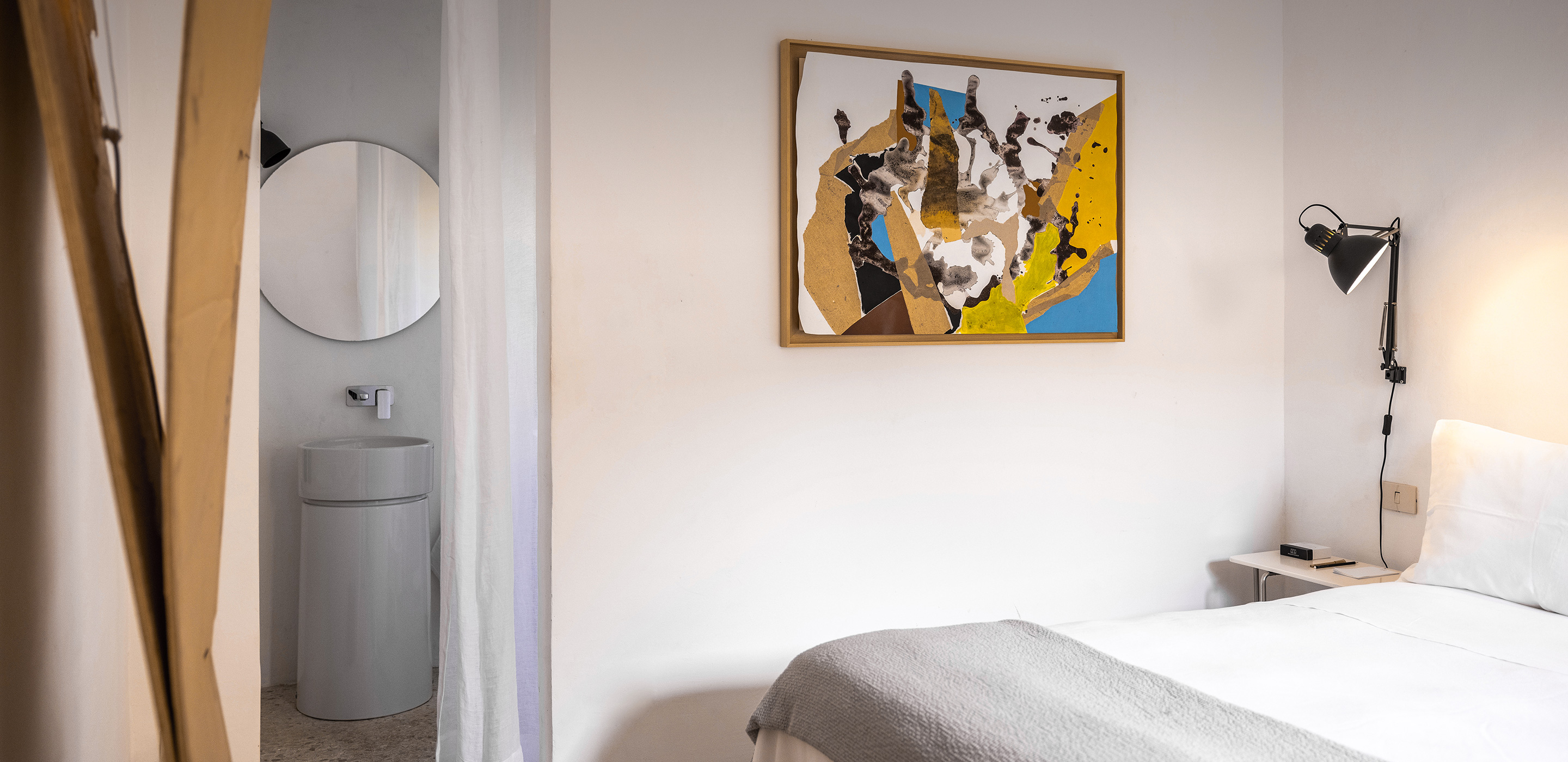
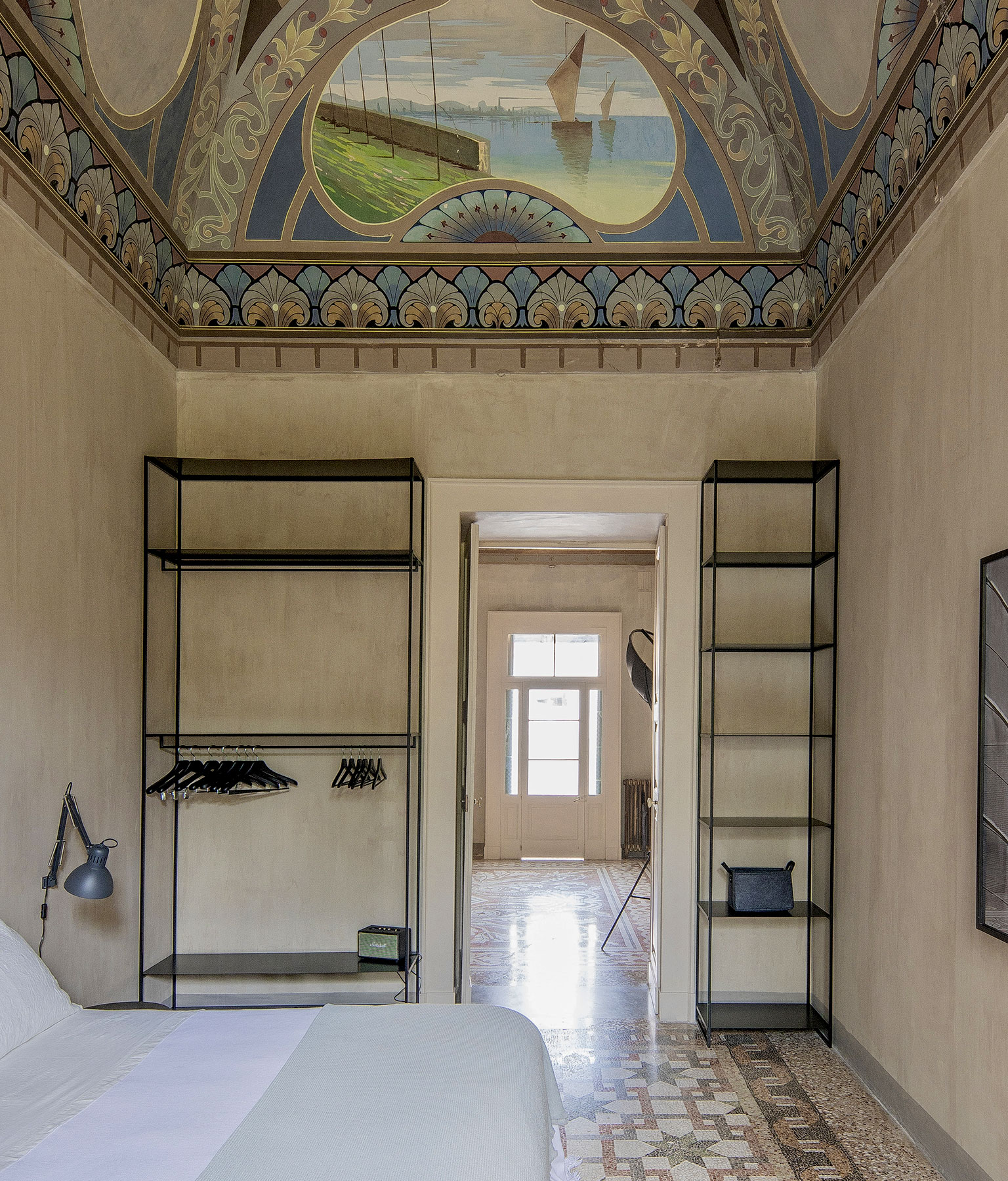
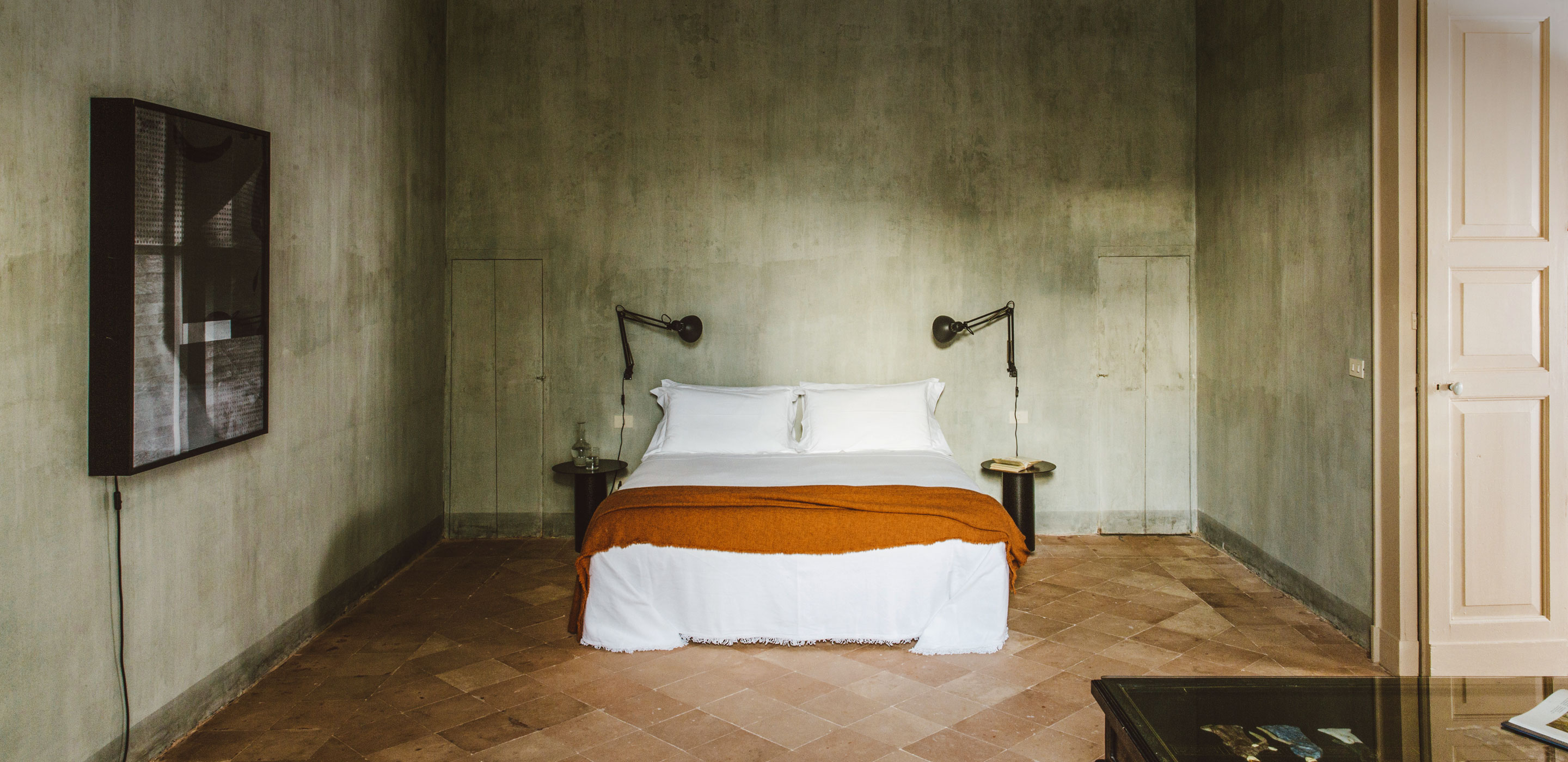
Minimal custom furnishings — black steel-framed wardrobes among them — set against the building’s aristocratic history, with masterworks by celebrated artists shown prominently. The Junior Suites face the lush courtyard, most with frescoed ceilings and original 19th-century floors.
Junior Suite
La Torretta
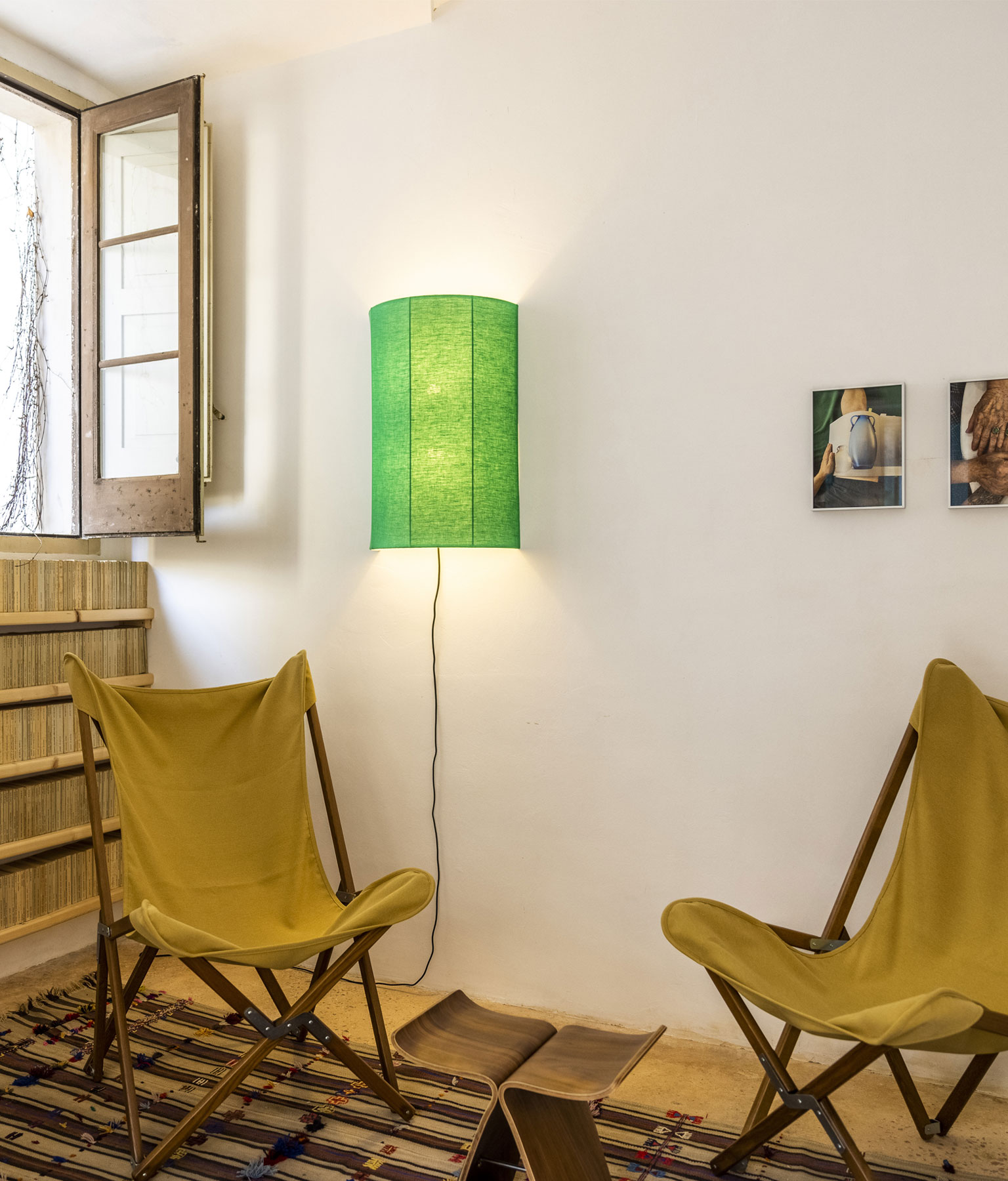
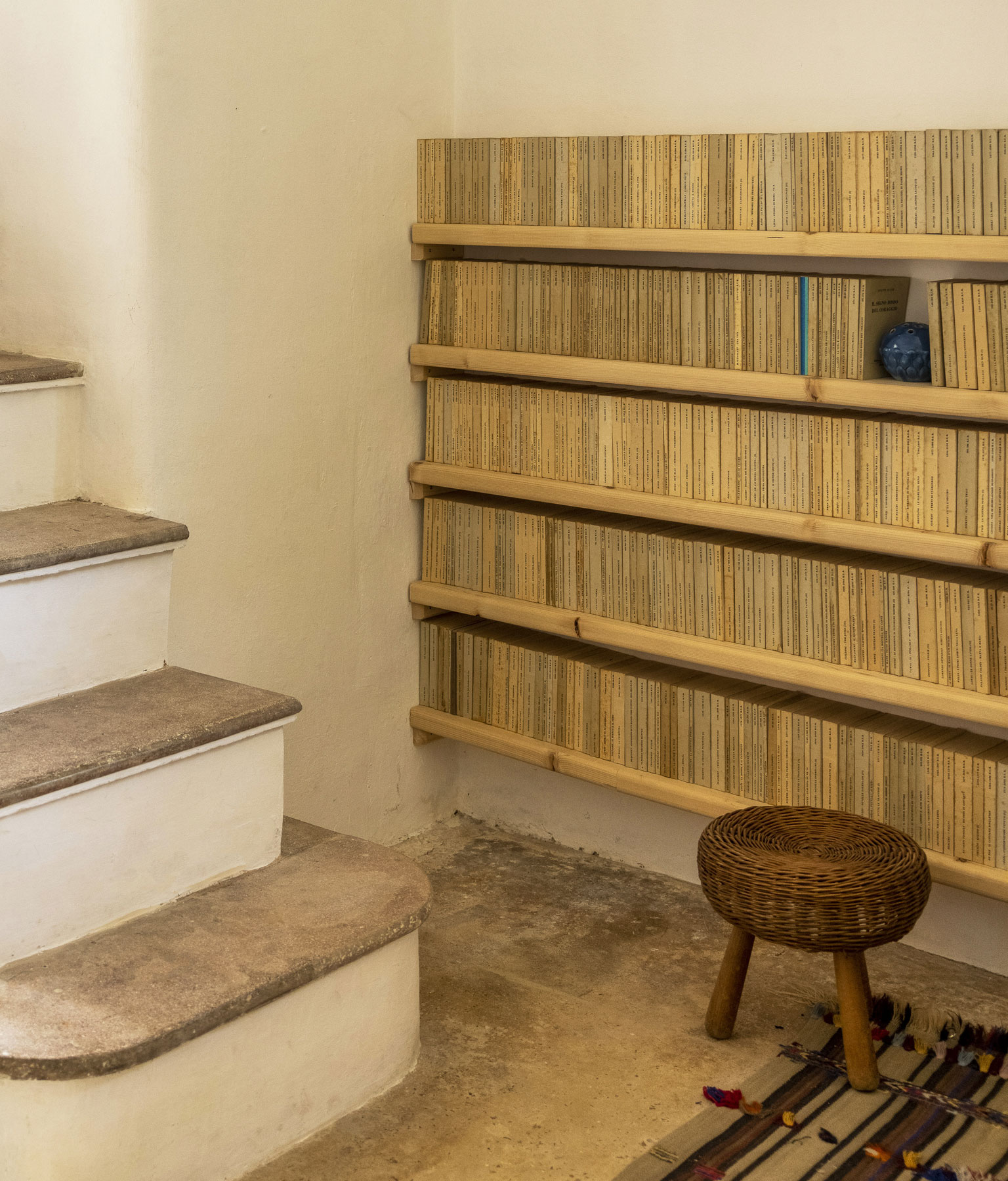
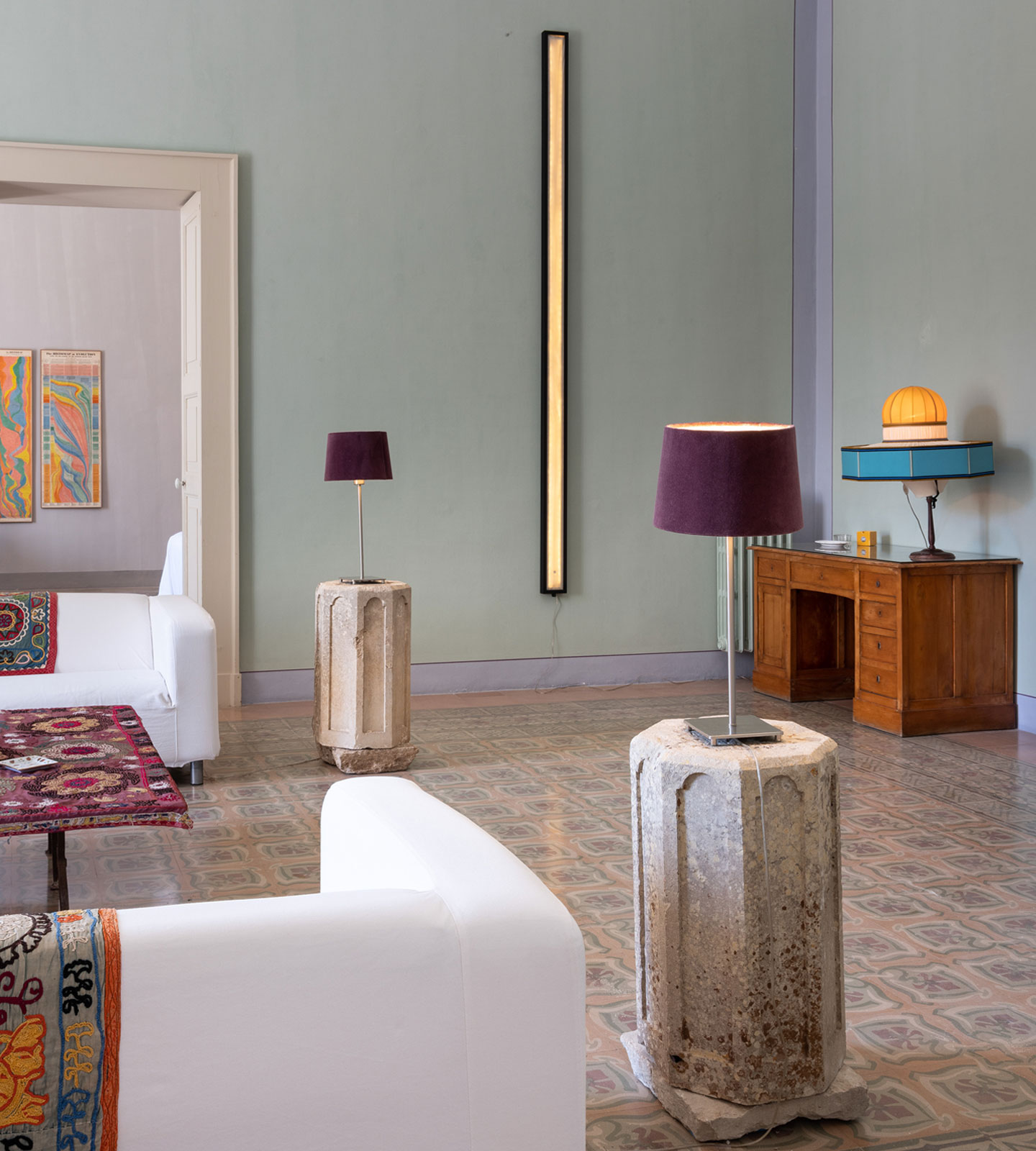
A duplex, and the only room with direct access to the grand courtyard and gardens. The ground-floor living area holds an exquisite selection of art and design; a red-marble staircase leads up to the bedroom and its en-suite bathroom.
La Torretta
Royal Suite
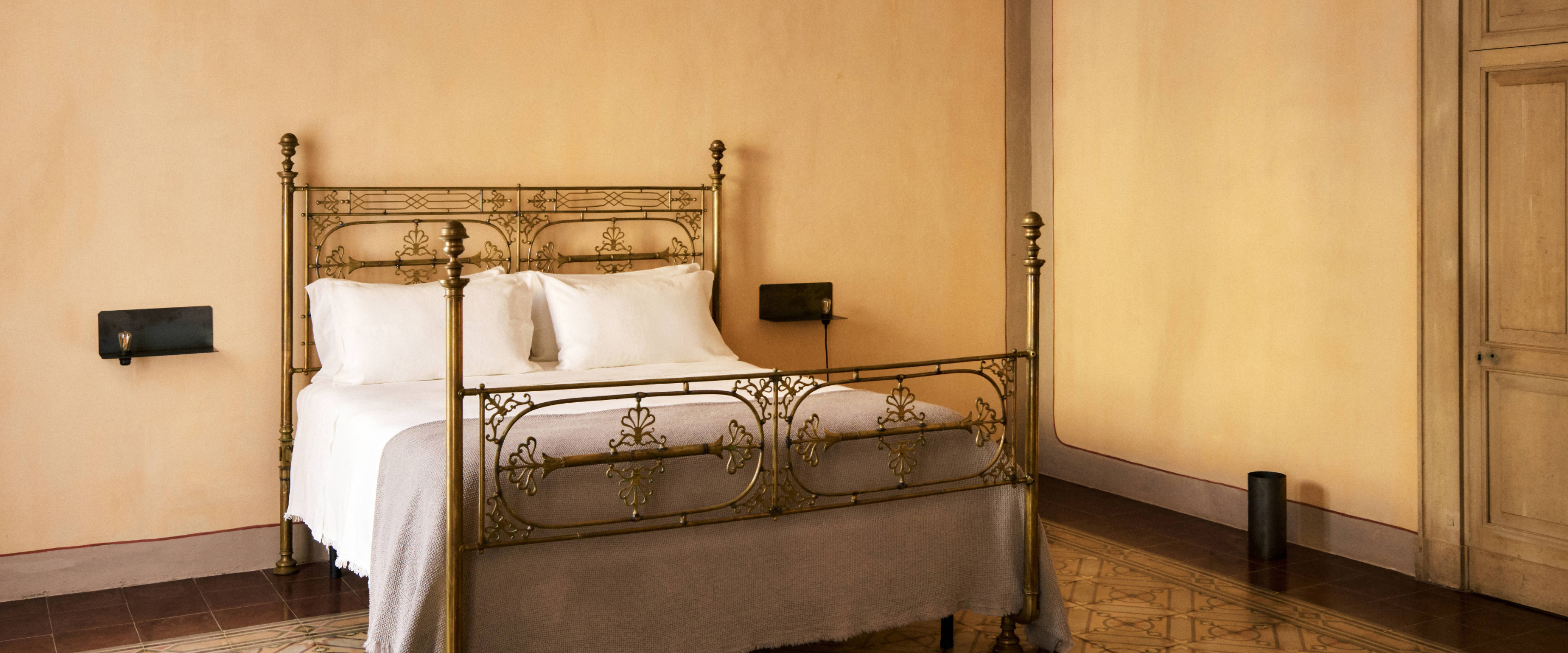
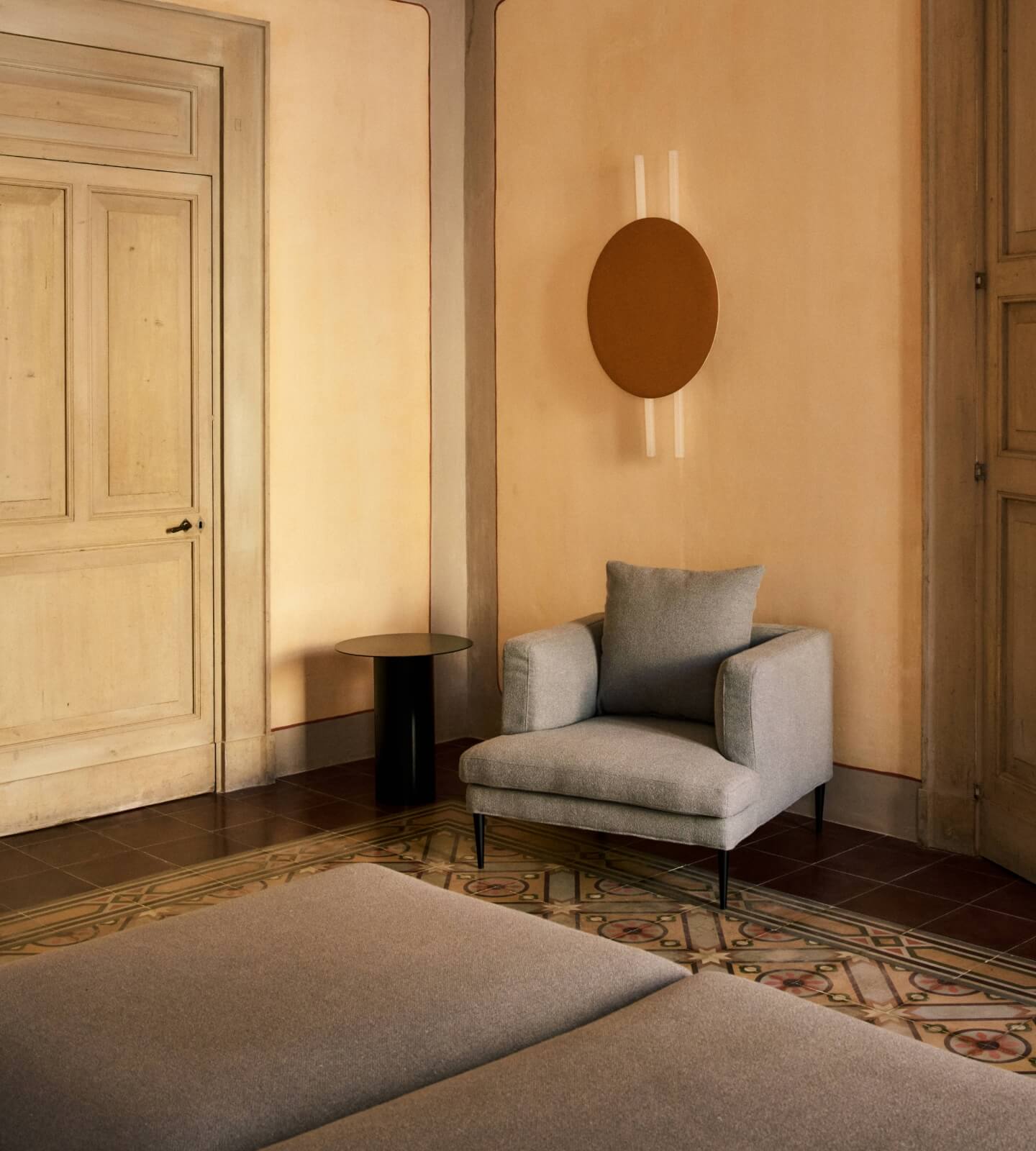
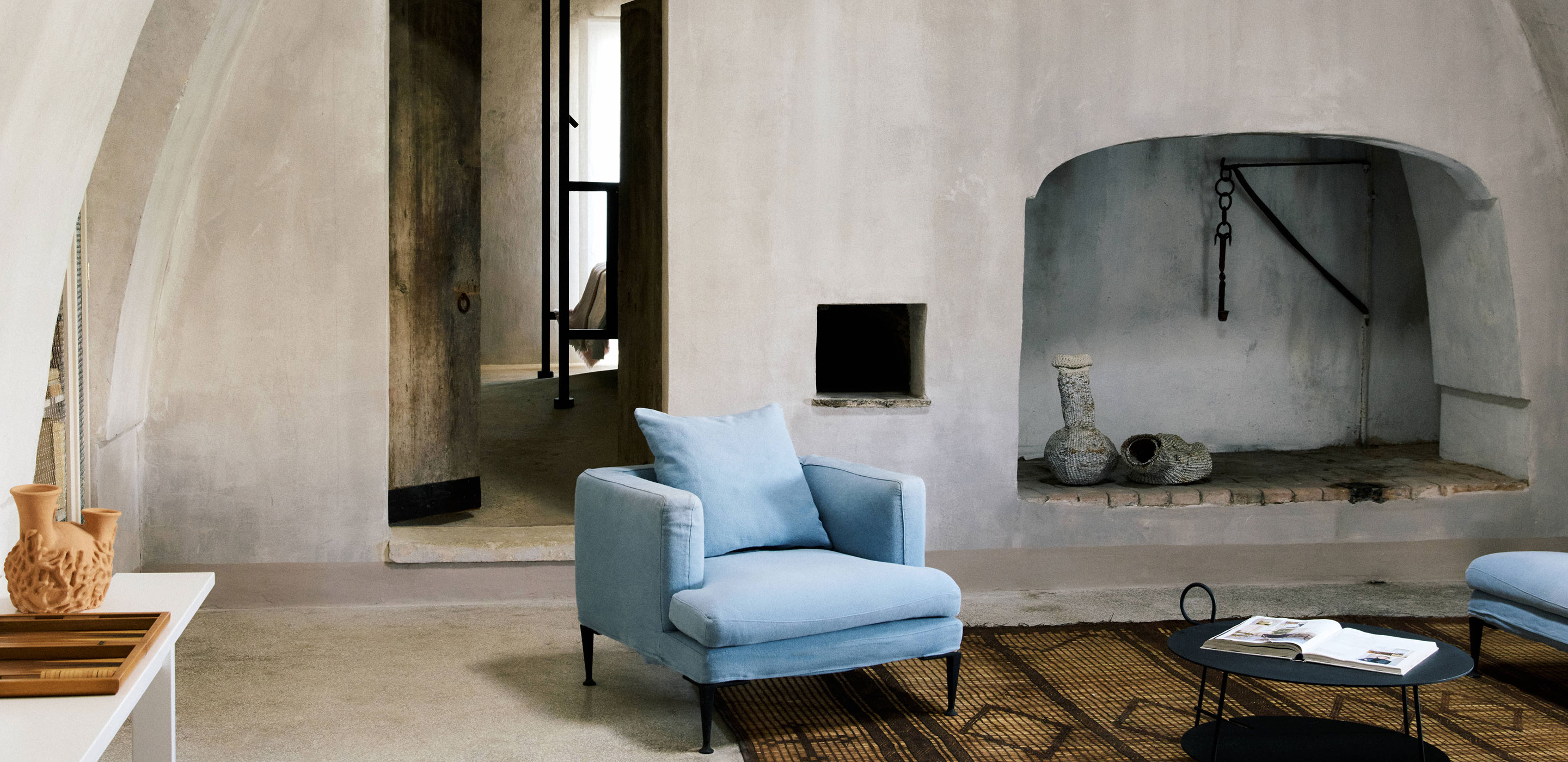
Original architectural details, vaulted ceilings and contemporary art, with sunlight filtering through tall windows. A freestanding bathtub sits beneath frescoed ceilings — an intimate contrast to the grandeur beyond.
Royal Suite

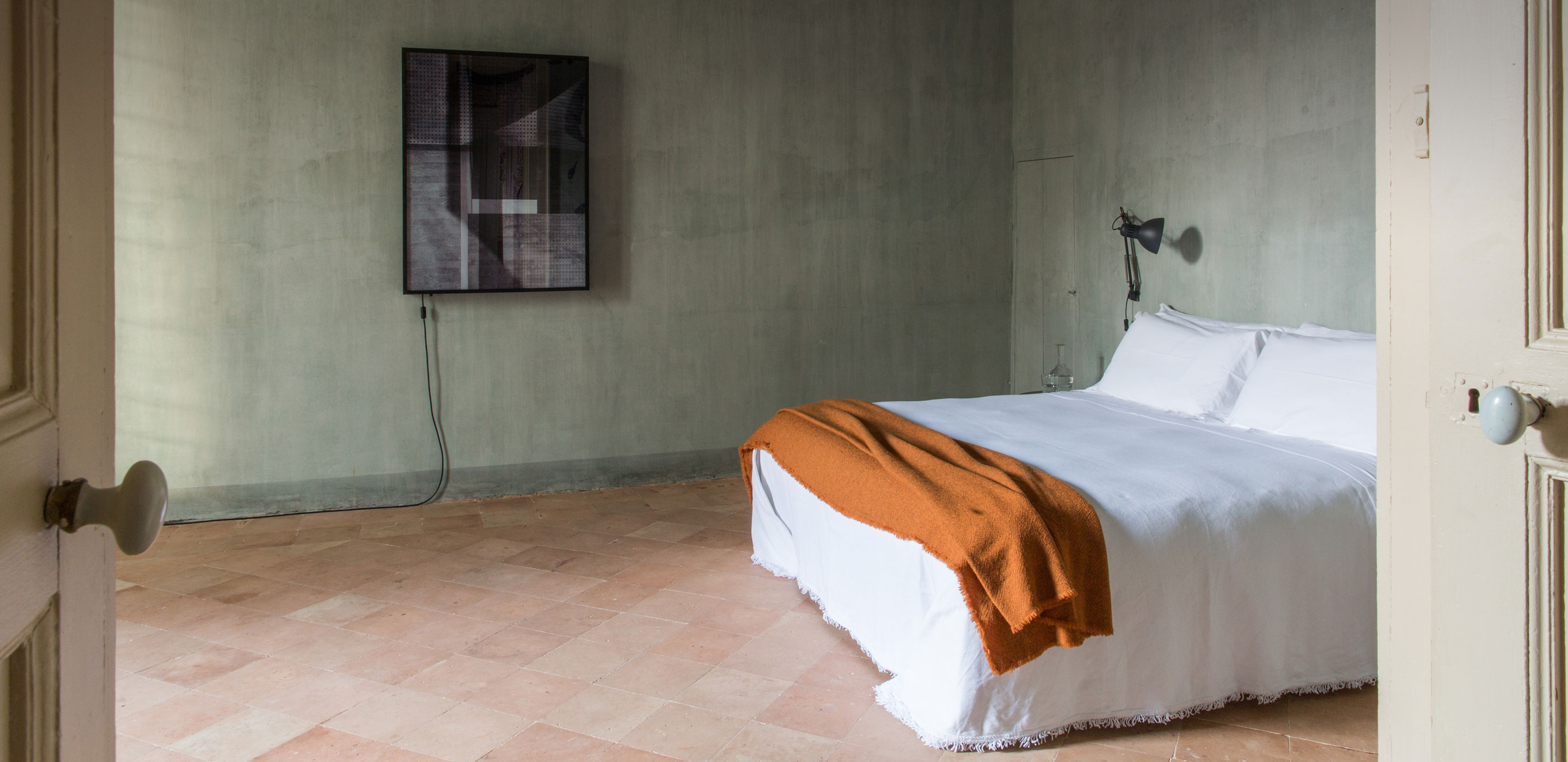
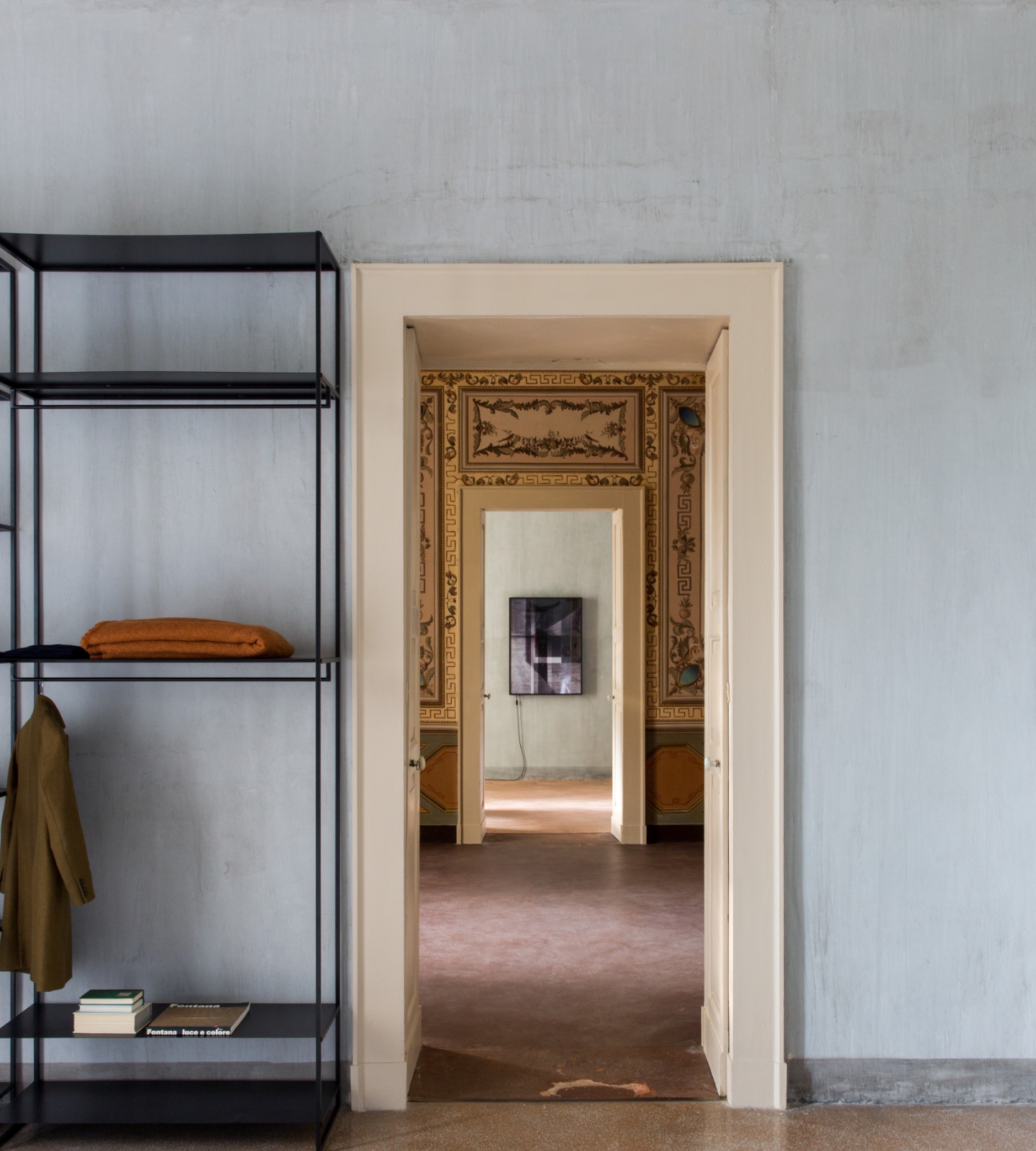
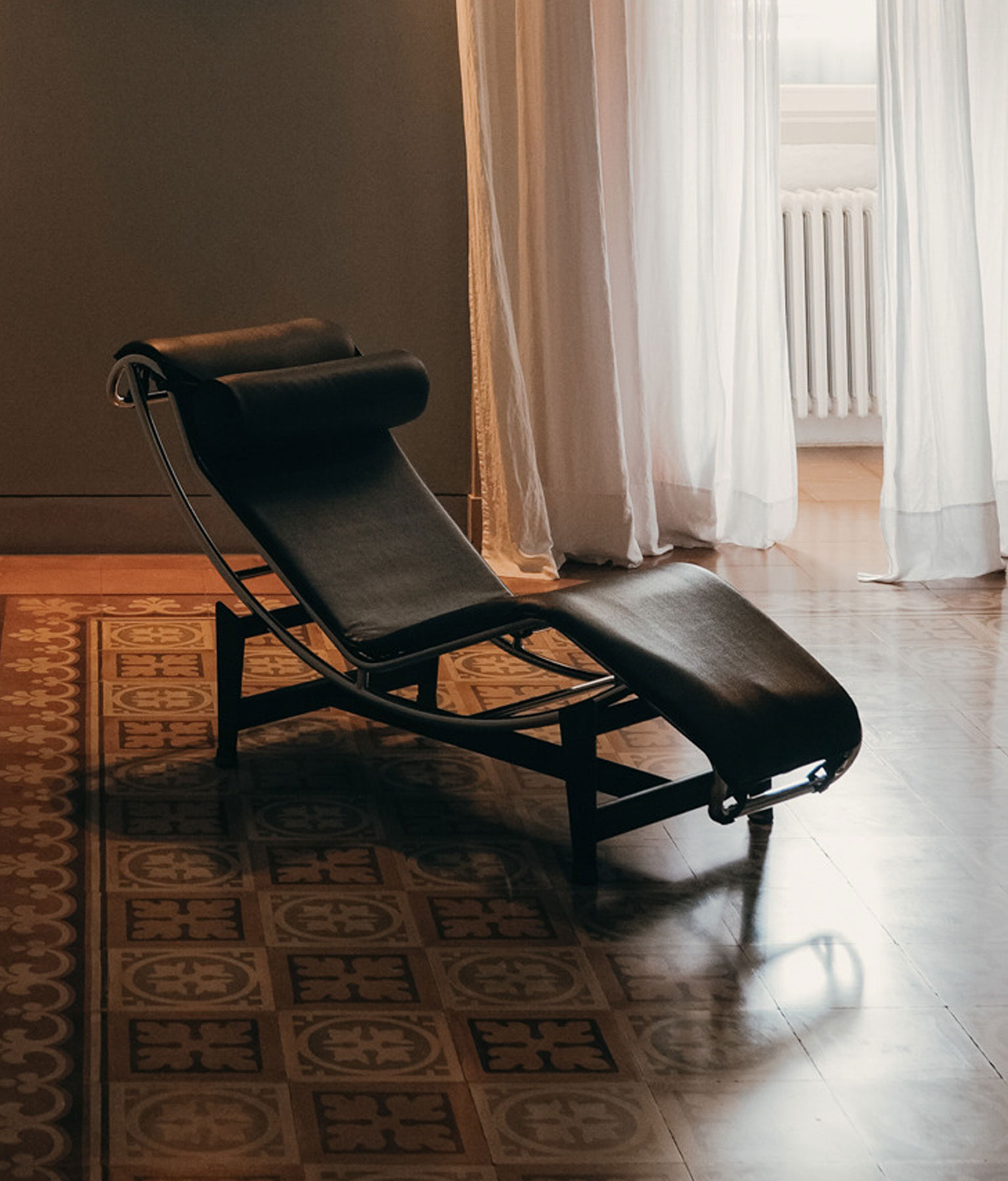
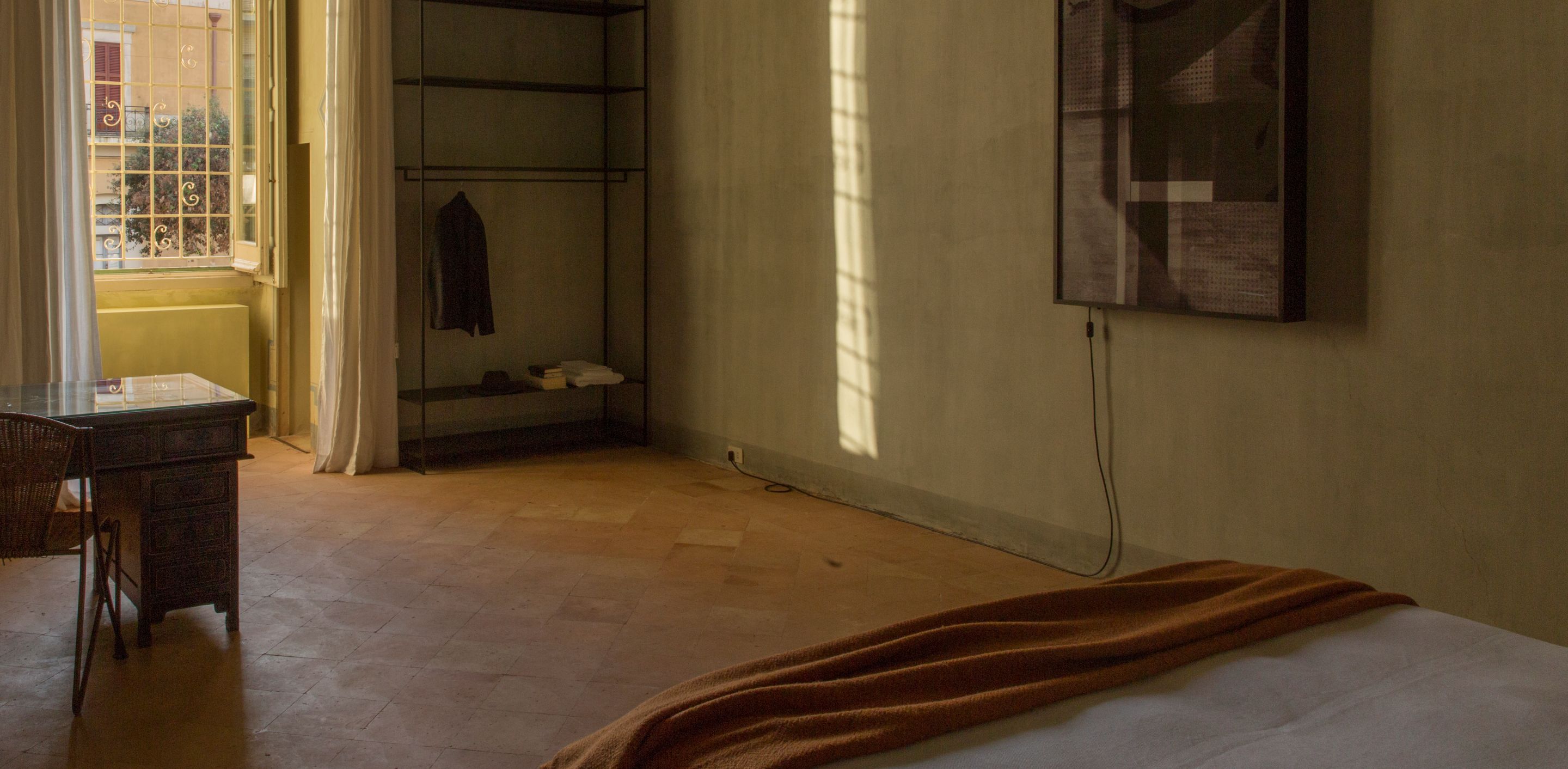
Suite
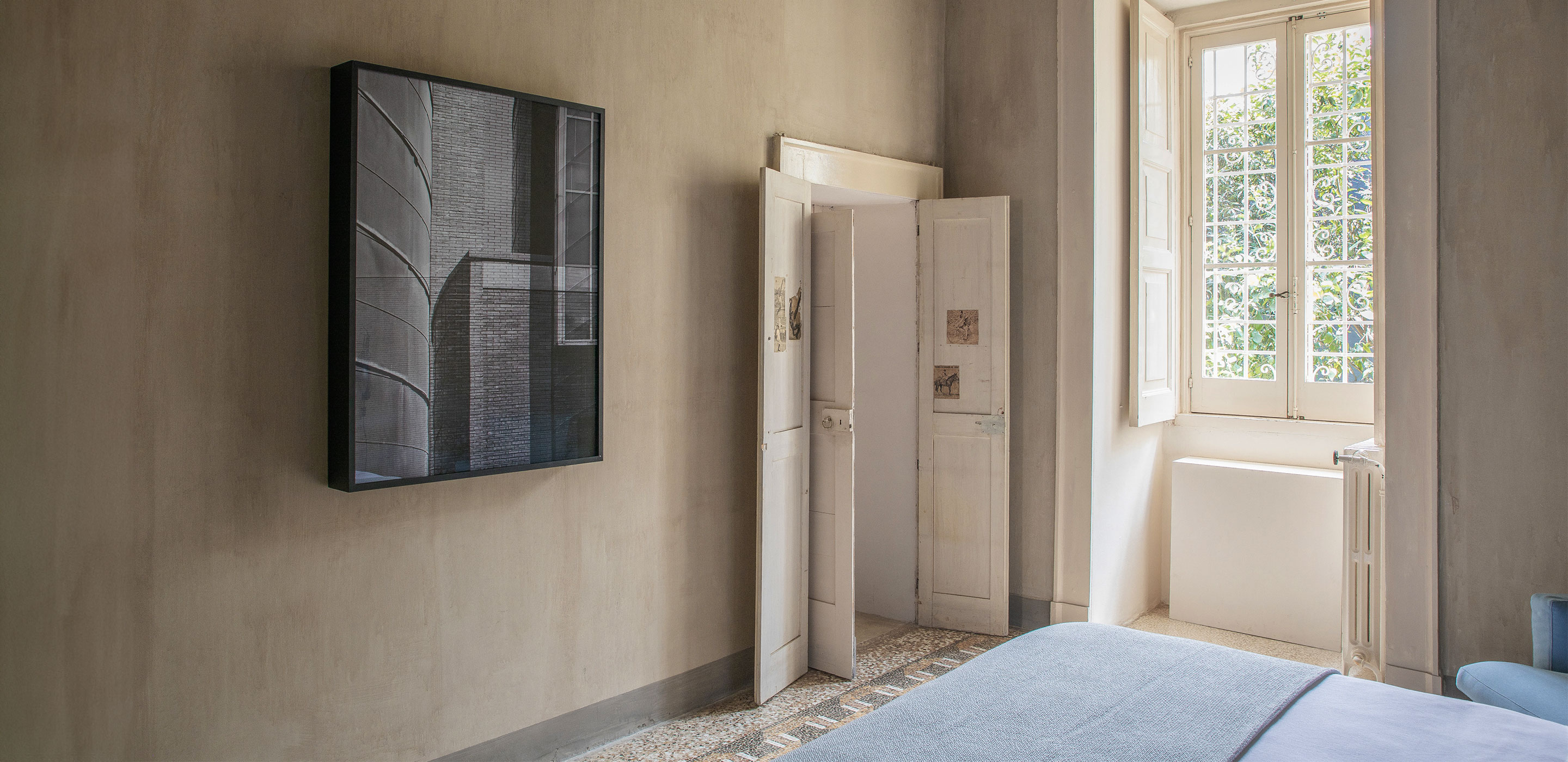
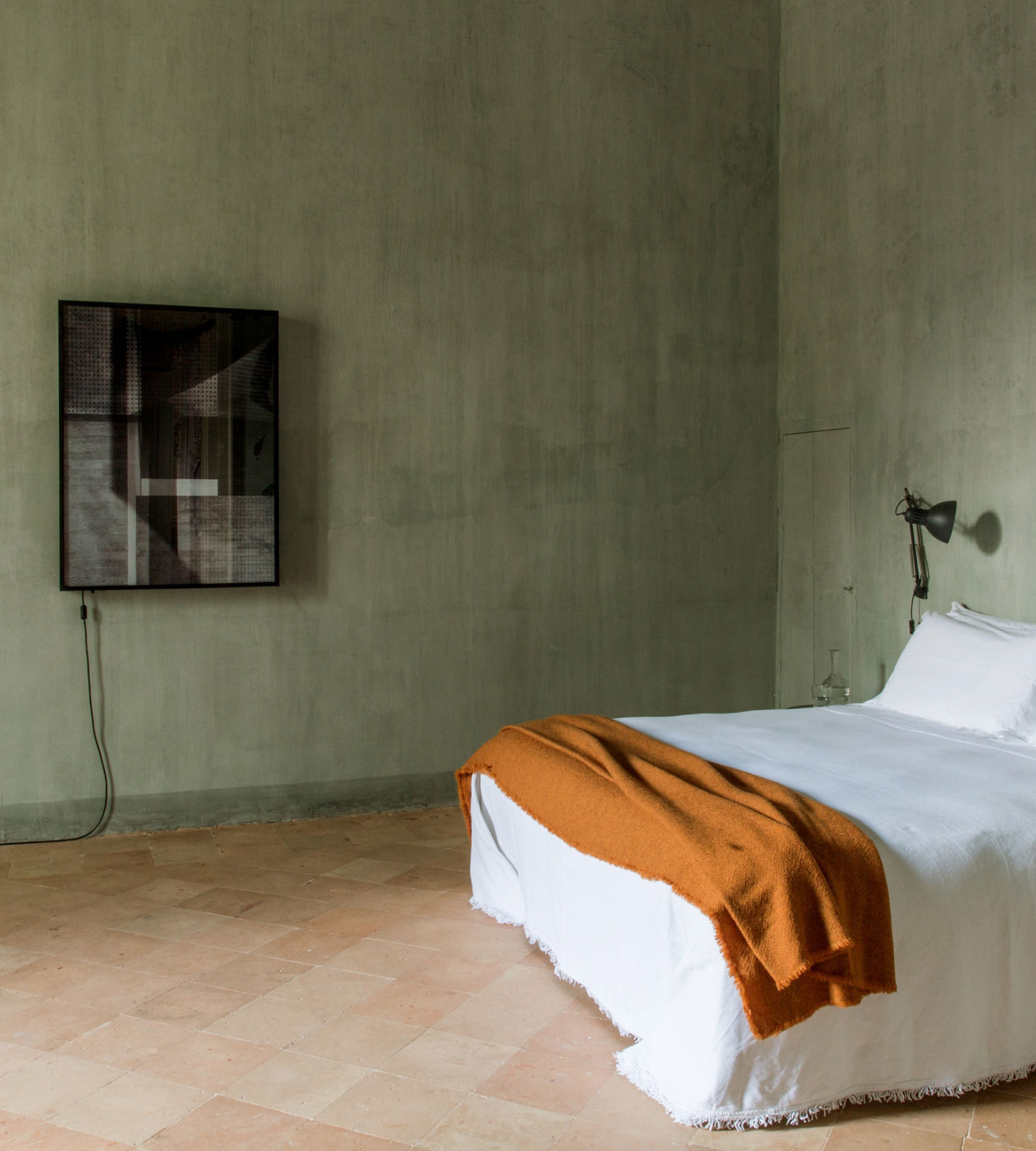
Wardrobes custom-made by Ludovica + Roberto Palomba sit alongside contemporary masterworks — among them a lightbox by Simon d’Exea. Views over the piazzetta or the pool, beneath fresco ceilings and original 19th-century floors.
Suite
Royal Junior Suite
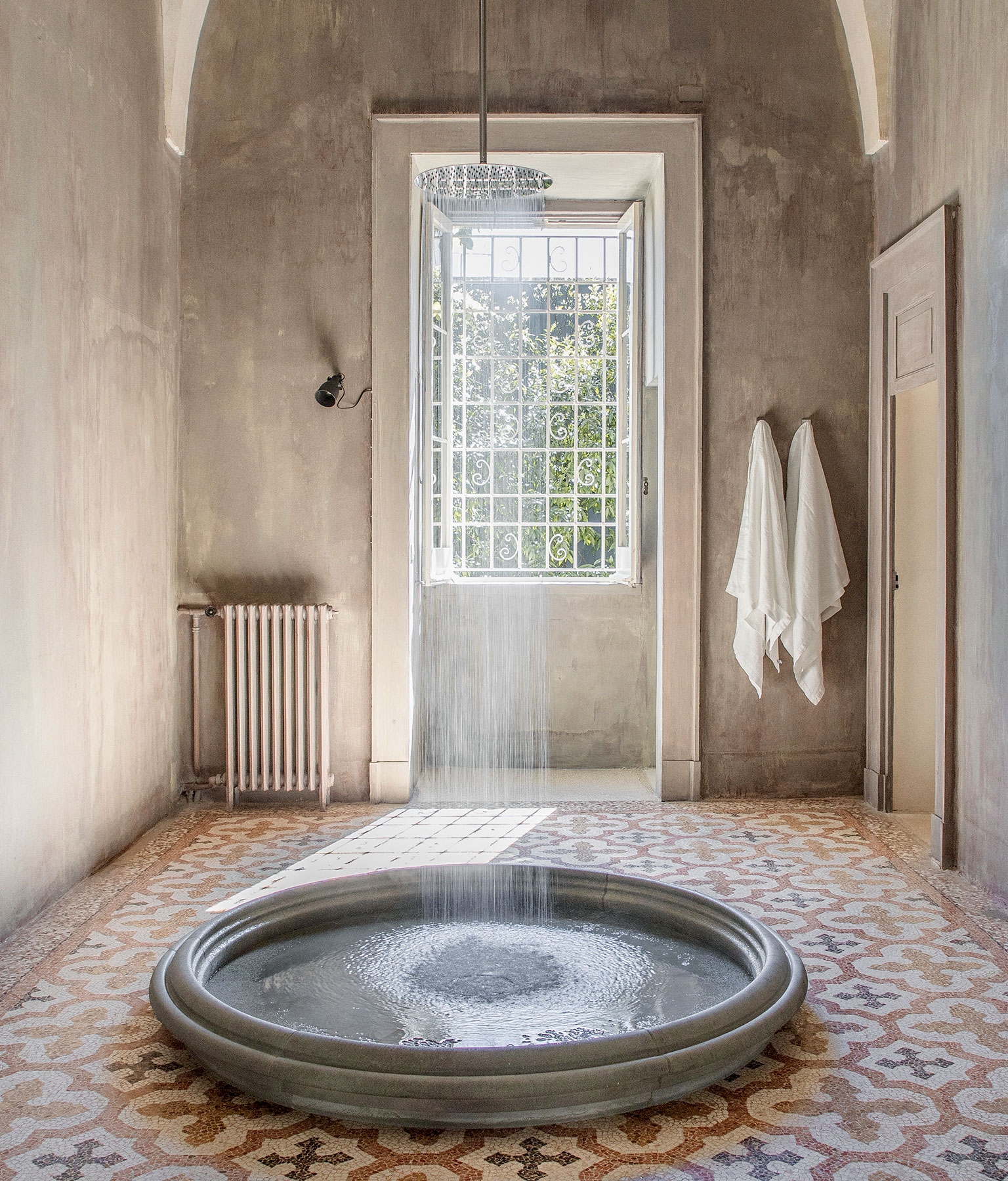
The most photographed room in the house: courtyard views, vaulted ceilings and original 19th-century floors. The bathroom is the highlight — a rain shower falling from a six-metre ceiling into a circular basin designed by Andrea Sala.
Royal Junior Suite
Black Suite
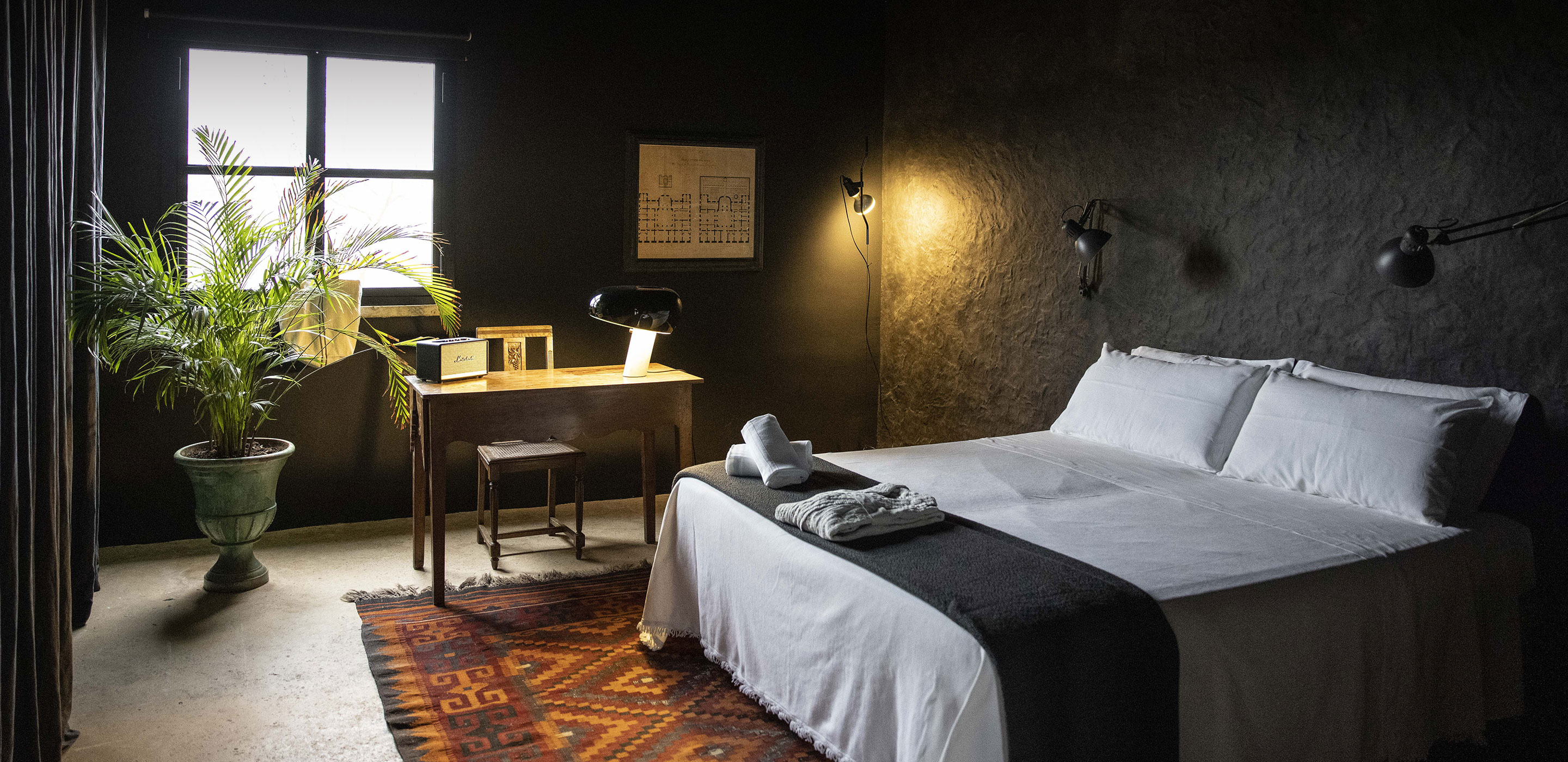
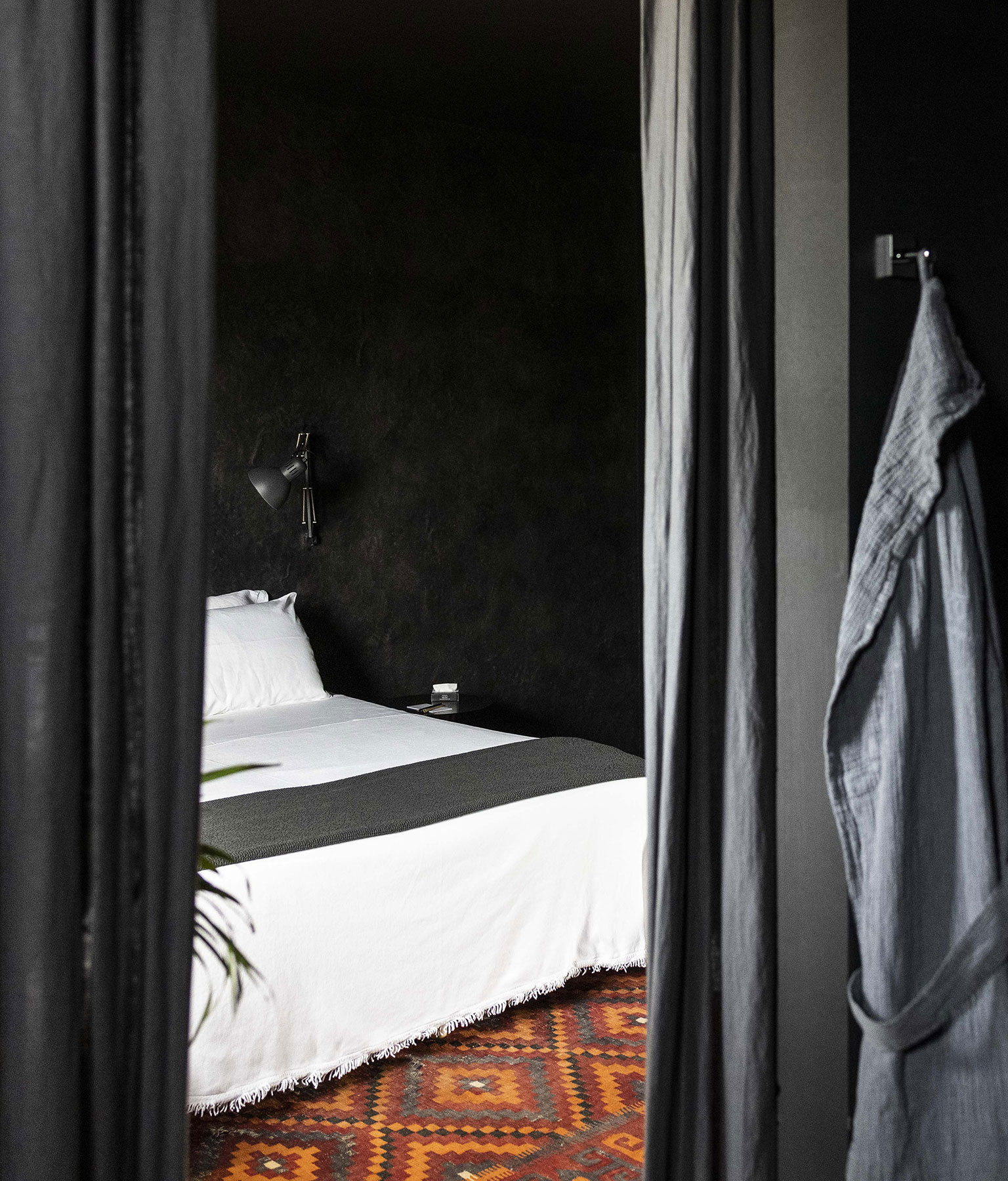
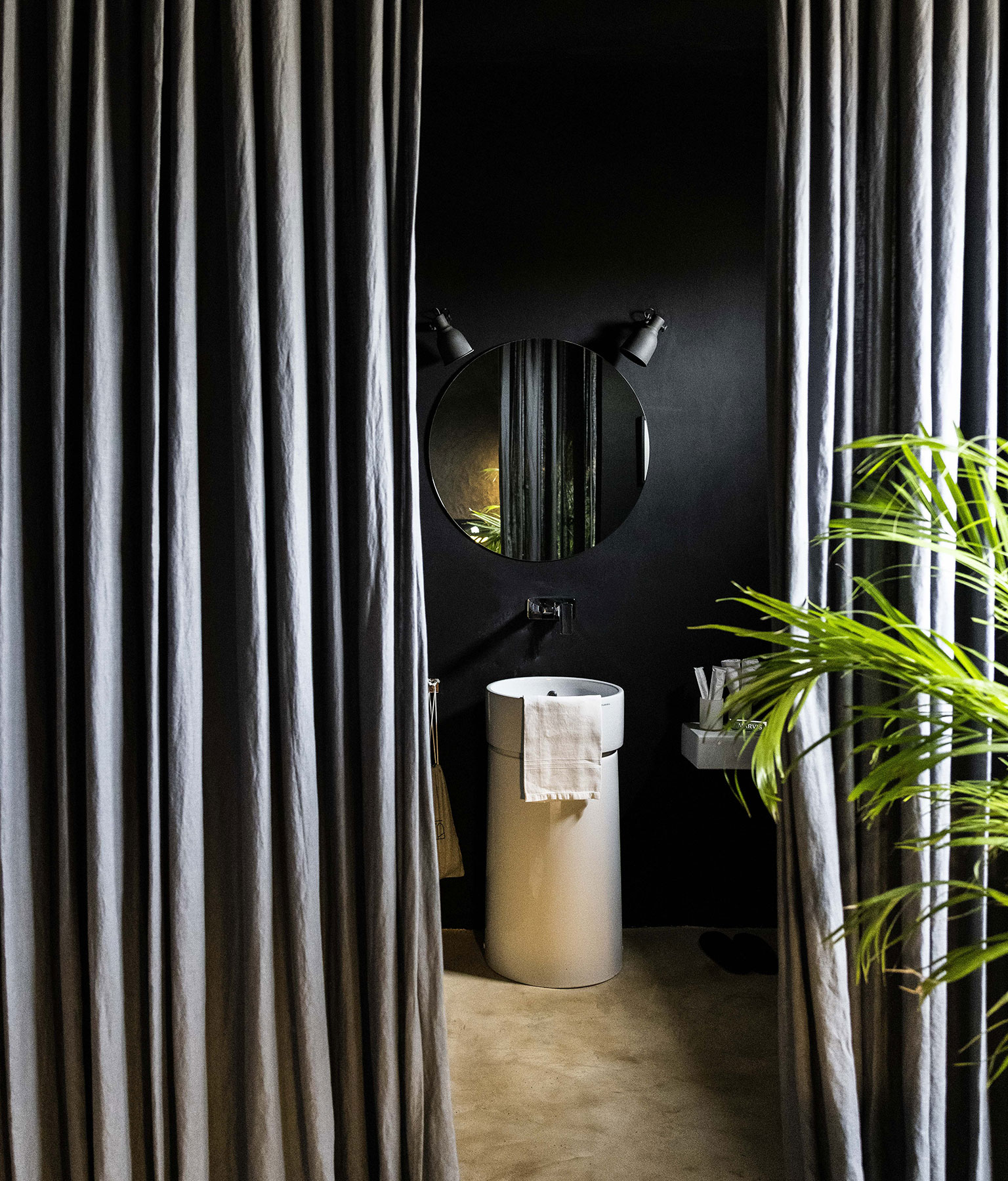
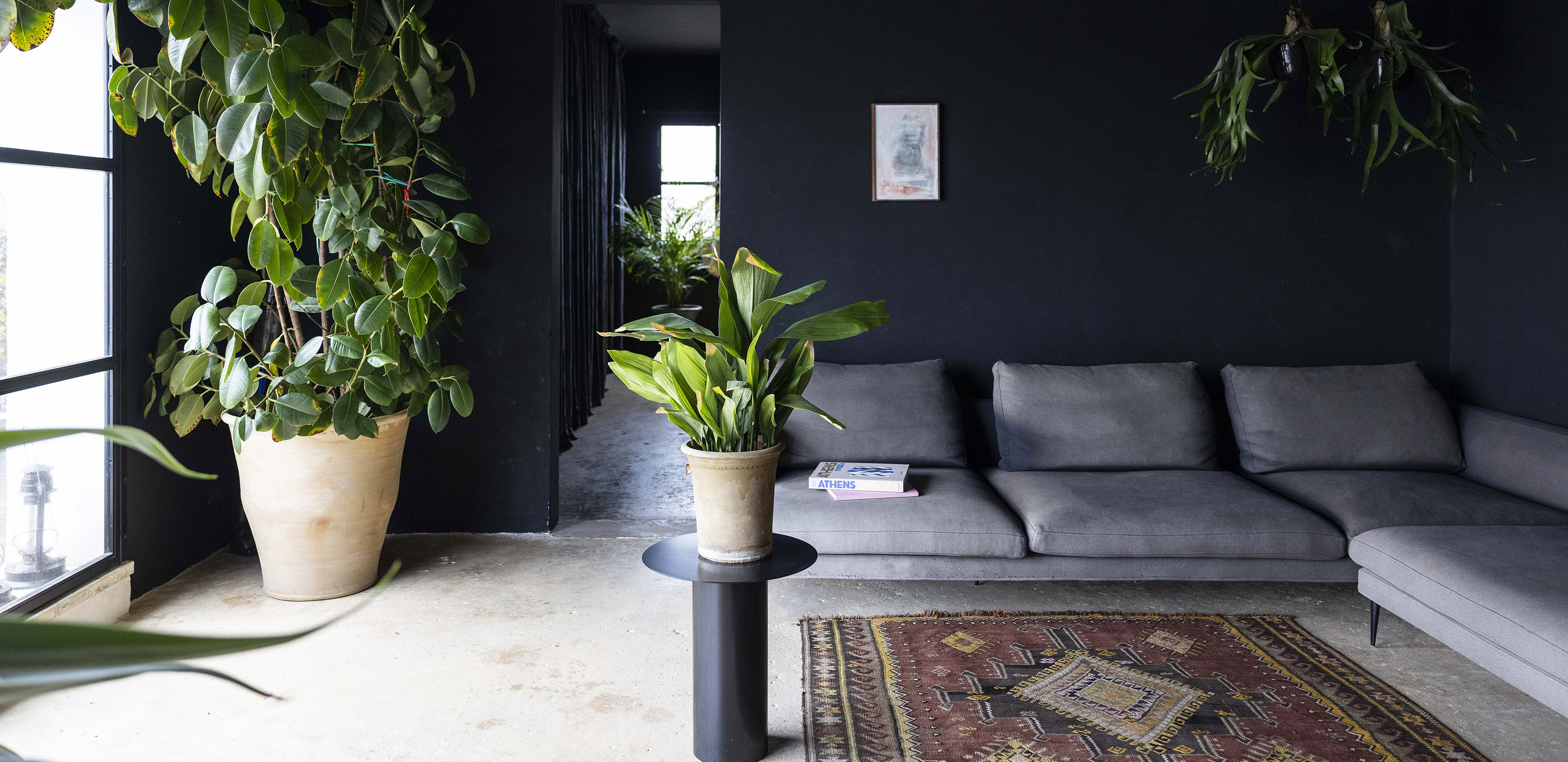
A penthouse atop the palazzo, minimal and clean, with work by Thea Djordjadze and Francesco Arena. A living room, a bedroom, a fully outfitted kitchen and a 1,500 m² private terrace with a commanding view over the property.
Black Suite

Master Suite
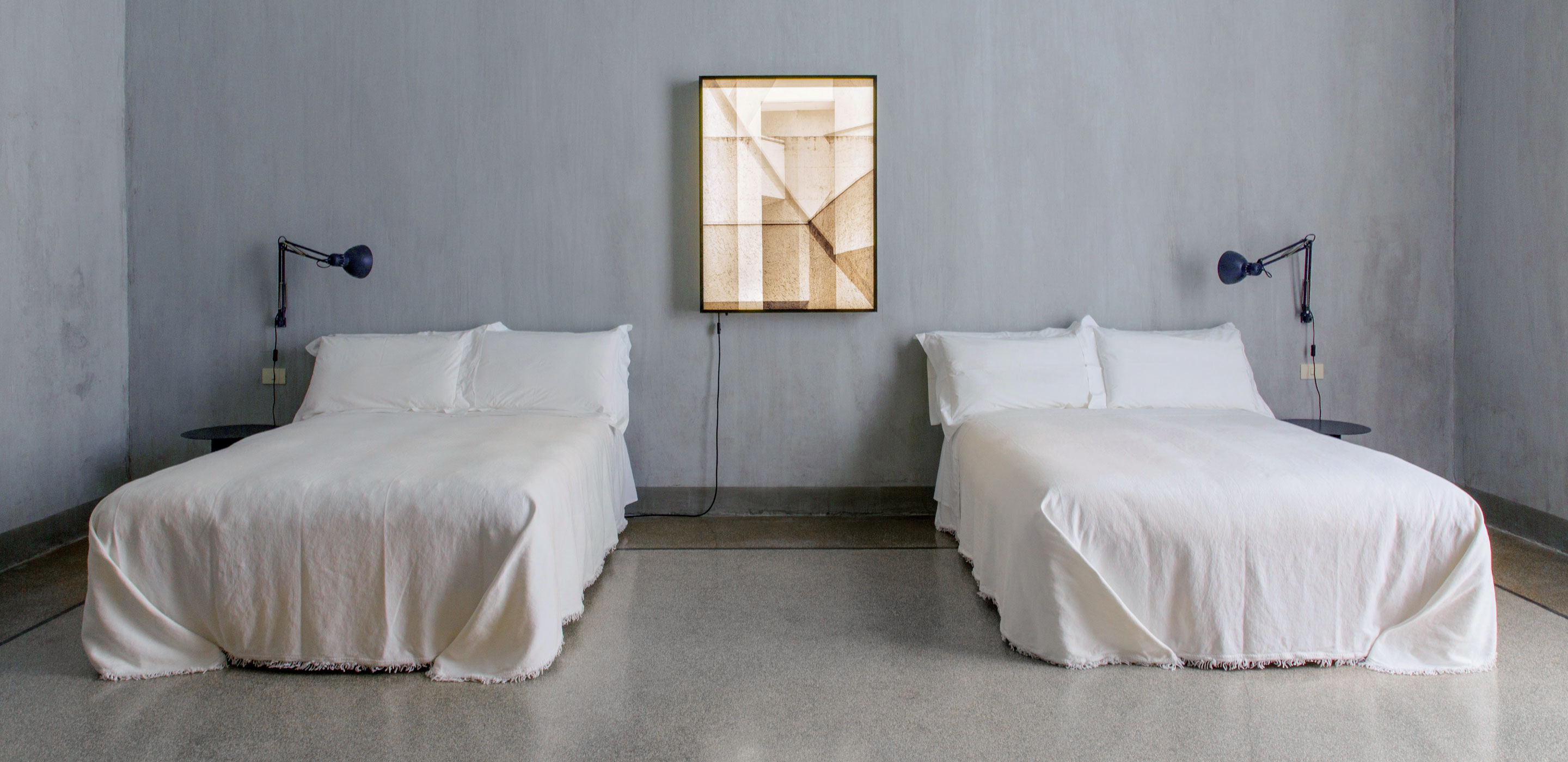
The most aristocratic of the suites: a 40 m² living room and two 35 m² bedrooms with king-size beds and two private bathrooms, under dazzling frescoed ceilings and original 19th-century floors, with many pieces from the palazzo’s art collection.
Master Suite
Why book with us

Best Price Guarantee

Full Access to Content Library

Personalized Itinerary

A Gift with Every Booking

24/7 Support
Amenities
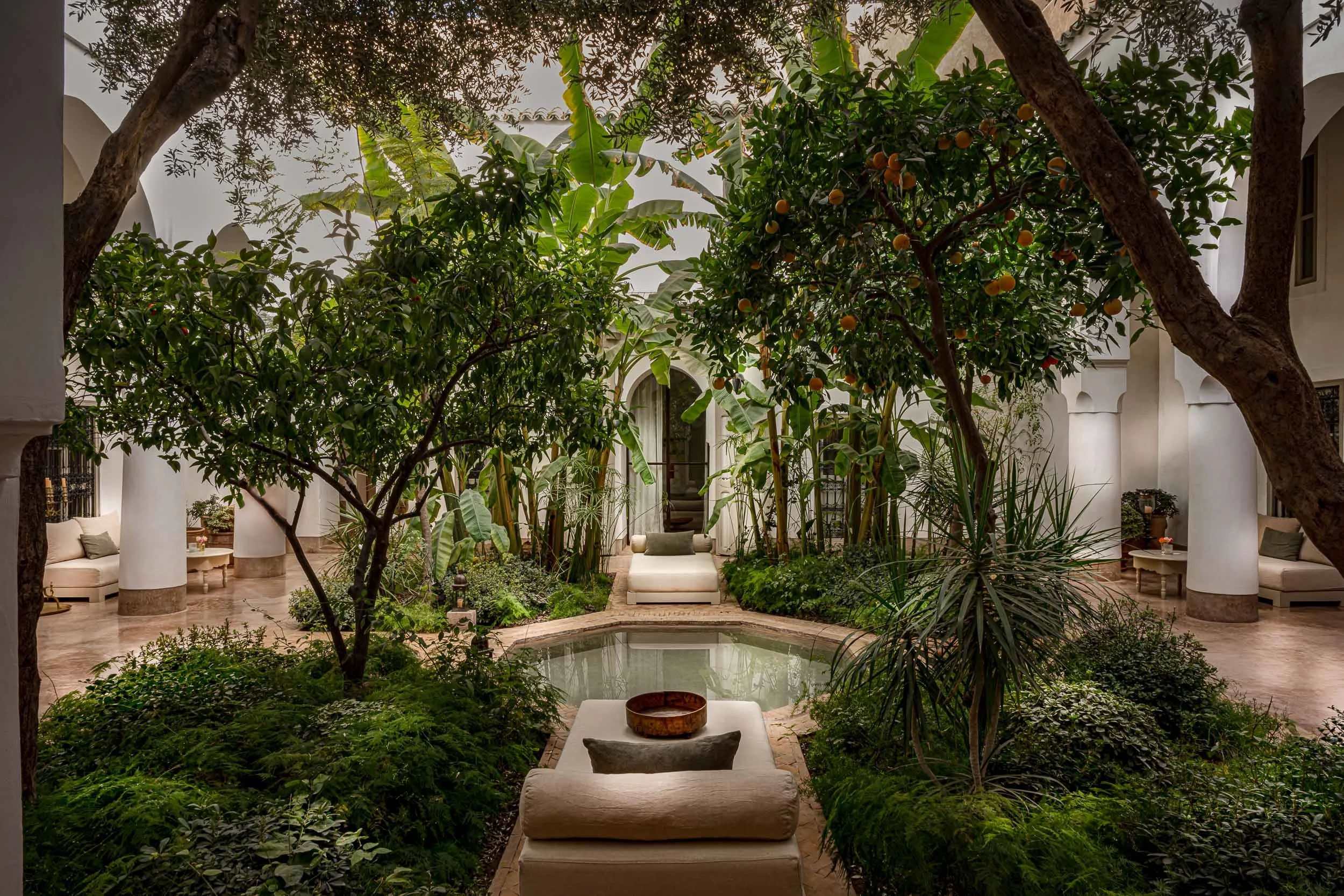
An outdoor pool in the grounds, a spa with sauna and hammam, an orange-tree courtyard, and a kitchen that cooks for guests only.
Photography © Palazzo Daniele.
PUGLIA | MAY 2026
Restrained Luxury in the Aristocratic Heart of the Salento
The Salento, the southernmost tip of Puglia’s heel, has long been Italy’s most Greek-feeling stretch of coast — a low, chalk-bright landscape of dry-stone walls, ancient olive groves and whitewashed villages strung between the Adriatic and the Ionian. In the middle of one such village, Gagliano del Capo, the Petrucci family lived for five generations in a neoclassical palazzo built in 1861 to the designs of Domenico Malinconico. In 2018 Francesco Petrucci, the last of the line to live there, handed its keys to the Roman hotelier Gabriele Salini, founder of G-Rough; the following spring the palazzo reopened as one of the most singular small hotels in Italy.
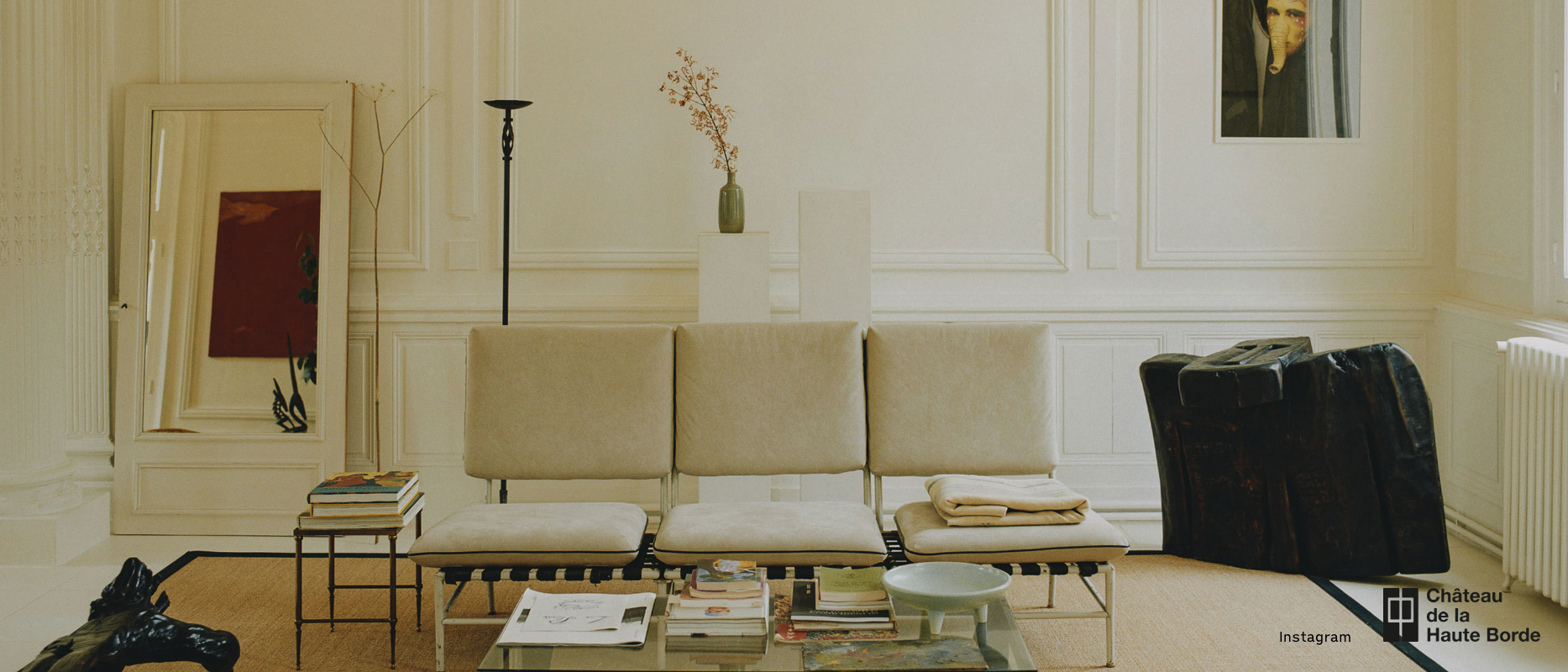
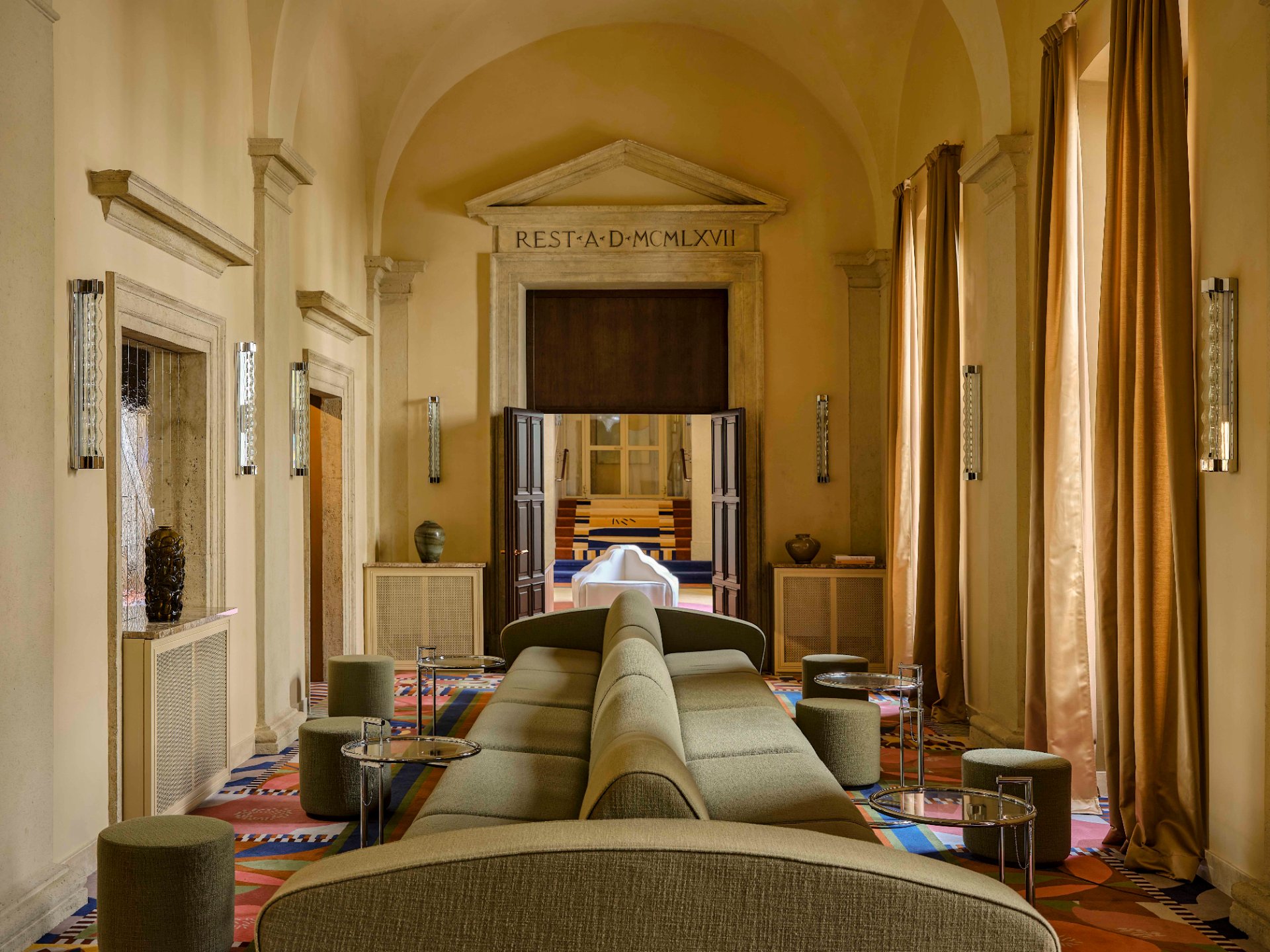
The restoration was entrusted to Ludovica Serafini and Roberto Palomba of the Milanese studio Palomba Serafini Associati, whose brief was as much curatorial as architectural: to preserve the palazzo’s original volumes and decorated surfaces while introducing a contemporary minimalism capable of holding its own against nineteenth-century grandeur. The frescoed ceilings, the mosaic floors and the carved limestone staircases have been left entirely intact; what is new — a long linear dining table here, a pair of Palomba-designed armchairs there, a framed contemporary photograph — is allowed to feel almost sparse against them. The result is neither museum nor hotel exactly, but a sequence of contemporary still lifes arranged within historic rooms.
The suites open off the central courtyard, each generously scaled, each a study in the tension between preserved fresco and pared-back furniture. Behind the house, a twelve-metre pool tiled in near-black has become the hotel’s most photographed image — a dark, glossy rectangle that holds the façade like a still lake. In 2025 Palomba Serafini returned to convert the former olive mill, the trappeto, into four vaulted suites and a communal lounge, bringing the total to eleven; several are anchored by many-sided soaking tubs cast bespoke in cocciopesto, the Roman mortar of lime and crushed brick.
Meals are local and ingredient-led — orecchiette with turnip tops, sea urchin from the harbour at Tricase, aubergines, ricotta forte, olive oil from the surrounding groves — and served family-style, often at the long courtyard table under the stars. Contemporary art runs through the house: works by Nicolas Party, Carla Accardi, Eva Jospin and the Salentine painter Luigi Presicce hang against the frescoed walls, a legacy of the years when Petrucci ran the palazzo as the seat of his non-profit Capo d’Arte. Palazzo Daniele’s quiet, precise intelligence — its willingness to let less do more — has made it a touchstone for a new kind of southern Italian luxury, one that prizes continuity and restraint over spectacle.