beta
beta
Free, and it takes one tap. The guide opens as soon as you are in.
Continue with GoogleWe will send you a one-time sign-in link.
Tuscany, Italy
April – October
7 nights
13 stays
Renaissance & wine country
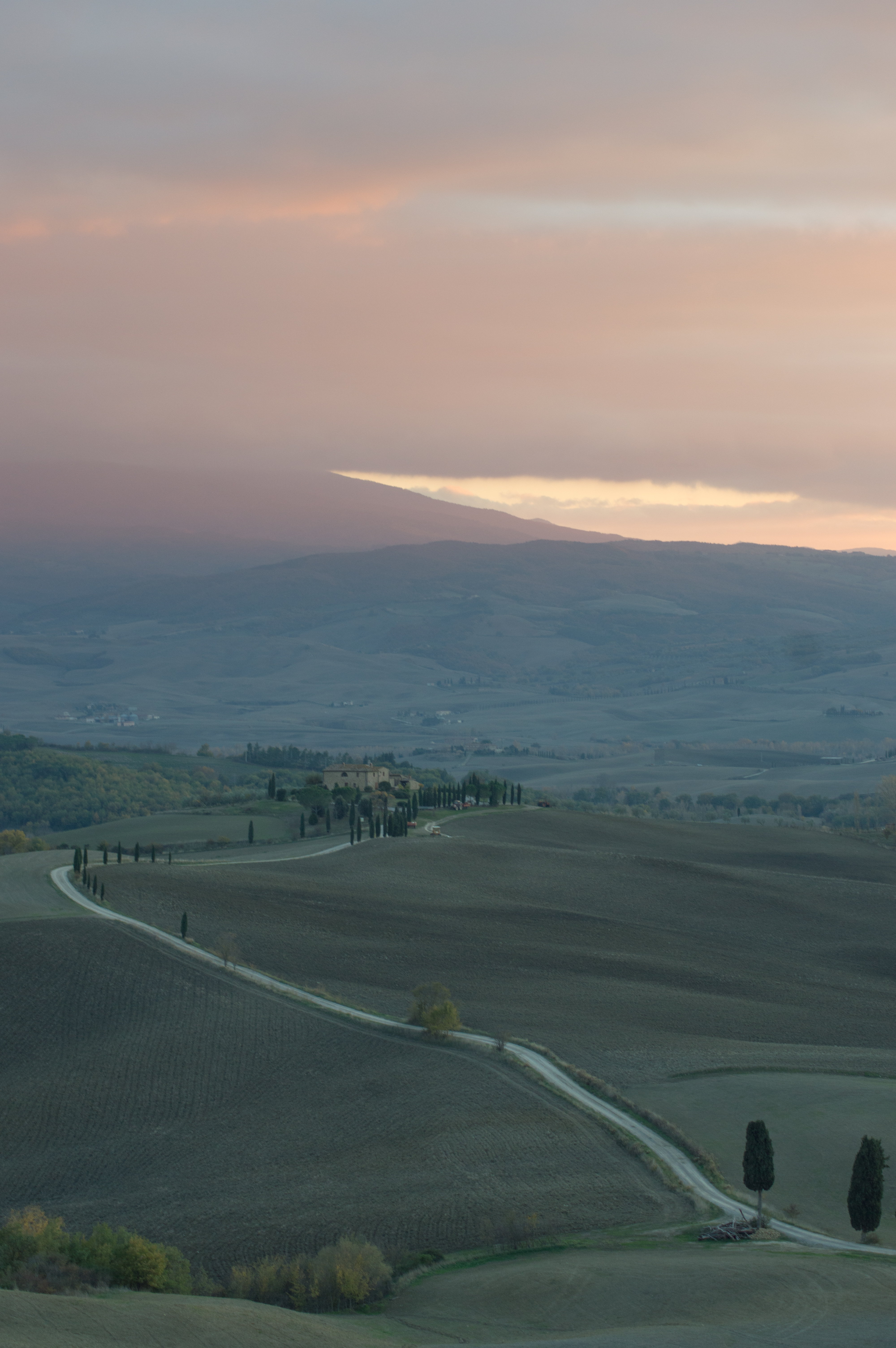
Nothing you will look at this week grew there by itself. The cypress rows were planted to mark boundaries, the olive terraces were cut by hand, and one entire town was rebuilt in three years because a pope wanted his birthplace to look like the ideal city of the architects' treatises. Over seven nights the route runs south from Florence, the city that paid for all of it, through the hills its families planted, to the valley where the idea went furthest. Two nights in Florence, two in the Chianti, three in the Val d'Orcia. Siena is a day trip, not an overnight stop.
Florence made the money and the argument. For two centuries its bankers financed half of Europe and its architects worked out, on paper first, what a proportioned building ought to be — Brunelleschi's dome, Alberti's façades, the grid of Santo Spirito. The city is still the most concentrated statement of that argument anywhere, which is exactly why it is unbearable between eleven and five from May to October. The Florence in this journey is early, late, and across the river.
South of the city the same families put their theory into the ground. The Chianti hills were farmed on the mezzadria system — the landowner in a villa, the sharecropper in a casa colonica, the produce split in two — and the pattern of vineyard, olive grove and cypress-lined farm track that reads as timeless was laid out by estate managers with ledgers. The Antinori have made wine here for twenty-six generations. The rows you drive between were somebody's decision.
The Val d'Orcia is where the idea went furthest. In 1459 Enea Silvio Piccolomini, newly Pope Pius II, had his architect Bernardo Rossellino rebuild the village of his birth as an ideal city — cathedral, palace, town hall, one square — and renamed it Pienza after himself. Around it, Sienese landowners shaped the valley to the taste of the paintings they were commissioning, and UNESCO's citation for the site says so in as many words: a landscape designed to look like art. Seven nights, then, from the drawing to the finished picture.
12
Casa Newton

Florence, Piazza Santo Spirito · Fifteen rooms under the loggia · €€
A sixteenth-century palazzo on the Oltrarno's best square, kept by Ferdinando and Laura Budini Gattai with family portraits on the walls and no lift. Breakfast comes to the room; the top-floor loggia looks over Santo Spirito and doubles as the bar at sunset.
View hotel →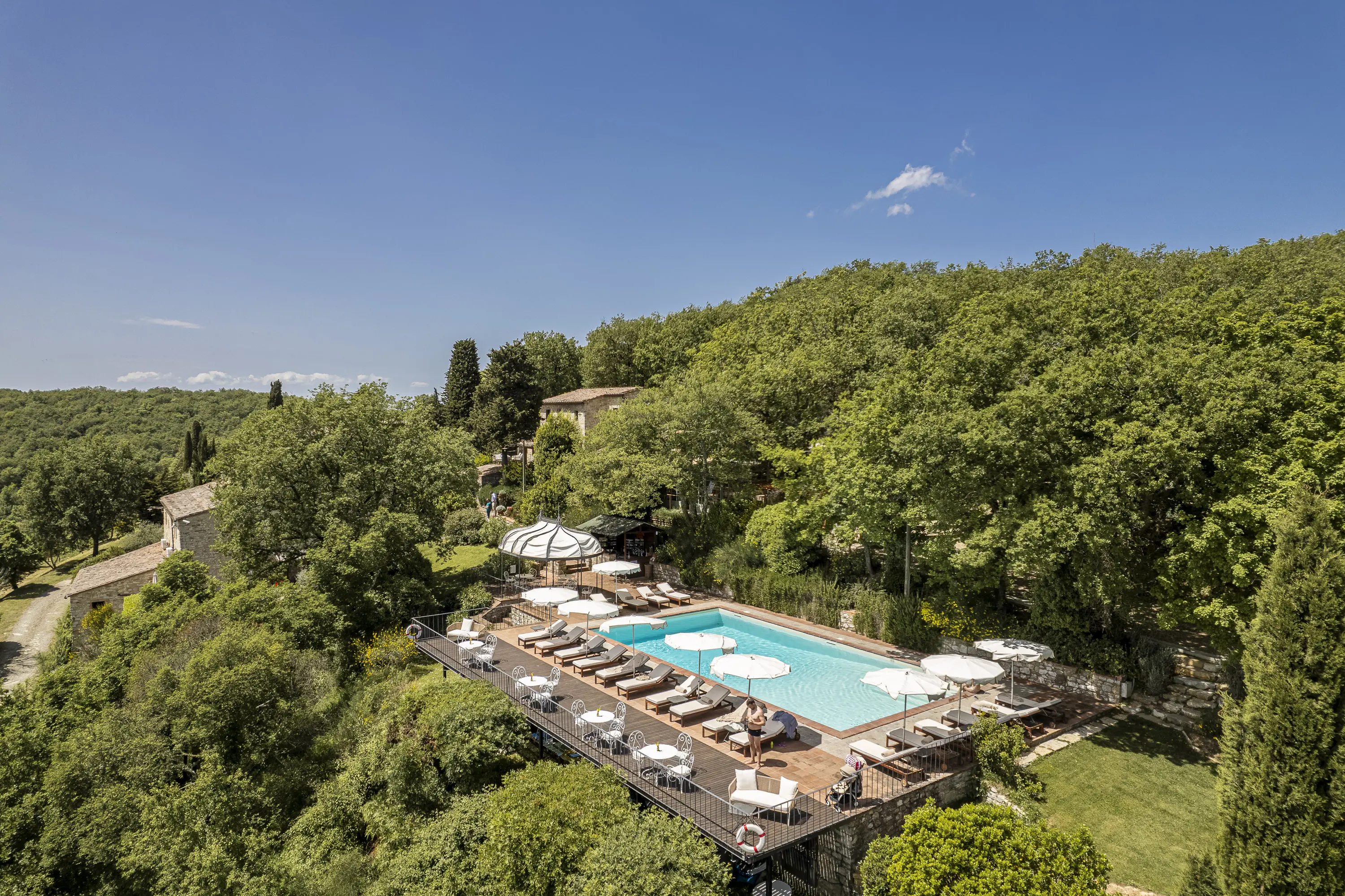
Radda in Chianti · A Lombard hamlet turned estate · €€€
Rooms named for what they used to be — grain store, fermentation vat, olive press — in a fortified hamlet above forty-two hectares of vines and woods. Two restaurants, a weekly dinner in the piazza, and a working winery attached.
View hotel →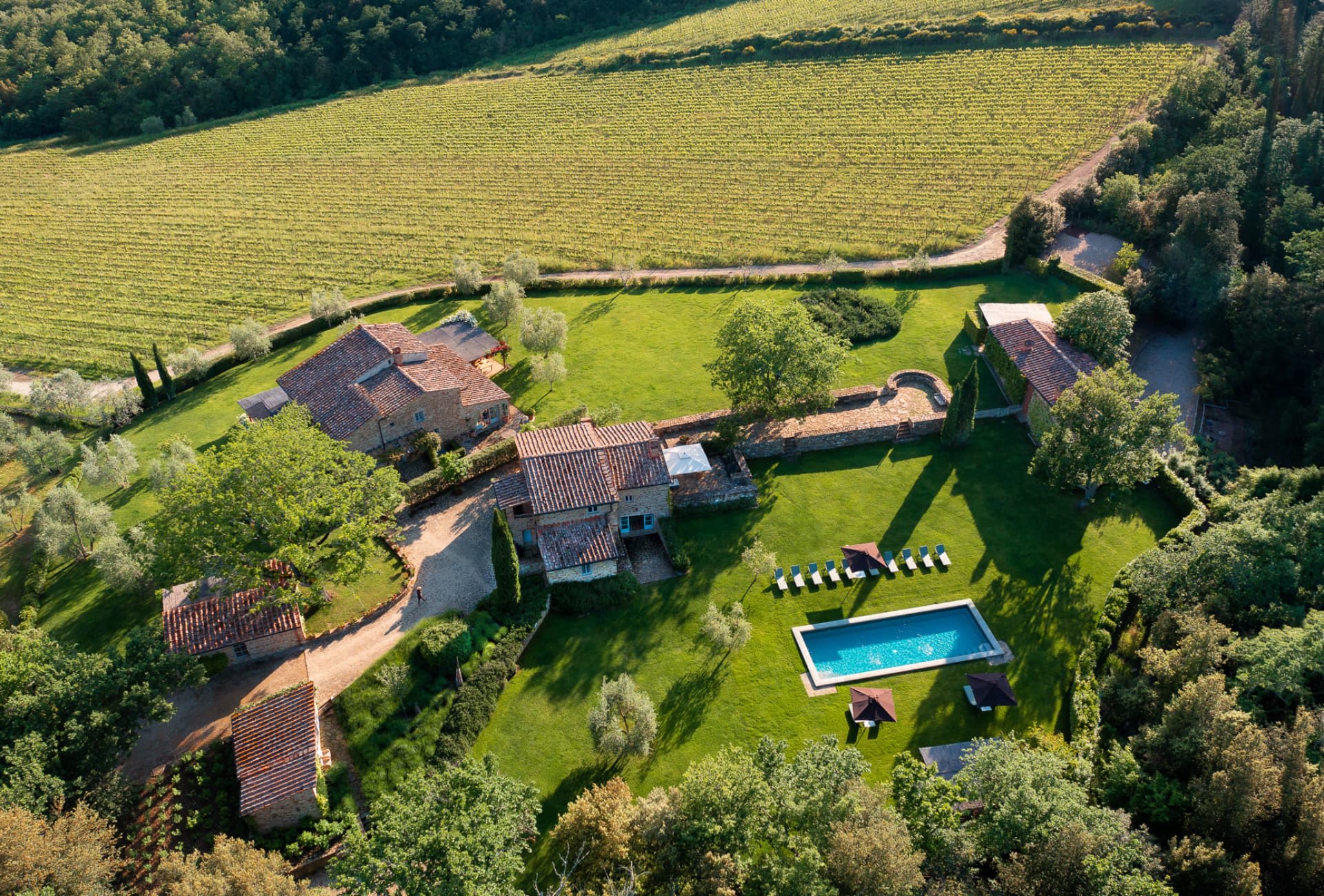
Greve in Chianti · The villa with a Gherardini in the family tree · €€€€
The house where, by tradition, Lisa Gherardini was born; Patrice Taravella — the gardener behind Babylonstoren and The Newt — has spent a decade rebuilding it. Nineteen suites, four hundred organic hectares, and a garden meant to become one of Italy's great ones.
View hotel →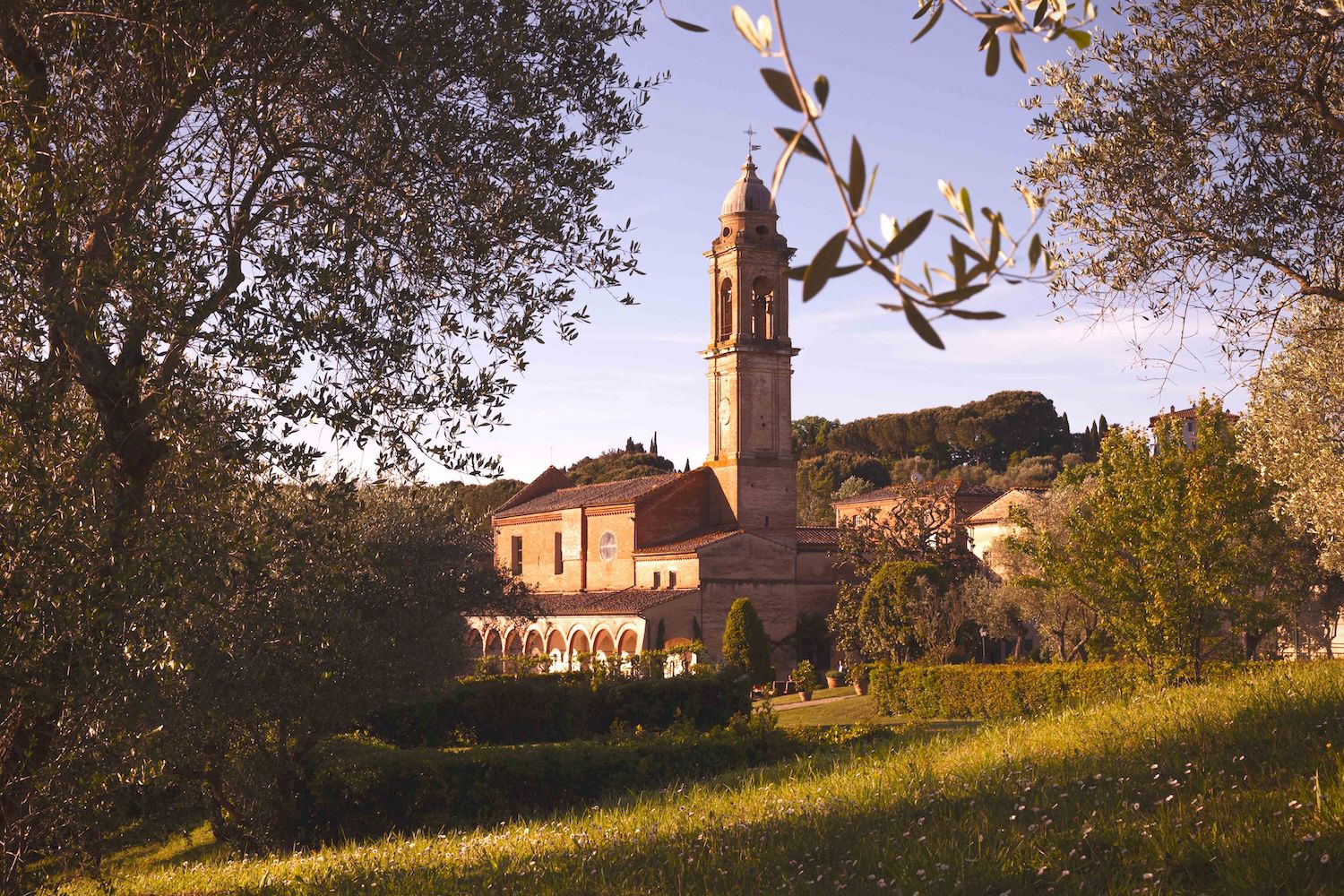
Siena, Porta Romana · Twenty-two rooms in a 1314 charterhouse · €€€
A charterhouse of 1314, abandoned for centuries and bought as a ruin by Anna Grossi Recordati in 1969. Twenty-two rooms in what were the monks' cells, a frescoed chapel, a pool behind the cloister arches — and the one address here you can walk into Siena from.
View hotel →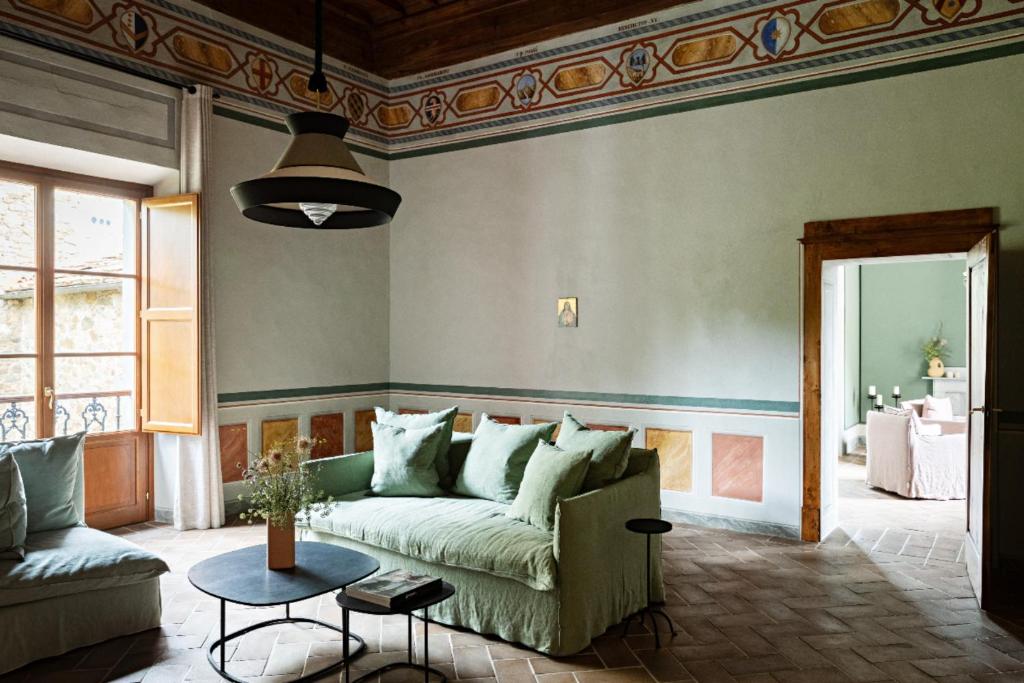
Radda in Chianti · A twelfth-century bishop's estate, opened 2023 · €€€
Four buildings around a Romanesque church — la Pieve, the Studiolo, the Conventino — restored by Pierattelli Architetture for the French Fontenille group. Twenty-two rooms, sixteenth-century frescoes left where they were, and Le Rondini in the former olive press.
View hotel →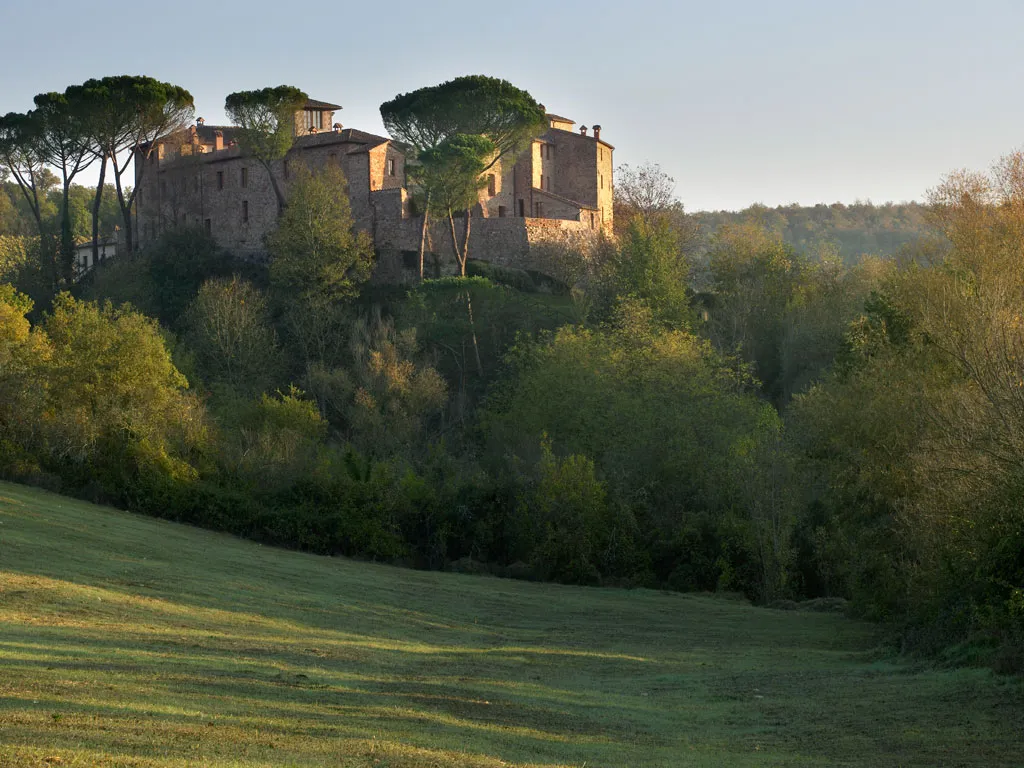
Castelnuovo Berardenga · An eleventh-century monastery and its village · €€€€
An eleventh-century monastery and the hamlet that grew around it, restored as a single house twenty-three kilometres east of Siena: sixty-eight rooms along the old lanes, a spa under the walls, and a thirteenth-century cellar that still serves dinner.
View hotel →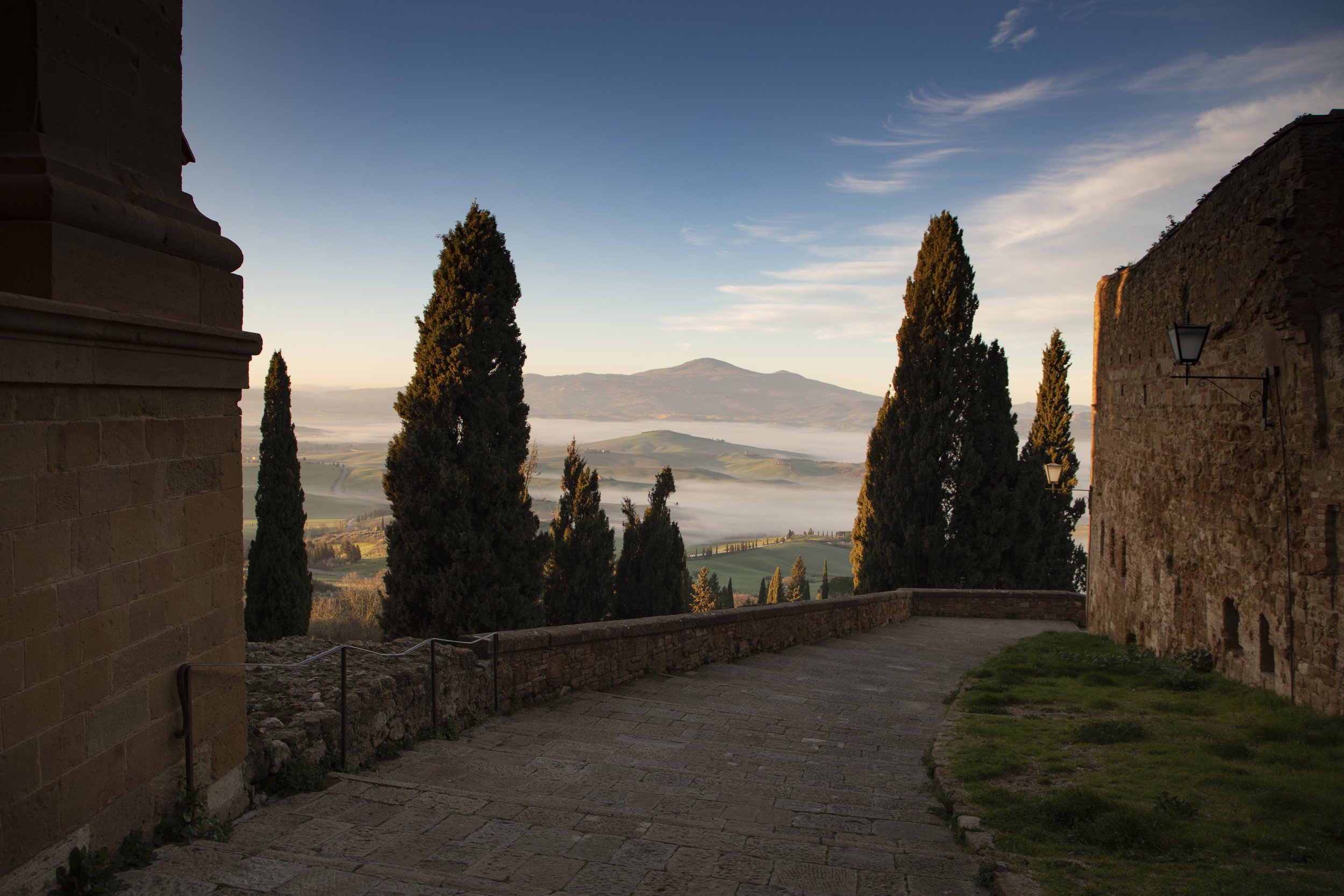
Pienza, Corso Rossellino · Twelve rooms where nuns lived for five centuries · €€€
John Voigtmann left Sony Music and took a fifteenth-century convent inside Pius II's ideal city; nothing on the outside was allowed to change. An open kitchen, a walled medieval garden, and the view Montepulciano to Monte Amiata from the roof.
View hotel →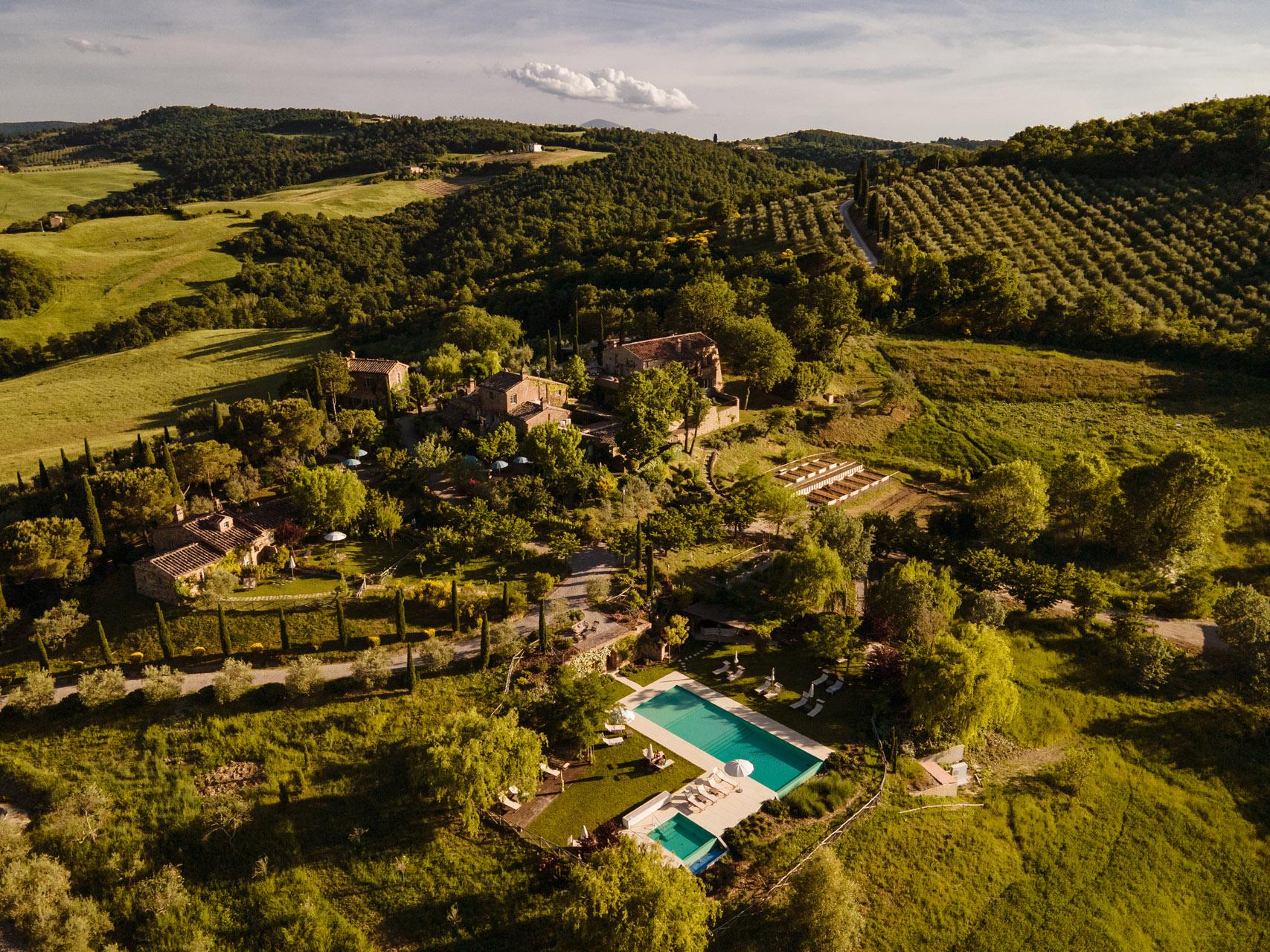
Torrita di Siena · Twelve rooms across five stone farmhouses, 1622 · €€€
Heidi and Christopher Müller left corporate Austria for a hilltop with a full circle of valley around it. The kitchen garden feeds a four-course dinner cooked on an open hearth; truffle hunts and e-bikes fill the days for those who want filling.
View hotel →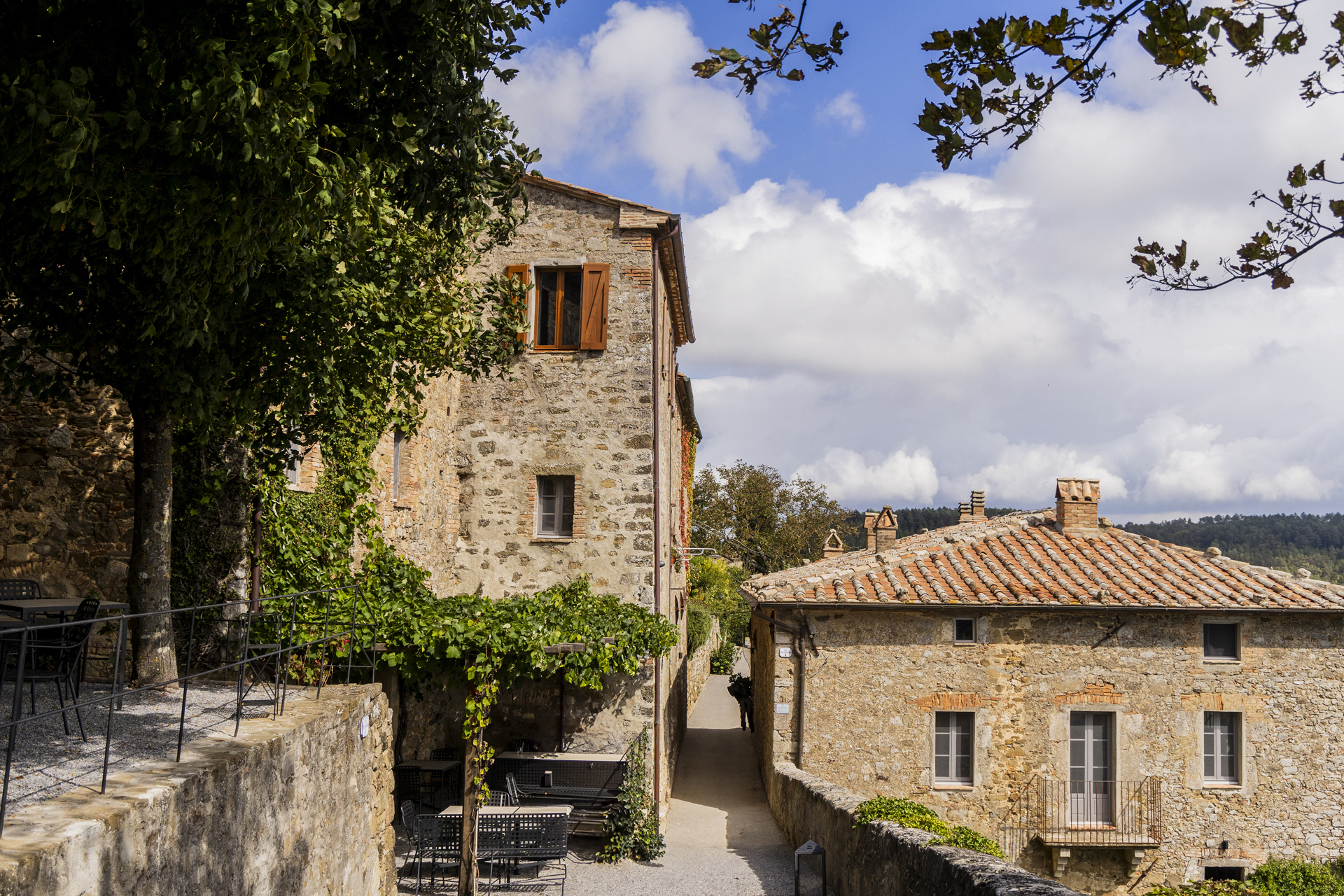
Castiglioncello del Trinoro · An entire village, population sixteen · €€€€
Michael Cioffi bought the hilltop hamlet and restored it house by house: twenty-nine rooms across seven medieval buildings, a restaurant, an arts programme and a pool aimed at the whole valley. The southern edge of the Val d'Orcia.
View hotel →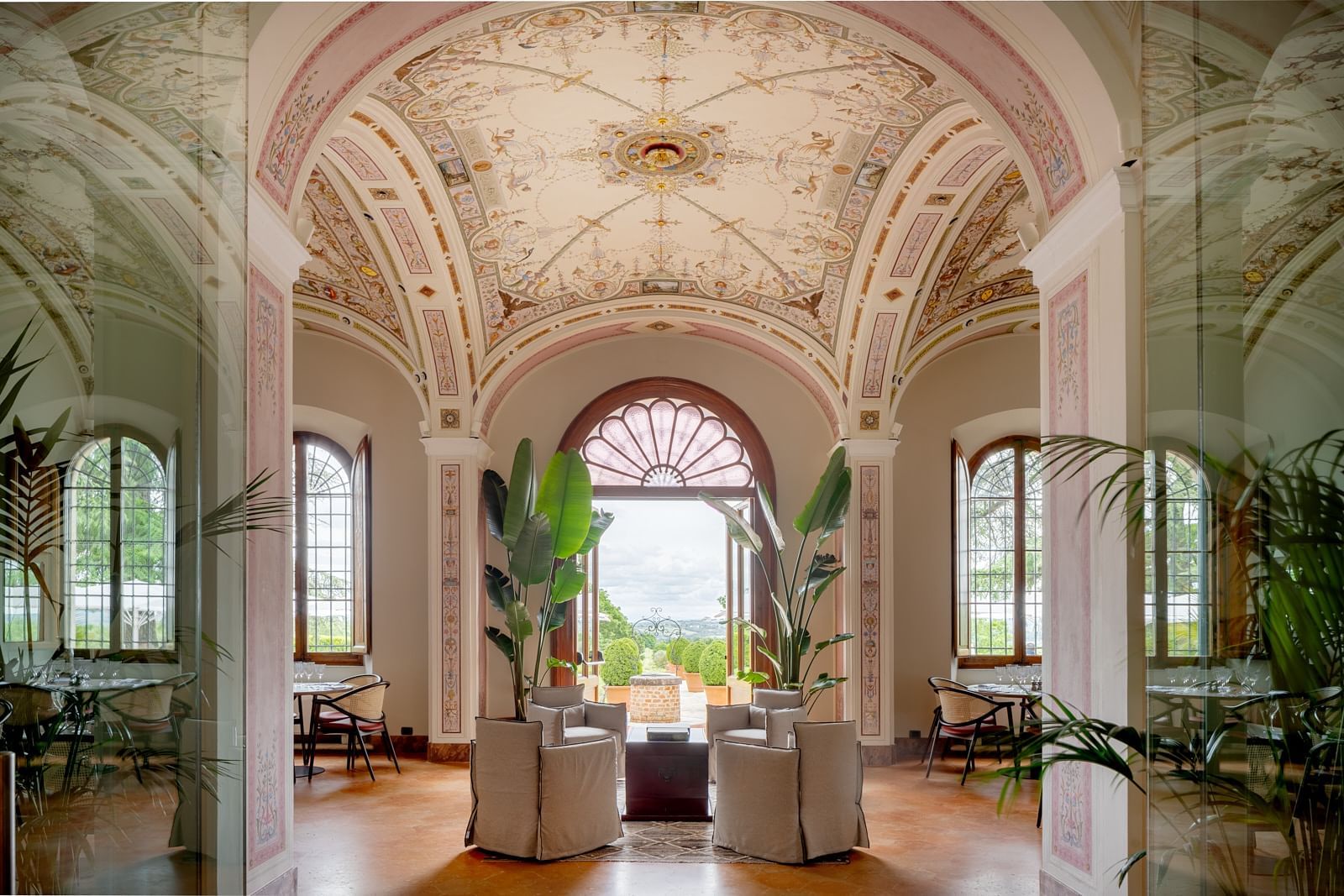
Montepulciano · An eighteenth-century villa with its own Vino Nobile · €€€
A neoclassical villa on its own wine estate outside Montepulciano, reopened in 2023. Sixty rooms and suites, salons with the frescoes left on the ceilings and pools in the park — the larger house in this corner of the valley, with its own Vino Nobile.
View hotel →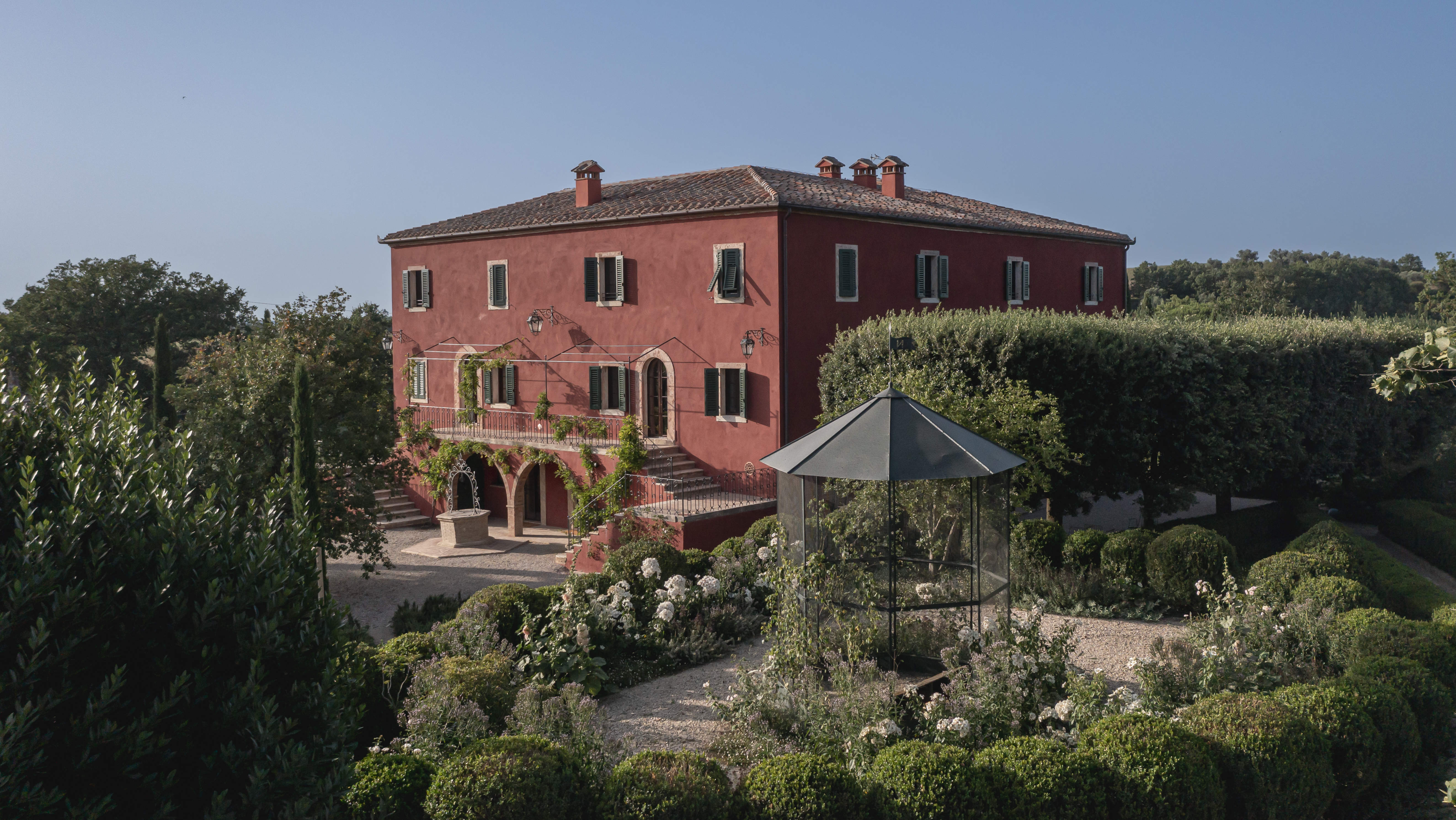
Pienza, Villa Borghetto · Eleven rooms on an 1846 estate, opened 2024 · €€€€
An 1846 villa on the Fabbrica Pienza estate between Pienza and Montepulciano, brought back by descendants of the Newton family. Eleven rooms and two suites, a biodynamic winery still working the vineyards, and Il Cervo, where Sara Scaramella cooks what the estate grows.
View hotel →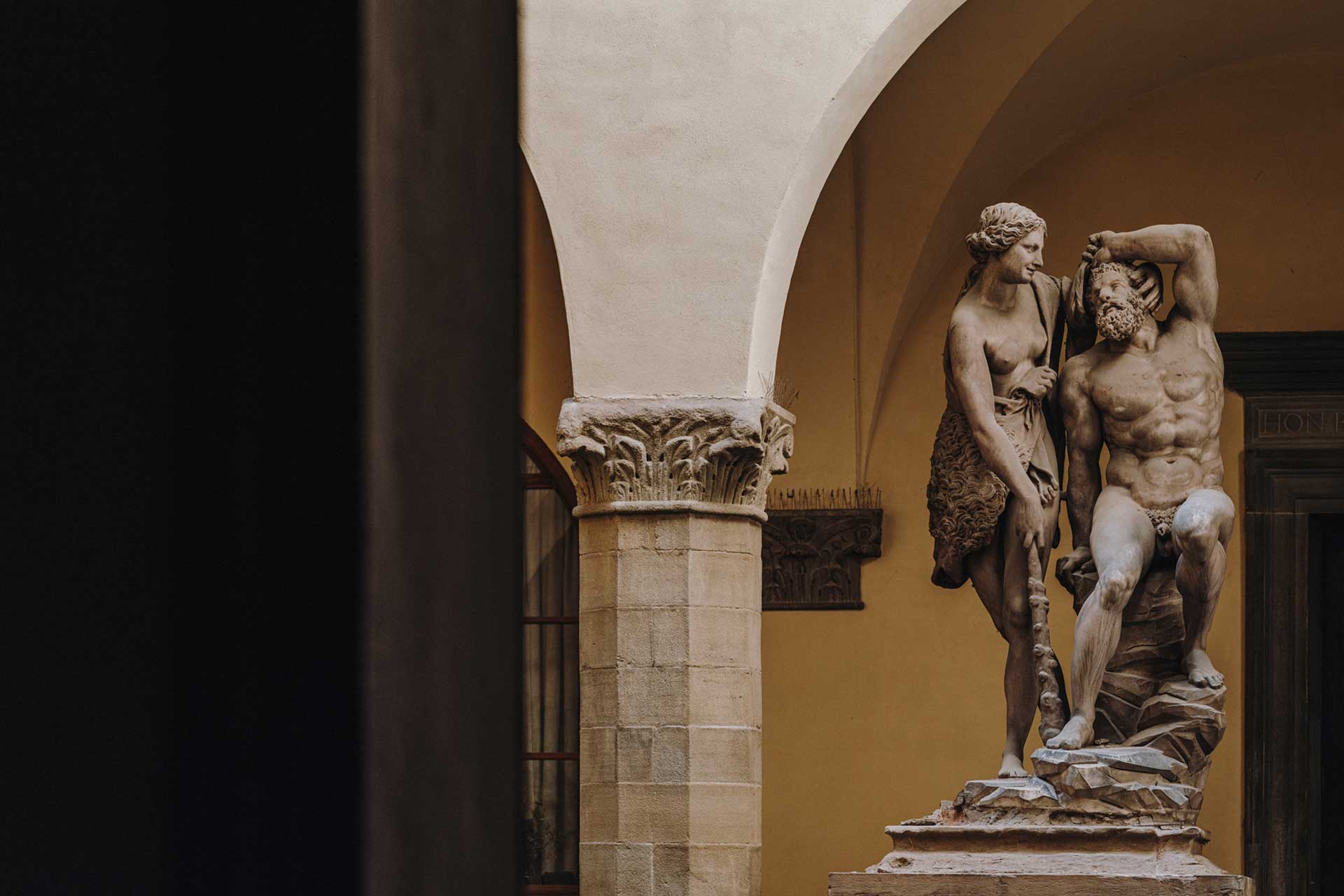
Florence, Via dei Pandolfini · Seven lofts in a 1510 palazzo · €€
Martino di Napoli Rampolla turned his family's 1510 palazzo into an artist residency and kept seven lofts open to guests: frescoes left unretouched, mid-century furniture, a shared kitchen instead of room service. A working house rather than a hotel.
View hotel →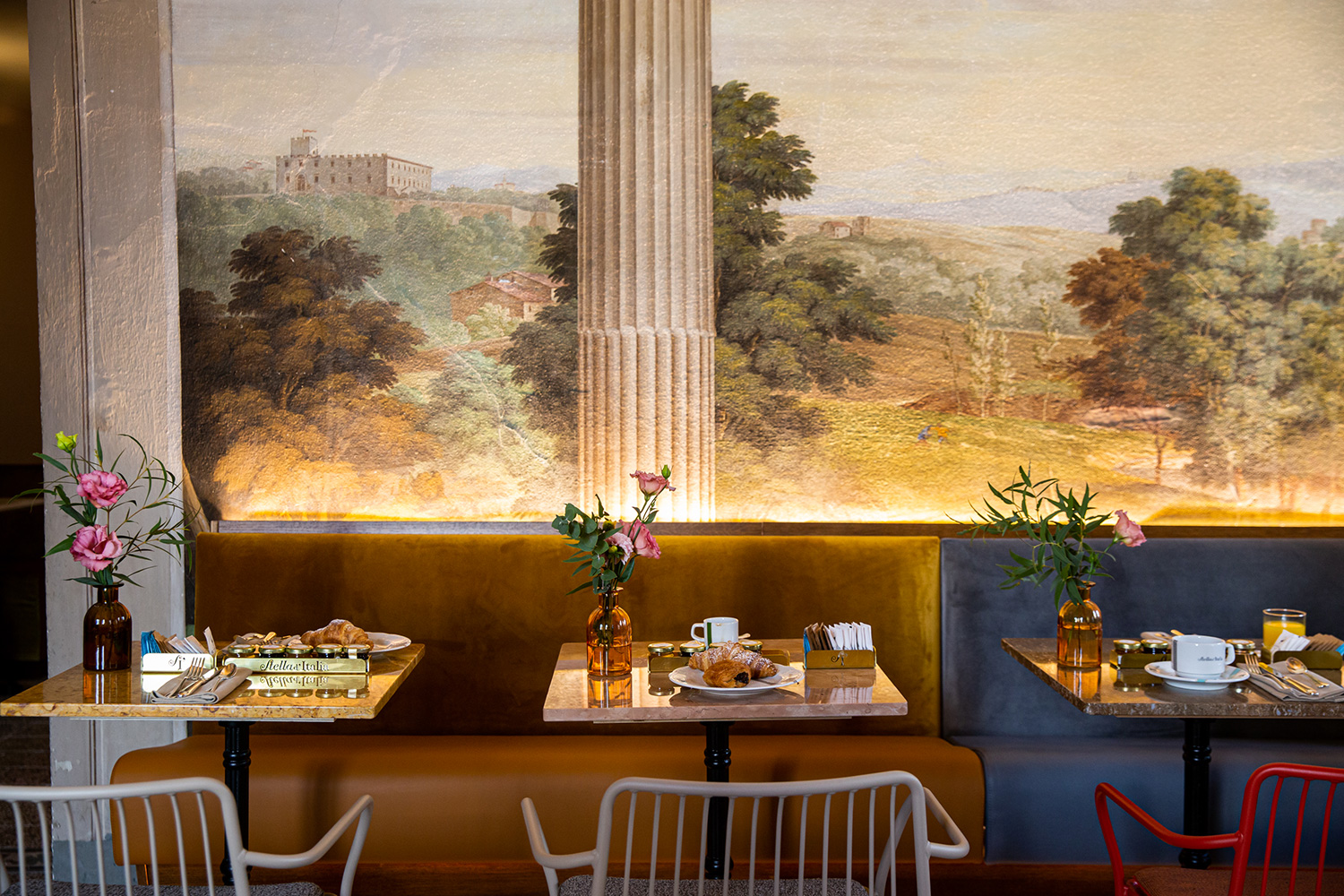
Florence, Via Tornabuoni · Twenty-four rooms in a Vasari palazzo · €€€
Matteo Perduca and Betty Soldi took the top three floors of Vasari's palazzo on Via Tornabuoni and made twenty-four rooms of them, no two alike: textiles from Florentine workshops, salvaged seats from the old Odeon cinema. The roof loggia looks across the tiles to the hills.
View hotel →The Seven Nights · Florence
I.
Arrive in the afternoon, cross the river and stay on the other side. The Oltrarno is the part of Florence that still feels like a neighbourhood — workshops with the doors open, a square with a market rather than a queue. The journey starts in Piazza Santo Spirito: Brunelleschi's church at one end with a façade nobody ever finished, plane trees, a fountain, benches.
Arriving earlier in the day? Stay on this side of the river. The Brancacci Chapel in Santa Maria del Carmine, five minutes from Santo Spirito, holds Masaccio's frescoes — book a slot, visits are short and timed. Or walk up to San Miniato al Monte, the Romanesque church above the city, for the whole of Florence at your feet before coming back down for the evening.
The church is the thing to see today and it costs nothing. Inside, Brunelleschi's grid of grey stone columns is the clearest statement of Renaissance proportion in the city, and at six in the evening it is almost empty. The whitewashed front outside is not a style; the money ran out in the 1480s and the plain wall became the square's signature. Aperitivo on the roof of Palazzo Guadagni — La Loggia, at the top of the stairs, open to non-residents — with the dome across the river turning pink. Dinner at Trattoria Cammillo on Borgo San Jacopo, old-school and unbothered since 1945, or Il Santino on Via di Santo Spirito for wine and crostoni standing up.
The Seven Nights · Florence
II.
This is the day for the famous things, and it only works if you keep to the hours. The Uffizi opens at 8.15; be at the door with a timed ticket at 8.10, go straight to the Botticelli rooms on the second floor, and be out by ten-thirty. You see the same collection everyone else sees at noon, with a third of the crowd.
Then back across the river for the garden. Not Boboli — the Bardini, next door, smaller, steeper, and with the only view of the dome that has the whole city spread out beneath it. In April the wisteria pergola is the most photographed thing in Florence for about ten days; the rest of the year it is a quiet terrace with a café. By early afternoon, leave. Fiesole is fifteen minutes by taxi and noticeably cooler: the Roman theatre, the Etruscan walls, and the terrace at San Francesco looking down on the city. Dinner up there at Ristorante Tullio a Montebeni — a former hunters' grocery turned trattoria, fried steak and the grandmother's jam tart, closed Mondays — or back down for Trattoria Sostanza, cash only, famous for its butter chicken; book it when you book the trip.
The Seven Nights · The Chiantigiana
III.
Leave Florence on the SR222 and do not take the motorway at any point today. The Chiantigiana is the old road to Siena and it goes through the wine rather than past it: Greve first, with its triangular piazza and the Antica Macelleria Falorni on the corner since 1806, then up the hill to Montefioralle, seventy-nine residents, a stone ring of a village where Amerigo Vespucci's family is said to have lived.
The detour of the day is Badia a Passignano: a Vallombrosan abbey in a stand of cypresses with a handful of houses around it, where the Antinori age one of their Chianti Classico Gran Selezione wines in the cellars under the cloister. Lunch on the terrace of Bar Divino, looking down the rows. If you would rather have height than a cloister, take Castello di Albola instead — a medieval borgo on a ridge above Radda, among the highest vineyards in the Chianti Classico, tours and tastings by appointment. Spend the afternoon in Panzano. The town has one of the Chianti's best lookouts — stand beside the Gallo Nero statue — and it has Dario Cecchini, the butcher who recites Dante, whose restaurants are the most famous meal in the region and run like a stage show. Go if you want the show; the journey does not depend on it. Radda for the golden hour: walk the ring road around the walls and sit on a bench. Dinner where you are sleeping.
The Seven Nights · Siena
IV.
Thirty minutes south is a very different city. Where Florence grew outward from its banks and workshops, Siena grew inward around one square: the Campo is shell-shaped, sloped and paved in nine segments for the Council of Nine that governed the republic, and the whole city bends toward it. Arrive before nine, take a coffee at Caffè Fiorella on Via di Città — no seats, all locals — and come down into the Campo while it is still in shadow.
The Duomo is the morning. Its marble floor — fifty-six inlaid panels, a Bible in stone — is covered for most of the year and uncovered from late summer into October; if your dates fall in that window, it is the single best reason to be in Siena. Then the Pinacoteca Nazionale, where the gold-ground painting of the Sienese school fills three floors and almost nobody visits. Lunch at Osteria Il Grattacielo on Via dei Pontani, open since 1840, a room the size of a corridor with crostini neri and Cinta Senese on paper plates; or Enoteca I Terzi for the polished version. Leave by five. The day-trippers leave then too, and Siena rewards a night if you can spare one — but the Chianti bed is only thirty minutes back up the road.
The Seven Nights · The Crete
V.
South of Siena the vines stop and the land turns to bare grey clay: the Crete Senesi, rolling, almost empty hills that were once seabed. Take the SP438 through Asciano rather than the fast road, and stop at Monte Oliveto Maggiore, the Olivetan abbey in a cypress wood whose cloister carries the life of St Benedict in thirty-six frescoes by Signorelli and Sodoma. It is the great painted cloister of southern Tuscany and it has no queue.
Lunch in San Quirico d'Orcia, a small town on the Via Francigena that most people drive straight past: the Horti Leonini, a sixteenth-century Italian garden inside the walls, and the collegiate church with its Lombard lions. Then the last ten kilometres to Pienza, timed for the hour before sunset. Pienza is the clearest example of what this journey is about. Rossellino built the cathedral, the papal palace and the town hall around one trapezoidal square between 1459 and 1462, and the palace garden hangs over the valley toward Monte Amiata. Walk the ring lane behind the cathedral — Via dell'Amore, Via del Bacio — as the light goes. Dinner in town at La Bandita Townhouse Caffè, or at Podere il Casale out on the ridge for pecorino from their own sheep.
The Seven Nights · The Water
VI.
The sixth day has no itinerary and no car. The Val d'Orcia sits on a volcano — Monte Amiata, extinct, to the south — and the water that comes up through the ground is hot. Bagno Vignoni is the village where the main square is a sixteenth-century thermal basin, steaming in the morning, with Santa Caterina and Lorenzo de' Medici both recorded as having bathed here. Nobody swims in the square; the free pools are five minutes' walk below it in the Parco dei Mulini, where the water runs over the old mill channels into the hillside.
If you want the wilder version, Bagni San Filippo is twenty minutes further on: a white calcium cascade in a wood, the Fosso Bianco, with warm pools at its foot and no ticket. Go early or late; it is small. Spend the rest of the day where you are staying — every house on this part of the route was chosen for its pool, its garden and its long table, and this is the day to use them. Dinner where you are staying, or Lo Spugnone in Bagni San Filippo, plain and family-run, if you want to go out.
The Seven Nights · Montalcino
VII.
The last full day goes west to the wine and south to the garden. Sant'Antimo first, before ten: a Romanesque abbey alone in a valley of olives below Montalcino, built of a pale travertine shot through with onyx that goes translucent in low sun, and founded — the legend says — by Charlemagne. The nave is the finest of its kind in Tuscany and the car park holds thirty cars.
Montalcino for the middle of the day: a fortress town whose entire economy is Brunello, the Sangiovese wine that Ferruccio Biondi Santi first bottled in 1888 and which now sells at prices that have paid for many of the restored farmhouses you have driven past. Taste at a producer rather than a shop; Podere Brizio below the town will walk you through the estate and, on a clear day, show you the sea from a window. The afternoon is La Foce: the estate where the Anglo-American writer Iris Origo and her husband spent the 1920s turning eroded clay into a working farm, with a garden by Cecil Pinsent that steps down toward the valley and the famous zigzag of cypresses on the road below. Garden visits are guided and on fixed afternoons; book ahead. Farewell dinner at Dopolavoro La Foce across the road, the estate's 1939 workers' club turned restaurant, with the whole journey's landscape in the window.
The Seven Nights · Departure
VIII.
Rome is two hours south on the A1 from Chiusi; Florence an hour and a half north. Take the long way to either through the valley one last time, and stop once at a caseificio for a wheel of pecorino di Pienza to carry home. The cypress rows in the rear-view mirror were planted by someone with a plan — which is what this whole week has been about.
Florence airport is the shorter drive; Rome the better connection. Either way, the valley road first.
Every excursion carries a crowd rating: how busy the place gets, weighed against how well it absorbs people. A single chapel fills up; a walled town spreads everyone out. Where somewhere is crowded at every reasonable hour and an equal exists nearby, we send you to the equal.
April, May, June, September and October are the best time for this journey. July and August are hot, Florence is at its most crowded, and the hill towns of the Val d'Orcia fill with day-trippers. Late September and October bring the grape harvest, and the light over the Crete is at its best.
Chianti Classico in the hills between Florence and Siena, Brunello around Montalcino, Vino Nobile at Montepulciano — all three are Sangiovese, and tasting them in a row is the easiest way to understand the grape. Most estates want a tasting booked a day or two ahead, and someone in the car should not be drinking.
Florence, Siena and most of the hill towns have a ZTL, a limited-traffic zone watched by cameras. Drive into one by mistake and the fine arrives by post months later, via the rental company. Park outside the walls and walk in; in Florence, leave the car at the hotel's garage or pick it up only on the morning you leave.
The Palio is run in the Campo twice a year, on 2 July and 16 August, and the city is full for days around each race. It is Siena's own event rather than a show for visitors. Check the dates against your week and plan the Siena day around them, one way or the other.
Book timed tickets for the Uffizi and the Duomo before you travel, the guided garden visit at La Foce, and a table at Trattoria Sostanza. Wine tastings want a day or two's notice. For most other restaurants, a call the day before is enough.
You will not need a car for the two Florence days; pick it up on the morning of Day III. From then on the route assumes one. The country roads are narrow and winding, so add a third to every drive time, and plan to be at each hill town before ten or after five, when parking is easy.
Fly into Florence, or into Pisa and take the train, about an hour. Florence Santa Maria Novella has fast trains from Rome and Milan. At the end of the week Rome is two hours south of the Val d'Orcia by the A1, Florence an hour and a half north.