beta
beta
Free, and it takes one tap. The guide opens as soon as you are in.
Continue with GoogleWe will send you a one-time sign-in link.
Puglia, Italy
May – October
7 nights
18 stays
Baroque & the Greek villages
In nine villages an hour south of Lecce, a few thousand people still speak a dialect of Greek. It arrived with settlers before Rome and never left. That says a lot about this peninsula: for three thousand years, Italy's heel has looked east, across the sea, rather than north to Rome. Over seven nights the route runs from a Baroque city carved in stone soft enough to cut with a knife, down the Ionian side to the point where the two seas meet, and back up an Adriatic coast of sea caves — with Albania on the horizon on clear mornings.
The Salento is the last eighty kilometres of Italy, narrow enough to see both coasts from one hill, and everything that ever happened here arrived by boat from the east. Greeks founded Gallipoli — kallipolis, the beautiful city — and left a language: Griko, still spoken in the villages of the Grecìa Salentina, which is either a survival of Magna Graecia or a Byzantine reinforcement of it. The villages themselves are still arguing about which.
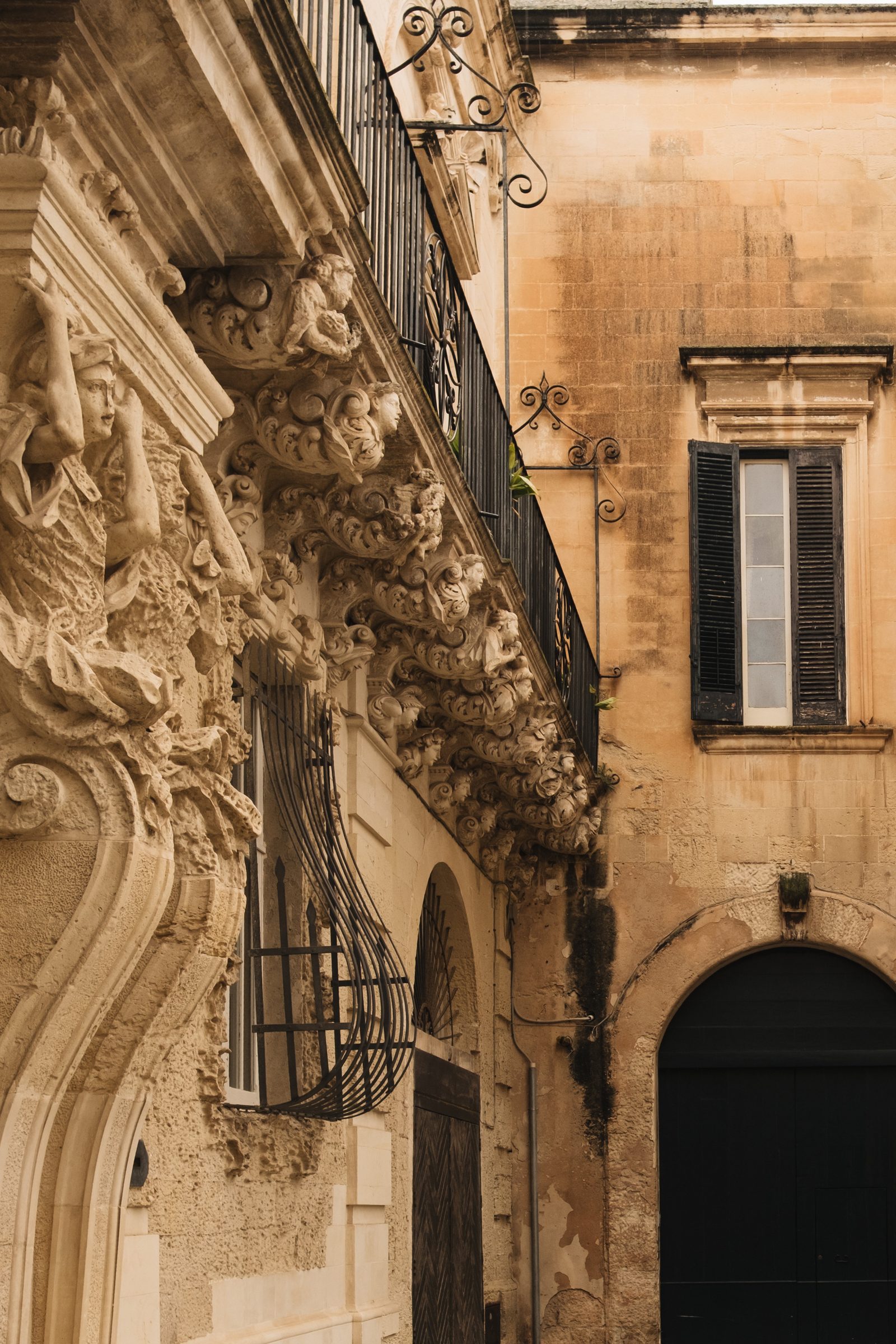
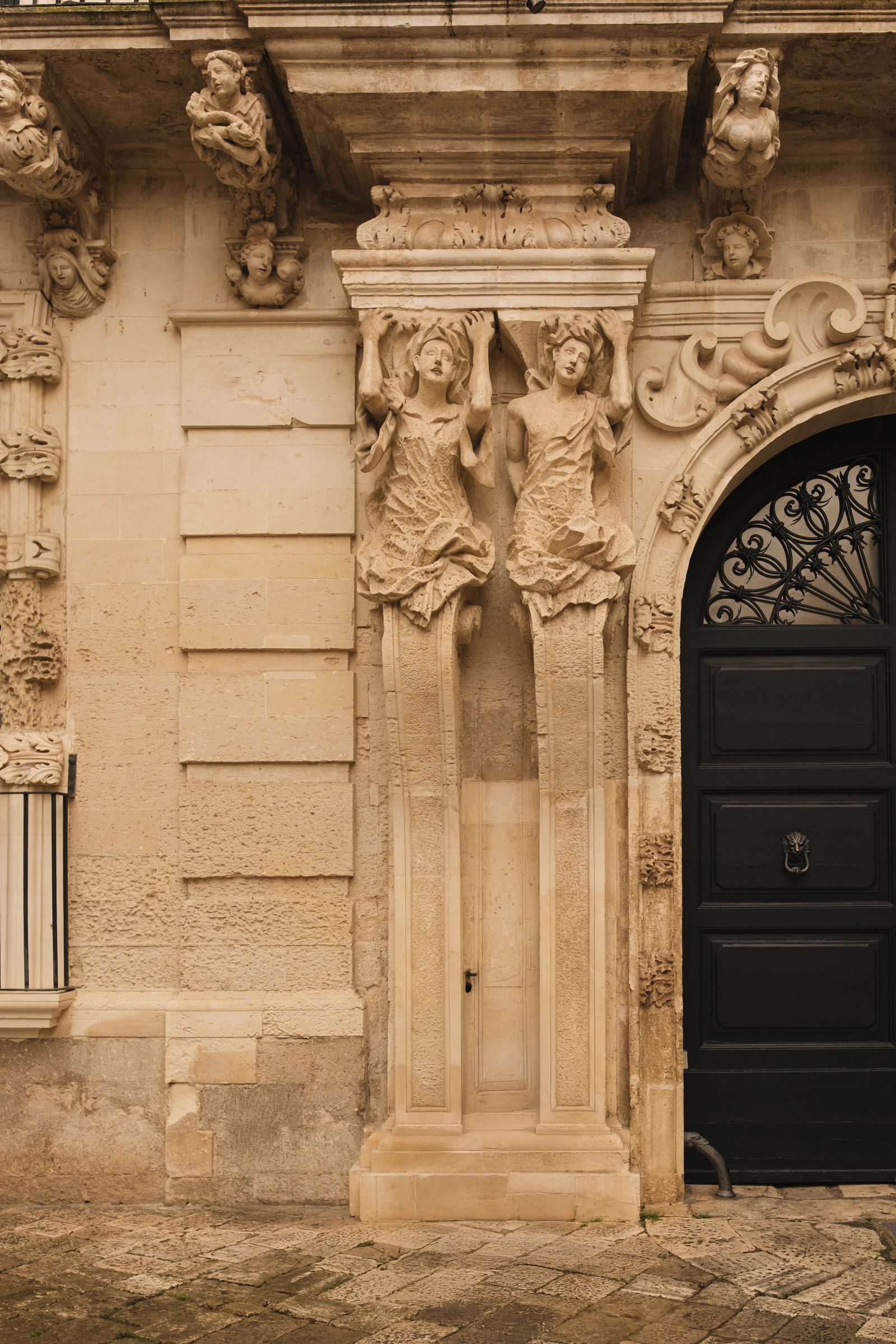
Lecce is a provincial city that built like a capital. The local limestone, pietra leccese, is soft enough to cut with a knife when quarried and hardens in the air, so a city with more masons than aristocrats could afford to carve on a grand scale. The result is some forty churches of a Baroque so specific it has its own name, in a stone the colour of pastry.
Underneath all of it, olives — the peninsula's second landscape and its open wound. In 2013 the bacterium Xylella fastidiosa was identified near Gallipoli; since then it has killed olive trees across the Salento by the million, and the grey, leafless rows you will drive past are dead trees, not a winter look. Replanting with resistant varieties is under way. It is the first thing to know about this landscape, so this guide says it up front.

Photography by Matteo Capirola.
Stays
18
01
Galeta Masseria
02
Tenuta Negroamaro
03
Palazzo Presta
04
Relais Monastero Santa Teresa
05
Palazzo Tafuri
06
Palazzo Piccinno
07
Palais Gentile
08
Palazzo San Vito
09
Masseria Caposella
10
Castello di Ugento
11
Palazzo Zimara
12
Palazzo Maresgallo
13
Palazzo Luce
14
Patria Palace
15
La Fiermontina
16
Palazzo Daniele
17
Masseria Prosperi
18
Masseria Montelauro
Restaurants
10
01
Trattoria La Puritate
02
La Vinaigrette
03
Piccola Osteria
04
Trattoria Salandra
05
Osteria da Angiulino
06
Caffè Alvino
07
Le Zie
08
Le Stanzie
09
Trattoria Iolanda
10
Taverna del Porto
Sites
21
01
Porto Cesareo
02
Porto Selvaggio
03
Gallipoli
04
Santa Maria al Bagno
05
Nardò
06
Galatina
07
Teatro Paisiello
08
Lecce
09
Santa Caterina, Galatina
10
Santa Maria di Leuca
11
Tricase
12
Marina Serra
13
Castro
14
Grotta della Poesia
15
Torre dell'Orso
16
Grotta Zinzulusa
17
Torre Sant'Andrea
18
Baia dei Turchi
19
Porto Badisco
20
Otranto
21
Punta Palascia
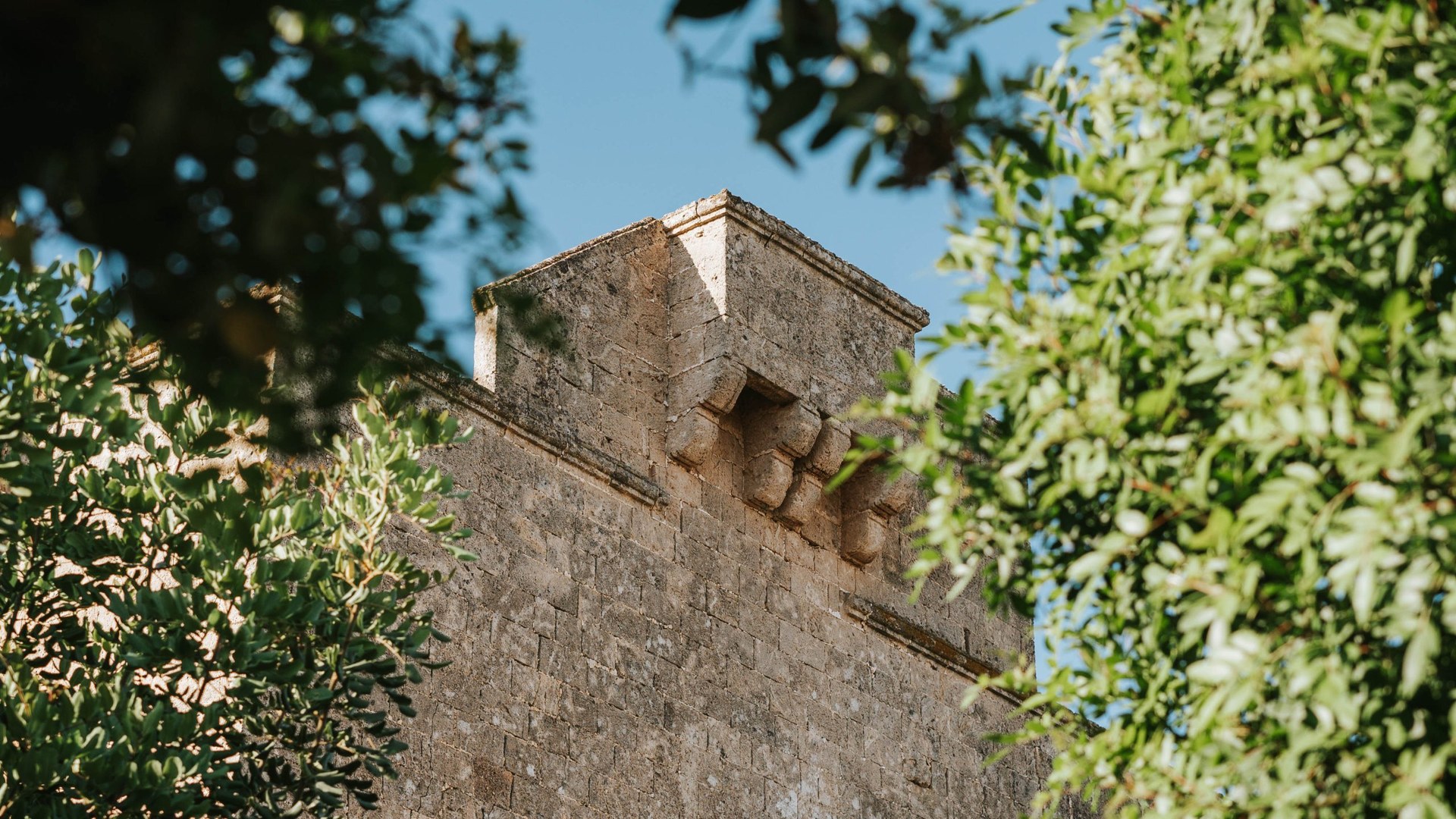
Nardò countryside · A small working farm on red earth · €€
A newly converted farmhouse in the red soil behind the Ionian coast, run by its hosts as a working farm with a handful of rooms and studios. A garden with an outdoor fireplace, cooking dinners, yoga in the mornings, and Nardò's beaches a short drive away.
View hotel →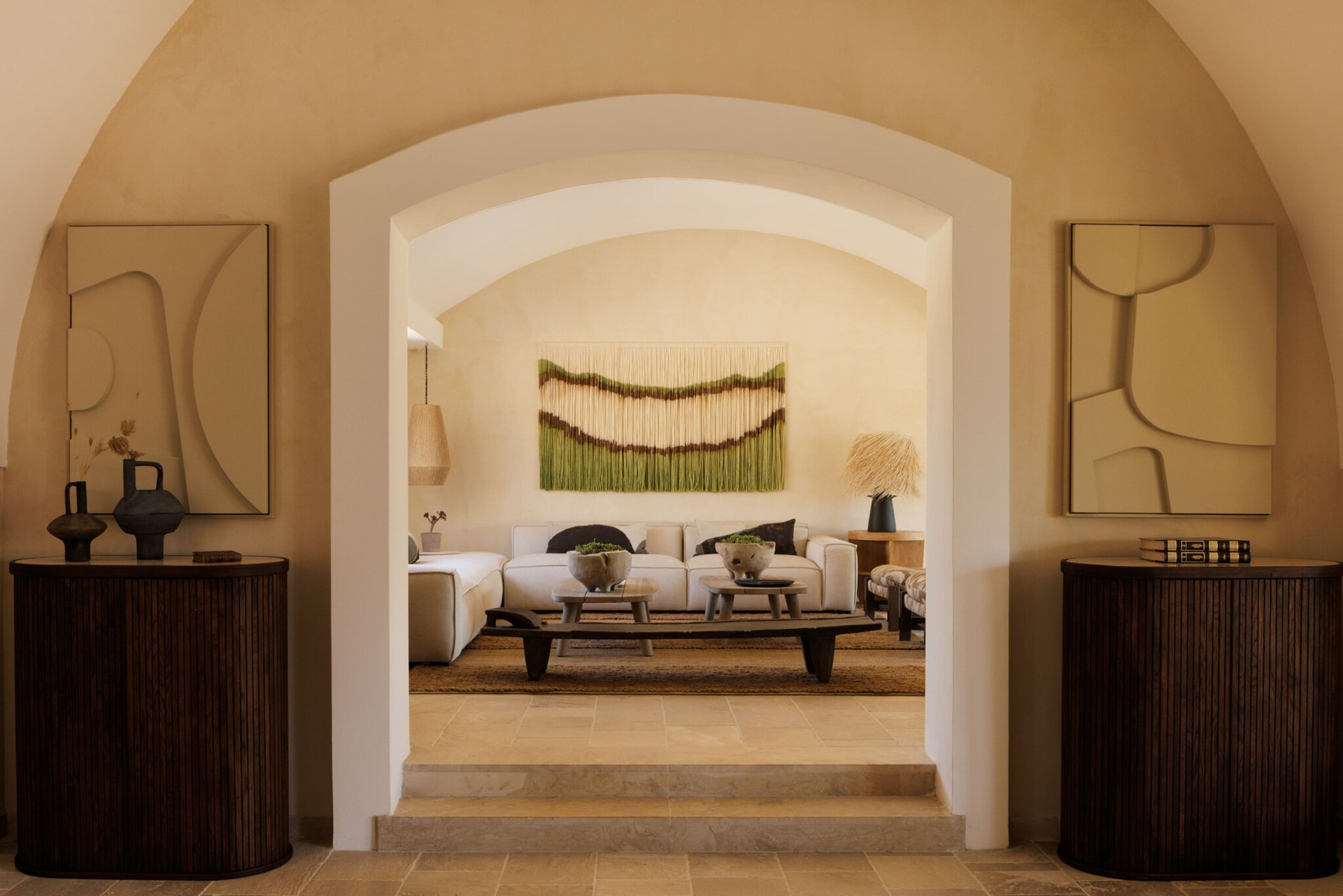
Sannicola · Ten suites in seven hectares of pine · €€€
An estate on the Ionian side, a few kilometres from Gallipoli, with interiors by the London designer Olga Ashby. Ten suites among pine woods and a vegetable garden, some with their own plunge pool; a shared pool with the Cactus bar, yoga, and beaches ten minutes away.
View hotel →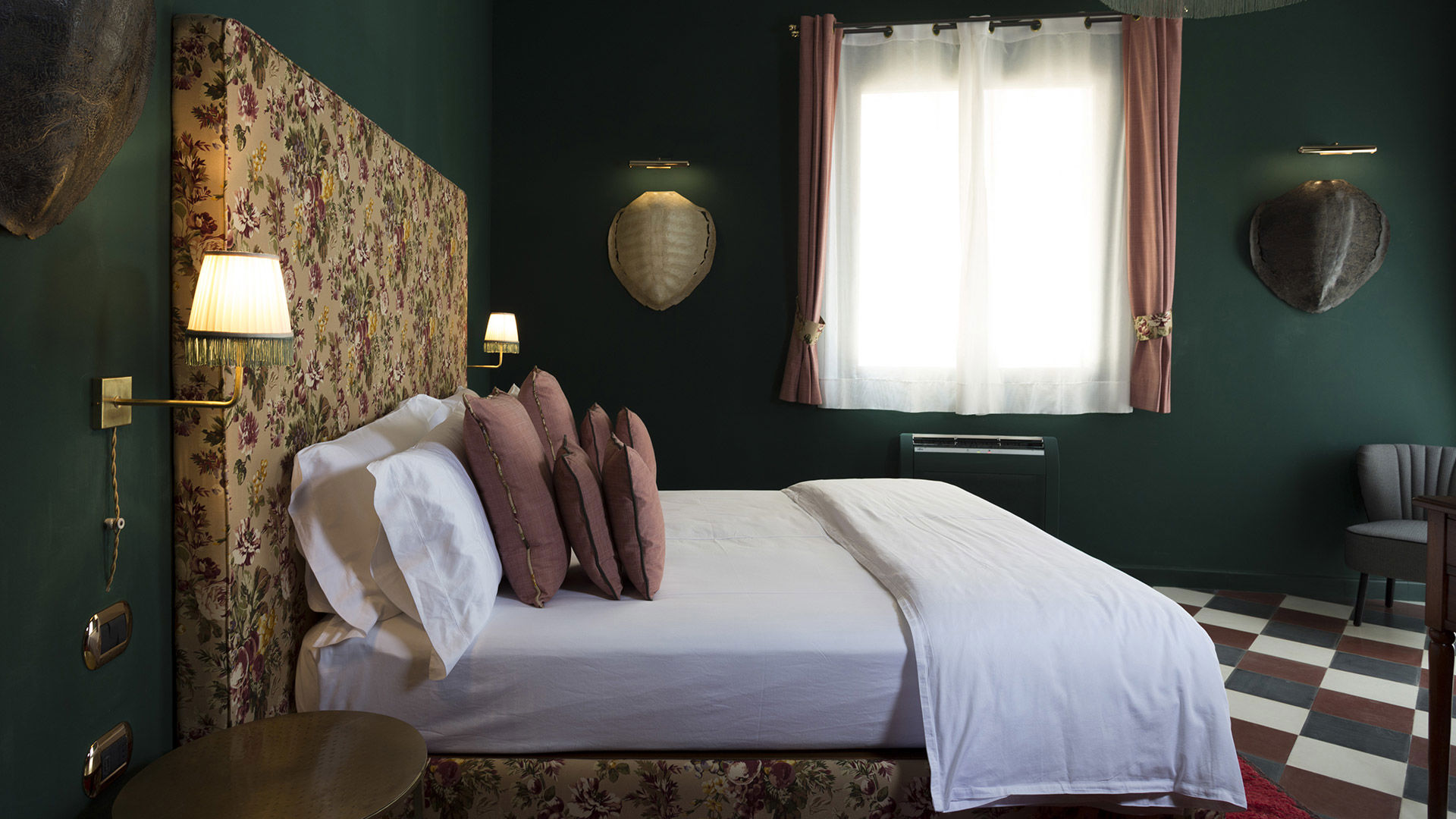
Gallipoli, old town · Ten rooms, each a different journey · €€
A seventeenth-century house on Gallipoli's island, by the Purità beach, redone by Alessandro Cesario with every room themed on a different country. Lazzaro & Caterina for dinner, a sea-view roof bar, a bookshop and a cinema bar behind the library. Open April to mid-November.
View hotel →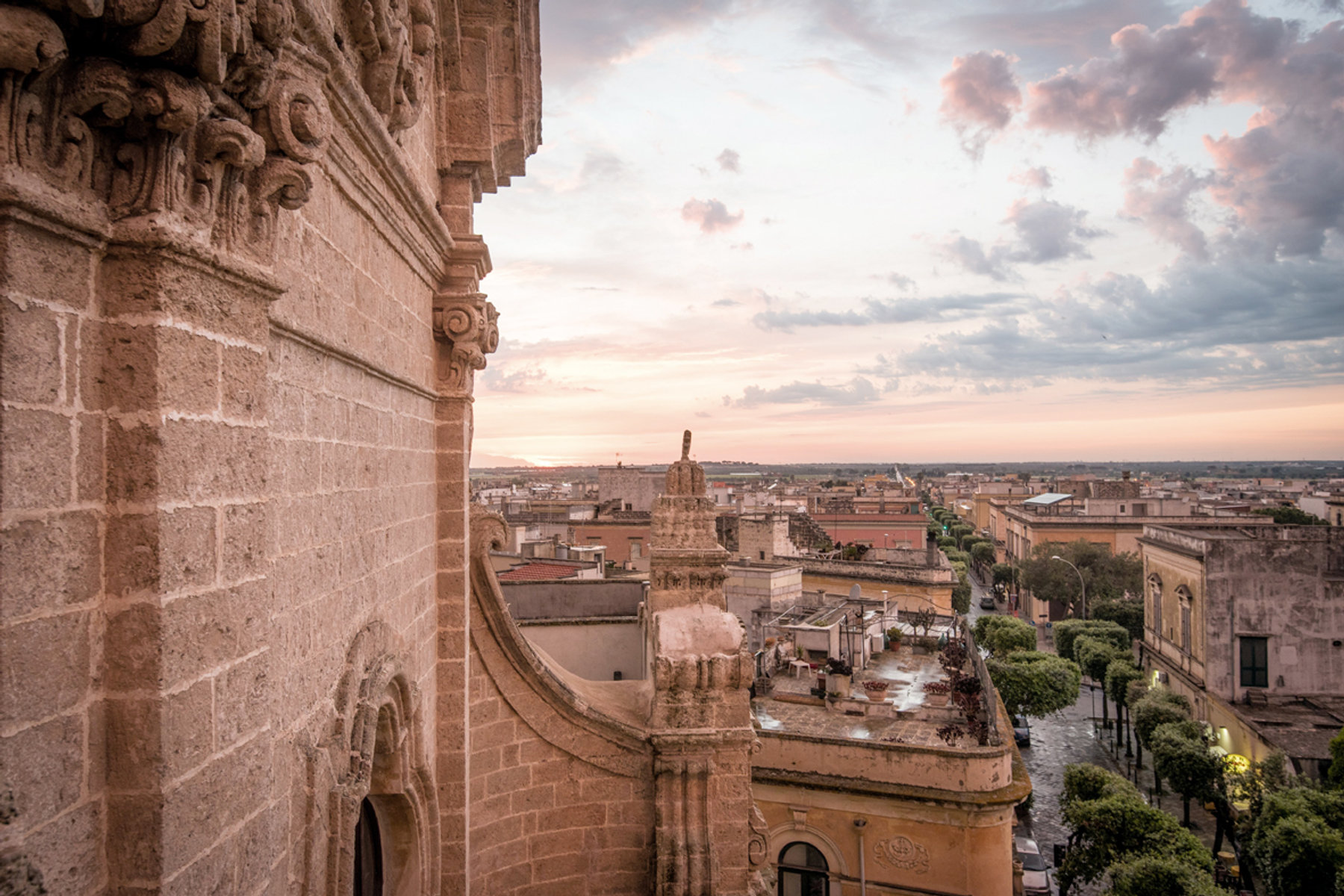
Nardò, old town · A Carmelite convent by the cathedral · €€
A baronial palace handed to the Discalced Carmelites in 1600, now rooms under frescoed vaults in the centre of Nardò, a few steps from the cathedral. A garden and a winter garden, the church of Santa Teresa next door, Porto Selvaggio a short drive west.
View hotel →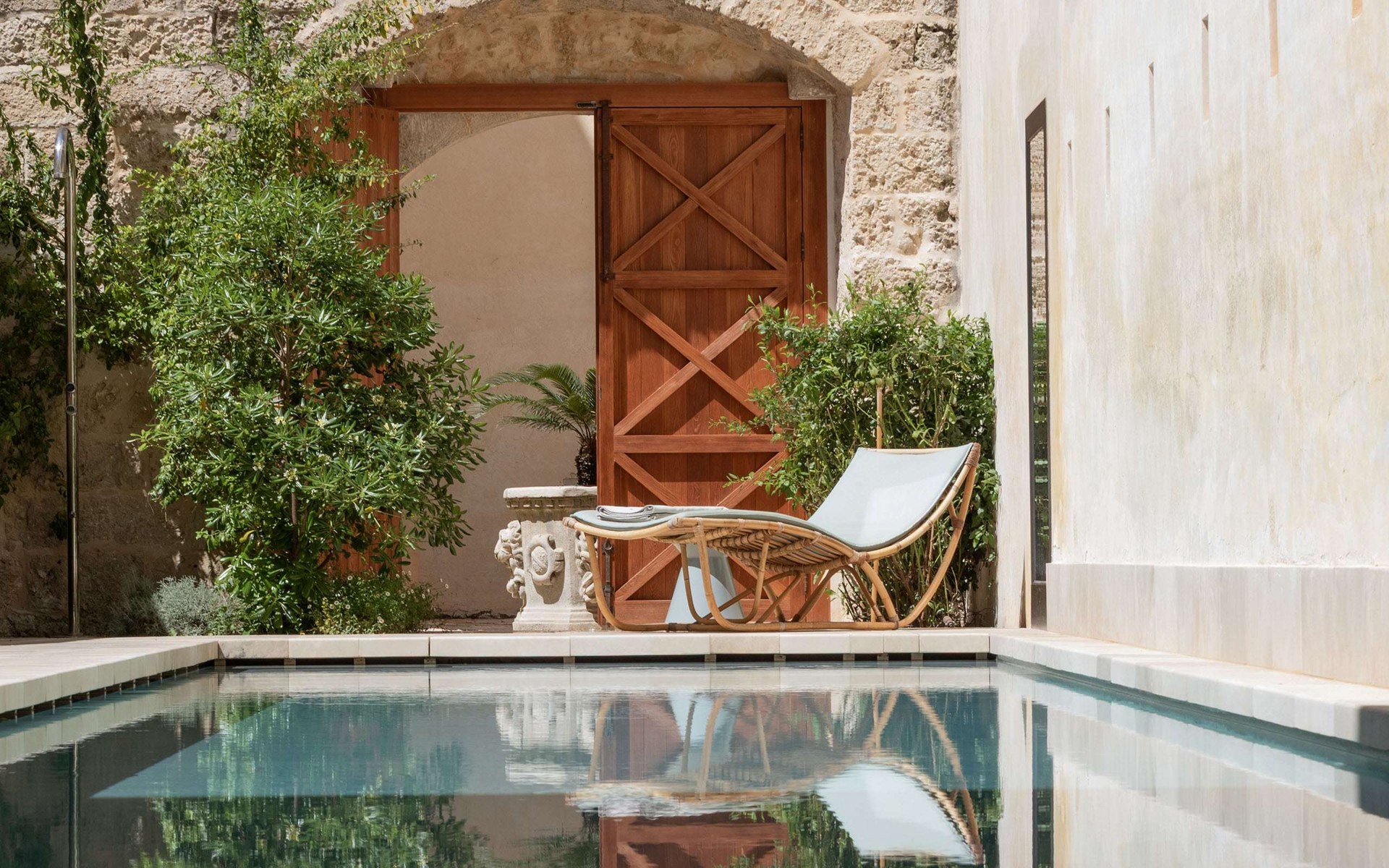
Nardò · A Baroque house facing a convent · €€€
In Nardò's oldest quarter, directly opposite the monastery of Santa Chiara: a French count and countess rebuilt it as a house for eating and resting — garden, rooftop, a serious restaurant, a spa in the cellars. Nardò is Lecce with a fraction of the visitors.
View hotel →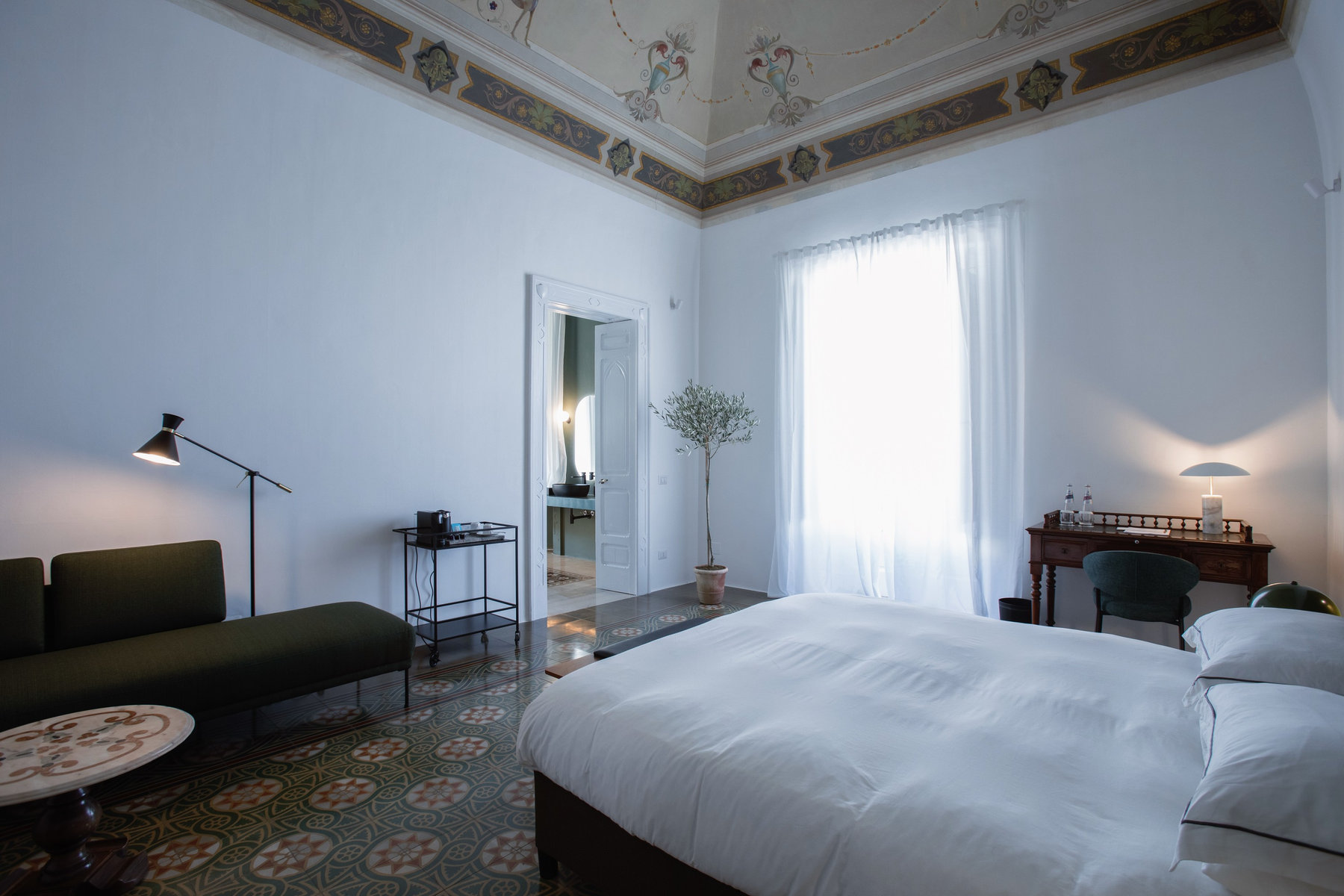
Parabita · Four rooms, adults only · €€
An early-twentieth-century Neo-Gothic house in the old centre of Parabita, inland from Gallipoli, restored by its owners Richard and Marco with local craftsmen. Frescoed vaults, original tiles, four rooms, and a plunge pool in the courtyard under a banana tree. Closed in winter.
View hotel →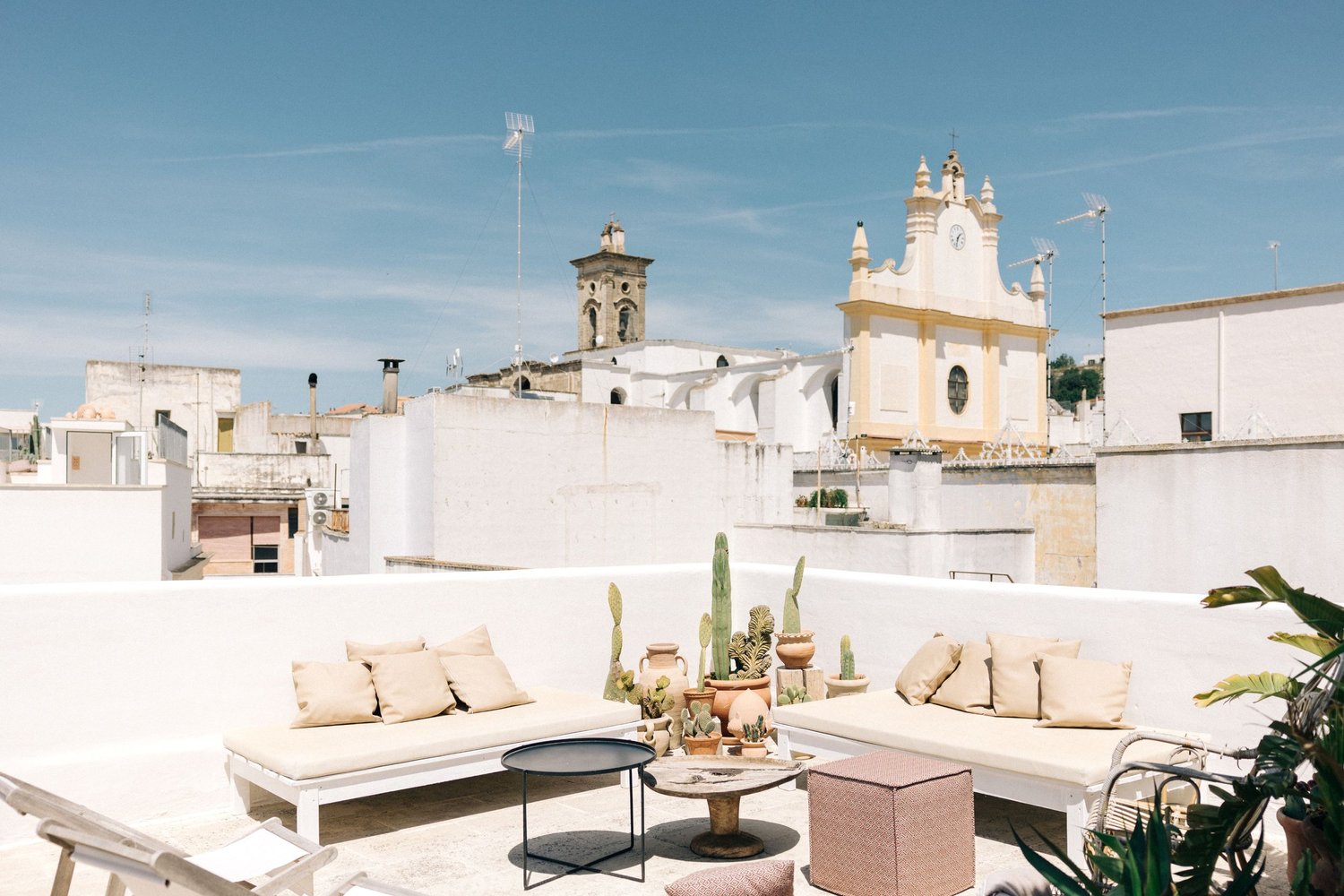
Matino · An eighteenth-century palazzo with a riad roof · €€
A family palazzo turned into a handful of rooms and suites by a Franco-Italian couple — blown-glass lights, limestone bathrooms, the original tiles. Breakfast on a roof terrace that looks to the sea; no pool, no restaurant, and Gallipoli twenty minutes away.
View hotel →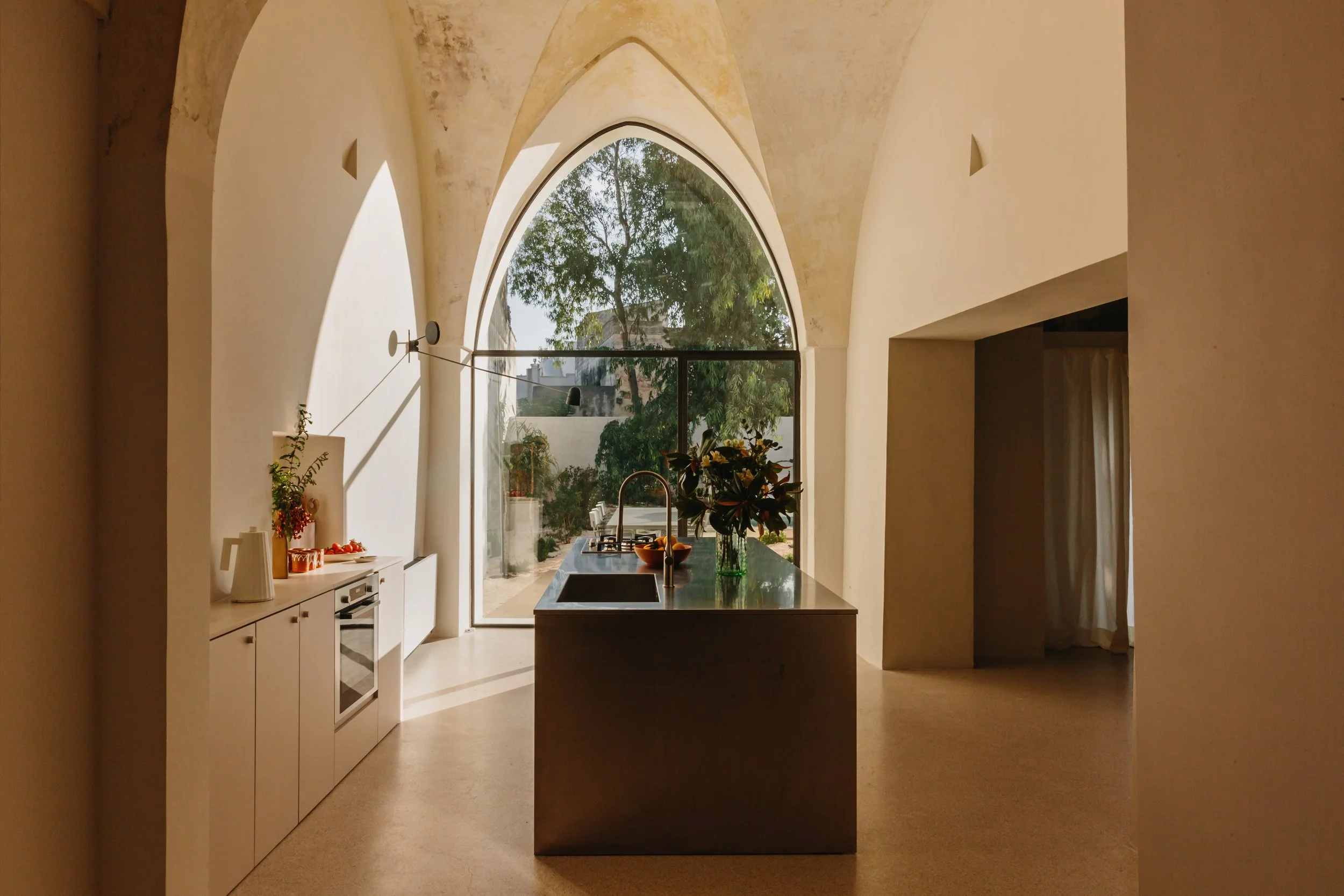
Lequile · A Salento palazzo, let whole for eight · €€€€
Empty for half a century, then restored by the studio Valari — poured terrazzo, travertine and blackened steel set against star vaults and mosaic floors. Four bedrooms for one party at a time, an orange grove, a thirteen-metre pool, and Lecce five minutes up the road.
View hotel →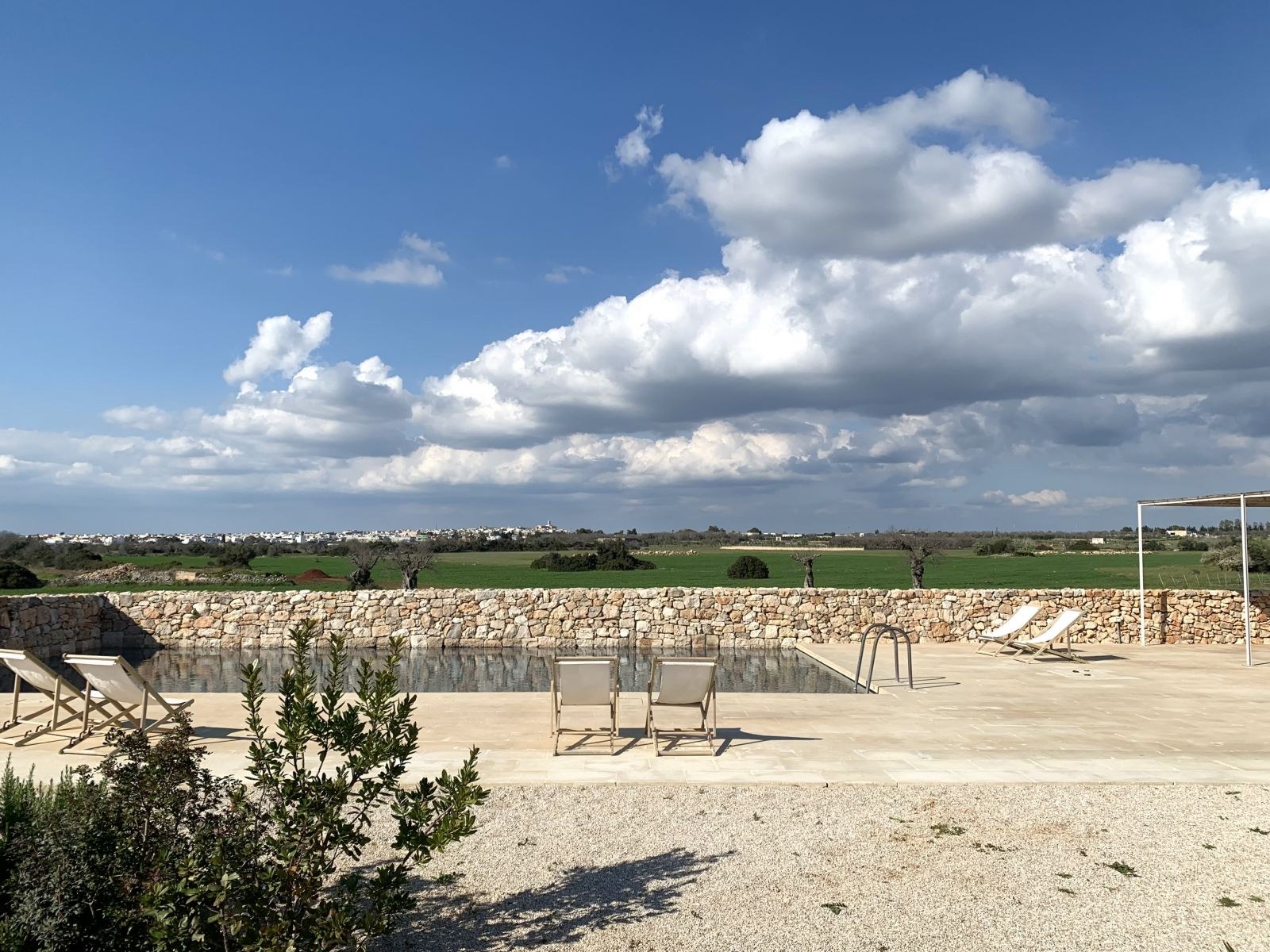
Ugento countryside · A fifteenth-century sheepfold by the coastal park · €€
A fortified sheepfold on the edge of the Litorale di Ugento park, restored the traditional way and run by one family. Six rooms, suites and small houses, a pool facing the fields, dinner in the courtyard, and the beaches of Torre San Giovanni four kilometres off.
View hotel →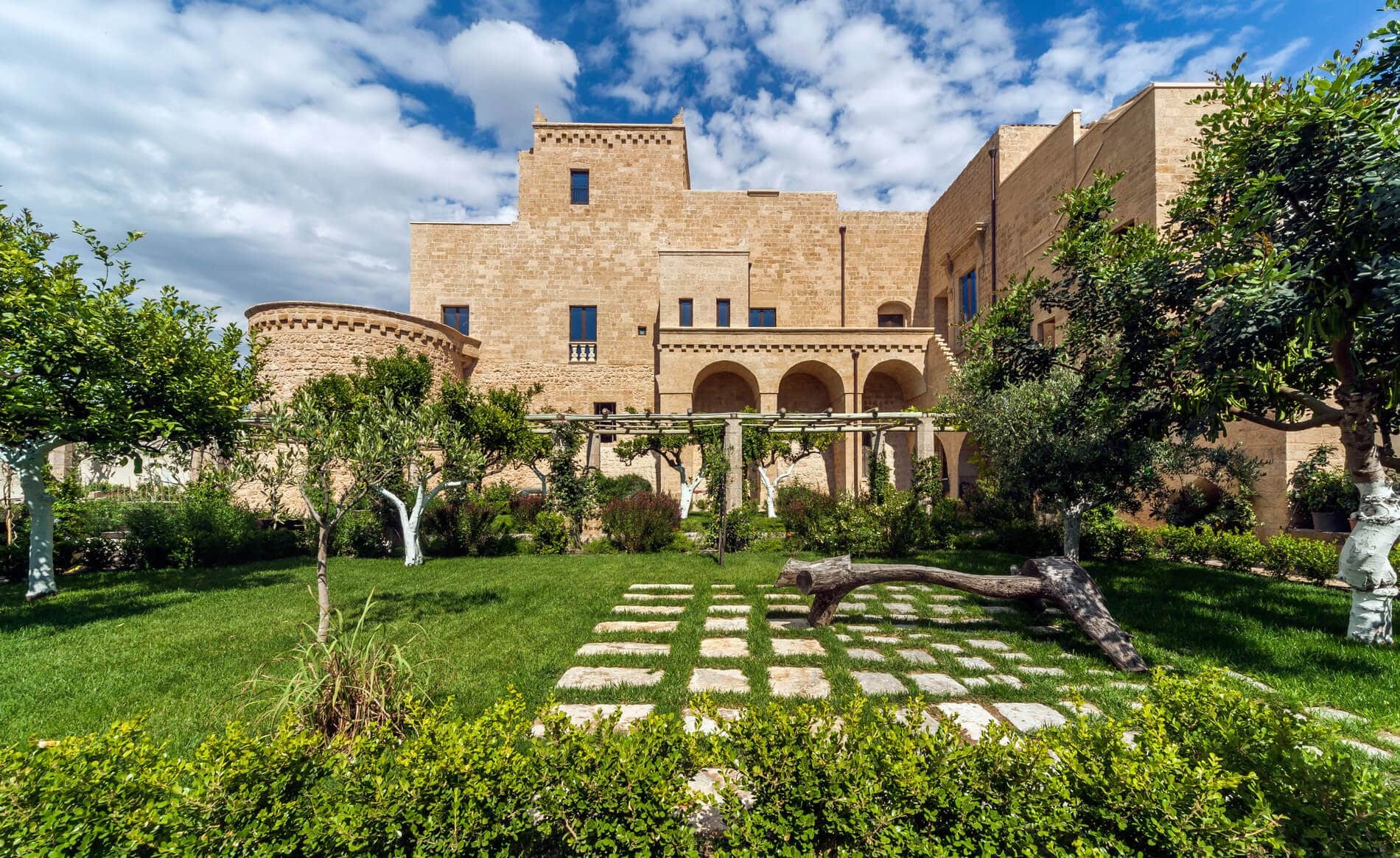
Ugento · A seventeenth-century castle with a cooking school · €€€
In the d'Amore family since 1643 and restored by Carafa & Guadagno: nine rooms and suites under frescoes, walled gardens, an old cistern turned wine cellar, the restaurant Il Tempo Nuovo, and the Puglia Culinary Centre in the former storehouses.
View hotel →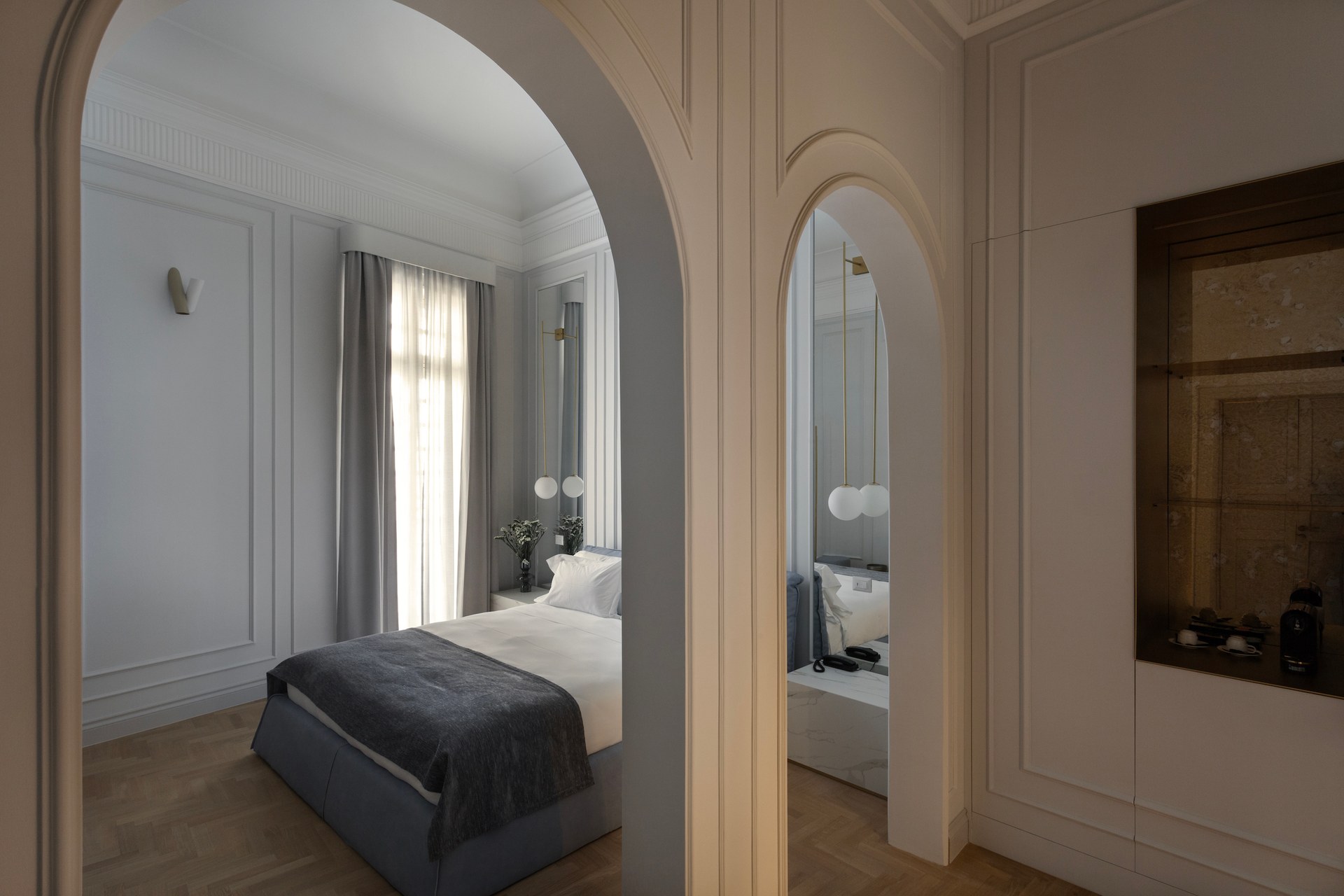
Lecce, Via Libertini · One of forty protected Baroque palaces · €€€
Built in 1557 and restored into eighteen rooms without losing the plan — restaurant, wine bar, private courtyard, all inside a sixteenth-century footprint. The D'Angelo family's collection; the cathedral square is four minutes on foot.
View hotel →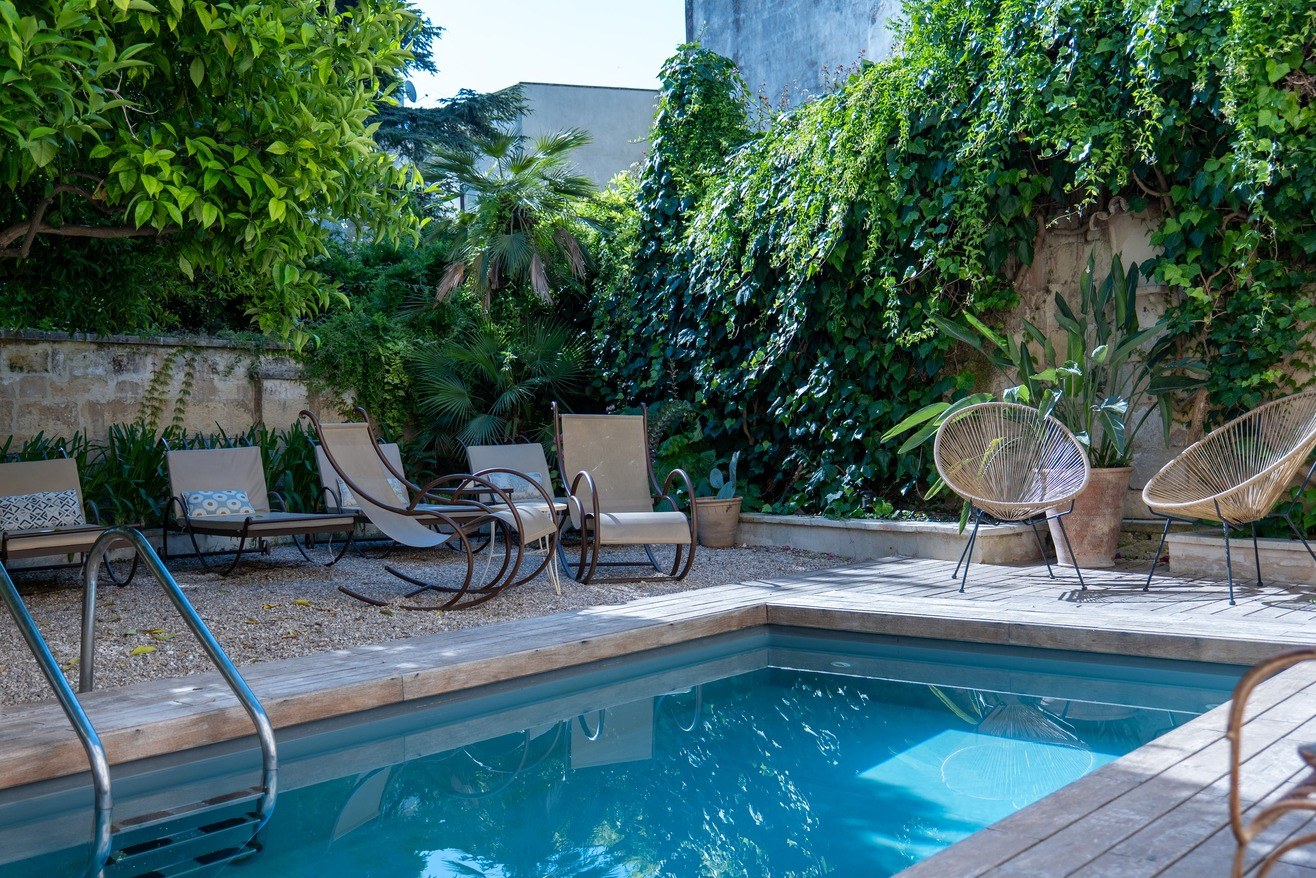
Lecce, old town · A sixteenth-century palace run as a collection · €€€
Bought by a Parisian architect and his art-collecting wife, who oversaw the restoration and then filled it: frescoes, antique marble, murals by Roberto Ruspoli. A walled garden with a plunge pool, and a roof looking across to the Roman amphitheatre.
View hotel →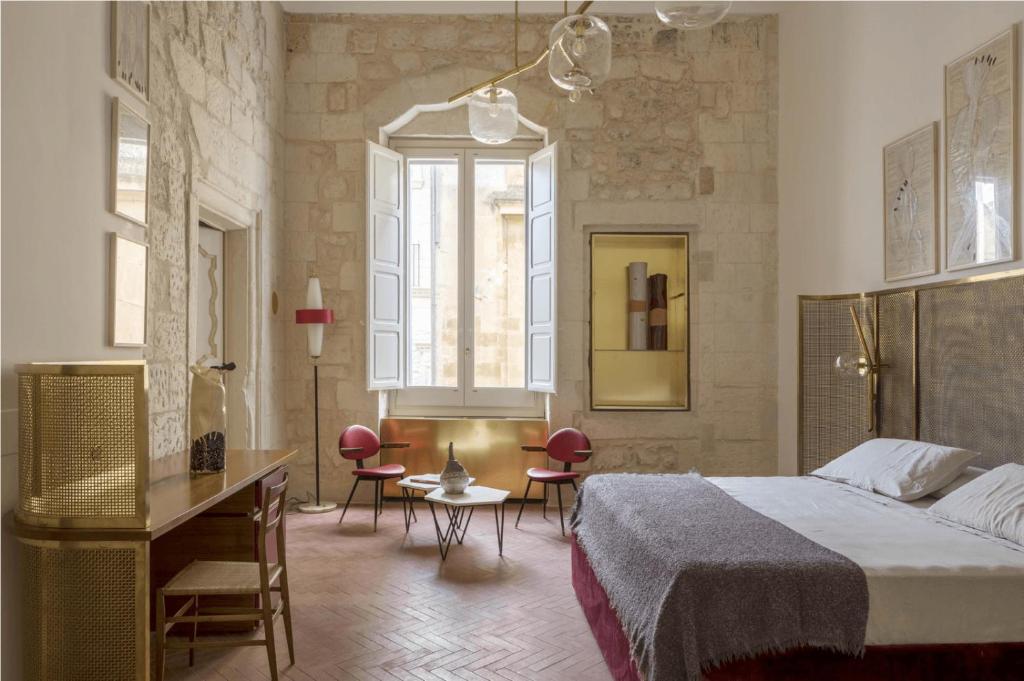
Lecce, old town · The palace of the Counts of Lecce, hung like a gallery · €€€€
The medieval seat of the Counts of Lecce, restored by the Milanese collector Anna Maria Enselmi and furnished from her collection — Gio Ponti, Sottsass, Mollino, Abramović, Kentridge. A handful of rooms, two libraries, a bar by Martino Gamper, a roof terrace over the old town.
View hotel →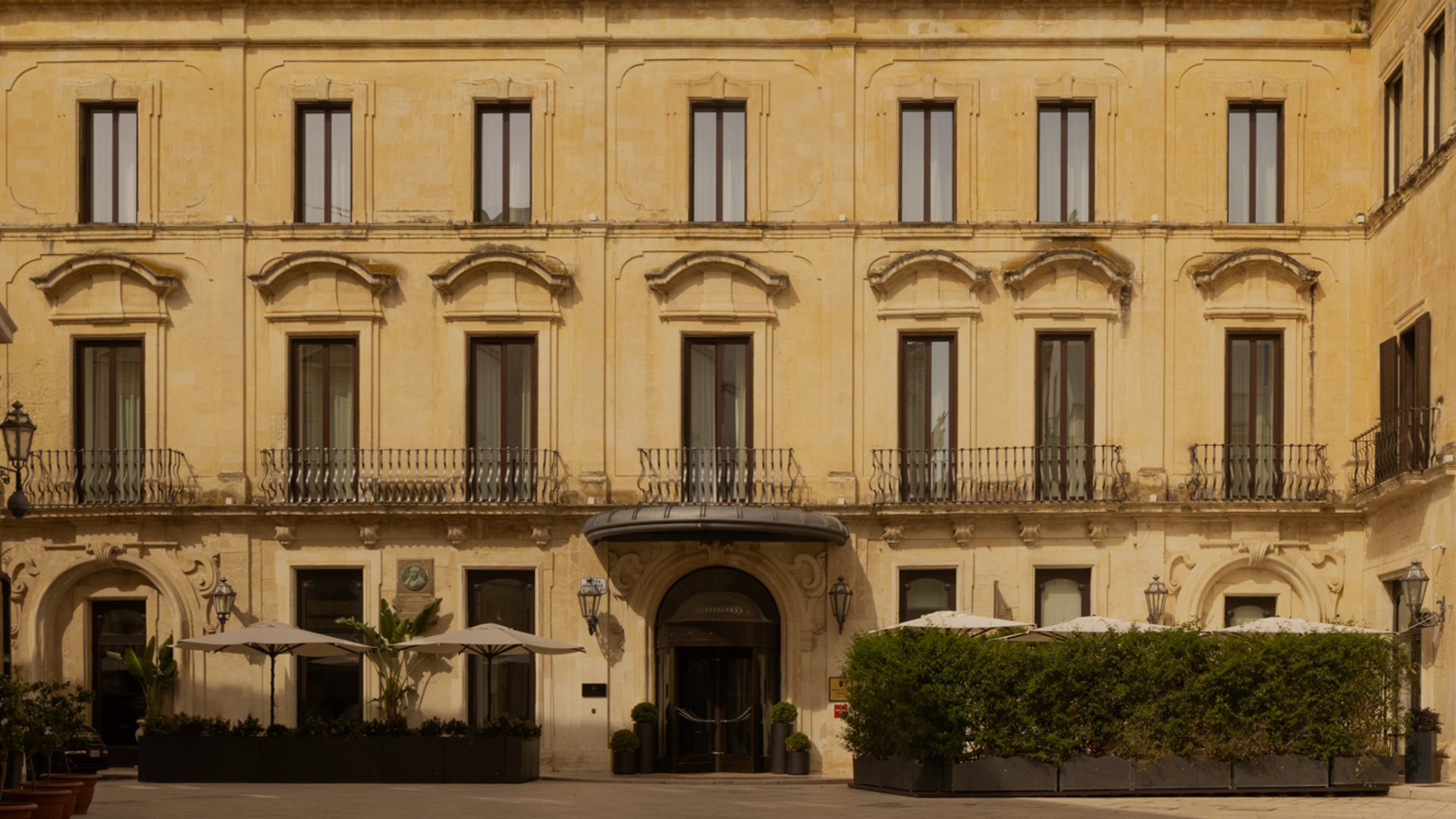
Lecce, Piazzetta Riccardi · The grand hotel facing Santa Croce · €€€
An eighteenth-century palace directly across from the Basilica of Santa Croce, a hotel long before Lecce was fashionable and reopened in 2024 after four years of work. Atenze for dinner, the Sira bar up on the roof level with the basilica, a spa below.
View hotel →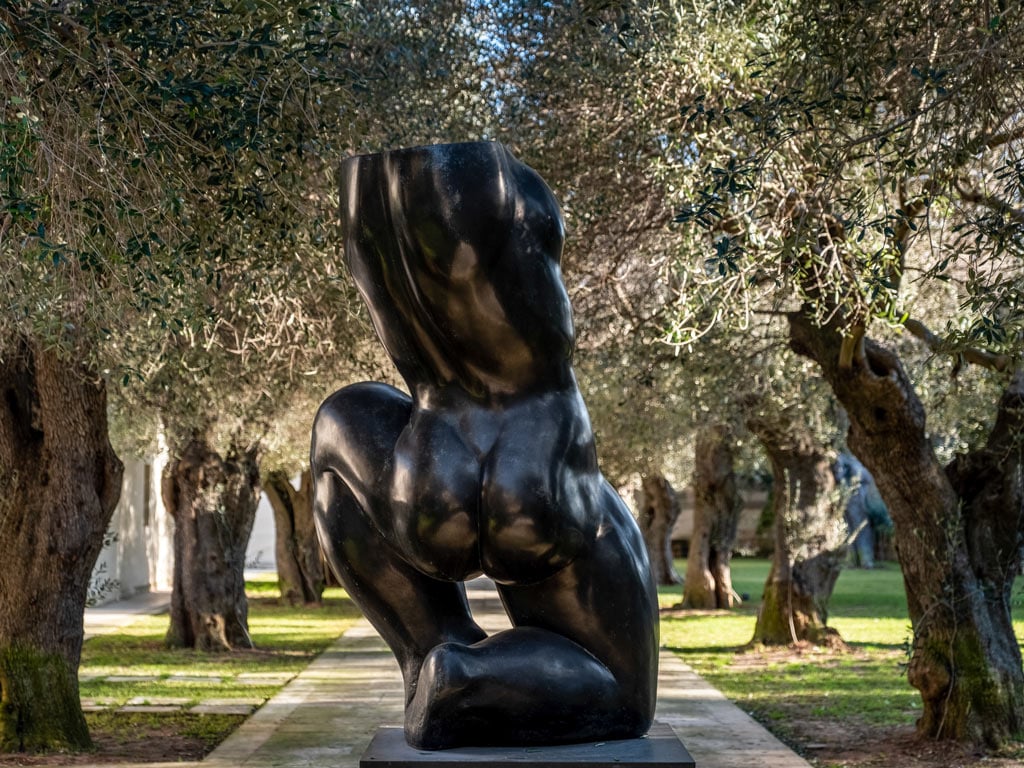
Lecce, inside the walls · A garden of old olives behind the city wall · €€€
A seventeenth-century building restored over a decade by the grandchildren of the painter Antonia Fiermonte and opened in 2015. Le Corbusier, Perriand and Scarpa in the rooms; outside, centuries-old olive trees, sculpture, a pool, and Zéphyr for dinner.
View hotel →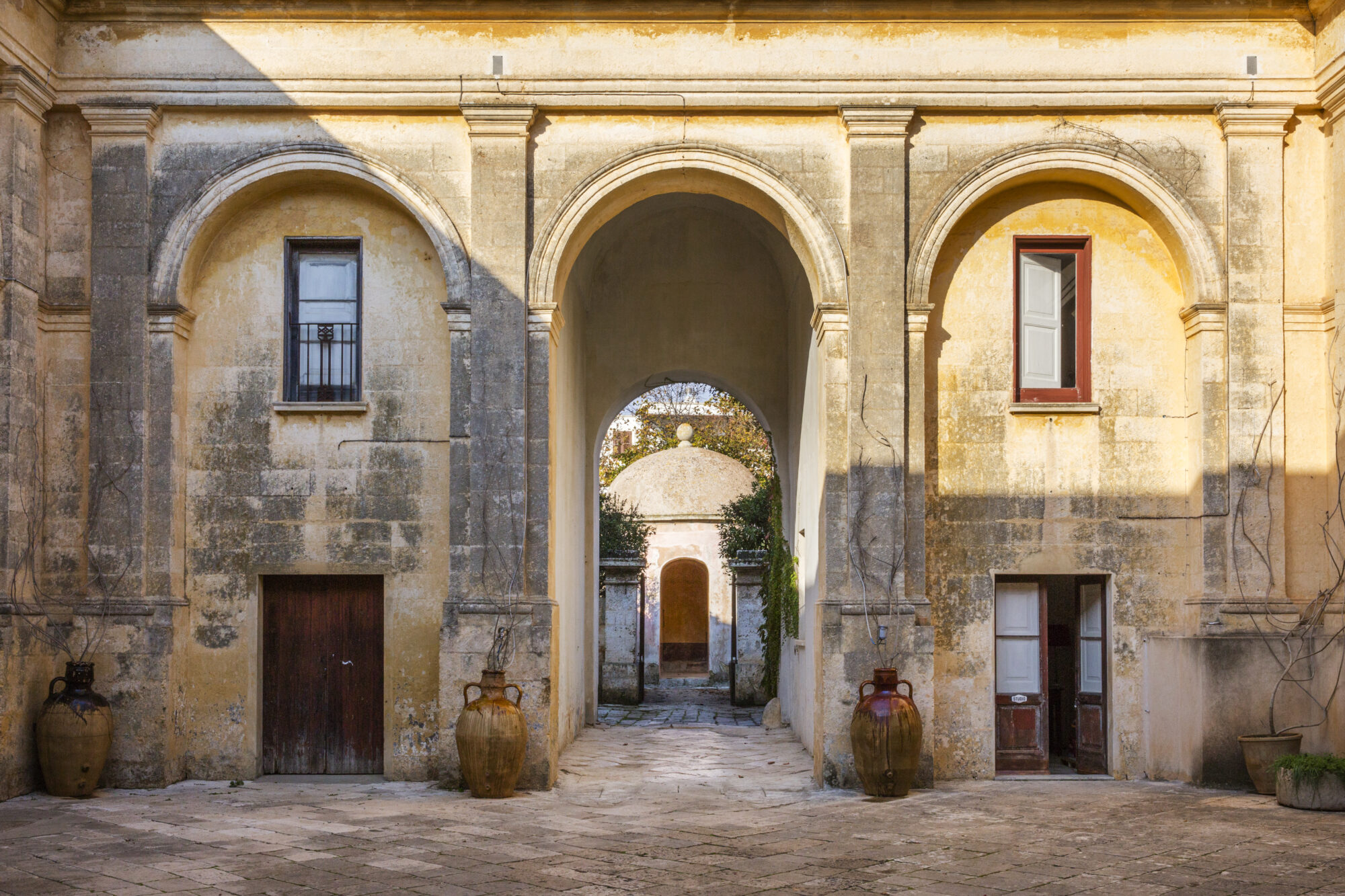
Gagliano del Capo · Nine rooms in an 1861 palazzo, emptied on purpose · €€€€
Gabriele Salini and the architects Ludovica and Roberto Palomba stripped a family palazzo back to its frescoed shell and left it that way: vaulted halls with almost nothing in them, nine rooms, commissioned art where furniture would be, a pool in the courtyard behind.
View hotel →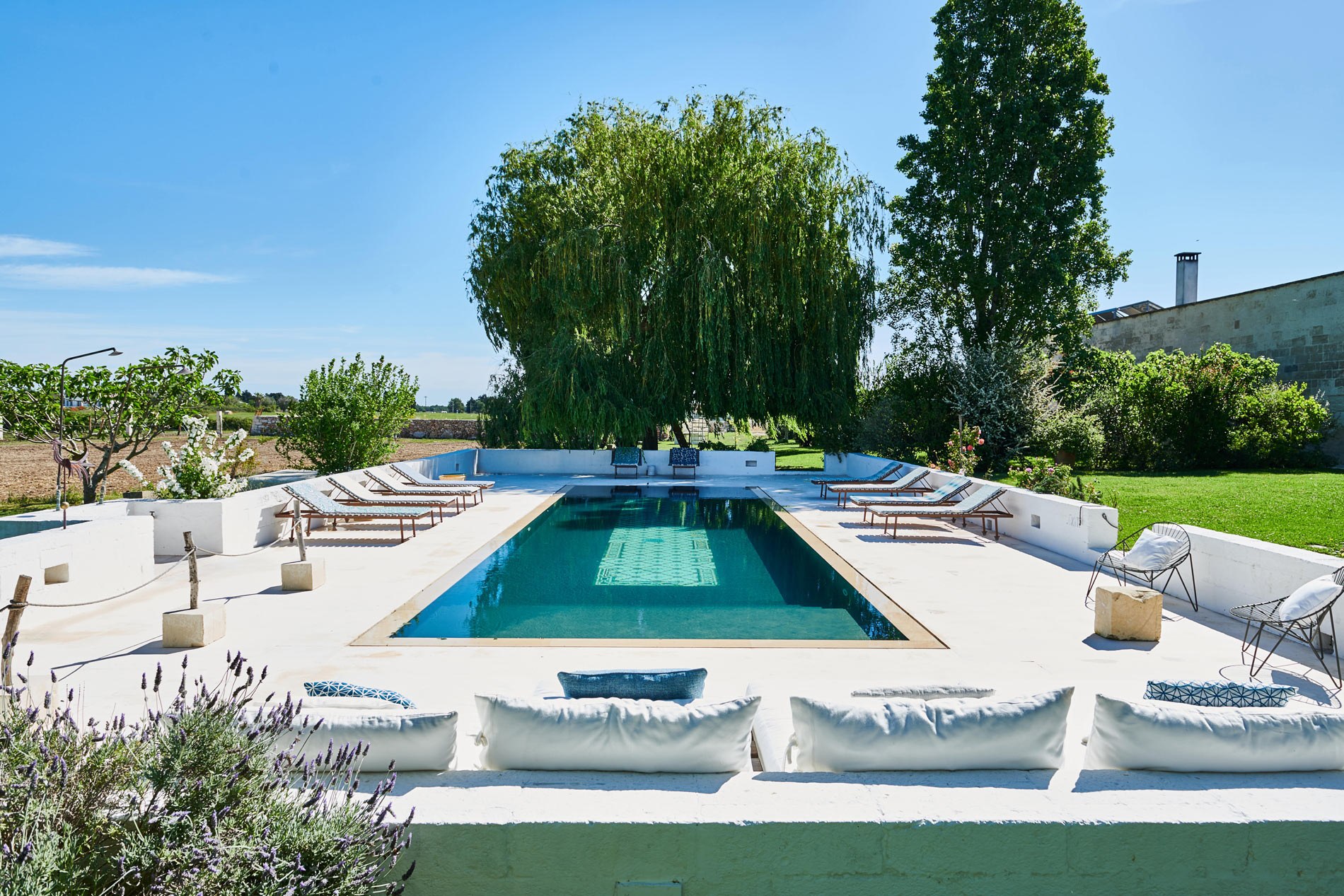
Otranto · Eight rooms, horses, and the Alimini lakes · €€€
Mercedes and Antonio opened the farm in 2013 out of a shared enthusiasm for horses and for having people to stay. Eight whitewashed rooms layered with wicker and flea-market finds, two pools, bees, a kitchen garden. Runs year-round.
View hotel →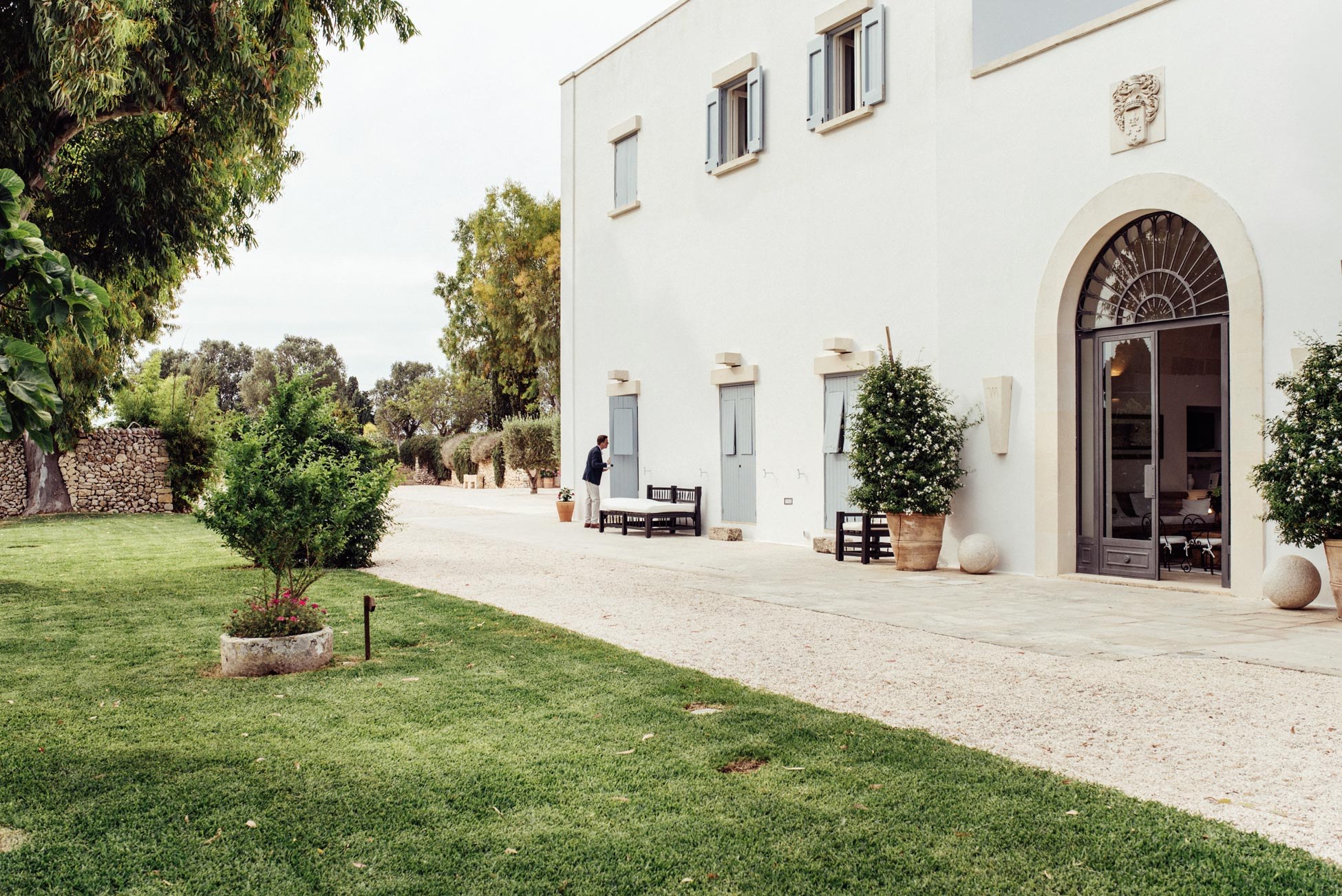
Otranto · A white masseria two kilometres from the sea · €€
A nineteenth-century farmhouse outside Otranto, restored in 2001 and run by Elisabetta and her daughters Caterina and Mercedes. Twenty-nine white rooms with locally forged iron beds, a pool in the courtyard garden, and Fimmine cooking from its own orchard. Open April to November.
View hotel →Photography by Matteo Capirola.
The Seven Nights · Lecce
I.
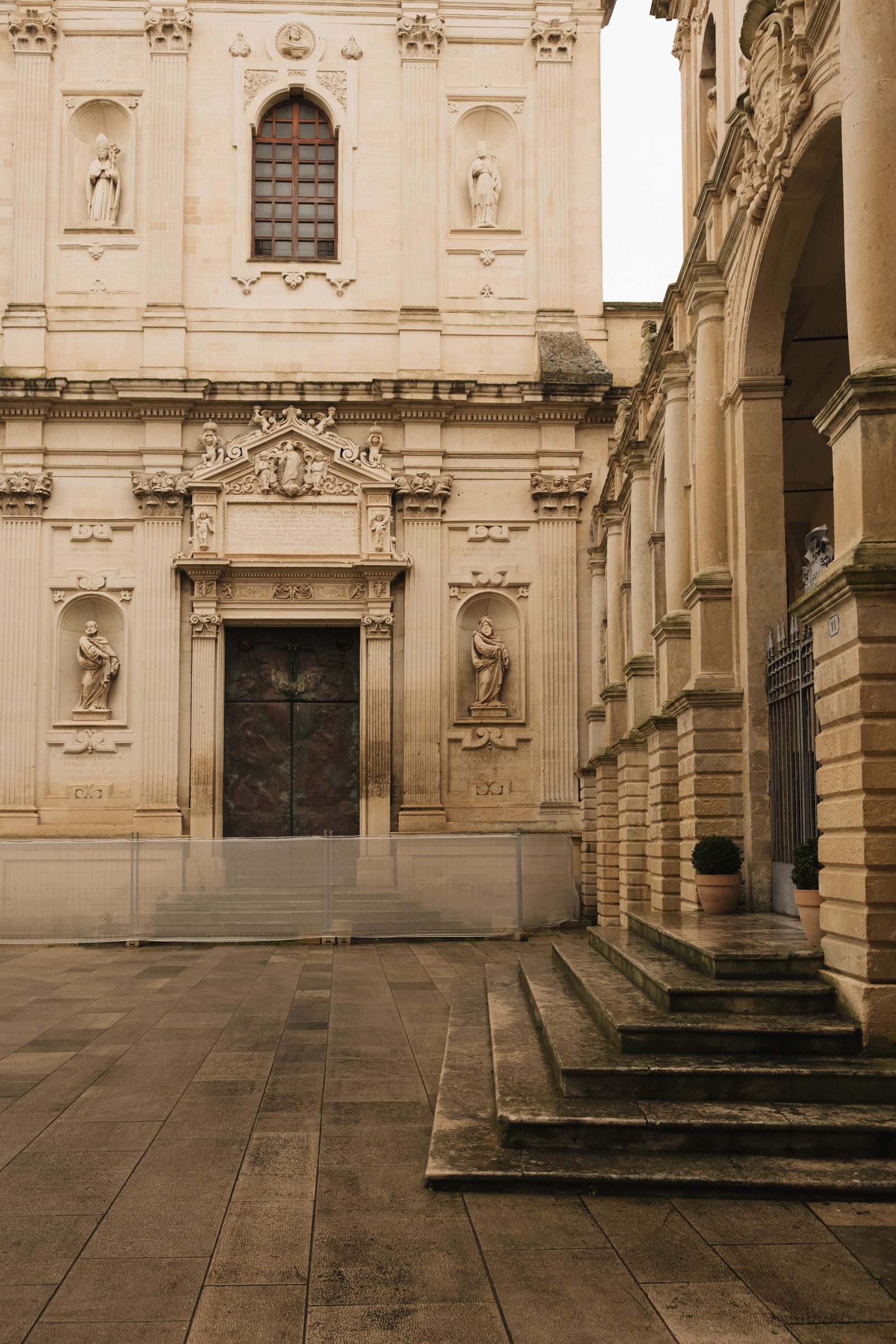
Arrive in the afternoon and start with a slow walk. Piazza Sant'Oronzo first, where a Roman amphitheatre sits two metres below the modern pavement, only half excavated because the city was built on top of it. Then the cathedral square — a piazza closed in on all sides, with a single way in.
Arriving earlier in the day? Drive fifteen minutes east to San Cataldo, Lecce's own stretch of coast, for a first swim, or walk through the Castello Carlo V, the sixteenth-century fortress at the edge of the old town. Both leave the churches for the evening, when the stone is at its warmest.
Pietra leccese is a pale limestone that cuts with a knife when quarried and hardens in the air. That one property is why a provincial city could carve like a capital: the labour was affordable, so the ambition could be enormous. Look at the front of Santa Croce — there is hardly a flat surface on it.
The first order is a caffè leccese — espresso over ice with almond syrup — at Caffè Alvino on Sant'Oronzo, with a rustico or a pasticciotto. Dinner at Le Zie, where you ring a doorbell and eat in what is effectively someone's dining room, or Osteria da Angiulino for the louder version.
The city runs on its own clock. Shutters come down at one and go up again at half past four; at seven the whole of Lecce is out on Via Trinchese, pushchairs and all. The bakeries near Porta Napoli bring the pasticciotti out warm at eight in the morning and are usually sold out by eleven.
The Seven Nights · Lecce
II.
A day on foot inside the walls. Santa Croce in the morning, before the light goes flat on the façade; the Duomo and its bell tower for the view over the roofs; then the Museo Faggiano, a house whose owner started fixing a drain in 2000 and hit two thousand years of city underneath — now open exactly as he found it.
When the heat makes the streets unusable, take the interiors: the Teatro Paisiello, a small nineteenth-century theatre in pistachio and cherry-red velvet, and the papier-mâché workshops the city has kept going since the eighteenth century — cartapesta, a poor city's answer to marble, still made by hand a few streets from the cathedral. A third door, opened only in 2021: the Fondazione Biscozzi | Rimbaud, a private collection of twentieth-century Italian art given to the city and hung in a palazzo off Piazzetta Baglivi. Four hundred years of Baroque, and then a room of Fontana and Boetti.
Evening is the passeggiata and then dinner. The city has a real restaurant scene rather than a tourist one; the rule is to eat where the menu is short.
The limestone holds the day's heat and gives it back after dark, so the evenings stay warm long after the light has gone. For things to take home, the lanes behind the Duomo and Via Palmieri have the cartapesta workshops and a few ceramicists; the morning market on Piazza Libertini is fruit and enamelware, not souvenirs.
The Seven Nights · Grecìa Salentina
III.
South into the villages, and into the region's most unusual story. The Grecìa Salentina is nine communes where Griko is still spoken — Calimera, Martano, Sternatia, Corigliano d'Otranto and the rest — a Greek dialect that has been here so long that nobody agrees when it arrived. The signs are bilingual; the older generation is the last to have grown up speaking it.
Drive between them slowly. Corigliano has a moated castle with a Baroque face, Sternatia an underground oil press, and none of them has a ticket office. Twenty minutes north-east, Acaya is the opposite kind of place: a fortified town drawn on a grid and built from nothing in 1535, one of the few Renaissance planned towns in the south and still barely bigger than its own walls. Lunch wherever the sign says ciceri e tria — chickpeas with fried and boiled pasta in the same bowl.
The one fixed stop is Galatina. The Basilica di Santa Caterina d'Alessandria is plain outside and completely frescoed inside — a fourteenth-century cycle over every surface, one of the great painted interiors of the south, and almost nobody in it. Galatina is also where tarantism lived: the ritual in which women said to have been bitten were danced back to health, and the pizzica played to do it.
Mornings here sound different: men on plastic chairs outside the bar at seven with the radio going, and one bar to each village that is also the newsagent and the place you pay the water bill. Order a caffè and a spumone in Calimera or Sternatia, and buy a puccia wherever there is a queue.
The Seven Nights · Nardò
IV.
West to the other sea, which is warmer, shallower and a different colour. Nardò in the morning: Piazza Salandra is a Baroque square as fine as anything in Lecce, and you will have it to yourself. Coffee under the arcades, then out to the coast.
Porto Selvaggio is four hundred hectares of Aleppo pine running down to a rocky cove between two watchtowers. You park above and walk twenty minutes down through the trees, which keeps the numbers down; there is no sand and no bar. Swim, then walk back up. Santa Maria al Bagno, the old bathing village a few minutes south, has the afternoon coffee.
Dinner in Nardò at Antica Trattoria Salandra, in a lane behind the piazza.
The Ionian shelves gently and warms early: by June it swims at eight in the morning, when the water off Santa Maria al Bagno is still glassy and the light comes from behind you. Take a towel and nothing else — Porto Selvaggio has no bar, little shade at the bottom and nowhere to buy water. Nardò's shops shut hard at one.
The Seven Nights · Gallipoli
V.
Gallipoli, which the Greeks named the beautiful city, occupies a limestone island joined to the mainland by one bridge. Go in the late afternoon and walk the sea walls all the way round as the light goes; the fishing boats come in on the harbour side.
Below the old town lie the frantoi ipogei — olive presses cut into the rock, where until the nineteenth century Gallipoli pressed the lamp oil that lit much of northern Europe. The morning before it belongs to the inland villages, Parabita and Matino, where the blight is most visible and the replanting is too — young trees in rows between the grey ones.
Dinner on the walls: La Puritate for the classic version, La Vinaigrette on the terrace above the water for the modern one.
The fish market on the harbour side is finished by nine and worth the early start for the noise of it alone. By evening the lanes smell of frying and salt. The water inside the walls at the Purità beach is flat enough to swim before breakfast, when it is mostly locals in the water.
The Seven Nights · Leuca
VI.
The day the peninsula runs out. South through Tricase to Santa Maria di Leuca, called de finibus terrae — the end of the earth: a lighthouse, a basilica, a monumental staircase built for an aqueduct, and the line offshore where the Ionian meets the Adriatic, visible on a calm day as a seam in the water.
Lunch at Tricase Porto, at the taverna on the harbour where the menu changes with the catch. Spend the afternoon at the small rocky swimming spots of the south-east: Marina Serra, a natural rock pool, or the Ciolo inlet, where a bridge crosses a ravine that drops straight into the sea.
Then north up the Adriatic side, which is higher and colder: Castro, a walled town on a headland with the Grotta Zinzulusa below it — stalactites reached along the shore, named for the rags they were thought to resemble. Dinner where you sleep.
There is no sand at all on this stretch. The days are rock, ladders and deep, cold, very clear water, so bring something to sit on. Marina Serra fills after eleven and empties again at six. Inland, Tricase and Specchia have the ordinary shops — a fruttivendolo, a macelleria, and a bar that makes granita to order in the morning.
The Seven Nights · Otranto
VII.
Begin before breakfast at the Faro di Punta Palascìa, five kilometres south of Otranto: the lighthouse on the easternmost point of Italy, where the sun comes up over Albania, seventy kilometres off and visible on a clear morning. It is the first sunrise in the country.
Otranto for the middle of the day: a compact walled town, an Aragonese castle on the water, and in the cathedral the finest single thing on this route — its floor. Between 1163 and 1165 a priest named Pantaleone laid a mosaic across the entire nave — a Tree of Life carrying Alexander the Great, King Arthur, the months, elephants and the zodiac in one image. People have been walking across it for more than eight hundred years.
The afternoon at Baia dei Turchi or Porto Badisco, the horseshoe bay where Virgil has Aeneas land — or, ten minutes south of town, the Cave di Bauxite, a disused quarry of red earth around a still green pool. There is nothing to do there and no swimming; you go for the colours, which are best in the last hour of light. The farewell dinner where you are sleeping; the Otranto estates cook from their own gardens.
Dawn at Punta Palascìa is cold enough for a jumper even in July, and the drive back into Otranto lands just as the bakeries open. The bay inside the walls is shallow and calm — the local swim rather than the postcard one. North of town the Alimini lakes have eucalyptus, pines and often a strong wind: welcome on a hot day, too much on others.
The Seven Nights · Departure
VIII.
Brindisi is an hour and a quarter from Otranto, Bari two and a half. Take the coast road north as far as Roca Vecchia and stop: the Grotta della Poesia is a collapsed sea cave forming a near-circular pool in the rock, joined to the open sea by a tunnel, and the cave beside it carries inscriptions in Messapian, Greek and Latin — three thousand years of people leaving their names in the same place.
Then inland for the airport, past the grey rows and the knee-high trees planted between them by people who will not live to harvest them. Ninety minutes north, around Ostuni, the old trees are still standing — that is where Journey I begins.
Come before nine and the pool is still in shadow, the rock cold underfoot and the water the colour it is in the photographs; by eleven there is a queue. There is a bar in the car park and nothing else. If you have time before the flight, the coast road north to Torre dell'Orso and San Foca is worth the extra half hour.
The route assumes a car and a loose hand. Days are built around the hours rather than the other way round — out early, slow through the middle, towns after seven. No day is full, nothing has to happen in order, and every address here carries the whole week, so a second night wherever you like it costs you nothing but a day. Take it as a spine, not a schedule.
The peninsula is barely forty kilometres across, so you get to choose which end of the day you want. The Ionian side faces west and belongs to the evening — the sea walls at Gallipoli, Punta della Suina in the pines, Porto Selvaggio once the bay has gone into shade; the last half-hour of light is the reason to be there. The Adriatic side faces east and belongs to the morning: Baia dei Turchi and the Grotta della Poesia are cold, clear and nearly empty before nine, and overcrowded by eleven. Punta Palascìa outside Otranto is the first sunrise in Italy. The Cave di Bauxite, ten minutes south of it, are best at the other end of the day, when the evening light deepens the red earth. At Leuca, where the two seas meet, you can have both in one day.
The Ionian side is shallow, warm and pale; the Adriatic side is deeper, colder and clearer, and it is the one to take when the wind allows. Porto Selvaggio stays cold and transparent all summer because springs surface offshore — no sand, no bar, twenty minutes down through the pines. Porto Badisco and the Ciolo are rock and deep water, nothing to lie on. Baia dei Turchi is the pine-backed sand everyone wants, and the walk in from the car park is what keeps it bearable. Punta della Suina takes the late sun. The wind decides the day: if the Adriatic is blown out the Ionian is usually flat, and the crossing is forty minutes.
Every excursion carries a crowd rating: how busy the place gets, weighed against how well it absorbs people. A single rock pool fills up; a walled city spreads everyone out. Where somewhere is crowded at every reasonable hour and an equal exists nearby, we send you to the equal.
May, June, late September and October are the best time for this journey. In July and especially August the Salento is one of Italy's busiest holiday regions, and the small coastal spots cannot absorb the crowds. The sea is warm enough to swim from late May into October, and October is quiet and still warm.
The bacterium has reshaped this landscape since 2013 and the containment line keeps moving. The dead trees are not hidden and this guide does not hide them either. Rules on moving plant material out of the zone are real and enforced.
Kalimera means good morning in Griko and is also the name of a village. Two words go a long way in the Grecìa: the region is proud of the language and mildly surprised that anyone outside it has heard of it.
The festival runs through August across the Griko villages and finishes at Melpignano with a crowd in six figures. It is the region's own festival rather than a production for visitors — and the single busiest night of the Salento year. Check the date against your week and decide deliberately.
Book Le Stanzie at Supersano and the Otranto estate kitchens well ahead, and anything on the Gallipoli walls in July and August. For most other places, a call the day before is enough.
In July and August the coastal car parks fill early — arrive at the water before ten or after five. The old towns are ZTL (limited-traffic zones); park outside and walk in. Distances look small and drive long: single carriageway and tractors, so add a third to every estimate. The two coasts often have different weather on the same day; if the Adriatic is too windy, the Ionian usually is not, and the crossing takes forty minutes.
Brindisi is the airport for this journey; Bari adds ninety minutes. Lecce is on the national rail line, reachable directly from Rome and Milan. Everything south of Lecce needs a car — the local Ferrovie del Sud Est trains do reach the towns, but they run infrequently.
In Lecce the contemporary argument happens indoors: Palazzo Luce hung with Ponti, Sottsass, Mollino and Abramović; Palazzo Daniele stripped back to its frescoed shell with commissioned art where the furniture would be; Palazzo San Vito in poured terrazzo and blackened steel under star vaults. Outside the city the register changes — Vincent City on the road at Guagnano, twenty ceramic and mosaic works built as one man's monument to another, and a cooking school in the cellars of a seventeenth-century castle at Ugento.
What people bring home is rarely on the list — the passeggiata starting at seven, the smell of a frantoio under the street, the last swim of the day when the rock is still warm underfoot. Treat the route as a spine: an extra hour in a piazza, a village you only meant to drive through, a second night where you had planned one. Every address in this guide can be booked through placer, and we are glad to reshape the week around how you actually travel.
‹
›
.jpg)