beta
beta
Free, and it takes one tap. The guide opens as soon as you are in.
Continue with GoogleWe will send you a one-time sign-in link.
Puglia, Italy
May – October
7 nights
13 stays
Masserie & white towns
The houses in this journey were built to be defended. A masseria is a farm with walls, a courtyard that closes and a tower for watching the sea, because for three centuries the sea brought raiders. The raids stopped; the buildings stayed. Over seven nights the route moves between fortified estates in the olive country, three white towns on three low hills, and a coast where the swimming is done off limestone rather than sand. Ninety kilometres, end to end.
The Valle d'Itria is not a valley but a shallow karst basin between Bari and Brindisi, and its floor holds the densest concentration of trulli anywhere: dry-stone cones roofed in limestone slabs laid like scales, tens of thousands of them, most still in use. The usual explanation is a tax dodge — tenants built without mortar so the houses could be pulled down before the Kingdom of Naples came counting. Whether or not the story holds, the buildings do.
Above them stand the white towns — Ostuni, Locorotondo, Cisternino — lime-washed to a brightness that began as cheap maintenance and is now the most photographed colour scheme in southern Italy. Between the towns and the sea run the masserie: fortified farm estates, most raised between the fifteenth and eighteenth centuries, when Ottoman and Barbary galleys worked this coast. Courtyard, cistern, chapel, an oil mill cut into the rock beneath, a tower on the corner.
What they were defending is the other thing this landscape is made of. Puglia grows roughly half of Italy's olive oil, and the trees here are the old ones — trunks two and three metres across, some a thousand years old and still cropping. Further south a bacterium is killing them by the million; here, for now, it has not arrived. Seven nights among walls that no longer need to be walls, and trees that still need to be trees.

Photography by Matteo Capirola.
Stays
12
01
Masseria Palombara
02
La Peschiera
03
Masseria Borgo Ritella
04
Masseria Torre Coccaro
05
Masseria Calderisi
06
Masseria San Domenico
07
Masseria Le Carrube
08
Paragon 700
09
Vista Ostuni
10
Casale Madre
11
Masseria Moroseta
12
Borgo Gallana
13
Villa Colucci
Restaurants
29
01
Antiche Botteghe
02
Il Panino di Marino
03
Osteria del Caroseno
04
Pinto Carlo
05
Da Tuccino
06
Osteria di Chichibio
07
Puro
08
Super Mago del Gelo
09
Pescaria
10
Terra Madre
11
My Wine
12
Casa Pinto
13
Panificio L'Assunta
14
Ristorante Garibaldi
15
Silve
16
Locanda di Felisiano
17
Trattoria delle Ruote
18
Torre Coccaro
19
Bere Vecchie
20
Il Principe del Mare
21
Caseificio Crovace
22
Il Cortiletto
23
AlbaChiara
24
Osteria da Giuseppe
25
Cibus
26
Masseria Moroseta
27
Osteria del Tempo Perso
28
Sonmarco
29
Dentromare
Sites
15
01
Conversano
02
Abbazia di San Vito
03
Peppino Campanella
04
Port'Alga
05
Polignano a Mare
06
Alberobello
07
Monopoli
08
Locorotondo
09
Martina Franca
10
Fasano
11
Scavi di Egnazia
12
Cisternino
13
Ceglie Messapica
14
Ostuni
15
Torre Guaceto
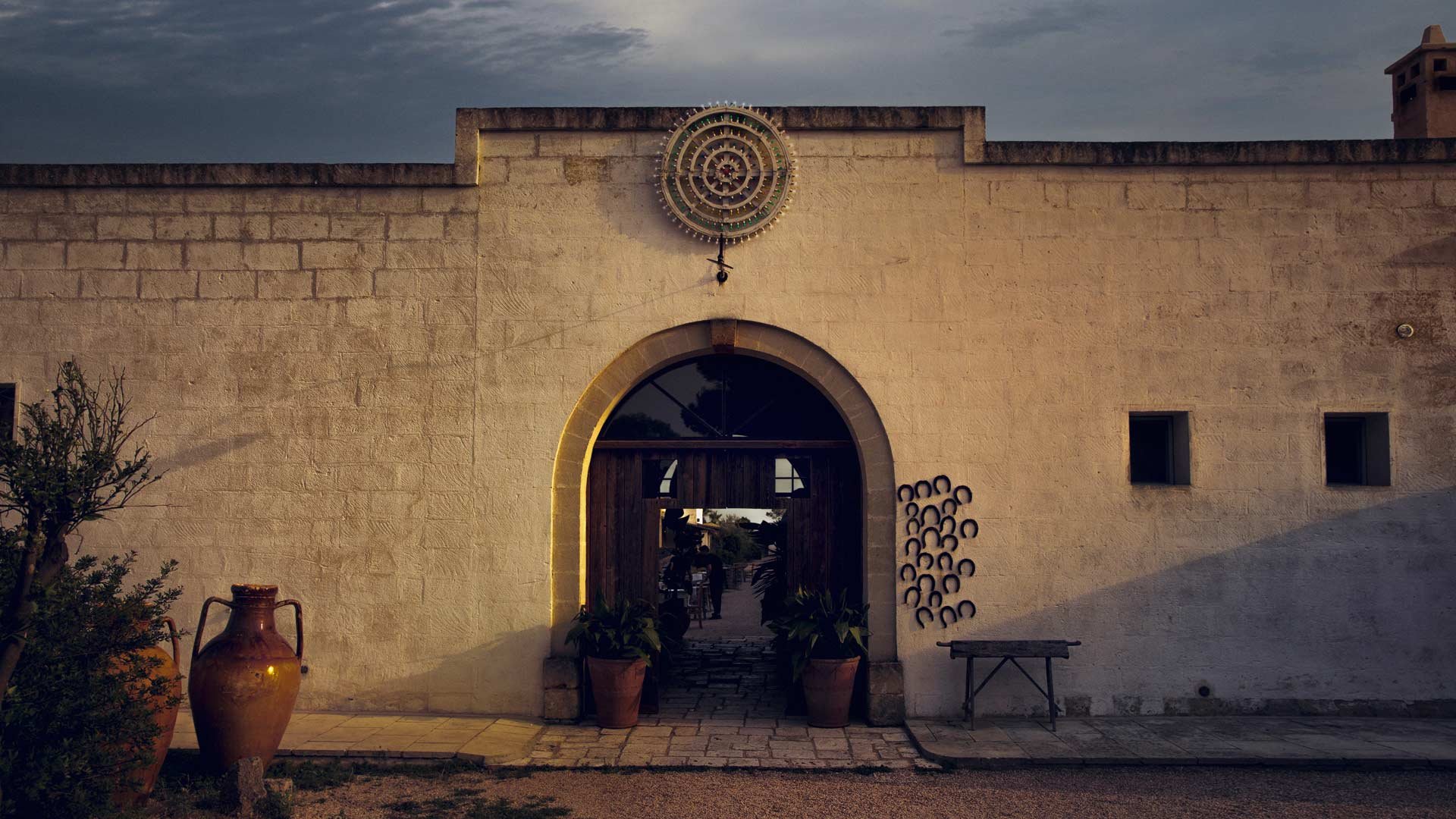
Oria · The adults-only farm with a spa in the granary · €€€
A sixteenth-century masseria outside Oria, on the Salento side of the Brindisi plain. Twenty-one rooms on one floor, some suites with plunge pools, two outdoor pools and a spa in the old granary, beneath barrel vaults. Almonds, olives and an organic kitchen garden feed the restaurant. Guests from fourteen.
View hotel →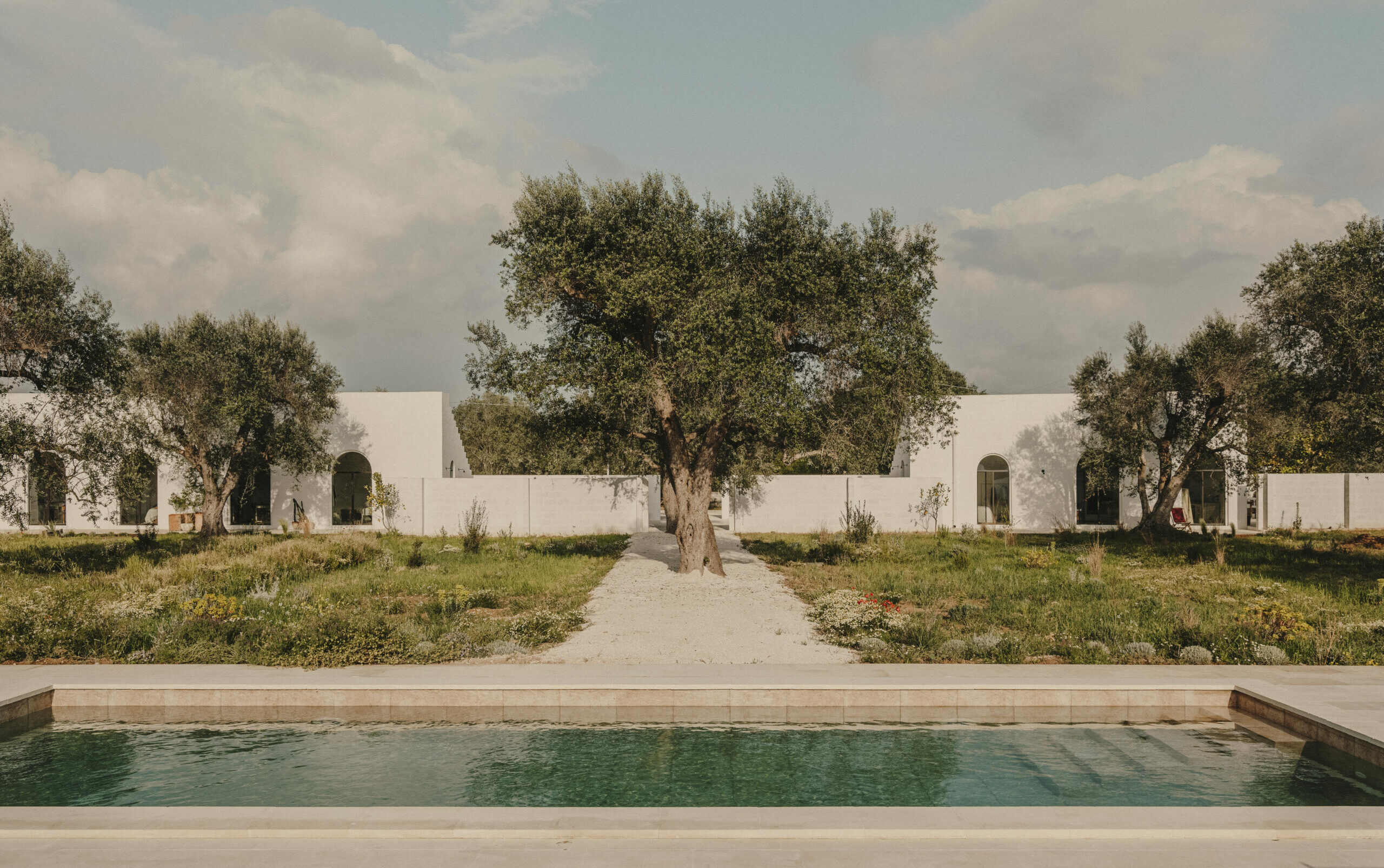
Oria · Three houses under the olives · €€€
Giuseppe De Vanna's borgo in the countryside outside Oria, rebuilt by Studio Andrew Trotter in local tufo: vaulted ceilings, cement floors, arched doors. Three houses, Casa Camino, Casa Luce and Casa Limone, each with its own garden and outdoor bath, around a shared pool in the grove.
View hotel →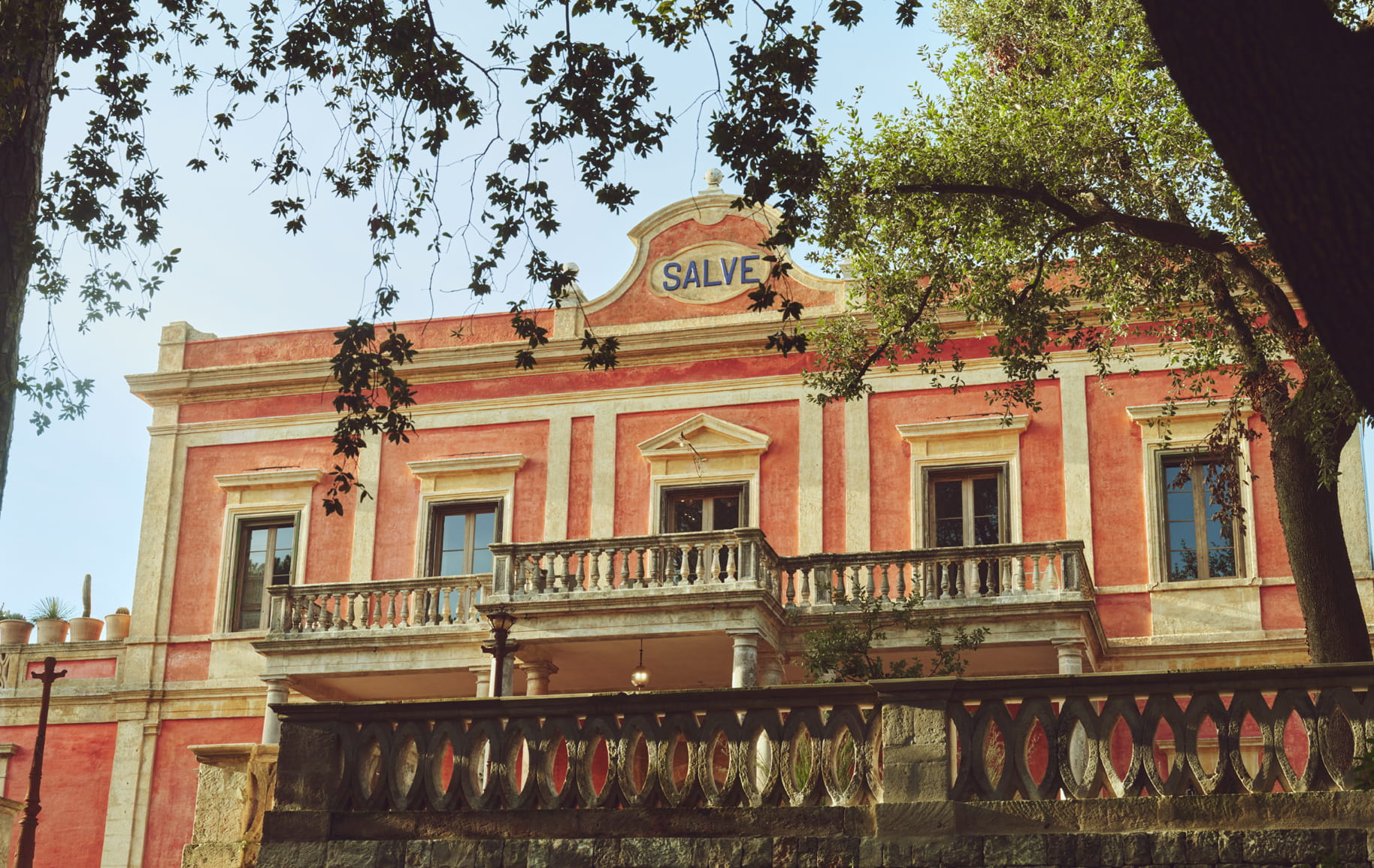
Selva di Fasano · Ten bedrooms, let whole by the week · €€€€
A 1930s villa in the pine woods above Fasano, brought back by the founders of HAY and a second Danish family. Ten bedrooms, a garden, a kitchen and a collection of furniture and art that the house was restored around — taken as a whole, not by the room.
View hotel →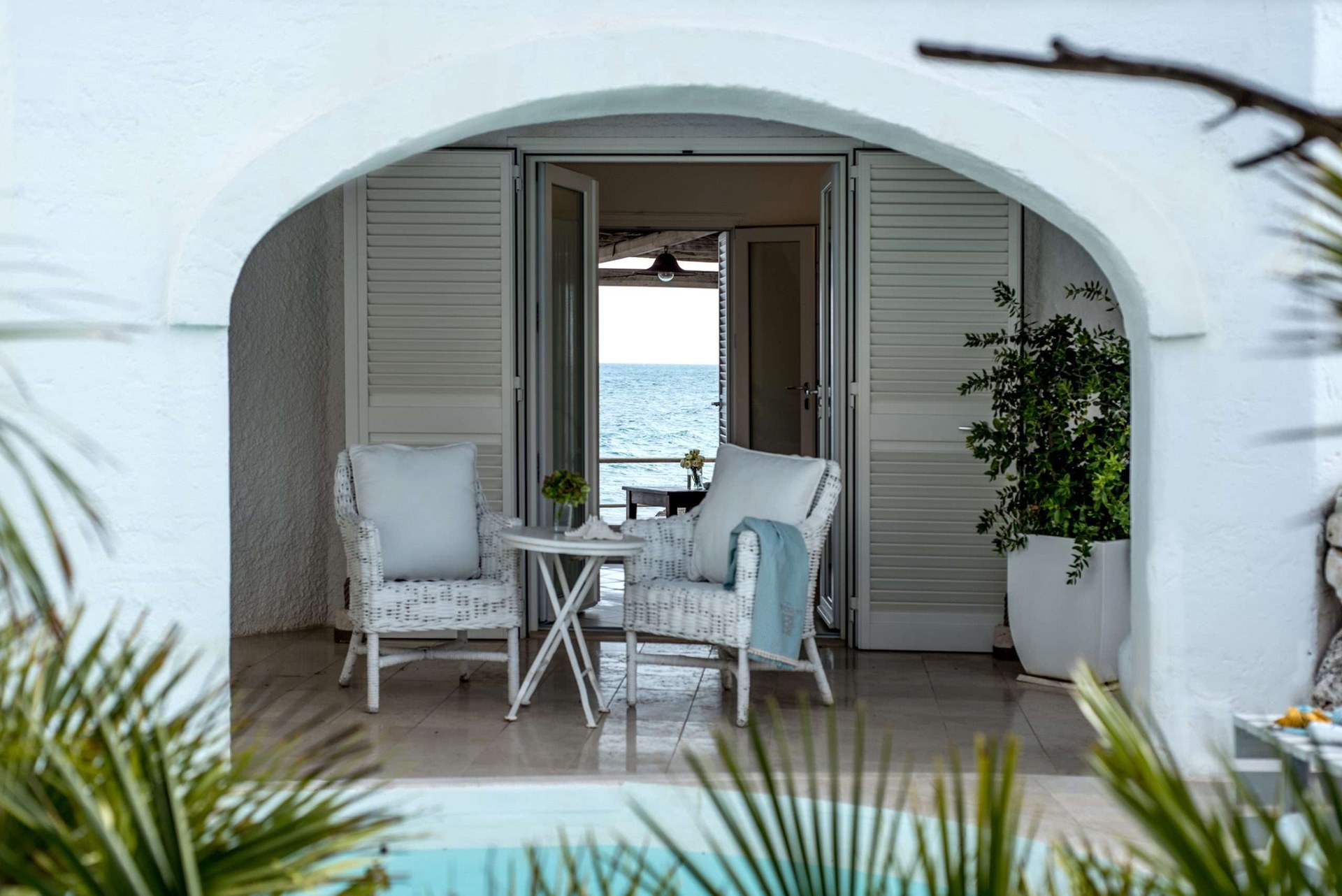
Capitolo, Monopoli · The Bourbon fish farm at the water's edge · €€€€
A fish farm from the Bourbon era on the shore at Capitolo, south of Monopoli, now thirteen rooms on a single floor, some with direct access to the sea. Seven pools, a private beach, sauna and thalassotherapy, and Saleblu, the seafood restaurant. No children under ten.
View hotel →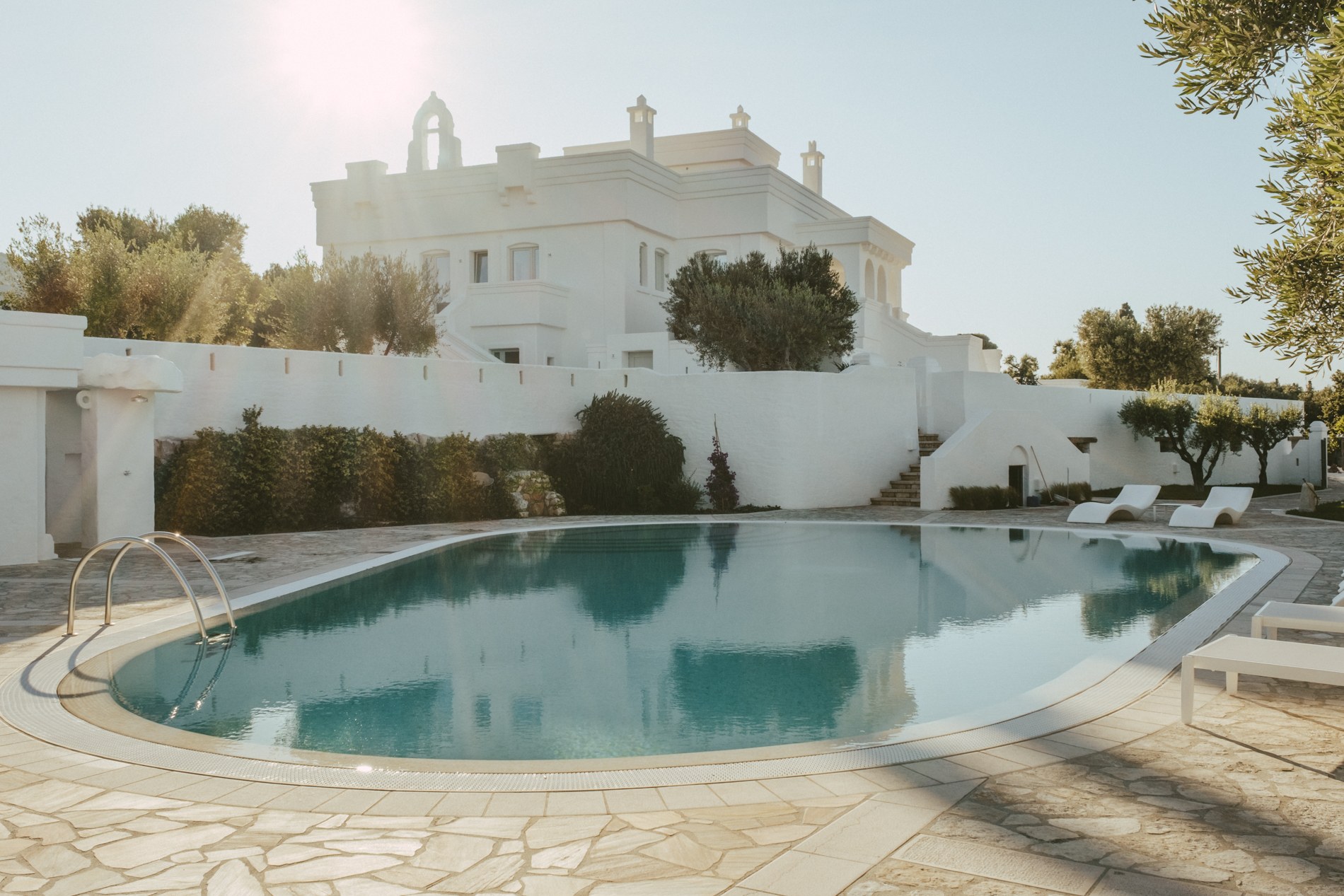
Fasano · The working estate with trulli in the garden · €€
A seventeenth-century farm on a terrace above Fasano, restored by the Vinci family with interiors by Pino Brescia: whitewash, lime, drapery, a scatter of trulli turned into suites, a pool among century-old olives. Ten minutes to the towns, fifteen to the sea.
View hotel →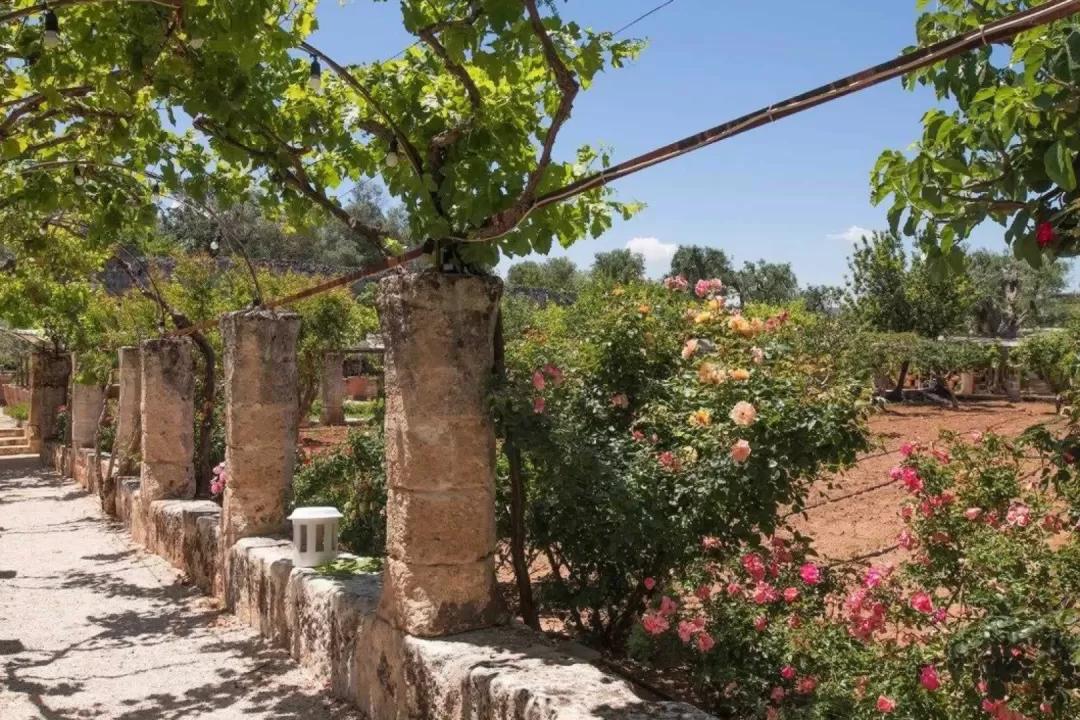
Savelletri · The fortified farm with a spa in the caves · €€€
A sixteenth-century tower from the coastal line built against Saracen raids, with a 1730 chapel, a walled kitchen garden and olives the owners reckon at eight hundred years old. The Muolo family run thirty-seven rooms, an Aveda spa set in natural caves and a beach club five minutes away.
View hotel →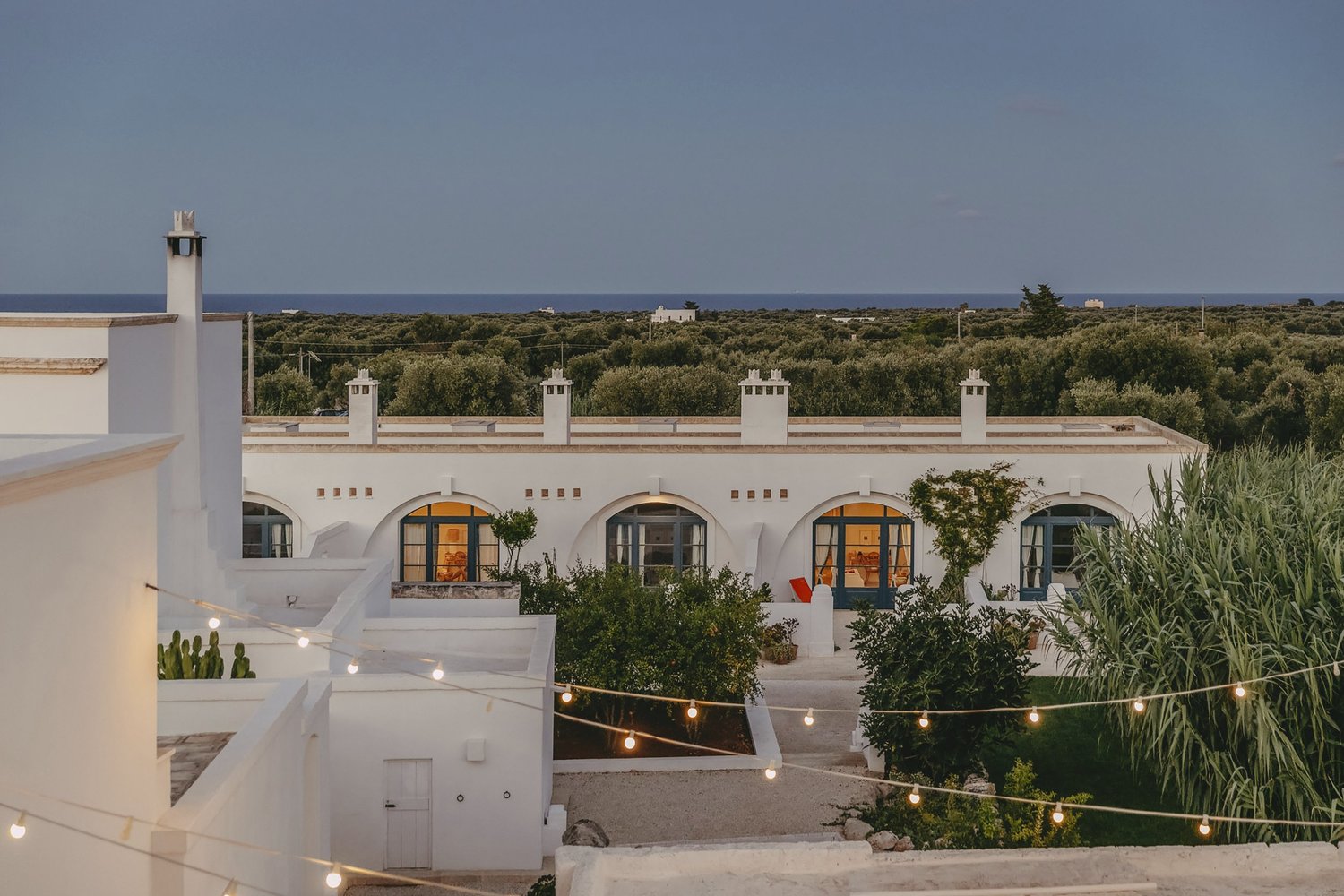
Savelletri · The 1658 farmhouse with a chapel and resident donkeys · €€€€
A farmhouse built in 1658, reopened in spring 2021 by Max and Jutta von Braunmühl, with Jutta curating the interiors: Puglian furniture, pieces from Morocco and France. Twenty-four rooms and suites, a consecrated chapel, an old olive press, a heated pool behind drystone walls, a private beach five minutes away.
View hotel →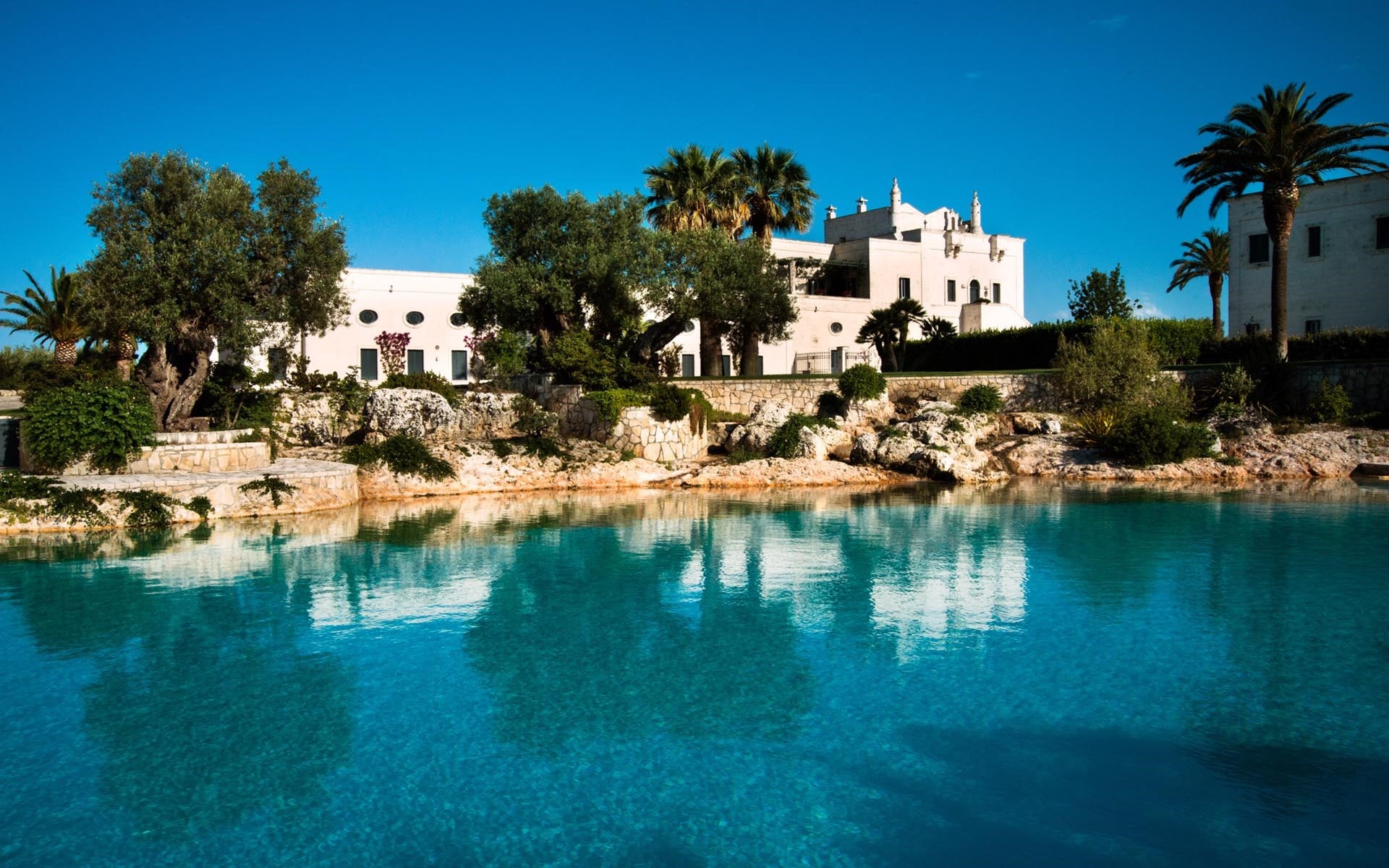
Savelletri · The watchtower with its own golf course and sea · €€€€
A fifteenth-century watchtower once held by the Knights of Malta, guarding olive groves against Saracen raids. The Melpignano family opened it as a hotel in 1996: sixty hectares of ancient olives, a free-form seawater pool, a thalassotherapy spa, an eighteen-hole course above the Adriatic. No children under twelve.
View hotel →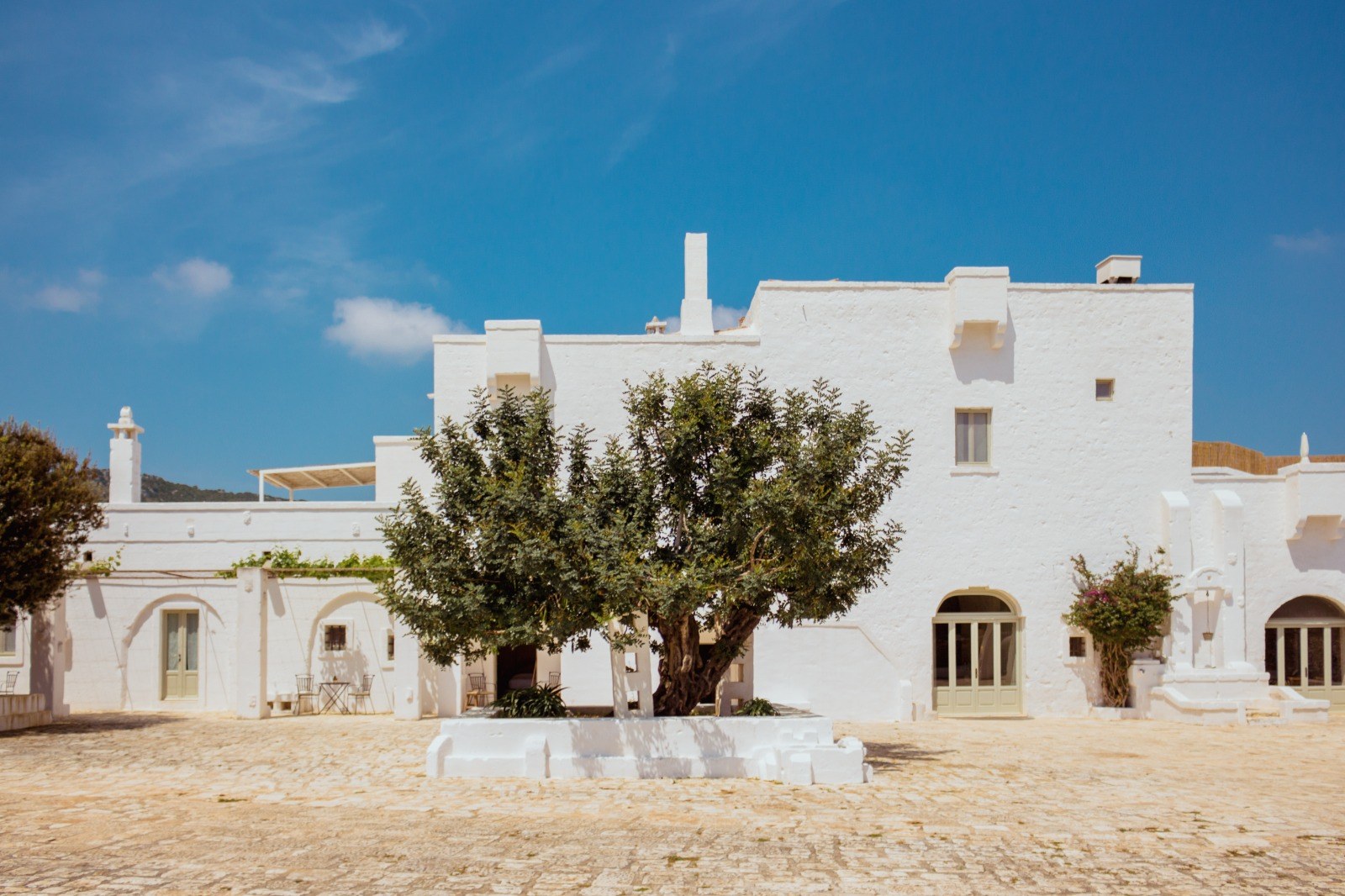
Ostuni · The olive mill with an all-vegetarian kitchen · €€
A whitewashed stone farm and former olive-oil mill in Contrada Spennati, on the Fasano–Ostuni road, restored by Valentina De Luca and her cousin. Nineteen rooms and suites, lemon and prickly pear in the courtyards, an outdoor pool among the olives, and a restaurant that serves only vegetarian food.
View hotel →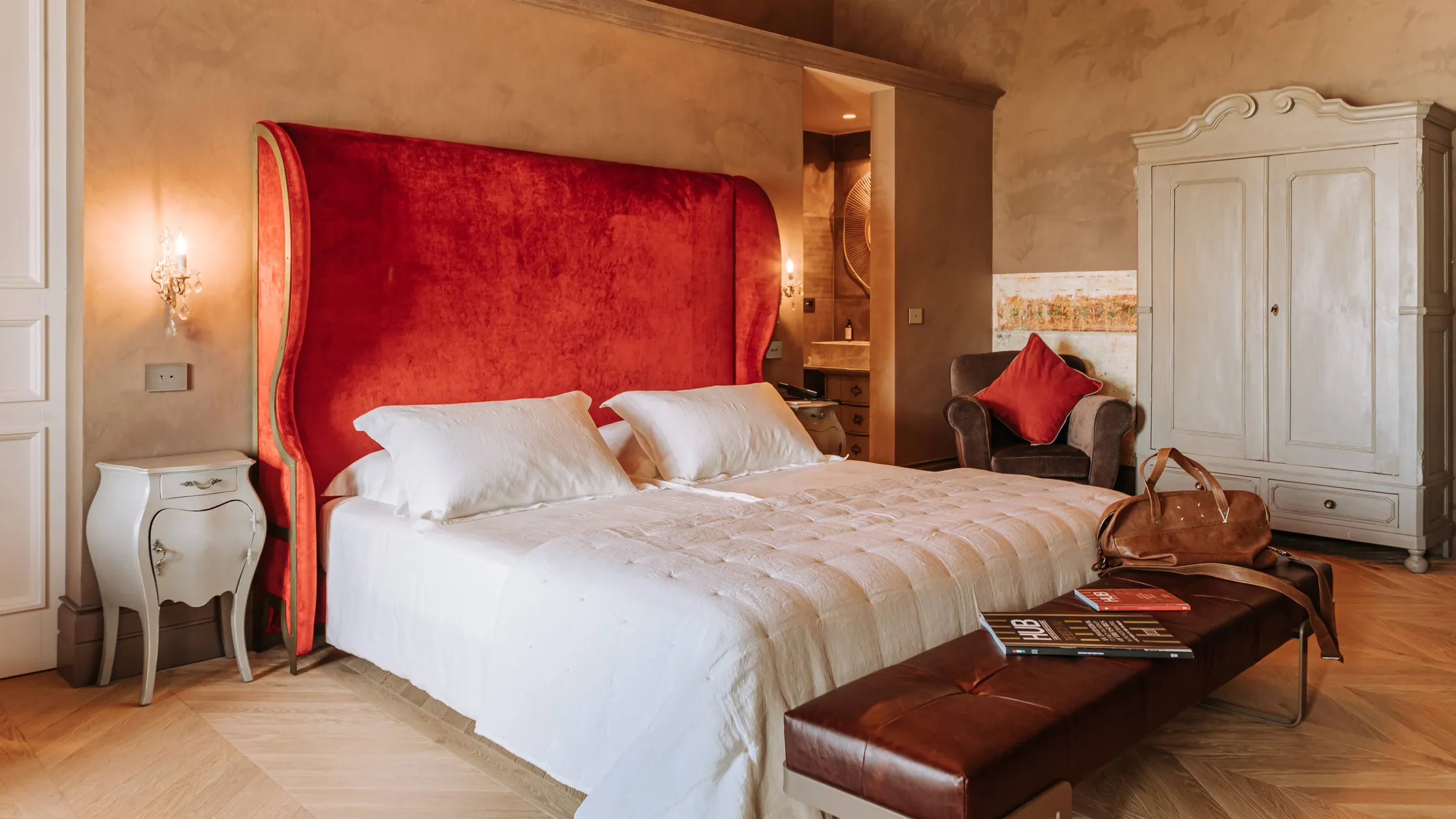
Ostuni, old town · A Baroque palazzo with a garden behind the wall · €€€€
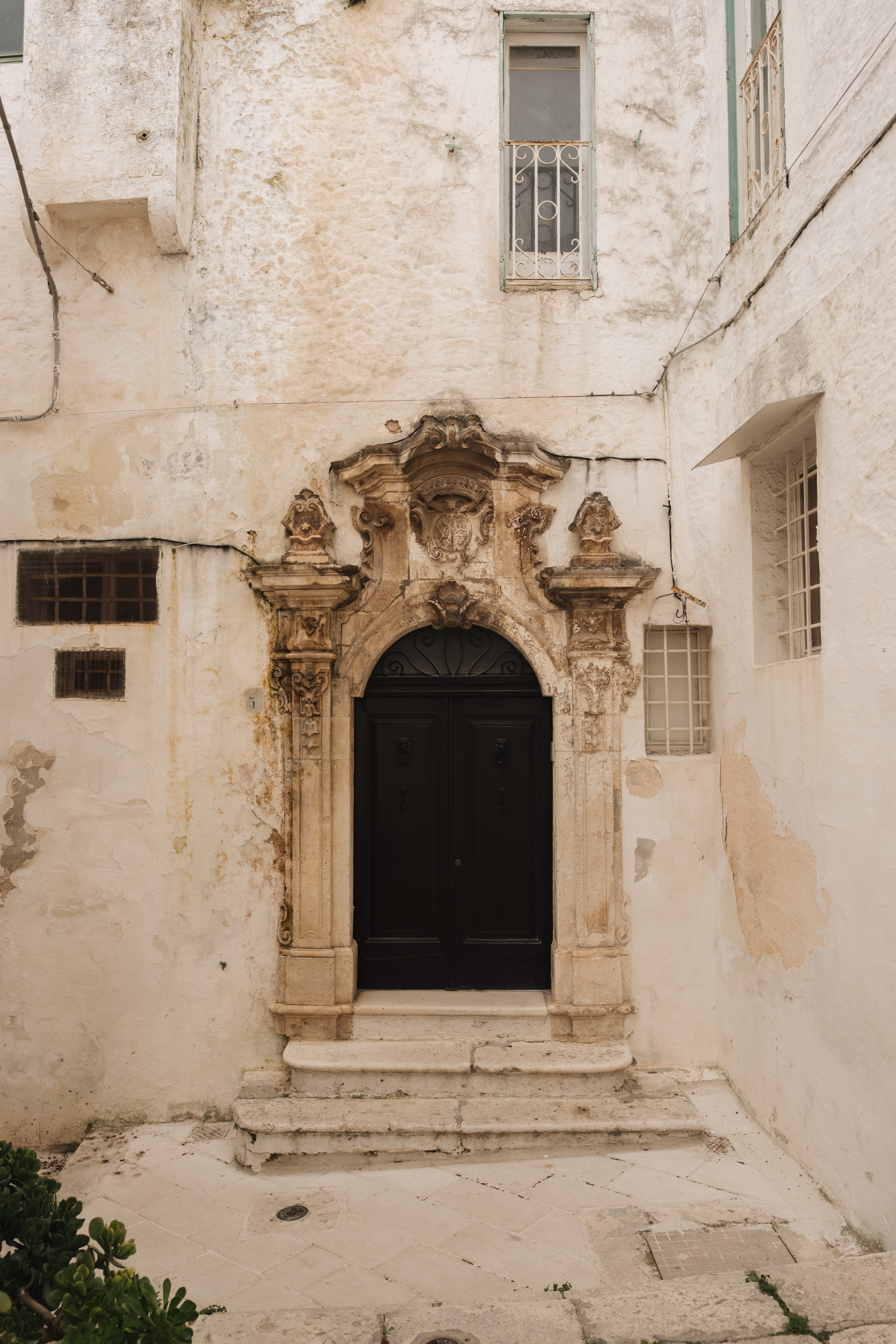
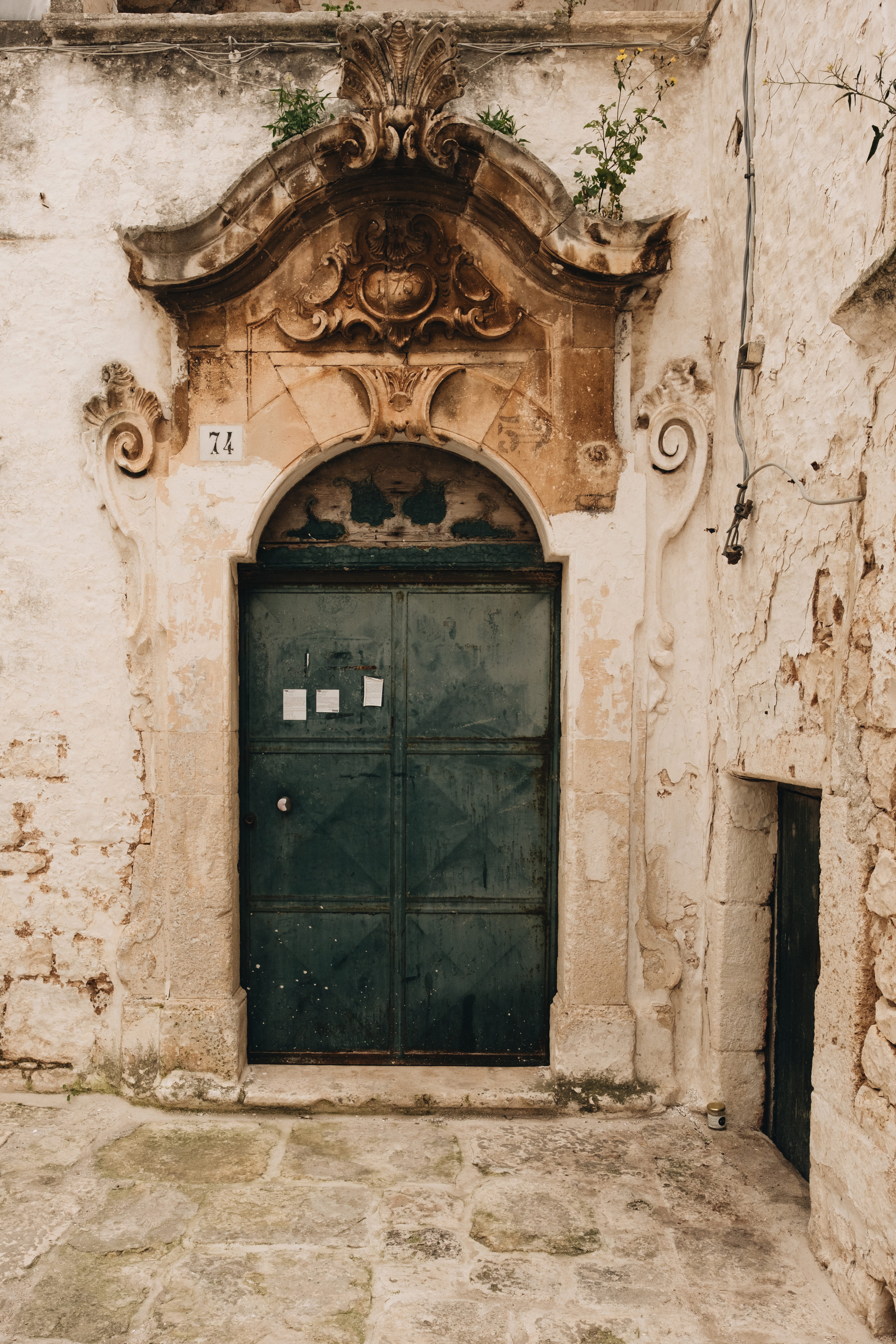
Inside the white maze, an eighteenth-century palace hides a garden of nearly a thousand square metres — palms, citrus, a pool — invisible from the alley. Furnished as a private collection rather than a hotel; the passeggiata starts at the door.
View hotel →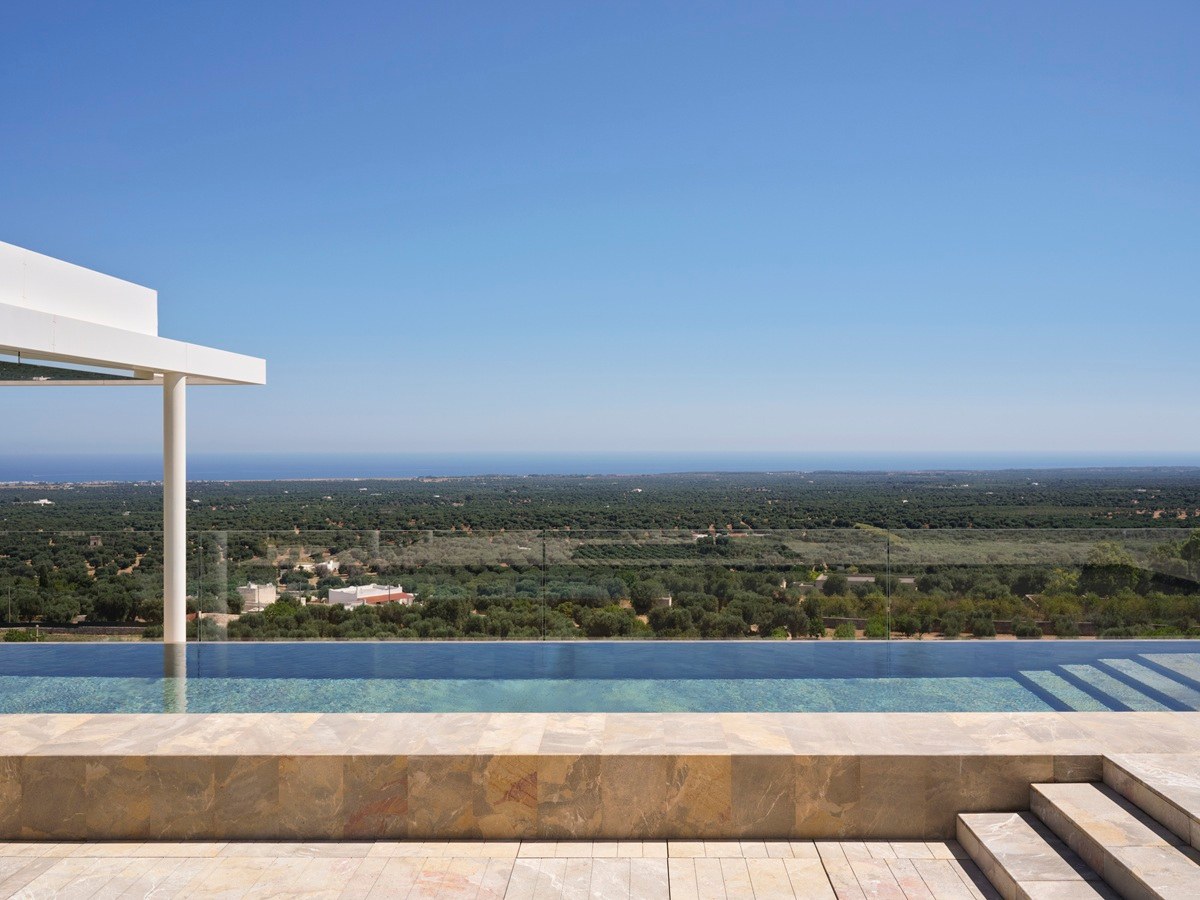
Ostuni, old town · A medieval convent turned tobacco factory, turned hotel · €€€€
A fourteenth-century convent in the old town that became a tobacco factory, closed in 1969 and stood empty for decades. Bianca and Luigi Passera reopened it in 2025 with architect Roberto Murgia: twenty-eight rooms, gardens by Erik Dhont, a rooftop infinity pool, and Andrea Berton in the kitchen.
View hotel →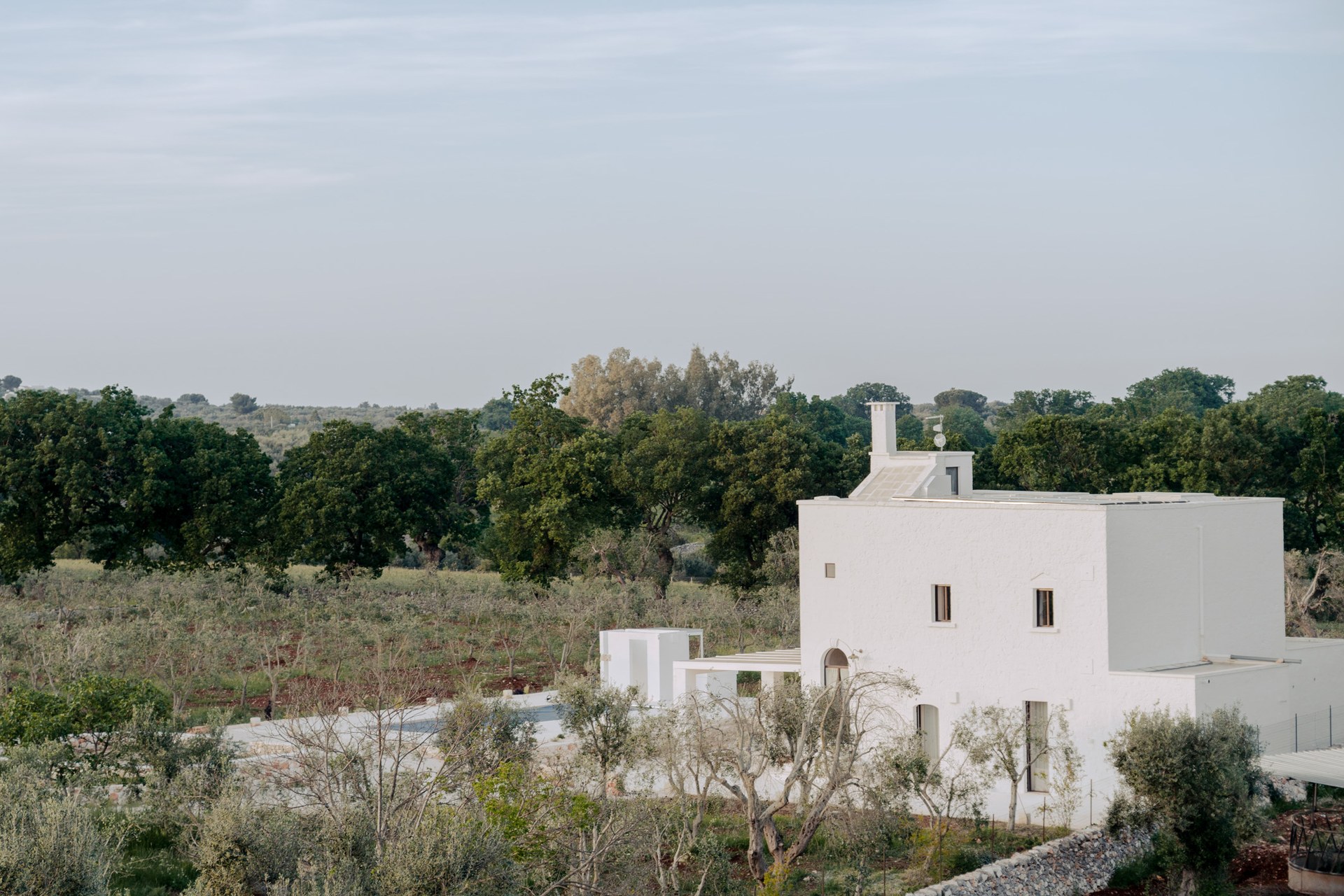
Ostuni · Three rooms, four hectares, one family · €€€
Angelica and Francesco came home after years abroad and rebuilt the old casale with local craftsmen — chianca flagstones, terrazzo, cocciopesto. Three rooms, a long shared table, four hectares of olives and almonds. More house than hotel.
View hotel →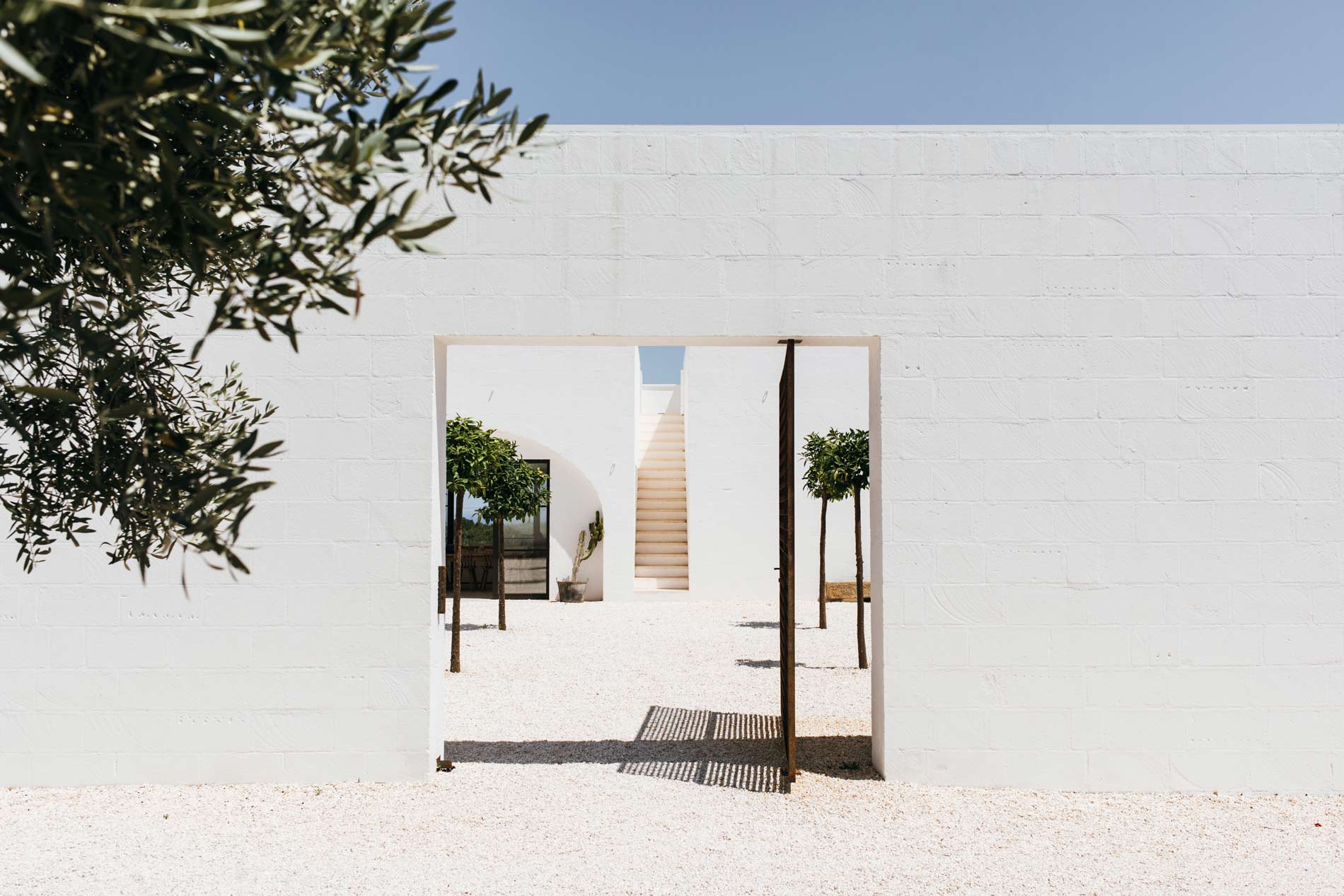
Ostuni · Six rooms and the house that started the decade · €€€
Andrew Trotter built it in 2016 on a hill of olives: rooms around a closed courtyard, local tufo, walls eighty centimetres thick. Six rooms, five hectares of grove, and Giorgia Eugenia Goggi's kitchen, which people drive the length of Italy for.
View hotel →Photography by Matteo Capirola.
The Seven Nights · Ostuni
I.
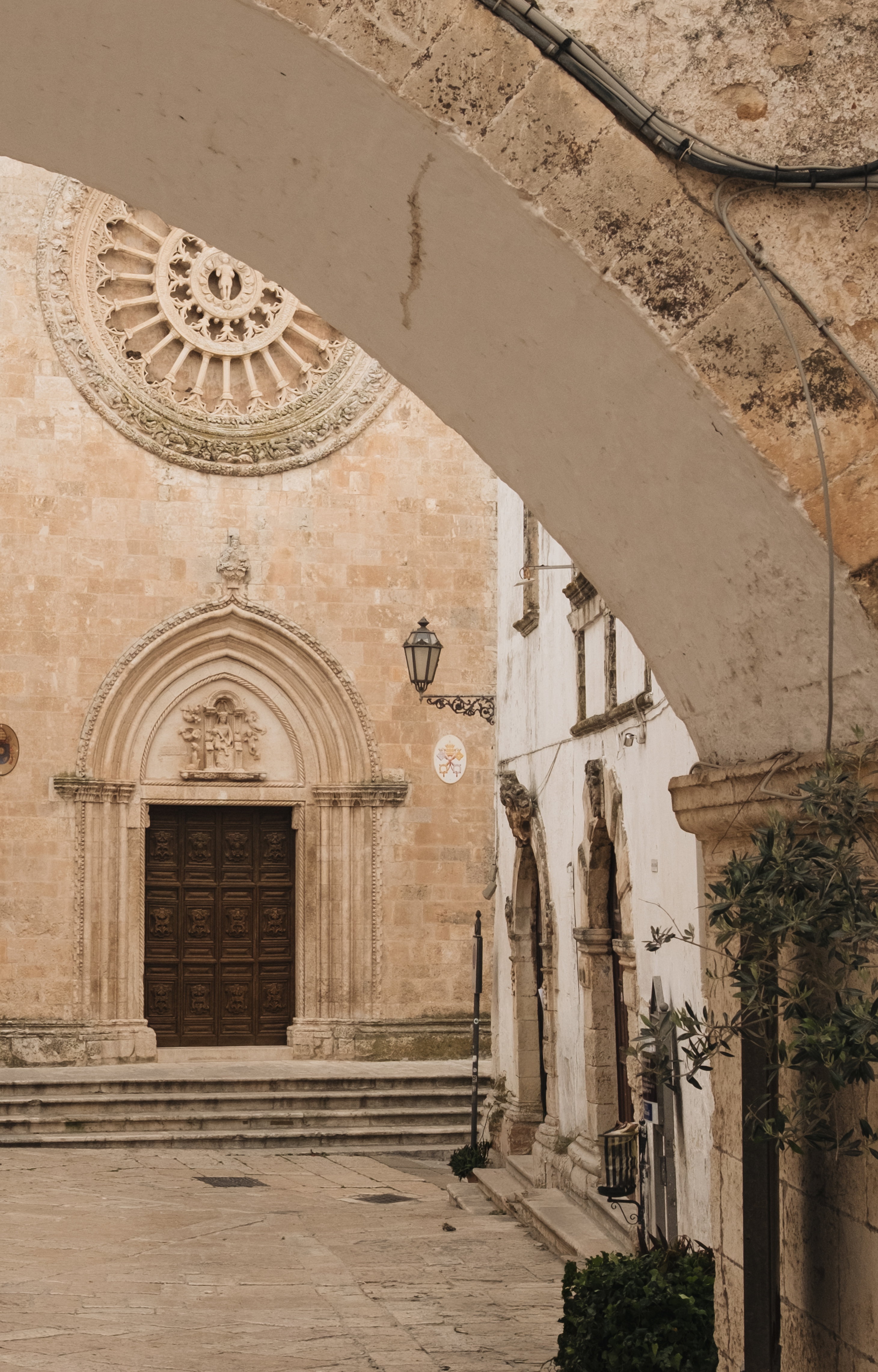
Come up from the coast in the late afternoon, when Ostuni turns from white to apricot to rose over about forty minutes. The town is a spiral — one road climbing, alleys folding off it, the cathedral at the top with its large carved rose window. Walk up, get lost on purpose, come out somewhere with the olive plain running down to the sea.
Arriving earlier in the day? There are easy ways to fill the hours before the light turns. Swim at the Torre Guaceto nature reserve, about twenty minutes down on the coast. Take a first coffee or an early aperitivo at Burro Cafè in the old town. Or drive ten minutes to Carovigno for a drink at Picci Bar, an old salumeria that still has its vintage Peroni awning.
The whitewash is not decoration. Lime was cheap, reflected the heat and was believed to keep disease out of the plaster; what reads as a colour scheme began as the cheapest maintenance available.
Dinner in the old town at Osteria del Tempo Perso, dug into caves below the street — book before you arrive. An early night; Day Two starts among the trees.
The Seven Nights · The Olive Country
II.
Give the morning to the ground the whole week stands on. Drive the small roads between Ostuni, Carovigno and Fasano — not the coast road — and look at the trees: trunks two and three metres through, hollow at the centre, some a thousand years old and still cropping. The oldest are protected by law as monuments.
Several estates will show you a frantoio ipogeo — an old olive mill cut into the rock below ground. The oil was pressed down here because the temperature stays constant all year, and mules turned the millstones in the dark. Lunch near Speziale: Il Cortiletto, whose house antipasto arrives as eighteen small plates, or the cheese counter at Caseificio Crovace, a plain roadside dairy with excellent fresh cheese. Somewhere in these same groves stands Pescetrullo, Gaetano Pesce's pink-and-blue polyurethane houses — a private rental rather than a monument, and the clearest sign that this landscape is still being argued with.
Afternoon at Torre Guaceto, the marine reserve north of Carovigno — dunes, a watchtower, and the only stretch of this coast protected before it was discovered. Dinner wherever you are sleeping; the estates here cook their own ground. Or drive into Carovigno for Già Sotto l'Arco, the one starred kitchen on this stretch, on the first floor of a palazzo off the corso — it wants booking well ahead.
The Seven Nights · The Coast
III.
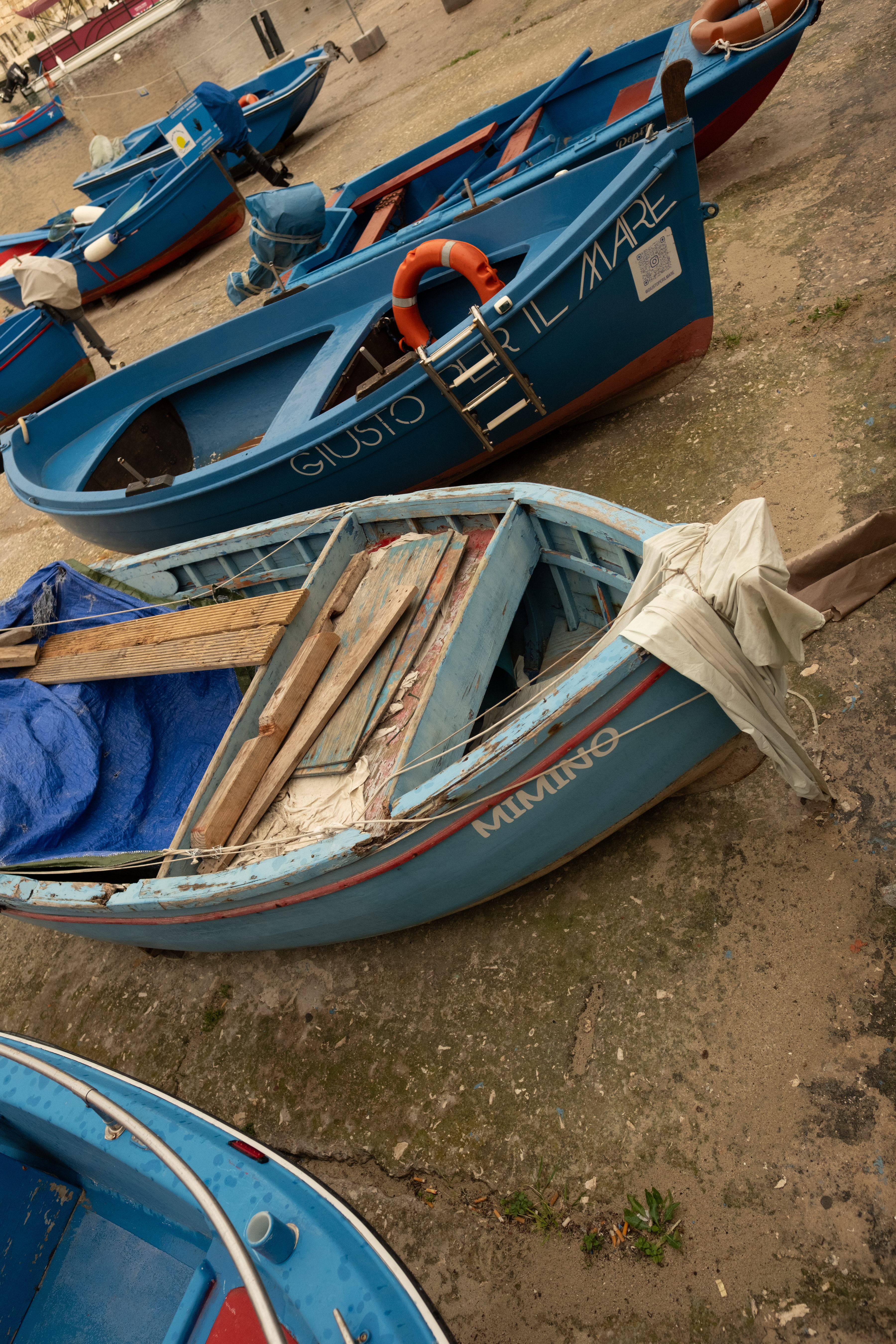
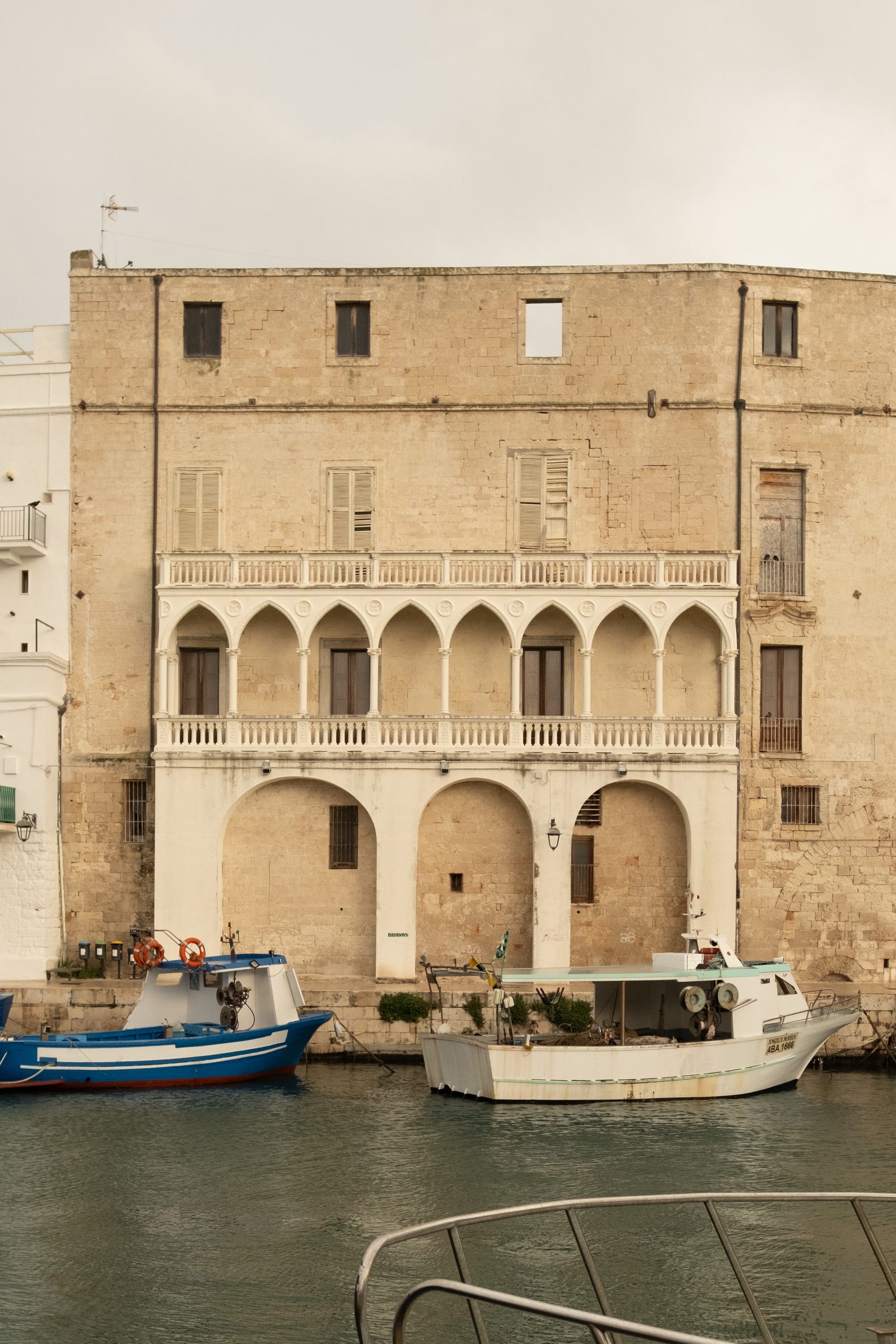
The coast here is not sand but a limestone shelf dropping straight into deep water. Its two towns are best at different times of day: Monopoli in the morning, Polignano in the evening. Monopoli first — a working port with a fleet that still lands here, a castle on the mole, a compact whitewashed old town. Coffee, the fish market, the sixteenth-century walls. Drive out to Capitolo on the way back for the concrete domes at Torre Cintola — a 1970s holiday village whose shells Dante Bini raised by inflating a balloon under wet concrete, and which the coast has been quietly absorbing ever since.
The middle of the day is not for the coast at all — swim, sleep, stay behind a wall, or spend it indoors at the Fondazione Museo Pino Pascali, the old slaughterhouse above the water that Polignano turned into a contemporary art museum for the Arte Povera sculptor who was born here. Polignano a Mare itself is the most photographed place in this half of Puglia, and from June to September it is packed from late morning until early evening. It is also extraordinary, and it belongs to whoever arrives after seven.
Walk out then to the terraces above the ravine, take the caffè speciale — coffee, cream, lemon zest and amaretto — at the bar that invented it, and eat on the shelf: Da Tuccino, in the same family since 1968, or Chichibio for the quieter version of the same fish.
The Seven Nights · Alberobello
IV.
Alberobello's trulli are a World Heritage site, and in summer the main quarter, Rione Monti, is lined with souvenir shops. Go early, before nine, and walk the smaller quarter across the road instead: Rione Aia Piccola, around four hundred trulli where people still live, and no shops. An hour is enough.
Then leave, and spend the day where the same building tradition never became an attraction. Locorotondo is laid out as a circle — that is what the name says — with a balcony over the whole basin and a white wine of its own. Cisternino, fifteen minutes on, is smaller and quieter.
Cisternino's dinner needs explaining: you choose your meat at a butcher's counter and they grill it and bring it to a table in the same room. Ask for bombette, rolled pork neck stuffed with cheese. Trattoria Bère Vecchie is the one to book.
The Seven Nights · Martina Franca
V.
South-west along the rim of the basin to Martina Franca, the surprise of the week: not a white village but a full Baroque town, with a ducal palace, a triumphal gate and a piazza that would not embarrass Lecce. Every summer since 1975 the palace courtyard has staged an opera festival specialising in the works nobody else revives.
The town also gives its name to a capocollo smoked over oak and almond shells and protected as a Slow Food presidium, which you can taste at any salumeria on the square.
Afternoon to Ceglie Messapica, twenty minutes east — a settlement two and a half thousand years old that has spent the last thirty becoming the best place to eat in the province. There is little to sightsee; you come here for the tables. Dinner at Cibus, in a fifteenth-century convent with its own cheese and cured meats, or Osteria da Giuseppe, where the menu is whatever came in that morning.
The Seven Nights · The Estate
VI.
Every journey needs a day with no logistics in it, and this is where it belongs. The masserie of this coast were built as closed worlds — courtyard, garden, cistern, chapel, grove — and the sixth day is when the architecture gets to do its job. Swim in the morning, eat lunch under something.
If you need a destination, the shortest one is Egnazia, on the shore at Savelletri: a Messapian town that became a Roman port on the Via Traiana, with a stretch of the original basalt road still visible and an acropolis you can walk with the sea on one side and nobody on the other. Forty minutes, and back before the heat.
Spend the afternoon in the water — the sea here stays warm enough to swim well into October. Dinner stays home, or goes to Savelletri for whatever came off the boats — Il Principe del Mare is plain, white-tableclothed and serious about crudi.
The Seven Nights · Grottaglie
VII.
The last full day goes inland and west, out of the white country into the ceramics town. Grottaglie has made pottery since the Middle Ages, and its quartiere delle ceramiche is a single ravine of workshops built into the rock — kilns, drying racks, courtyards stacked with the pumo, the stylised bud that goes on gateposts for luck, and the capasa, the great-bellied storage jar.
The workshops are open and the potters will talk. Studio Cromie, an old workshop turned residency and gallery, is where the town's contemporary argument lives; the botteghe along Via Crispi are where the four-hundred-year-old one is — Enza Fasano among them, where the old shapes are still thrown and then sent somewhere unexpected. Lunch at Trattoria La Luna nel Pozzo, a two-person osteria near the workshops.
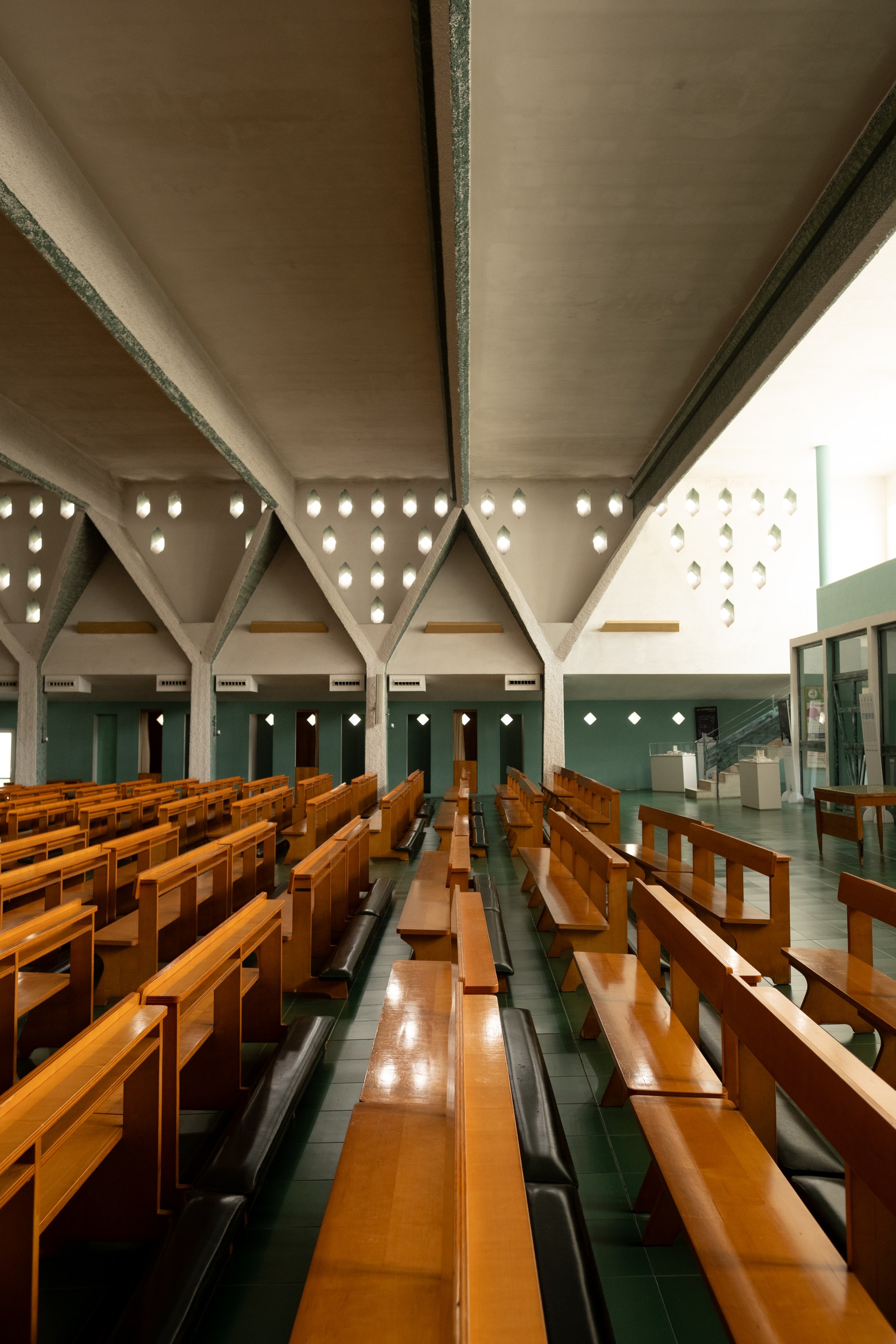
Twenty minutes further west, Taranto holds the strangest building in Puglia: Gio Ponti's Concattedrale Gran Madre di Dio, finished in 1970. A concrete sail pierced by rows of openings stands in a pool of water in front of the church, built to be read against the sky rather than against the city — and the city, a working naval port, gives it no competition. Then the farewell dinner back east, on the coast or in the courtyard where you are sleeping. Order the crudi one last time.
The Seven Nights · Departure
VIII.
Brindisi is forty minutes from Ostuni, Bari an hour and a quarter from Fasano, and the drive can be spent on the motorway or on the old road through the groves. Take the old road, stop once at a roadside stand for oil and taralli, and note what you are driving through: the last large stand of ancient olives in this region that is still entirely healthy.
Ninety minutes south, that sentence stops being true. Journey II starts there.
Beyond the Seven Nights
IX.
For those with an eighth night, the better extension is not another beach but the high country north-west of Bari, which no itinerary routes and every Italian food writer names. Drive an hour and a half north to Ruvo di Puglia, on the edge of the Alta Murgia, and sleep at Villa Fenicia, whose restaurant, Cucina Villana, is the reason to come.
The day around it: Castel del Monte, Frederick II's octagon on its hill, and lunch at Antichi Sapori in Montegrosso, where Pietro Zito cooks from his own fields and three separate editors name it the best table in the region. Bari airport is forty minutes from Ruvo, which makes this the departure as much as the extension.
The route assumes a car and a loose hand. Days are built around the hours rather than the other way round — out early, slow through the middle, towns after seven. No day is full, nothing has to happen in order, and every address here carries the whole week, so a second night wherever you like it costs you nothing but a day. Take it as a spine, not a schedule.
Every excursion in this journey carries a crowd rating: how busy the place gets, weighed against how well it absorbs people. A cliff terrace fills up; an olive plain spreads everyone out. Where somewhere is crowded at every reasonable hour and an equal exists nearby, we say so and send you to the equal. The quiet here is a matter of hours, not of secrecy.
May, June, September and early October are the journey. July is hot and full; August is both, and Ferragosto empties the cities into exactly these towns. The sea swims from late May into October. Many estate kitchens close for part of the winter.
This coast faces east, and that decides the shape of the day. Monopoli's harbour and the Lama Monachile inlet at Polignano take the light straight off the water before nine and are in their own shadow by late afternoon — they are also empty at that hour, which is the second reason to go. Inland it reverses: from the ramparts at Ostuni the sun sets behind the town and the olive plain below goes gold and then violet in the last half-hour. Locorotondo and Cisternino sit two hundred metres higher and hold it a few minutes longer. Torre Guaceto works at either end of the day and not at all at noon.
Osteria del Tempo Perso, Cibus and the Moroseta kitchen all want reserving when the trip is booked. Nothing else here queues.
The site is worth seeing and the default version of it is not. Arrive before nine, use the Aia Piccola quarter, and give the day to Locorotondo and Cisternino — the same architecture without the retail. Off season the calculation changes entirely.
The old groves are private working farms. The roads through them are public and the ground between them is not. Estates will show their mill and their trees if asked; several run tastings. Plant material may not be moved out of the Xylella zone further south — the checks are real.
White parking lines are free, blue paid, and the old towns are ZTL — limited-traffic zones read by camera — so park outside and walk in; the house will tell you where. Nothing in this journey is more than an hour from anything else, and the contrada addresses of the estates confuse satellite navigation, so ask for the pin, not the name. Many family kitchens close around Ferragosto.
Brindisi is closer to Ostuni, Bari to the Valle d'Itria; both are under ninety minutes from any bed in this journey. The regional trains reach Fasano, Ostuni and Monopoli, but the estates and the hill towns do not sit on a railway. The journey wants a car throughout.
The white towns are only half the story. Within an hour of Ostuni: Dante Bini's inflated concrete domes on the Monopoli coast, Gaetano Pesce's pink-and-blue polyurethane houses in the groves near Carovigno, Andrew Trotter's Masseria Moroseta above Ostuni, the rock-cut kilns and the contemporary gallery at Grottaglie — and twenty minutes past them, Gio Ponti's Concattedrale Gran Madre di Dio in Taranto, a concrete sail standing in water. Taken together they make the case that this landscape is still being argued with.
‹
›