beta
beta
South Tyrol, Italy
June – September
7 nights
14 stays
Historic sites
South Tyrol's quiet north is made for slow walkers and design pilgrims alike: pale Dolomite towers rising above improbably green meadows, a thousand-year-old bishop's town, long rifugio lunches and forest dinners at altitude. Over seven nights, the route leads from Bolzano through Val di Funes and Brixen into the Pustertal, with enough time to linger rather than simply pass through.
Val di Funes is the first great landscape — the Odle's pale peaks rising almost 2,000 metres above its meadows. It is one of the Alps' most photographed views, yet the valley itself was never rebuilt around the fame: no ski circus, no through-road, just farms, forests and the small churches of San Giovanni and Santa Maddalena. A short drive away, Brixen, one of Tyrol's oldest towns, feels equally lived-in. Bread is bought, wine is debated, shops close for lunch.
East of Brixen, the Pustertal forms the broad green corridor of the Alps. Above it, Kronplatz offers three reasons to take the summer cable car: MMM Corones, Zaha Hadid's striking summit museum dedicated to mountaineering; Lumen, a museum of mountain photography; and AlpiNN, Norbert Niederkofler's mountain restaurant at 2,275 metres.
The same relationship with the landscape runs through the region's food. In 1912, doctors on the Plose were already convinced this air amounted to medicine; a century later the same conviction turned into a kitchen philosophy. Cook the Mountain — the idea that the mountains should largely feed themselves — has grown into one of South Tyrol's defining culinary ideas, from Michelin-starred kitchens in Bruneck to small osterias hidden in its side valleys.
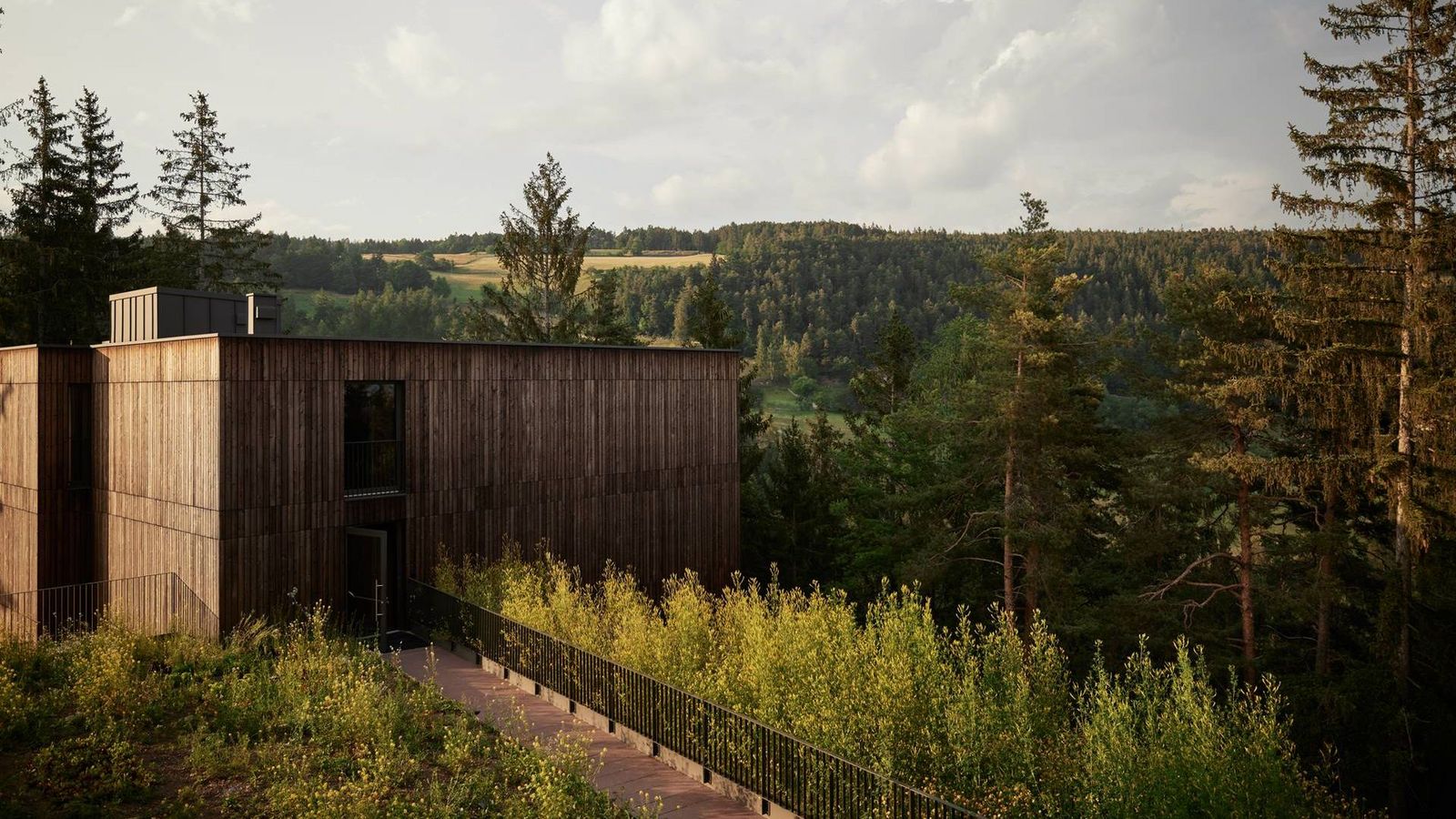
Jenesien, 1,100 m · Larch and porphyry above Bolzano · €€€
Tara architekten finished the house in 2019 on the Salten plateau: larch outside, porphyry sky pools on the roof, and the Dolomites lined up across the valley. The cable car from Bolzano runs straight up to the village.
View hotel →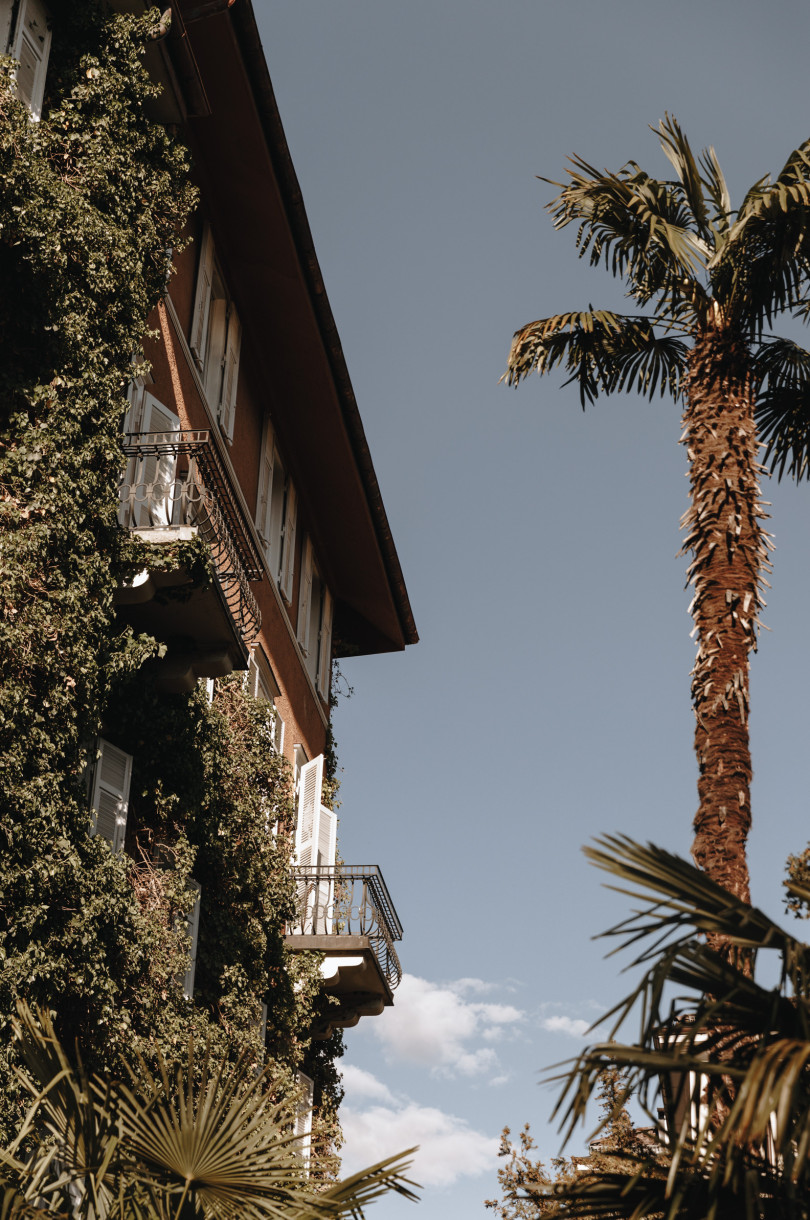
Bolzano, by the Talfer · The city's first guesthouse, 1320 · €€
The oldest part goes back to 1320, which makes it the first guesthouse Bolzano had. The Dissertori brothers reopened it in 2022 with the terrazzo floors and the Art Nouveau balconies left where they were, a few minutes' walk from the old town.
View hotel →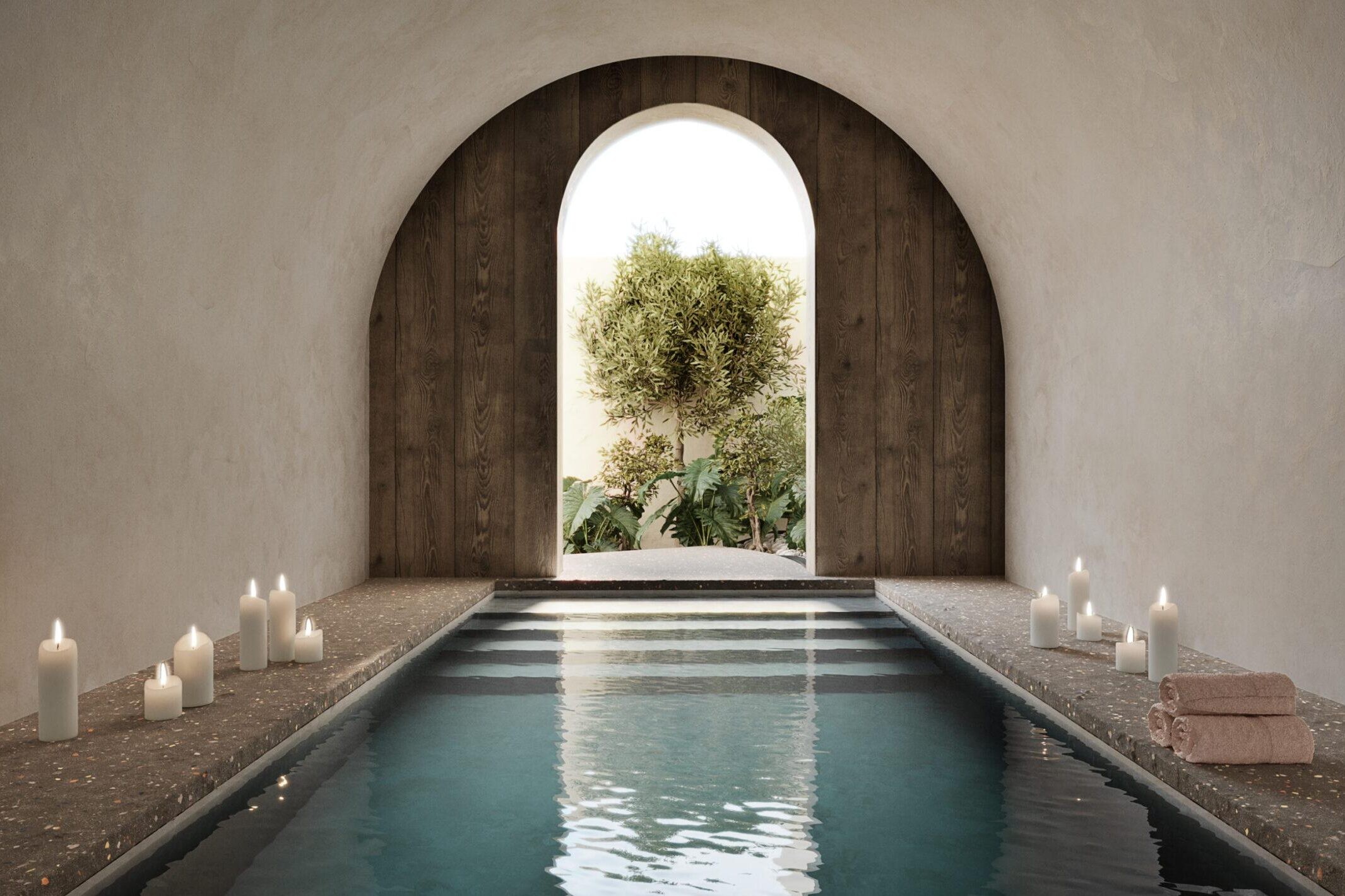
Brixen, old town · Nine suites above a thousand-year-old wall · €€
Nine suites in the arcades, set against stretches of Brixen's medieval wall and eleventh-century cellars. Pale timber, lime-washed plaster, and a small Roman-inspired bathhouse beneath the old town. The restaurant downstairs has cooked here since 1896, now South Tyrolean alongside a full vegan menu.
View hotel →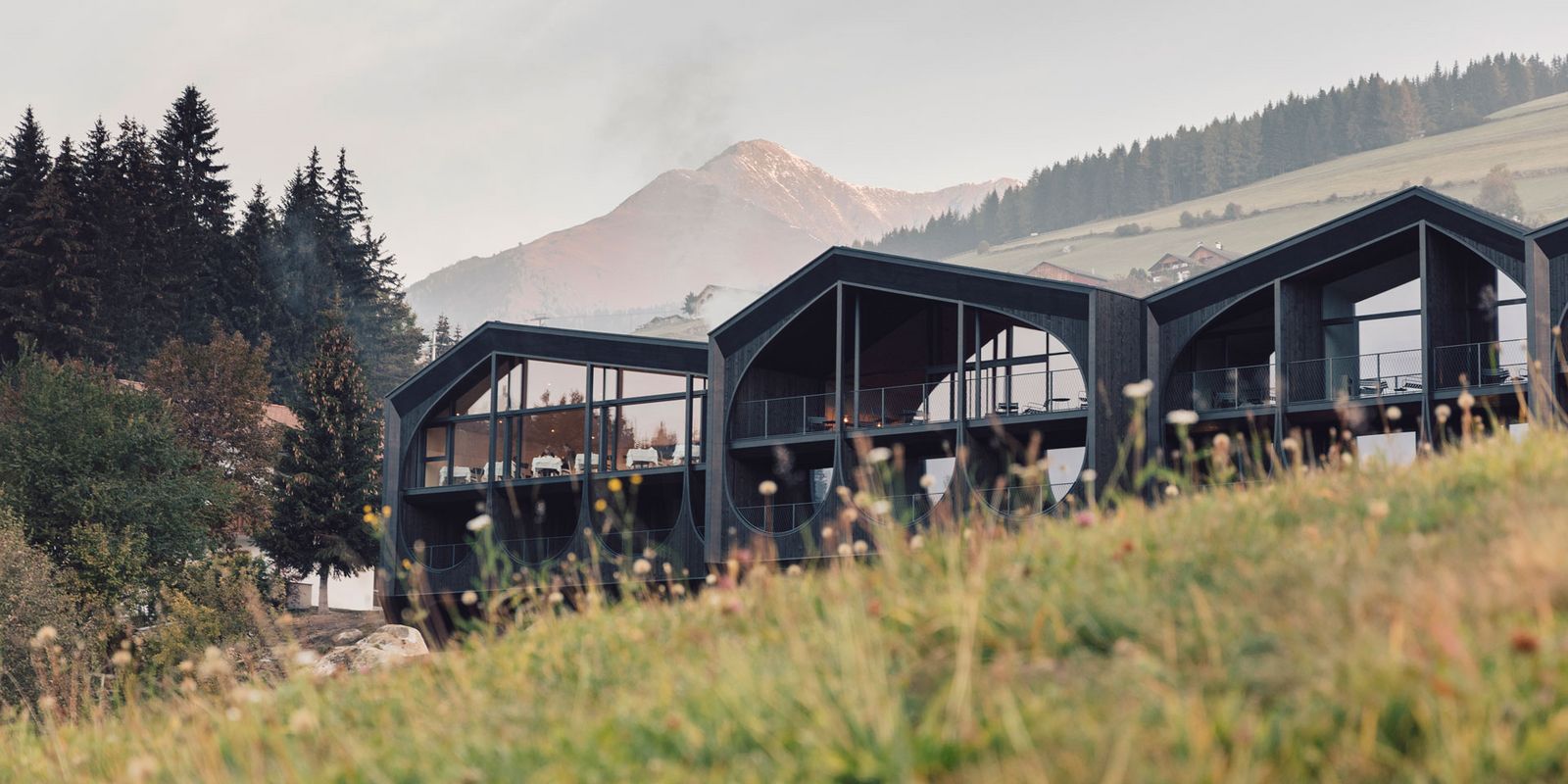
Maranza · Blackened larch, hay-fork windows · €€
Peter Pichler finished the house in 2020 above Maranza: four staggered volumes in blackened larch, the curved cut-outs in the facade shaped after the hay forks the farmers here still use. Small, quiet, and on the sunny terrace above the Pustertal's mouth.
View hotel →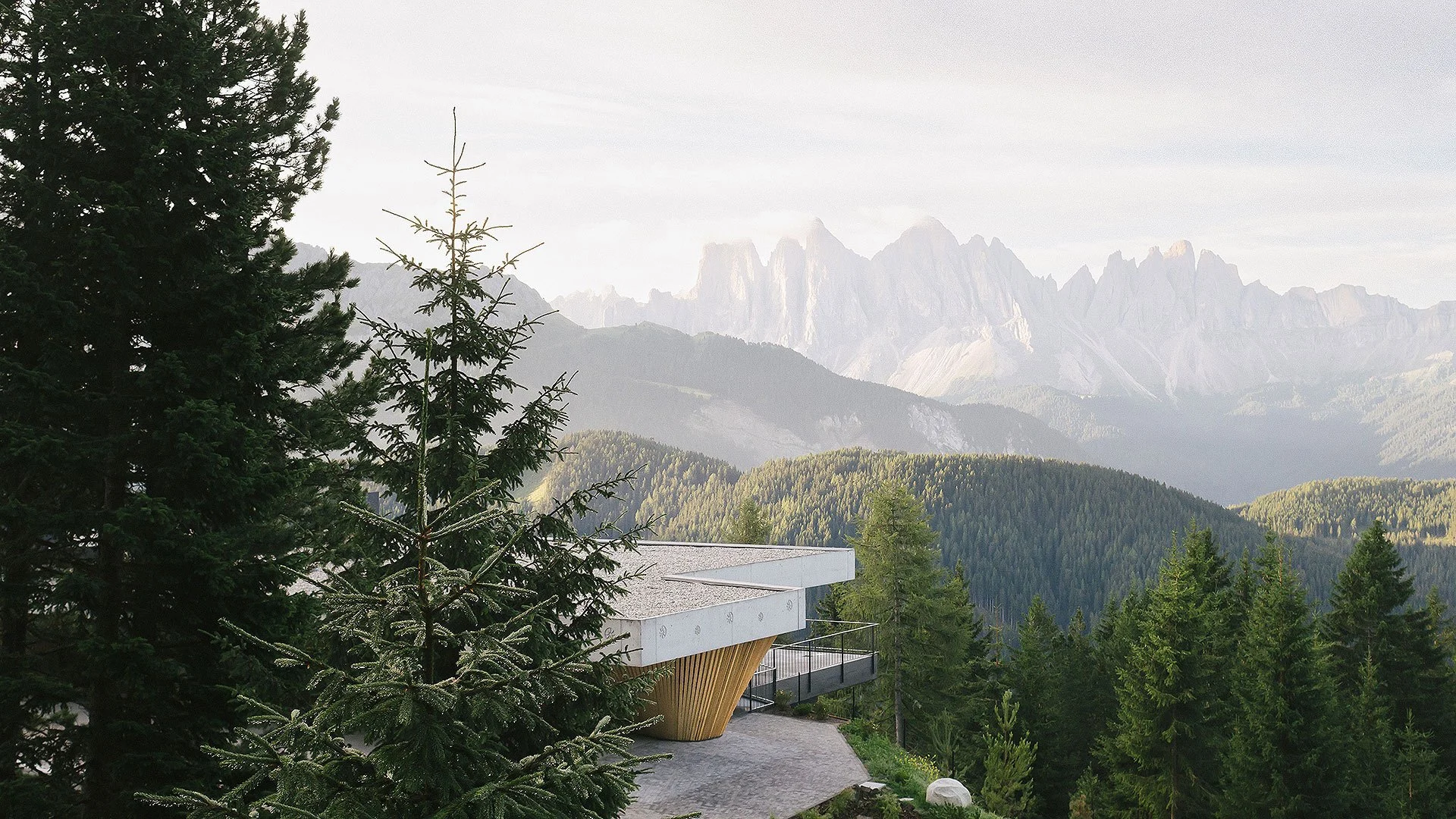
Plose, 1,850 m · Seven suites and the chef lives upstairs · €€€
Seven suites in a rebuilt pension at 1,850 m — spruce weathering silver, glass to the floor. The owner cooks most evenings, and a private sauna sits behind every suite door. The Plose trails and slopes start a few minutes from the house.
View hotel →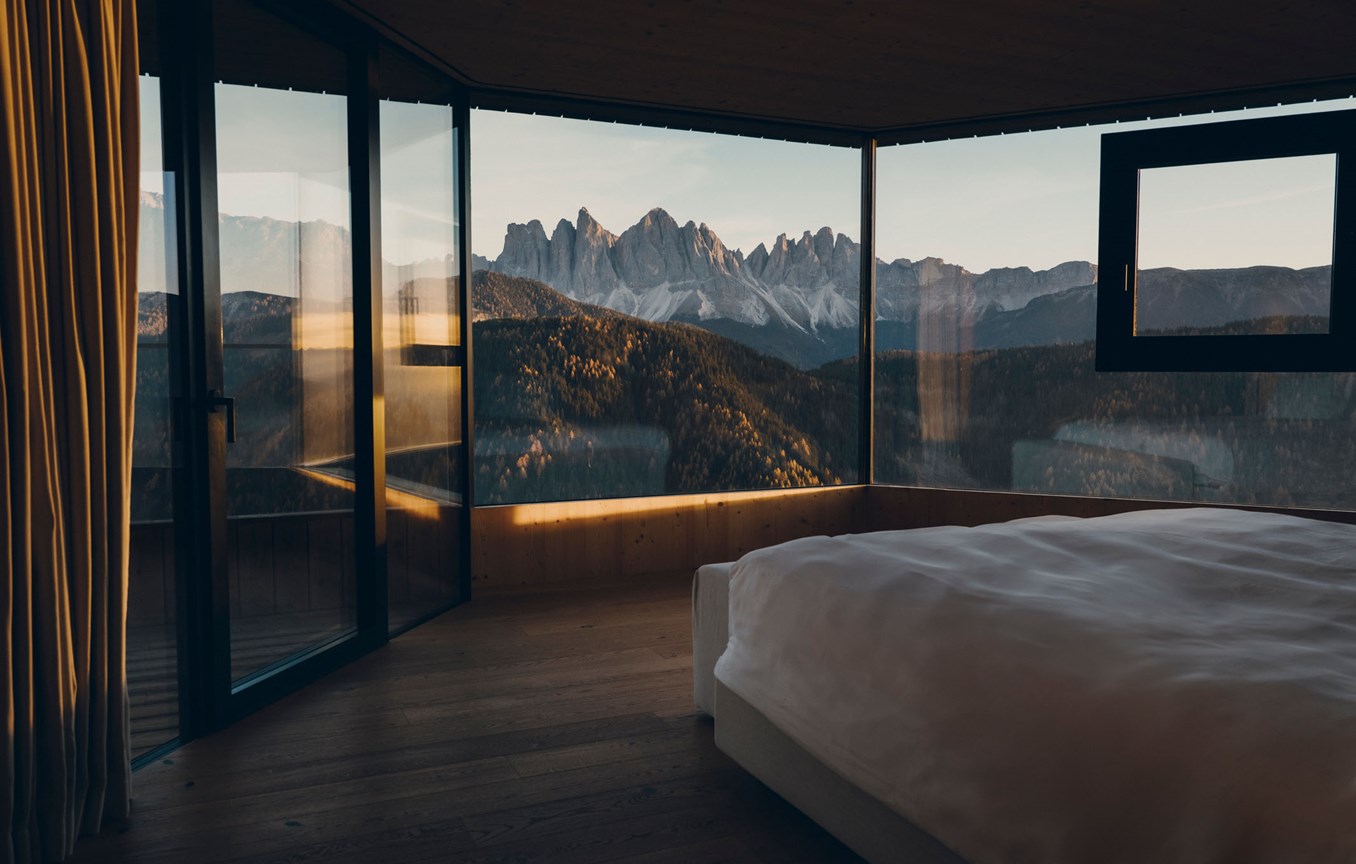
Plose, 1,800 m · The one the whole valley looks up to · €€€€
Chosen in 1912 as a sanatorium ledge, Forestis is built of the mountain it stands on. Three glass towers hold suites framed on the Odle, with dinner and a 2,000 m² spa built around the same forest logic.
View hotel →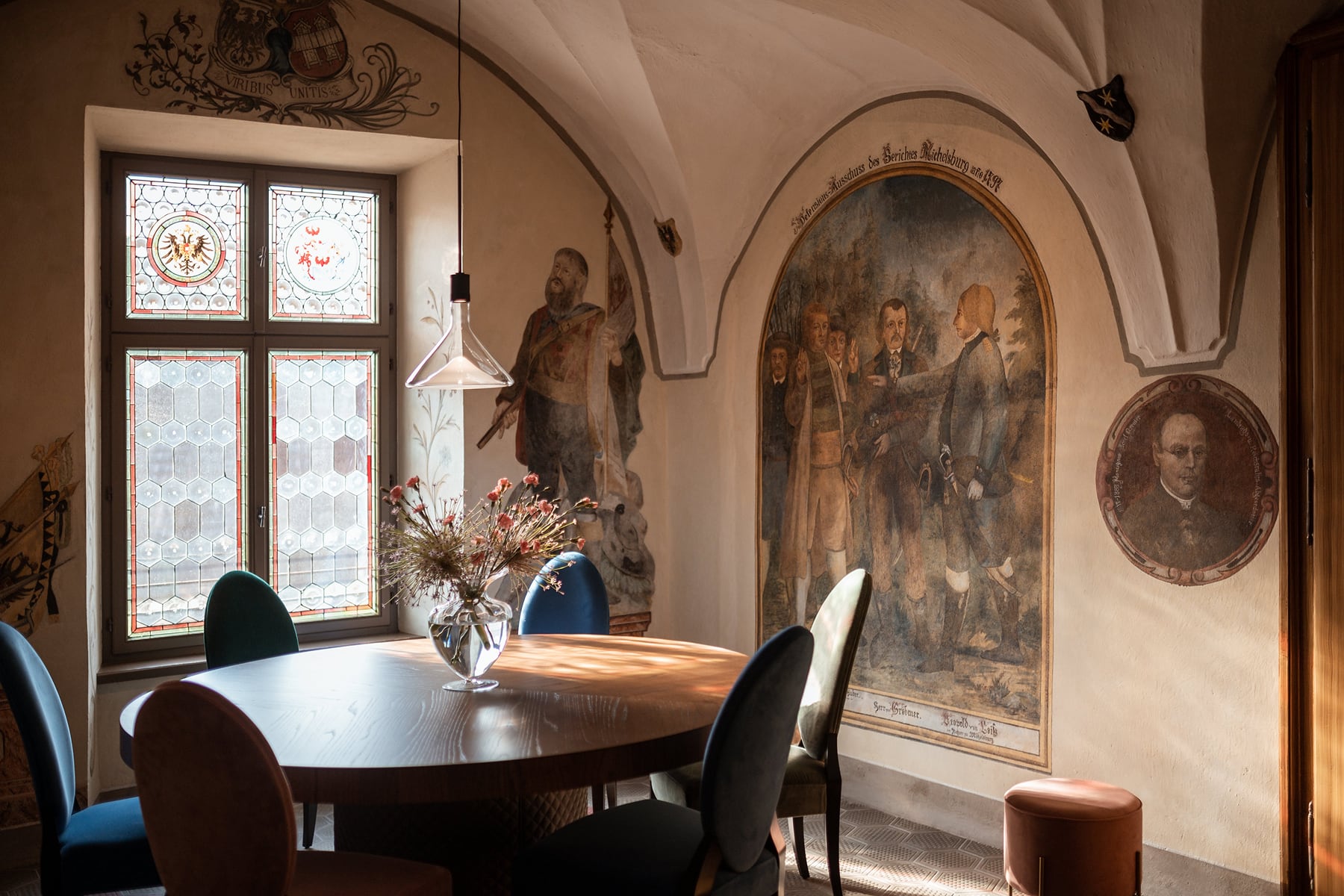
Palù, San Lorenzo di Sebato · The estate that stayed in the family · €€€
A fortified farmstead near the Sonnenburg hill, restored into eight large suites with their own kitchens. Garden, heated pool and sauna, in a hamlet that was never on the way to anywhere.
View hotel →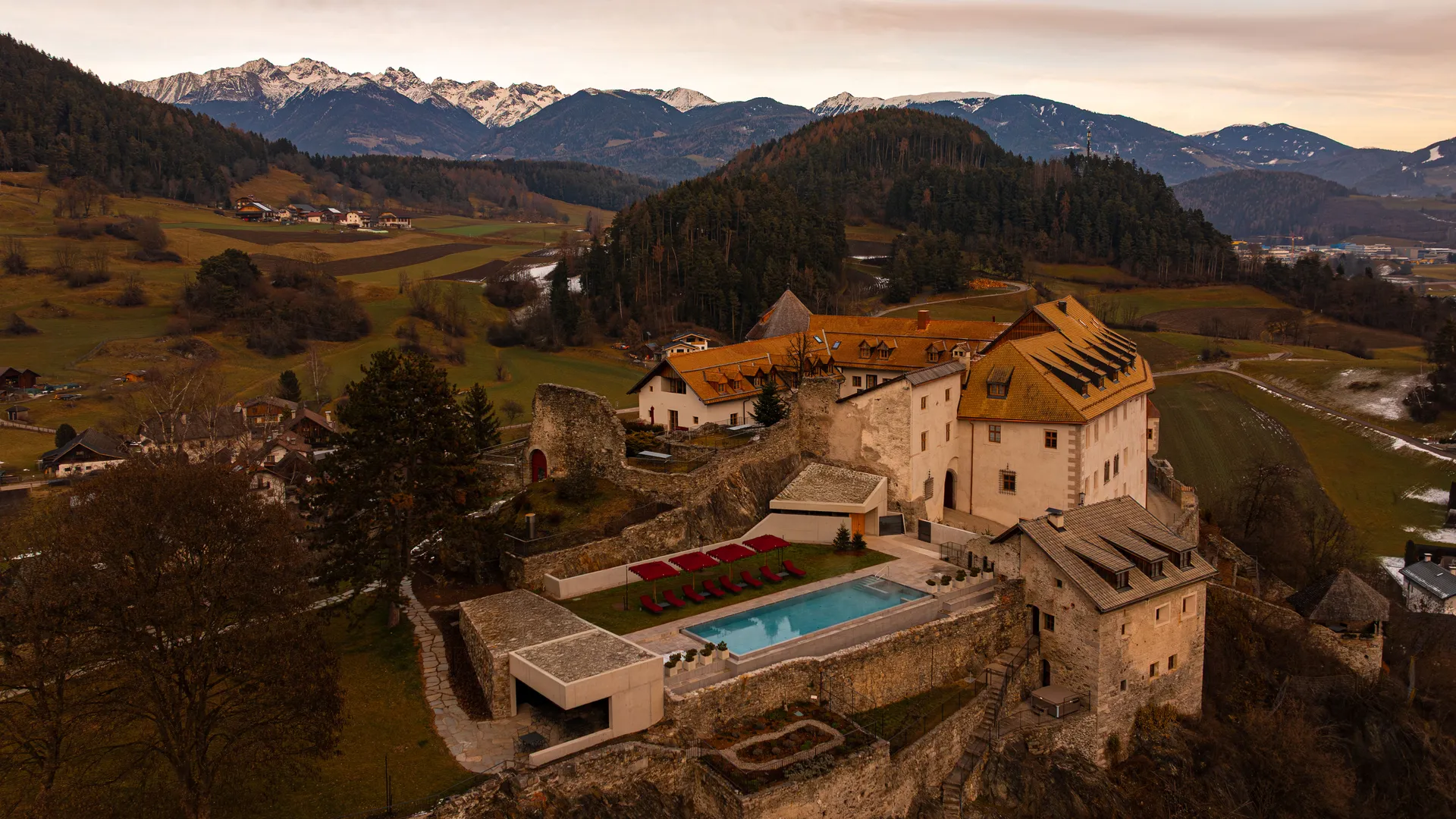
San Lorenzo di Sebato · The castle the valley is named after · €€€€
A convent-castle above San Lorenzo, restored into suites that keep their eight-hundred-year weight — vaulted ceilings, carved stone, honey-coloured grounds over the Pustertal. Now part of the Egnazia group and a member of the Leading Hotels of the World, with the service to match.
View hotel →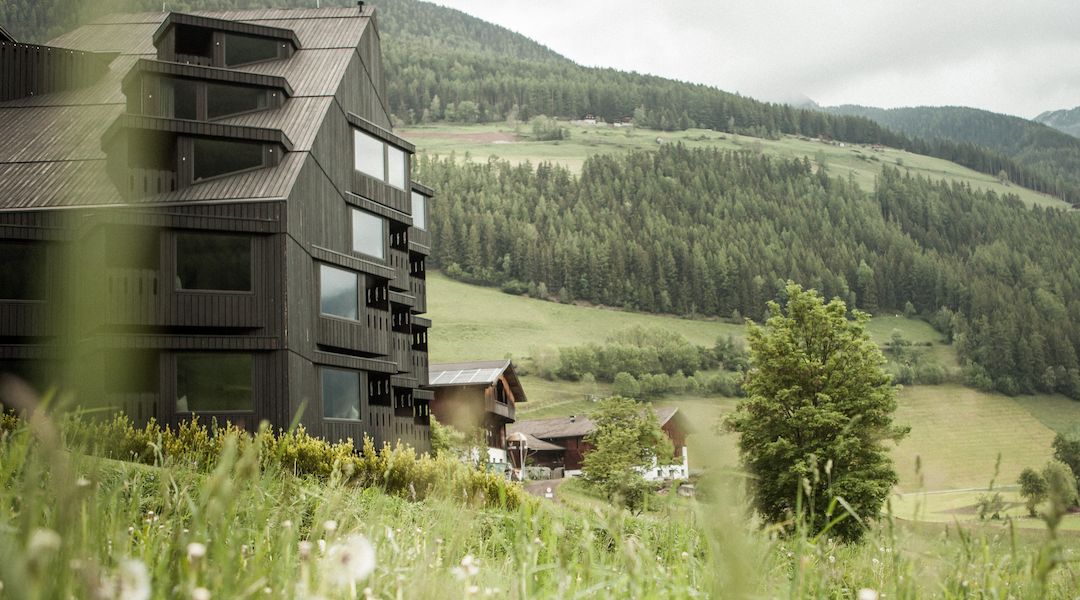
St. Jakob, Ahrntal · A Pedevilla wing on a family inn · €€
In 2017 Pedevilla Architects set a wing of exposed concrete and larch against the family's old inn, high above St. Jakob with the Ahrntal falling away below. Run as an organic house, at the quiet end of the valley towards the Zillertal ridge.
View hotel →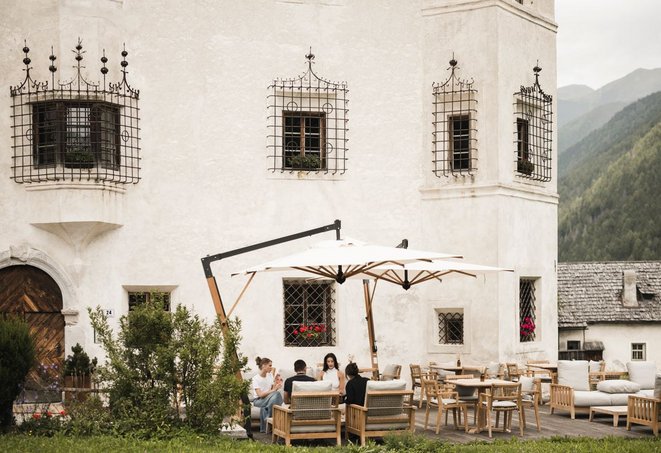

Rasun di Sopra, Anterselva · The Renaissance manor · €€€
A sixteenth-century Renaissance manor above Rasun — frescoed ceilings, a carved Hearnstube, ten suites of stone pine and linen. Norbert Niederkofler's Osteria cooks the Antholz valley, and little else; aperitivo is taken in the smoke-blackened Rauchkuchl, the old kitchen.
View hotel →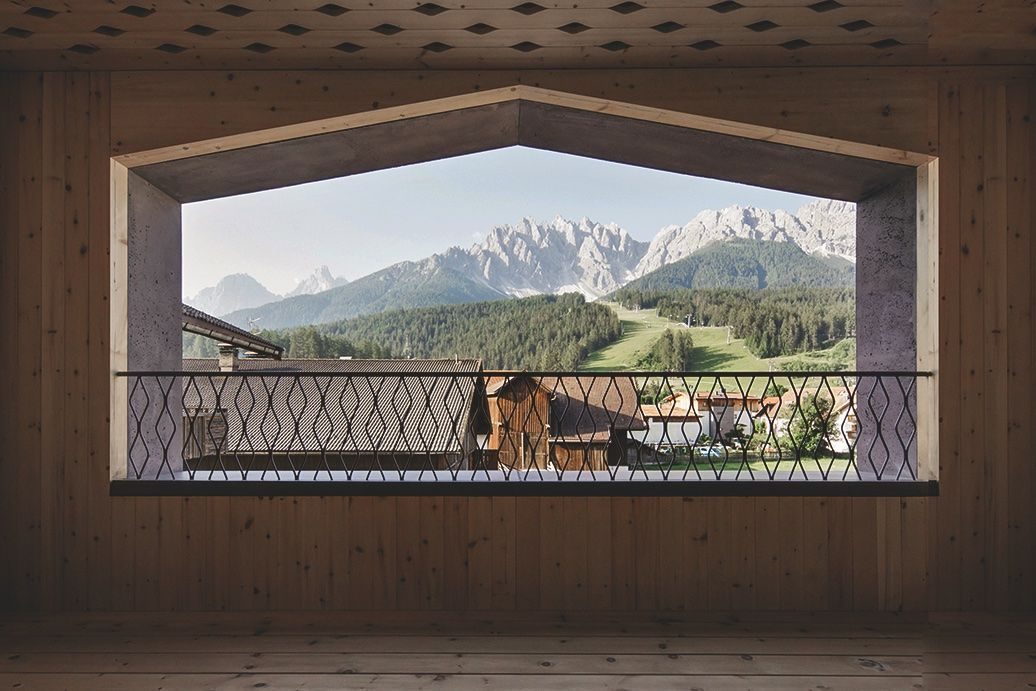
Innichen, old town · Suites with a kitchen of their own · €€€
The Mühlmanns' second house: a handful of suites in the middle of Innichen, each with its own kitchen, for anyone who would rather keep their own hours than sit down to a hotel dinner. The spa at the Leitlhof, up the hill, stays open to them.
View hotel →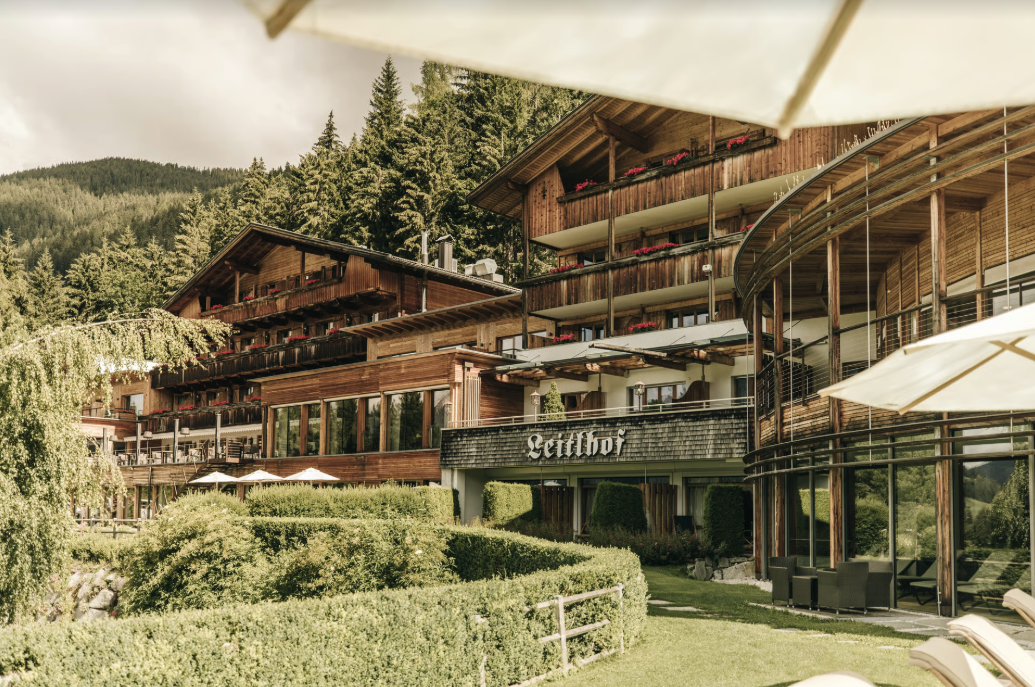
Innichen · A house heated by its own forest · €€€
The Mühlmann family runs one of the few energy-independent hotels in Europe: wood chips from their own woods heat and power the house, eight minutes above Innichen. The spa and the long south terrace look across to the Haunold and the Sextner Dolomiten.
View hotel →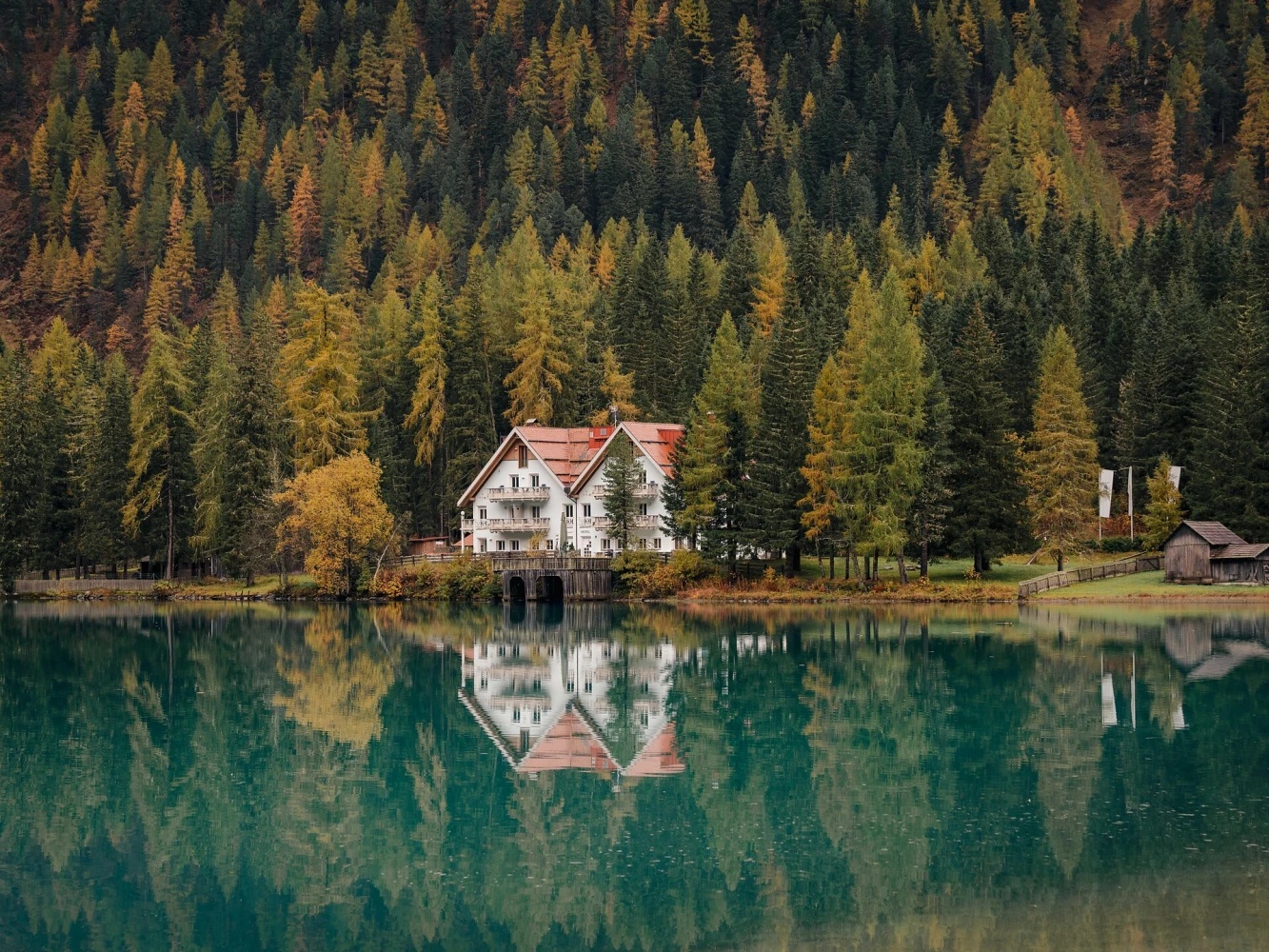
Antholzer See · A house on the shore, at the head of the valley · €€
A house right on the water of the Antholzer See, at 1,642 metres and inside the Rieserferner-Ahrn nature park. Eighteen rooms named after the peaks across the lake, a jetty, and a restaurant serving pizza and an Italian-Japanese menu to walkers coming off the lake path.
View hotel →The Seven Nights · Bolzano
I.
Most people pass through Bolzano on the way to somewhere else. An hour of it explains the week ahead: the last Italian city before the mountains close in, two languages sharing one Gothic old town, a fruit market that still feeds the town, vineyards inside the city limits.
Lunch at Wirtshaus Vögele sets the tone: the South Tyrolean classics, Knödel and Schlutzkrapfen, among people on their lunch break. Then the Laubengasse, six hundred metres of merchant arcades trading since the Middle Ages, and the Obstmarkt beside it — speck, mountain cheese and haggling. If the light holds, cross to the Talvera meadows and look back at the town under its vineyards.
Then north up the Eisack valley in the late afternoon, with the light long on the vineyard terraces. The city gets a longer look on the way home, if the flight allows.
The Seven Nights · Val di Funes
II.
The famous valley — go at the right hours. Leave before eight: San Giovanni in Ranui in early light, coffee in Santa Maddalena, the short panorama loop while the meadows are still wet and the only people out are farmers. By ten the coaches reach the church viewpoints; by then you are on the trail.
Drive to the head of the valley at Zans and walk the Adolf Munkel trail beneath the towers: two to three hours, none of them steep, all of them under two thousand metres of pale rock. Lunch at the Geisleralm: dumplings, Kaiserschmarrn, a deckchair. Its terrace has a name of its own, the Cinema delle Odle, an amphitheatre of chairs facing Furchetta and Sass Rigais.
Evening back above Brixen at Sunnegg, the Buschenschank in the vines: thin-sliced speck, the farm's own wine, and the town's rooftops below the terrace in the evening light.
The Seven Nights · Val di Funes
III.
Yesterday you stood beneath the Odle. Today you look at them from across the valley — the reason it is worth two days instead of one.
Take the road that climbs out of Santa Maddalena and traverses the open flank eastward. It is not a difficult drive and rarely a busy one, and it shows what the valley floor cannot: the whole range at once, meadow below, the towers in a row above. Stop at the Punto Panoramico below Sas de Putia and give it longer than you planned.
Beyond it the road enters deep, mossy forest and comes out at the pastures under the Peitlerkofel, where the walking starts. Come early for a space in the car park. Walk as long as you like — twenty minutes off the pass road, on the Untermoi side, Munt de Fornella has Highland cattle in the meadow and salami cured from them on the board, kitchen until five — then back down for dinner.
The Seven Nights · Brixen & Novacella
IV.
The morning is for Brixen, the oldest town in Tyrol and still a working one: the Hofburg square, the pastel façades, the market. Take the cathedral cloister at lunchtime, when the frescoed vaults — scenes from the Bible and the medieval bestiary — are near-empty.
Ten minutes north, Novacella has been making wine since 1142. See the rococo library and the frescoed cloister, then finish with a cold glass of Kerner in the courtyard.
Then east into the Pustertal, the long corridor valley. Arrive with enough light for a walk before dinner; from here the remaining days need no further move.
The Seven Nights · The Pustertal
V.
The Pustertal is the valley people have always moved through — Roman road, medieval trade, railway — and today so do you, slowly. Bruneck takes the middle of the day: the Stadtgasse, one of the handsomest medieval high streets in the Alps, and Acherer, a patisserie and flower shop under one roof, for the apricot strudel. In poor weather, Schloss Bruneck holds MMM Ripa, the Messner museum devoted to mountain peoples rather than mountaineering.
Mid-afternoon, ten minutes back to San Lorenzo, where the Romans planted the road-station of Sebatum and the Sonnenburg hill rises over the valley mouth. Walk its grounds in the late light: for eight hundred years the convent here owned the whole valley below, and in the 1450s its abbess, Verena von Stuben, fought Nicolaus Cusanus for years rather than accept his reforms. This was a centre of power run by women, not a retreat.
The Seven Nights · Kronplatz
VI.
Ten minutes to Riscone and up with the morning cable car. Kronplatz is not a beautiful mountain — a broad grassy dome among sharper neighbours — which is why it could be built on.
MMM Corones first, before the crowds: Zaha Hadid's museum, among her final works, is buried in the summit itself, three tongues of pale concrete cantilevered over a thousand-metre drop. Fifty metres away, Lumen fills the old cable station with a century and a half of mountain photography. Lunch at AlpiNN, Niederkofler's Food Space beside it — Cook the Mountain, served casual at 2,275 metres.
The evening is the week's one splurge: Atelier Moessmer, three stars in the villa of the old wool mill by the river, booked months ahead. Otherwise Oberraut above town, where the game comes from the family's own hunt.
The Seven Nights · Anterselva
VII.
The last full day goes to the Anterselva, a side valley off the Pustertal: one road in, larch forest, farms up the sunny side.
Drive it early to the Staller Sattel, the pass into Austria so narrow that traffic runs one-way in alternating quarter-hour windows, held by a traffic light at 2,050 metres. Just over the crest lies the Obersee, a dark tarn under glacier peaks, its meadows full of flowers in July. Return with the window and give the afternoon to the Antholzer See: turquoise, ringed by forest, and, unusually for a lake this photogenic, never overrun. The loop path takes an hour.
The farewell dinner is at the Ansitz Heufler at Rasun. An hour in the house, aperitivo in the smoke-blackened Rauchkuchl, then the Osteria — dumplings, lake fish and Antholz farm produce, cooked with precision and without ceremony.
The Seven Nights · Departure
VIII.
Departure · The Lake to Skip
Departure runs back down the Pustertal, past the turn-off to Lago di Braies — and we suggest you keep driving. It is the one place in this journey we advise against in summer: one shoreline, one boathouse, one photograph, and for that, access restrictions, full car parks and queues all day in July and August. You had the better lakes yesterday: the Obersee and the Antholzer See, neither with a queue.
So: a final espresso under Bruneck's arcades instead. People have been passing through this valley for two thousand years — Roman legions, wool traders, skiers — and it rewards the few who stop.
Beyond the Seven Nights
IX.
The lake ending. Move the last two nights up the Anterselva valley to the shore of the Antholzer See. The days stay as written — Kronplatz and Bruneck are half an hour away — but the evenings change completely: the day-visitors leave, the shore goes quiet, and it is empty again before breakfast. The Heufler is ten minutes down the road, so the farewell dinner loses nothing.
East to the Three Peaks. For those with an eighth night and the legs for a full day's walking, the Tre Cime di Lavaredo are worth the crowds they draw: a ten-kilometre circuit at 2,300 metres, three to four unhurried hours, long enough to leave the famous viewpoints behind. Drive east past Toblach and up the toll road to the Rifugio Auronzo; book the slot well ahead. Start at first light or after three; the middle of the day is for the coaches. Dinner is ten minutes back down the road at Tilia, Chris Oberhammer's glass pavilion in the park of Toblach's old Grand Hotel: five tables, twelve seats, a Michelin star.
Every excursion in this journey carries a crowd rating: how busy the place gets, weighed against how well it absorbs people. A small lakeshore fills up; a dense network of paths spreads everyone out. Where somewhere is crowded at every reasonable hour and an equal exists nearby, we say so and send you to the equal. Most of the quiet here is a matter of timing, not of secrecy.
Mid-June to late September is the full window in Funes; Kronplatz's summer lifts run from roughly early June to mid-October, which makes it the longest cultural season in the Dolomites, since the summit museums, not the snow, are the point. Larch gold arrives in the Anterselva valley from late September.
The Ladin word for the burning pink the Dolomite rock takes at sunset. From the Plose you watch it from the terrace; in Funes, the Santa Maddalena panorama path at dusk is the best place to stand.
Atelier Moessmer requires reservations months ahead; the Heufler Osteria and AlpiNN take outside guests but fill in August — book the Day Seven table when the trip is booked. MMM Corones sells timed summer entries on busy days. In this journey the restaurants, not the lifts, set the calendar.
Braies in summer runs on an access regulation: through the high-summer window, driving in during the day requires a booked parking slot with the licence plate registered in advance; the shuttle from Toblach also wants booking, in both directions. Arriving on foot or by bicycle is free and unrestricted, which tells you what the scheme is actually managing.
The pass road runs one-way in alternating fifteen-minute slots, posted at the valley entrance. Miss a window and you wait; build the wait into the plan and it becomes part of the story.
Most itineraries give this valley a morning. The second day exists because the range looks completely different from across — the flank road out of Santa Maddalena, the panoramic point below Sas de Putia, the forest and the pastures under the Peitlerkofel. If you only have one day, keep Day Two; if you have both, take them in this order, beneath first and opposite second.
Mountain time is slower than Google Maps thinks — pad every estimate, take the smaller car, and know the parking code: white lines free, blue paid. In Val di Funes, the Zans/Malga Zannes lot charges a flat daily fee and the machines are old-fashioned, so carry cash; park at Bergerplatz for the Santa Maddalena viewpoint, with Putzen as the fallback. On Day Three, be at the pastures early — the car park is the bottleneck, not the paths. The famous frames are working farmland: the paths are permitted, the pastures are not, and the farmer is right. Everything here has two names, including the cable cars; it is the same place.
Bolzano is the gate: both airports sit around ninety minutes to two hours out, and the Verona–Innsbruck line runs through it and through Brixen. The journey wants a car from Day One — the valley buses exist, but they answer to school timetables, not itineraries.
If the eighth night is booked, reserve the toll-road parking the same hour — the scheme changes yearly, so check the current rules — and treat 2,300 metres as its own season: layers, water, sun, little shade on the loop. On peak days the bus from Toblach spares you the queue at the toll gate. From Brixen it is a long day, from Innichen an easy one.